 Chuckanut Exterior
 Why Roofs in Columbia Wear the Way They Do
Columbia sits close enough to the water and the tree line that its roofs take a different kind of beating than roofs twenty miles inland. Salt-laden air off the coast slowly attacks exposed metal — nail heads, flashing, vent stacks, gutter hardware — long before most homeowners notice anything wrong from the ground. Add in driving rain that comes sideways during winter storms, and any weak point in a roof's underlayment or flashing turns into a slow, hidden leak instead of an obvious one. Then there's the tree cover common to this part of Whatcom County, which keeps shaded roof sections damp for days after a storm and feeds a moss and moisture season that can run from fall through spring.
None of that means a Columbia roof is doomed — it means the roof has to be built and installed with those specific stresses in mind. A replacement done to a generic spec, without accounting for coastal exposure and prolonged moisture, tends to show problems again within a few years. A replacement done right for this climate should hold up for the full life of the material.
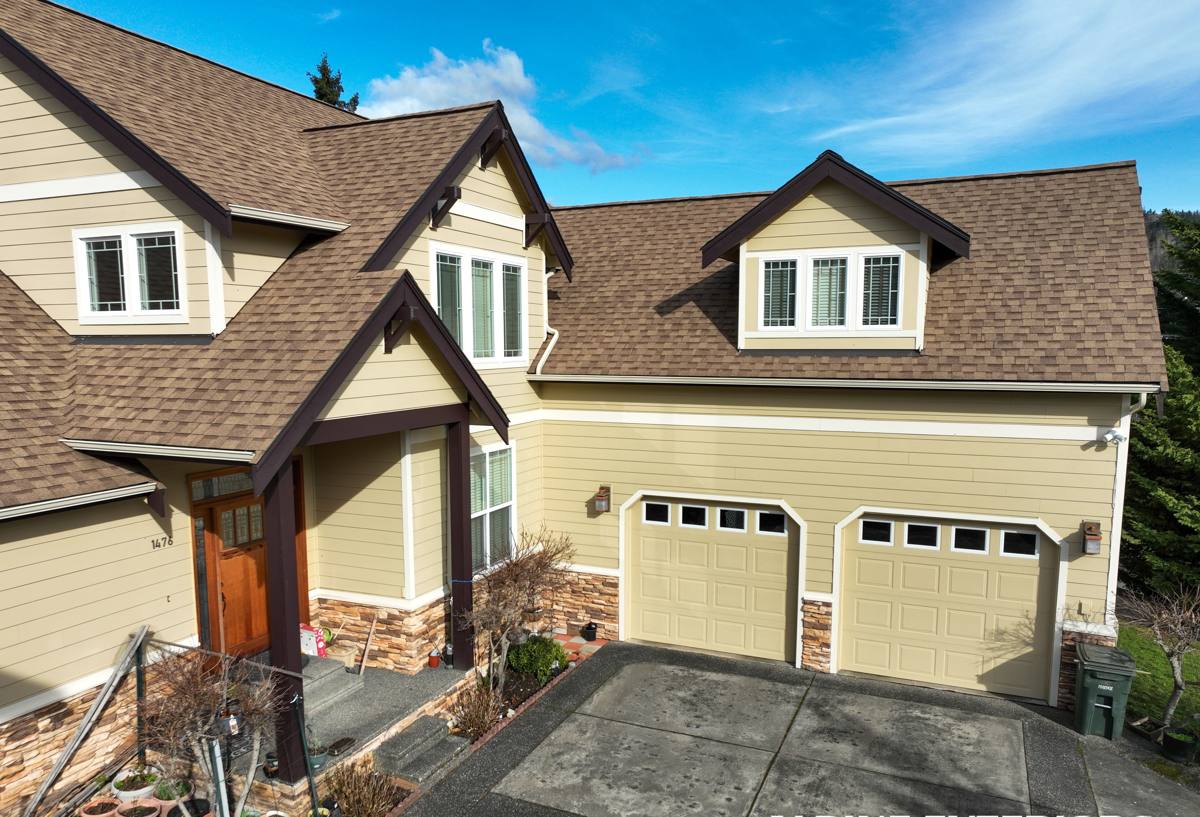
Repair or Replace? Knowing Where the Line Is
Not every roof problem calls for a full tear-off. A handful of cracked shingles, a single flashing leak, or storm damage limited to one slope is usually a repair. Replacement becomes the right call when the damage is systemic rather than isolated. Some signs worth taking seriously:
- Granule loss heavy enough that shingles look bald or patchy across large sections, not just one spot
- Moss or algae that keeps coming back within a season or two of cleaning
- Soft or spongy decking felt underfoot in the attic, or daylight visible through the roof deck
- Multiple past repairs in different areas — a sign the roofing system as a whole is past its service life
- Shingles curling, cupping, or lifting at the edges, especially on slopes that get the most wind-driven rain
- A roof already at or past the manufacturer's expected lifespan for its material and this climate
If a roof is showing two or three of these at once, patching individual spots usually just delays a bigger bill and risks interior damage in the meantime.
What a Correct Roof Replacement Actually Includes
A roof replacement is not just swapping old shingles for new ones on top of what's already there. Done properly, it's a full system rebuild:
Tear-off and deck inspection
Old roofing comes off completely so the deck underneath can be inspected. In a climate with this much moisture exposure, hidden rot under an intact-looking roof surface is common, especially around old flashing points and valleys. Any soft or delaminated decking gets replaced before anything new goes down — skipping this step is the single most common shortcut that leads to early failures.
Underlayment built for wind-driven rain
A synthetic or ice-and-water-shield underlayment matched to the exposure of each roof section matters more here than in drier climates. Valleys, eaves, and any low-slope sections need extra protection since that's where wind-driven rain concentrates and where standing moisture lingers longest.
Flashing at every penetration and transition
Chimneys, vent stacks, skylights, and wall-to-roof transitions are where the majority of leaks originate — not the open field of shingles. Corrosion-resistant flashing, properly lapped and sealed, is non-negotiable this close to salt air.
Ventilation that matches the home
Balanced intake and exhaust ventilation keeps the attic dry and temperature-stable, which slows moss growth on the roof surface and prevents condensation from rotting the deck from underneath. This gets its own section below because it's the step most often shortchanged.
Final material installation to spec
Whatever material is chosen, it needs to go down to the manufacturer's installation instructions and local code — correct nailing pattern, correct exposure, correct starter and ridge details. Installation errors are a leading cause of warranty claims being denied, which defeats the purpose of paying for a quality product.
Material Options for This Climate
There's no single "best" roofing material — the right choice depends on budget, roof design, and how much ongoing maintenance a homeowner wants to take on. Here's how the common options compare for a coastal, wet, moss-prone climate like this one:
| Material | Typical Lifespan | Moss/Moisture Behavior | Maintenance Load |
|---|---|---|---|
| Architectural asphalt shingle | 25–30 years | Algae-resistant granule options help, but shaded slopes still need periodic cleaning | Low to moderate |
| Standing seam metal | 40–50+ years | Sheds moisture fast, very little surface for moss to take hold | Low |
| Cedar shake/shingle | 20–30 years with upkeep | Naturally attractive to moss and moisture retention; requires real diligence | High |
| Synthetic/composite shingle | 30–50 years | Resists moisture absorption better than wood; performance varies by product | Low to moderate |
We'll walk through the real trade-offs for a specific roof rather than pushing one product across the board. Cedar can still be the right aesthetic choice for a home, but it's fair to be upfront that it demands more upkeep in this climate than metal or a quality architectural shingle — that's a maintenance conversation, not a knock on the material itself.
Ventilation and Moss: The Overlooked Factor
Moss doesn't grow because a roof is old — it grows because a roof surface stays damp and shaded long enough for spores to take hold. Trees that shade parts of a roof, combined with a long wet season, create exactly those conditions locally. Two things reduce it: adequate sun exposure (which homeowners can't always control) and airflow underneath the roofing material (which the installation absolutely controls).
Poor attic ventilation does double damage. On the outside, a warm, still attic keeps the underside of the roof deck slightly warmer and slower to dry, which extends the window moss has to establish itself. On the inside, that same trapped warm air condenses against a cold roof deck in winter, which is a direct path to hidden rot regardless of how good the shingles above it are. A replacement that doesn't correct existing ventilation problems is fixing the visible layer while leaving the underlying cause in place.
Our Replacement Process, Step by Step
- On-site inspection — walk the roof and attic, check decking condition, ventilation, flashing points, and drainage before quoting anything
- Written estimate — clear scope, material options, and pricing with no surprise add-ons buried in fine print
- Scheduling around weather — replacement work is planned for realistic dry windows given local rain patterns
- Tear-off and deck repair — old roofing removed, deck inspected and repaired as needed
- Underlayment and flashing installation — moisture protection installed before a single shingle or panel goes down
- Ventilation correction — intake/exhaust balanced to the home's attic design
- Final material installation — installed to manufacturer spec so warranties stay valid
- Cleanup and walk-through — site cleared, magnetic sweep for nails, and a final walk-through explaining the work done
What Affects the Cost
Every roof is priced on its own specifics, but the main cost drivers are consistent:
| Factor | Why It Matters |
|---|---|
| Roof size and pitch | Larger and steeper roofs take more material and more labor time and safety setup |
| Number of layers to remove | Tear-off of multiple old layers costs more than a single-layer removal |
| Deck condition | Rotted or soft decking found during tear-off adds material and labor to replace it |
| Material choice | Asphalt, metal, cedar, and composite options span a wide price range, as shown above |
| Roof complexity | Valleys, dormers, chimneys, and skylights each add flashing detail and labor time |
| Ventilation upgrades | Correcting inadequate intake/exhaust adds modest cost but protects the whole investment |
We'd rather walk a roof in person and give an honest number than quote a broad range that doesn't reflect the actual condition of a specific home. Deck repairs in particular are hard to estimate accurately until the old roofing is off.
Permits, Timing, and Working Around the Weather
Roof replacement typically requires a permit in Whatcom County, and a licensed contractor pulling that permit is part of what protects a homeowner if questions come up later — during a sale, an insurance claim, or a warranty issue. Timing matters too: work is best scheduled for stretches of drier weather, and a crew that's used to reading local forecast patterns can plan around rain windows instead of getting caught mid-tear-off with an exposed deck. That's a real risk in a climate where a delayed afternoon shower isn't unusual even in the "dry" months.
Why a Crew That Already Works Columbia Matters
A roofing crew that regularly works in and around Columbia has already seen how homes here age — which slopes hold moss longest, which flashing details tend to fail first under coastal exposure, and how attic ventilation issues show up in older versus newer construction in this area. That local pattern recognition shortens the inspection process and avoids guesswork on material and ventilation decisions. It also means someone is genuinely nearby if a warranty question or storm-related concern comes up after the job is done, rather than a crew that drove in from well outside the area for one job and isn't easy to reach afterward.
If a Columbia roof is showing its age — or it's simply time to plan ahead instead of waiting for a leak — we're glad to walk it, answer questions honestly, and put together a clear, no-pressure estimate using the form below.