 Chuckanut Exterior
 Board & Batten Siding for Larrabee, Built for This Coastline
Larrabee sits right where Whatcom County's forested hillsides meet saltwater, along the stretch of shoreline near Chuckanut. It's one of the most distinctive settings a home can sit in — and one of the toughest on exterior siding. Homes here take on salt-laden air off the water, long stretches of driving rain blown sideways by wind funneling through the bluffs, and a moss season that can run most of the year in the shaded, damp pockets common to this terrain. Board & batten siding is a natural fit for the cabin-and-coastal look so many Larrabee homes lean into, but only if it's built from a material and installed with a method that actually holds up to what this specific location throws at it.
This page is about that one job, in that one place: board & batten siding for Larrabee homes, done right for the climate, not a generic rundown of a siding style.
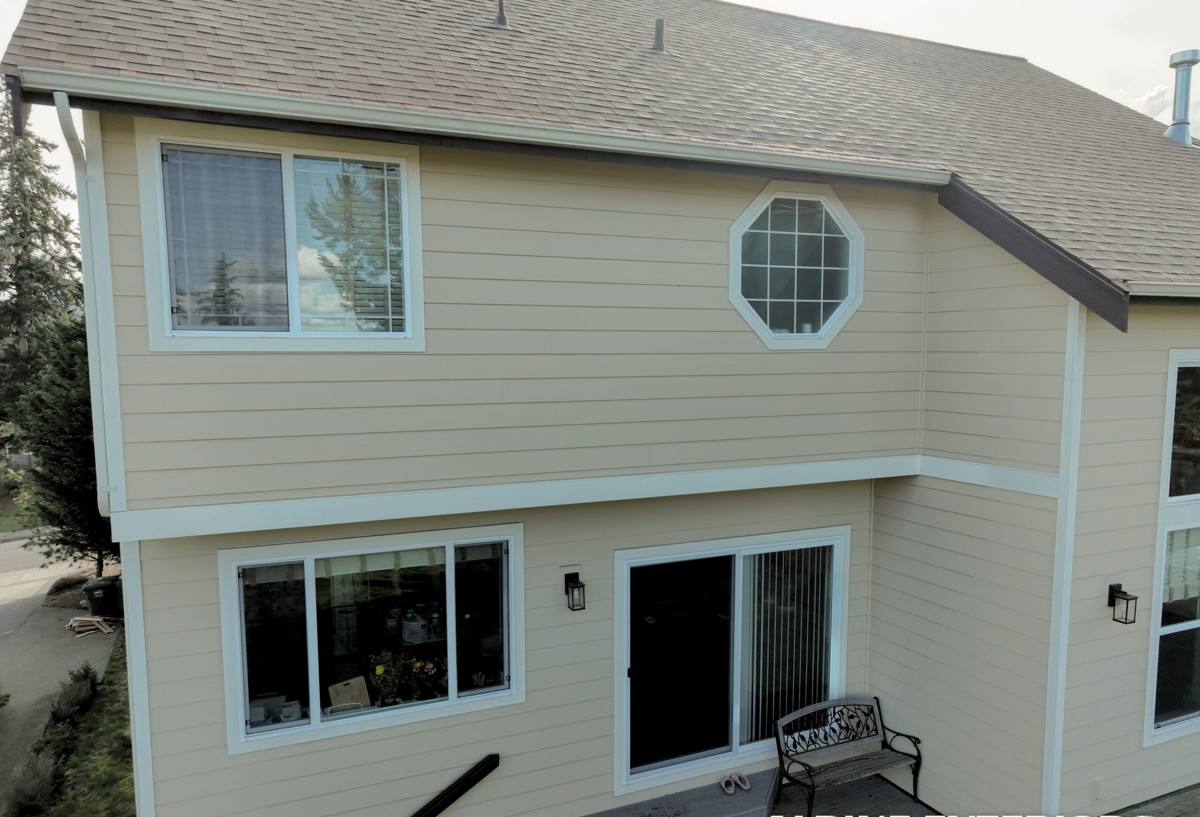
Why Larrabee's Climate Is Harder on Siding Than Most of Whatcom County
Not every neighborhood in the county deals with the same combination of stressors. Larrabee's position near the water and under tree cover creates a few specific problems worth understanding before you pick a siding material or a crew.
Salt Air and Wind-Driven Moisture
Homes closer to the shoreline take on airborne salt that settles on exterior surfaces and accelerates corrosion of fasteners, trim metal, and any material with a weak factory finish. Combined with wind-driven rain that gets pushed horizontally against walls rather than falling straight down, this means water is being forced at seams, corners, and butt joints far more aggressively than a typical inland home ever experiences.
Extended Moss and Damp-Shade Season
Larrabee's tree cover and terrain keep parts of many homes in shade for long stretches of the year. That shade, paired with regional rainfall, is exactly what moss and algae need to establish themselves on siding, trim, and fascia. Once moss gets a foothold on a porous or poorly sealed surface, it holds moisture against the wall assembly instead of letting it shed — which is where slow rot and paint failure usually start.
Temperature Swings and Material Movement
Coastal Whatcom County doesn't see extreme heat, but it does see repeated wet-dry and freeze-thaw cycling through fall, winter, and spring. Materials that absorb moisture swell and contract with these cycles. Over years, that movement is what opens up caulked joints, cracks brittle trim, and works fasteners loose — problems that show up as callbacks long after the original installer is gone.
Why Board & Batten Fits Larrabee's Character
Board & batten is a vertical siding pattern — wide flat panels or boards with narrow battens covering the seams between them — that reads as clean, architectural, and a little more rustic-modern than horizontal lap siding. It's a strong match for the cabin, farmhouse, and coastal-contemporary styles common on properties tucked into the trees near Chuckanut, and it pairs well with the mixed wood-and-stone exteriors you see in this area. Vertical lines also do a good job visually anchoring homes on sloped lots, which describes a fair number of properties around Larrabee.
The style choice is only half the equation, though. Board & batten has more seams and more vertical joints than a lap pattern, and every one of those seams is a place water can try to get behind the cladding. On a site with this much wind-driven rain and salt exposure, the material behind that pattern matters as much as the look.
Why We Install James Hardie Fiber Cement — and Nothing Else
We install James Hardie fiber cement exclusively for board & batten siding, including on Larrabee homes. We don't install vinyl, LP SmartSide, cedar, or primed spruce board & batten, and that's a deliberate standard, not a sales pitch.
- Vinyl board & batten profiles can look the part from a distance, but the material itself becomes brittle in cold snaps and can warp or fade under UV and salt exposure over time, and damaged sections are difficult to blend in later.
- LP SmartSide is an engineered wood product — it performs well in many climates, but wood-based substrates are more sensitive to sustained moisture exposure, and Larrabee's combination of shade, rain, and salt air is exactly the kind of environment that tests that sensitivity hardest.
- Cedar is a beautiful traditional choice for board & batten, but it demands ongoing refinishing, is a natural food source for the same moss and algae this area produces in abundance, and its lifespan depends heavily on maintenance discipline that most homeowners don't want to keep up with for decades.
James Hardie fiber cement is non-combustible, dimensionally stable when properly installed, and manufactured in HZ5 formulations engineered for cold, wet climates like the Pacific Northwest. Its ColorPlus factory finish is baked on under controlled conditions rather than field-applied, which matters enormously on a job where the wrong field-applied coating would be fighting salt air and moisture from day one. It's the product we're willing to put our name behind on a site like Larrabee, and it's backed by a strong transferable manufacturer warranty when installed to spec.
What a Correct Board & Batten Installation Involves
Board & batten siding fails less often because of the material and more often because of how it was installed. The pattern's extra seams and vertical joints make installation detail even more important than on standard lap siding, especially on a site exposed to wind-driven rain.
Rainscreen Gap
Hardie board & batten should be installed over a drainage gap — typically furring strips or a manufactured rainscreen product — rather than tight against the weather-resistive barrier. That gap lets any moisture that does get past the cladding drain and dry instead of sitting against the wall sheathing. On a site with this much driving rain, skipping the rainscreen is one of the most common shortcuts that leads to hidden rot years down the road.
Flashing at Every Penetration
Windows, doors, hose bibs, light fixtures, and any other wall penetration need proper flashing integrated with the weather-resistive barrier before a single board goes up. Board & batten's vertical seams tend to run right past these penetrations, so flashing detail here is non-negotiable, not optional.
Fastener Placement and Corrosion Resistance
Fastener type and placement matter more near saltwater. We use corrosion-resistant fasteners set per Hardie's fastening schedule — proper embedment depth, correct spacing, and blind- or face-nailing per the specified pattern for the panel type. Fasteners driven wrong or spaced incorrectly are a leading cause of premature panel movement and cracking.
Batten Spacing and Sealant Joints
Battens need consistent spacing over the panel seams, with sealant joints sized and placed according to manufacturer spec rather than eyeballed. Inconsistent batten spacing isn't just a cosmetic issue on a vertical pattern like this — it's usually a sign that other details were rushed too.
Ground Clearance and Bottom Edge Detail
The bottom edge of board & batten siding needs proper clearance from grade, decks, and roof lines, with starter strips and drip edges set correctly. This is one of the first places moss and rot show up when clearance is skipped, since it's the zone most exposed to splash-back and standing moisture.
Board & Batten Material Comparison for a Site Like Larrabee
| Factor | James Hardie Fiber Cement | Cedar | Vinyl | LP SmartSide |
|---|---|---|---|---|
| Salt air resistance | Strong — non-combustible, factory finish | Moderate, needs sealing | Moderate, can fade/become brittle | Moderate, wood-based substrate |
| Moss/algae resistance | Strong when properly finished | Weak — natural food source | Moderate — surface growth possible | Moderate |
| Refinishing needs | Minimal, factory ColorPlus finish | Frequent restaining/sealing | None, but fades over time | Periodic repainting |
| Dimensional stability | High | Moderate — swells/shrinks | Moderate — expands with heat | Moderate |
| Fire resistance | Non-combustible | Combustible | Combustible | Combustible |
| Typical lifespan when installed to spec | Multiple decades | Decades with upkeep | Decades, brittleness over time | Decades |
Our Process for Larrabee Board & Batten Projects
Because we already work in this part of Whatcom County, we're familiar with the terrain, wind exposure, and access considerations that come with wooded, sloped, near-shoreline lots.
- Site walk and existing siding assessment. We look at current siding condition, moisture damage, moss buildup, and how the home's orientation faces prevailing wind and rain.
- Wall assembly evaluation. We check the condition of the sheathing and weather-resistive barrier before deciding whether it's reused or replaced as part of the job.
- Product and color selection. We walk through Hardie board & batten panel options and ColorPlus finishes suited to the coastal-cabin look common in Larrabee.
- Rainscreen and flashing plan. We detail out drainage gap installation and flashing at every window, door, and penetration before installation begins.
- Installation to manufacturer spec. Fastening schedule, batten spacing, and clearance details are followed exactly, not approximated.
- Final walkthrough. We review the finished job with the homeowner and cover basic care going forward.
Why Hiring a Crew That Already Works This Area Matters
A siding crew that hasn't worked near the water before will often under-detail flashing and rainscreen work because they're used to conditions that are less demanding. A crew that already works Larrabee and the surrounding Chuckanut area knows which walls take the worst of the wind-driven rain, where moss tends to establish first, and how much drainage detail is actually needed versus what gets specified for a standard inland job. That local pattern recognition is the difference between board & batten siding that looks right for five years and siding that's still performing correctly two decades later.
Ongoing Care for Board & Batten Siding in a Moss-Prone Area
Correct installation does most of the work, but a small amount of homeowner upkeep extends the life of any siding in this climate.
- Rinse shaded, moss-prone sections of siding periodically rather than letting buildup accumulate season over season.
- Keep gutters clear so overflow doesn't run directly down siding faces and battens.
- Trim back vegetation and tree canopy that keeps sections of the wall in constant shade and slow to dry.
- Inspect caulked joints and touch up as needed, particularly at trim transitions and penetrations.
- Watch for any hairline cracking near fastener points and address it early rather than waiting.
What to Expect Cost-Wise
Board & batten costs more than standard lap siding on a per-square-foot basis because of the added batten material and labor for the extra seams and fastening detail. On a site like Larrabee, budgeting should also account for rainscreen installation and any sheathing or moisture repair uncovered once old siding comes off — both of which are common on homes that have been dealing with wind-driven rain and shade for years. We'll walk through real numbers specific to your home's condition and square footage during an estimate rather than quoting a generic range that doesn't reflect what's actually going on behind your existing siding.
If you're considering board & batten siding for a home in Larrabee, we're glad to come take a look, walk you through what your walls actually need, and put together a straightforward estimate — no pressure, no obligation. Use the form below to get started.