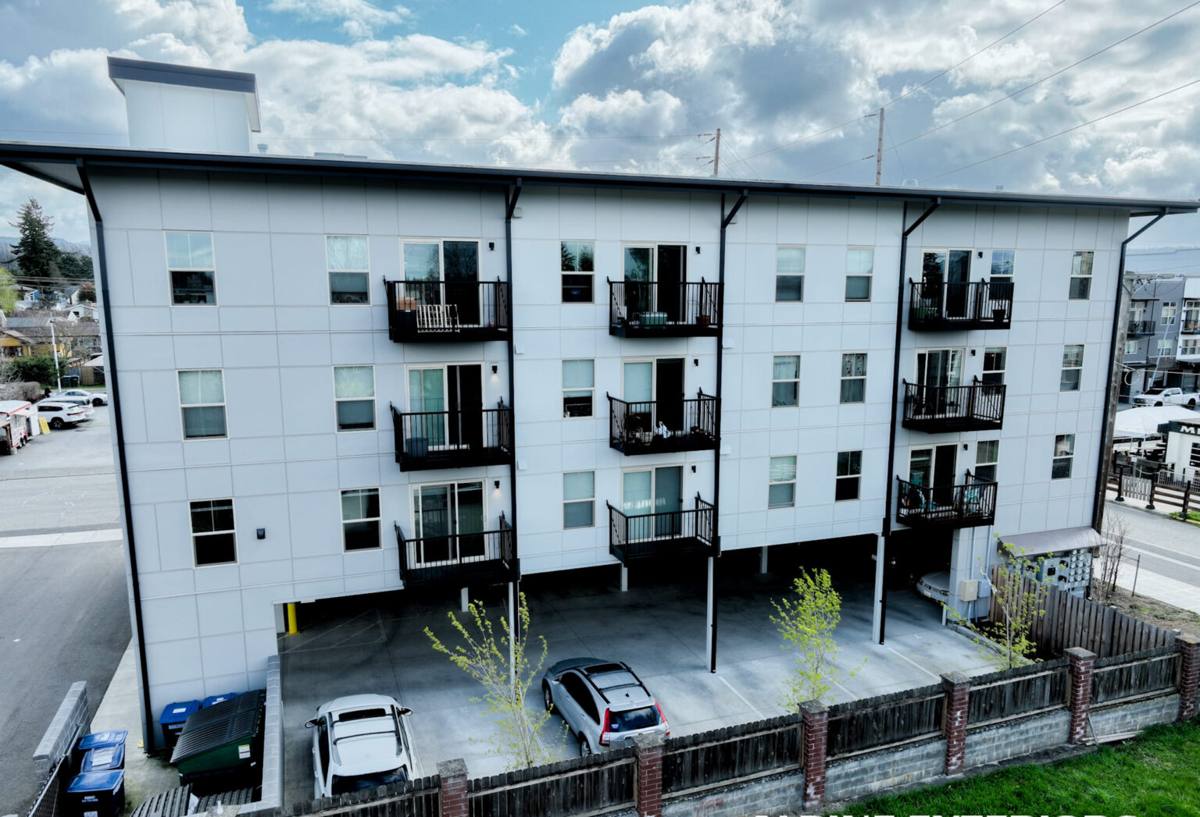
 Chuckanut Exterior
 Why Larrabee Homes Need a Different Approach to Window Efficiency
Larrabee sits close enough to the water and the forested slopes along Chuckanut Drive that its windows work harder than windows almost anywhere else in Whatcom County. You've got salt-laden air drifting up from the bay, wind-driven rain that hits glass and trim sideways instead of straight down, and a wet season that stretches long enough to grow moss on anything that holds moisture. Energy efficiency here isn't just about a lower heating bill — it's about picking a window system and installation method that can actually survive the environment it's installed in without failing early.
A window that's rated well on paper but installed without the right flashing detail, or built from a frame material that doesn't tolerate salt exposure, will underperform in Larrabee even if it would do fine twenty miles inland. That's the gap we focus on closing.
What Salt Air and Driving Rain Do to Windows Over Time
Salt air is corrosive to exposed metal hardware, fasteners, and some window frame finishes. Over years, it can pit or discolor lower-quality aluminum components and accelerate corrosion on hinges, cranks, and locking hardware that isn't rated for coastal exposure. Driving rain — rain pushed sideways by wind off the water — finds any weak point in a window's flashing or sealant far faster than a normal vertical downpour would. It's the reason a window that leaks in Larrabee might never leak on a calmer, more inland lot with the exact same product.
Add in a wet season long enough that moss and algae get a real foothold on north-facing siding, sills, and trim, and you've got a recipe for slow, hidden water intrusion around window openings if the original installation wasn't sealed and flashed correctly. Most of the window failures we see in this area aren't the glass or the frame giving out — they're moisture getting behind the window through a gap that should never have been left open.
The Three Things Larrabee's Climate Tests Hardest
- Weatherproofing at the rough opening — flashing, house wrap integration, and sill pan detail that keeps wind-driven rain from tracking behind the frame
- Hardware and frame material durability — resistance to salt corrosion and long-term UV and moisture exposure
- Seal integrity over time — sealant and weatherstripping that stays flexible and tight through repeated wet-dry, warm-cold cycles
What "Energy-Efficient" Actually Means for a Larrabee Home
Energy efficiency in a window comes down to how well it stops air movement, how well it slows heat transfer through the frame and glass, and how well it manages condensation. In a marine climate like Whatcom County's, that last one matters more than people expect — indoor humidity plus cold glass surfaces is a common recipe for condensation and, eventually, mold or wood rot around a poorly performing window.
The numbers that actually tell you something are the U-factor (how much heat passes through — lower is better) and the air infiltration rating (how much air leaks through the assembly — lower is better). Solar heat gain coefficient matters too, but less so here than in sunnier climates, since Larrabee doesn't get the intense, sustained solar load that drives cooling costs elsewhere.
Frame Material Comparison for This Climate
| Frame Material | Salt Air Tolerance | Maintenance | Typical Lifespan Here |
|---|---|---|---|
| Vinyl (quality grades) | Good | Low | 20-30+ years |
| Fiberglass | Very good | Low | 30+ years |
| Wood (clad exterior) | Fair — needs protection | Higher, ongoing | Varies widely with upkeep |
| Aluminum (uncoated/standard) | Poor near salt air | Moderate | Shorter without coastal-rated finish |
We don't push one material on every home. What we do is steer homeowners away from frame and hardware combinations that we know struggle in this specific environment, and explain honestly why — usually it comes down to how the finish or hardware handles salt exposure and repeated moisture cycling over time, not a claim that any particular product is bad in general.
Signs Your Current Windows Are Costing You Money
Most homeowners don't think about replacing windows until something obvious fails, but energy loss usually shows up long before that. Here's what to check:
- Visible condensation or fogging between panes of double- or triple-glazed glass (a sign the seal has failed)
- Noticeable draft near the frame on a windy day, even with the window fully latched
- Soft, discolored, or swelling wood trim or sill around the window opening
- Difficulty opening, closing, or locking the window — often a sign the frame has shifted or hardware has corroded
- Visible moss, algae, or persistent dark staining on or around the window exterior
- A noticeably colder spot near the window compared to the rest of the room in winter
- Higher-than-expected heating bills relative to home size, once other causes are ruled out
Our Installation Process
Getting the window right matters as much as picking the right window. Our process on Larrabee homes is built around the moisture and wind exposure this area sees:
1. On-Site Assessment
We look at the existing window, the condition of the rough opening, and any signs of past water intrusion — not just the glass itself. Orientation matters too: a window facing the prevailing wind and rain off the water gets more attention to sealing detail than a sheltered one.
2. Removal and Opening Inspection
Once the old window is out, we inspect the framing and sheathing underneath for hidden rot or moisture damage before anything new goes in. This is the step that gets skipped by crews trying to move fast, and it's the step most likely to catch a problem before it becomes an expensive repair later.
3. Flashing and Sill Pan Installation
This is the detail that determines whether a window stays dry through years of driving rain. A properly lapped flashing system and a sloped sill pan direct any water that does get past the exterior seal back outside instead of into the wall.
4. Window Setting and Sealing
The window is set level and plumb, shimmed correctly so it doesn't bind or sag over time, and sealed with materials rated for this climate's moisture cycling.
5. Interior and Exterior Finish
Trim and caulking are finished on both sides, and we walk the homeowner through operation and any care specifics for the frame material chosen.
Choosing the Right Glass Package for Whatcom County Weather
Double-pane, argon-filled, low-E glass is the standard baseline for good reason — it balances cost and performance well for this region's mix of cool, wet winters and mild summers. Triple-pane glass adds further insulation and can be worth it for north- or west-facing rooms that catch the brunt of wind and cold, but it adds weight, cost, and isn't always necessary on every elevation of a home.
Low-E coatings also help manage condensation risk by keeping the interior glass surface warmer, which matters in a climate where indoor humidity is common for much of the year. We size the glass package to the specific wall it's going in, not a one-size-fits-all spec for the whole house.
What a Correct Installation Involves Beyond the Window Itself
A window is only as energy-efficient as the wall it's installed in. Gaps around the frame, missing or torn house wrap, and insulation that doesn't fully fill the space between the window and the rough opening all undercut the performance rating printed on the window itself. Part of doing this job right in Larrabee is treating the window as one component of the wall assembly, not an isolated product swap.
We also pay attention to interior air sealing — foam or backer rod at the interior gap, not just exterior caulk — since interior air leaks are a common and often overlooked source of both drafts and condensation problems.
Why a Crew That Already Works Larrabee Matters
A contractor who only occasionally works this stretch of Chuckanut and the surrounding Whatcom County coastline doesn't build the same instinct for where water actually gets in on a home exposed to salt air and driving rain. We've seen how these specific conditions play out on real installations over time — which details are worth the extra attention, which hardware holds up, and which shortcuts show up as callbacks two or three winters later. That local pattern recognition is hard to replace with a generic install checklist.
Cost Factors to Expect
Every home is different, but the line items that typically move the price on a window project here are consistent:
| Factor | Why It Matters |
|---|---|
| Frame material | Fiberglass and quality vinyl generally cost more upfront than basic aluminum but hold up better to salt exposure |
| Glass package | Triple-pane and specialty low-E coatings add cost but improve comfort on exposed elevations |
| Opening condition | Rot repair or reframing discovered during removal adds labor beyond a straightforward swap |
| Number and size of windows | Whole-house replacements typically bring a lower per-window cost than one-off replacements |
| Access and elevation | Upper-story or hard-to-access windows can add labor time |
We give straightforward, itemized estimates so homeowners can see exactly what's driving the cost, and we'll flag upfront if we expect hidden damage based on what we see from the exterior.
Maintenance in a Moss-and-Salt Environment
Even a well-installed, high-quality window benefits from a little seasonal attention here. A checklist worth keeping:
- Rinse accumulated salt residue and grime off frames and glass a few times a year, especially on wind-exposed sides of the house
- Keep gutters and nearby roof valleys clear so runoff doesn't sheet directly across window trim
- Remove moss or algae buildup on sills and trim promptly rather than letting it sit and hold moisture
- Check and re-caulk exterior seals if you notice cracking or gaps, particularly after a hard winter
- Test locks and operating hardware annually — early stiffness can be an early sign of corrosion or frame movement
None of this replaces a correct installation, but it extends the life of one and helps you catch a developing problem while it's still a small, cheap fix.
If your windows are drafty, fogged, or just older than you'd like to admit, we're happy to take a look and give you a straightforward, no-pressure estimate for what energy-efficient replacement would look like on your specific home. Use the form below to get started.