 Chuckanut Exterior
 Roofing in Larrabee Isn't the Same Job as Roofing Inland
Larrabee sits right up against Samish Bay and the wooded slopes along Chuckanut Drive, which means homes here take on a mix of conditions that inland Whatcom County roofs rarely see all at once: salt-laden air off the water, long stretches of driving rain pushed in off the Sound, and heavy tree cover that keeps roof surfaces shaded and damp for much of the year. Any one of those factors will shorten a roof's life. Together, they do it faster than most homeowners expect.
We work on roofs throughout Chuckanut and the surrounding Whatcom County area, and Larrabee homes consistently show the same pattern: moss establishing itself years before it "should," fastener corrosion showing up early on the shady north and west slopes, and underlayment failing at the eaves before the shingles themselves look worn out. A roof replacement done right here has to account for that pattern from the start, not just replace what's on the roof now with more of the same.
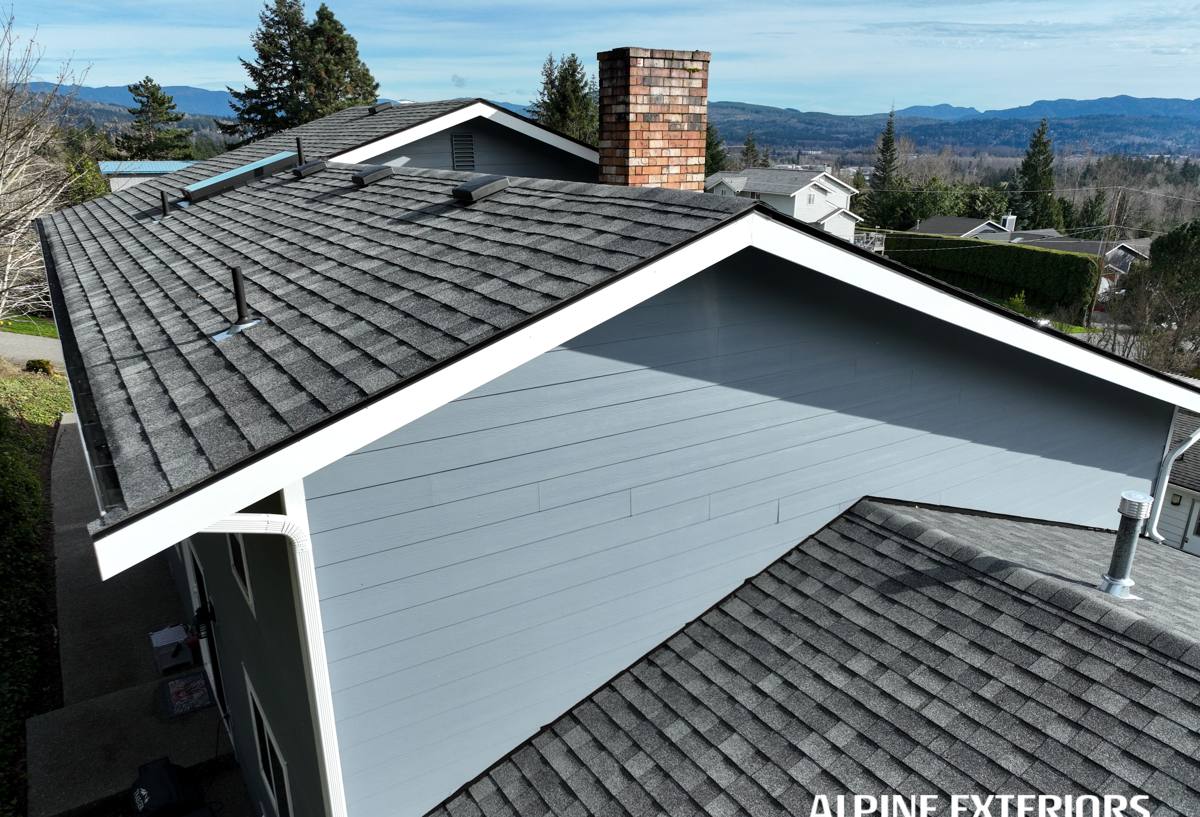
Signs a Larrabee Roof Needs Replacement, Not Another Repair
Repairs make sense when the damage is isolated. Replacement becomes the honest recommendation when the roofing system as a whole has aged out or the damage is spreading faster than patches can keep up with. In our experience with coastal, tree-shaded properties like the ones around Larrabee, these are the signals that tip the scale:
- Granule loss heavy enough that you can see bare asphalt mat on multiple slopes, not just one weathered patch
- Moss or algae mats thick enough to hold moisture against the shingle surface for days after rain stops
- Soft spots or sag when you walk the roof, which usually points to decking that's already absorbed water
- Repeated leaks in the same general area even after past patch repairs
- Curling, cupping, or cracked shingles concentrated on the shaded, moss-prone slopes
- Rusted, backed-out, or corroded fasteners visible at flashing points or ridge caps
- A roof original to the home and past 20-25 years old, regardless of how it looks from the ground
If you're only seeing one or two of these, a repair may still buy you real years. If you're seeing several at once, especially soft decking or repeat leaks, replacement is usually the more honest and more economical answer, since another round of patching on a system that's already failing tends to cost more over time than doing the job right once.
What a Correct Roof Replacement Actually Involves
A roof replacement is more than swapping old shingles for new ones. The parts of the system homeowners can't see from the driveway are usually what determines whether the new roof lasts 15 years or 30, especially in a climate like this one.
Full Tear-Off and Decking Inspection
We remove the existing roofing down to the deck rather than layering over it. That's the only way to actually see what shape the plywood or plank decking is in. Any section that's soft, delaminated, or water-stained gets replaced before anything new goes down — installing new shingles over compromised decking just hides a problem that will resurface.
Ice and Water Shield at Vulnerable Points
Eaves, valleys, and roof-to-wall transitions are where driving rain off the Sound tends to find its way in, especially during wind-driven storms. Self-adhering waterproof underlayment at these points is standard practice on our jobs, not an upgrade.
Synthetic Underlayment Across the Field
Modern synthetic underlayments hold up better than old felt paper under sustained damp conditions and give the whole system a second line of defense while the roof is exposed during construction — a real consideration given how often Larrabee sees rain move in with little warning.
Flashing Done Right, Every Time
Chimneys, skylights, vent pipes, and wall intersections fail more roofs than worn-out shingles do. We replace flashing rather than reuse it, and we take the extra time on step flashing and counter-flashing details because these are exactly the spots where salt air accelerates corrosion.
Ventilation Balanced Intake to Exhaust
An unventilated or poorly balanced attic traps moisture underneath the roof deck, which speeds up rot from the inside out — a slower, less visible version of the same damage moss causes from the outside. We check intake and exhaust balance on every replacement, not just when there's already an obvious problem.
Material Options for Larrabee's Conditions
There's no single "best" roofing material for every home — it depends on your roof's exposure, slope, budget, and how much upkeep you want to take on. Here's how the common options actually perform under Larrabee's mix of salt air, rain, and shade:
| Material | Coastal / Moss Performance | Typical Lifespan | Maintenance Load |
|---|---|---|---|
| Architectural asphalt shingle | Good with algae-resistant granules and proper ventilation | 25-30 years | Low to moderate — periodic moss treatment on shaded slopes |
| Standing seam metal | Excellent shedding of rain and moss; minimal surface for growth to grip | 40-50+ years | Low — occasional gutter and fastener check |
| Cedar shake | Attractive but holds moisture longer under tree cover; needs disciplined upkeep | 20-30 years with maintenance | High — regular treatment and moisture management required |
| Synthetic/composite shingle | Good moisture resistance, consistent performance in shade | 30-50 years depending on product | Low to moderate |
On heavily shaded, moss-prone lots close to the trees along Chuckanut Drive, we lean toward recommending metal or algae-resistant architectural asphalt over cedar, simply because cedar's maintenance demands are hard to keep up with when a roof rarely gets direct sun to dry out. That's a maintenance and moisture-behavior tradeoff, not a knock on cedar as a material — it performs well in drier, more open settings.
Moss, Algae, and Salt Air: Prevention Built Into the Job
You can't fully stop moss and algae from wanting to grow on a shaded, damp roof near the water, but you can make the roof far less hospitable to them. On every replacement, we build in a few specific defenses rather than treating moss control as an afterthought:
- Copper or zinc ridge strips, which release trace metal ions that inhibit moss and algae growth over the life of the roof
- Algae-resistant shingle products on the shaded slopes where growth is most likely
- Proper attic ventilation, since a warmer, wetter roof deck from below feeds surface moss just as much as rain does from above
- Fastener and flashing materials chosen with salt-air corrosion resistance in mind, not just cost
- Clean valley and gutter design so debris — a major moss starter — doesn't accumulate and hold water against the roofline
None of this eliminates the need for periodic moss removal and gutter cleaning. What it does is stretch the time between those maintenance cycles and reduce how aggressively growth takes hold in the meantime.
Our Roof Replacement Process
Homeowners generally want to know two things upfront: what's going to happen, and how disruptive it will be. Here's the sequence we follow:
- On-site inspection and estimate. We walk the roof (weather permitting) and inspect the attic, checking decking condition, ventilation, and flashing points, not just shingle wear.
- Written scope and material selection. You get a clear breakdown of what's being replaced, what materials are proposed and why, and what the timeline looks like — no vague allowances.
- Material delivery and site protection. Landscaping, siding, and gutters near the work area get protected before tear-off starts.
- Tear-off and decking inspection. Old roofing comes off, decking gets inspected and any compromised sections are replaced.
- Underlayment, flashing, and ventilation installation. The parts of the system that determine long-term performance go in before a single new shingle is laid.
- New roofing installation. Installed to manufacturer specification, which matters for both performance and warranty validity.
- Cleanup and magnetic nail sweep. Full site cleanup, including a nail sweep of the yard and driveway.
- Final walkthrough. We go over the finished roof and the workmanship warranty with you before calling the job done.
Cost Factors to Understand Before You Get Quotes
Roof replacement pricing varies by roof size, pitch, material, and how much of the underlying structure needs work — we won't quote a number without seeing the roof. But knowing what actually drives cost helps you compare estimates from different contractors on an apples-to-apples basis:
| Cost Factor | Why It Matters |
|---|---|
| Roof pitch and complexity | Steep or multi-plane roofs take longer and require more safety setup than a simple gable |
| Decking condition | Rotted or delaminated plywood found during tear-off adds material and labor beyond the base quote |
| Material choice | Metal and premium composite products cost more upfront than standard asphalt but require less upkeep and last longer |
| Tree cover and access | Heavily wooded lots near Chuckanut Drive can mean more debris management and careful equipment staging |
| Ventilation upgrades | Adding or correcting intake/exhaust venting is a smaller line item during replacement than as a standalone project later |
| Layers to remove | Multiple existing layers of roofing add tear-off time and disposal cost |
Be cautious of any quote that's dramatically lower than the others without a clear explanation — it usually means something is being skipped, whether that's ice-and-water shield at the eaves, flashing replacement, or proper decking repair. Those are exactly the details that matter most in this climate.
Why a Crew That Already Works Larrabee Makes a Difference
Roofing crews who mostly work drier, sunnier parts of the state don't always build in the moss prevention, corrosion-resistant fastening, and ventilation balancing that a shaded, salt-air property near the water needs as standard practice. They're not doing anything wrong for the climate they're used to — it's just not the same climate.
Working regularly around Chuckanut and Larrabee means we're used to the specific failure points these homes show: decking that's softer than it looks under a mossy shingle mat, flashing that's corroded faster than its age would suggest, and attic spaces that need more ventilation than a standard code minimum provides. That familiarity shows up in fewer surprises during tear-off and a roof that's built to handle what actually comes off the water here, not a generic specification.
Questions Worth Asking Before You Hire
Whoever you choose for a roof replacement, these questions will tell you a lot about how carefully a contractor is going to treat your home:
- Will you do a full tear-off, or is a layover being proposed?
- What happens if you find soft or rotted decking once the old roof is off — is that priced separately and how?
- What underlayment and ice-and-water shield products are included, and where specifically will they be installed?
- How will you handle attic ventilation — is it being assessed, or just left as-is?
- What's included for moss and algae prevention, if anything?
- What does the workmanship warranty cover, separate from the manufacturer's material warranty?
- Is the crew doing the work licensed, insured, and local to this area?
If a contractor can't answer these clearly and specifically, that's worth noting before you sign anything.
Get a Straight Answer on Your Roof
If your Larrabee home's roof is showing moss, granule loss, or its age, it's worth getting an honest, no-pressure look before deciding between repair and replacement. Use the form below to request a free estimate, and we'll walk the roof, tell you what we actually see, and lay out your options in plain terms.