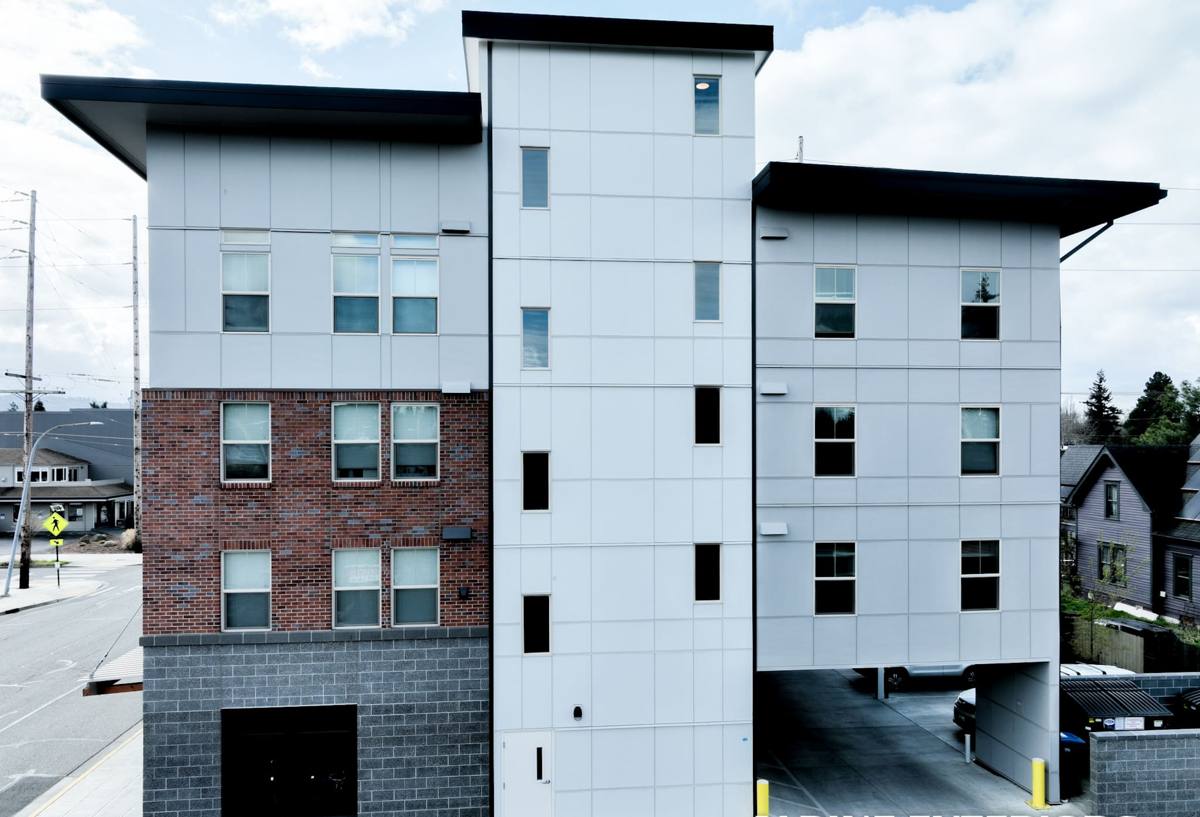
 Chuckanut Exterior
 Window Installation in Larrabee: Built for the Chuckanut Climate
Larrabee sits in one of the more demanding pockets of Whatcom County for exterior work. Between the salt water nearby, the dense evergreen cover on the hillsides, and the exposure that comes with living near Chuckanut Mountain, homes here take a different kind of beating than a house twenty minutes inland. Windows are usually the first place that shows it — sticking sashes, foggy glass, soft trim, or a draft that wasn't there five years ago.
We install windows in this area regularly, and the job here is not identical to a standard replacement in a dry, sheltered neighborhood. The flashing details, the sealants we choose, and the way we handle the rough opening all get adjusted for what this specific climate throws at a house year-round. This page covers what that actually means, what a correct installation looks like, and how our process works from first look to final walkthrough.
Why This Microclimate Is Hard on Windows
Salt Air and Corrosion
Homes with any proximity to the water pick up salt in the air, and that salt finds its way into hardware, fasteners, and metal window components over time. Cheaper hinges, cranks, and locking mechanisms corrode faster here than they would inland. It's not dramatic — it's slow, and by the time a window won't latch properly, the corrosion has usually been working on it for years.
Driving Rain and Wind-Driven Moisture
Rain in this part of Whatcom County doesn't always fall straight down. Wind off the water pushes it sideways, which means it's testing every seam, joint, and piece of flashing around a window opening — not just the sill. A window that would perform fine in a calm, dry climate can leak here if the installation didn't account for wind-driven rain specifically.
Moss, Shade, and Trapped Moisture
The tree cover around Larrabee keeps a lot of siding and trim in shade for large parts of the day, which is exactly the condition moss and algae need to take hold. Moss holds moisture against the wall assembly longer than open sun-exposed siding would, and that moisture has to have somewhere to go. If a window was installed without proper drainage behind it, trapped moisture finds the weakest point — usually the framing around the window itself — and causes rot well before anyone sees a stain on the interior wall.
What a Correct Window Installation Actually Involves
A window is only as good as the opening it sits in. Most window failures we get called out for were not caused by a bad window — they were caused by an installation that skipped a step that doesn't show up until years later.
Flashing and Water Management
Every opening needs a proper sequence: sill pan flashing first, then side flashing, then head flashing, layered so water sheds outward and down at every step, never inward or trapped behind a layer. In a high-rain, wind-exposed spot like Larrabee, we treat this step as non-negotiable, not optional trim work.
Air Sealing and Insulation
The gap between the window frame and the rough opening needs to be sealed and insulated correctly — not stuffed with excess fiberglass, not left with foam that expands and bows the frame. Done right, it stops drafts and keeps moisture from condensing inside the wall cavity.
Matching the Window to the Opening
Older Larrabee homes often have openings that are slightly out of square or sized for products that aren't made anymore. We measure and adjust for the actual opening in front of us rather than forcing a stock size to fit, which is where shims, packing, and careful leveling matter more than people expect.
Signs Your Larrabee Home Needs New Windows or a Reinstall
- Visible fogging or moisture between panes of double-glazed glass — the seal has failed
- Soft, discolored, or spongy trim and sill wood around the window frame
- Windows that are hard to open, close, or lock, especially after damp weather
- Noticeable drafts or cold spots near the window even when it's shut
- Visible daylight or gaps around the frame from outside
- Paint or finish failing faster around one window than the rest of the house — often a sign of trapped moisture
- Rising energy bills without another clear explanation
Choosing Materials for a Salt Air, High-Moisture Climate
There's no single "best" window material for every home — the right choice depends on budget, how exposed the house is, and how much upkeep the owner wants to do. Here's how the common options generally compare for a climate like this one.
| Frame Material | Salt Air / Moisture Resistance | Maintenance | Typical Cost Position |
|---|---|---|---|
| Vinyl | Good — won't rust or rot; seams and hardware quality vary by manufacturer | Low | Lower to mid |
| Fiberglass | Very good — dimensionally stable, resists warping in wet/dry cycles | Low | Mid to higher |
| Wood-clad | Fair to good — depends entirely on cladding integrity and sealed joints | Higher — needs monitoring where cladding meets wood | Higher |
| Aluminum | Fair — prone to corrosion near salt air unless properly finished/anodized | Moderate | Varies widely |
We'll walk through these trade-offs honestly during your estimate rather than steering you toward whatever's easiest for us to install. For homes with direct water exposure or heavy shade and moss, we tend to steer clients toward fiberglass or quality vinyl for the frame, paired with glass packages suited to wind and moisture rather than just energy rating alone.
Our Installation Process
- On-site assessment. We look at the existing openings, siding condition, sill flashing, and any signs of past moisture intrusion before quoting anything.
- Honest product recommendation. We explain material and glass options based on your home's exposure, not a one-size-fits-all pitch.
- Removal and opening inspection. Once the old window is out, we check the framing underneath for rot or damage that wouldn't have been visible before.
- Flashing and water management. Sill pan, side, and head flashing installed in the correct sequence for wind-driven rain.
- Window set, leveled, and sealed. Proper shimming, insulation, and interior/exterior sealant — no shortcuts on the seal.
- Trim and finish work. Interior and exterior trim reinstalled or replaced to match the home.
- Final walkthrough. We test operation, check the seal, and clean up before we call it done.
What Affects the Cost of Window Installation in Larrabee
Every home is different, and we won't quote a number without seeing the openings, but these are the main factors that move the price up or down.
| Cost Factor | Why It Matters |
|---|---|
| Frame material chosen | Vinyl, fiberglass, and wood-clad have different material and labor costs |
| Condition of the existing opening | Rot or framing repair adds labor beyond a straightforward swap |
| Number and size of windows | Larger openings and specialty shapes take more time and materials |
| Glass package | Impact-rated, higher-performance, or specialty glass costs more than standard double-pane |
| Trim and siding tie-in | Matching existing trim or siding profiles adds finish-carpentry time |
| Access and site conditions | Second-story or hard-to-reach windows take longer to stage and install safely |
Broadly, homeowners in this area should expect a range that spans from a modest per-window swap on an easy, ground-level opening to a considerably higher number when framing repair, custom sizing, or premium glass is involved. We'll give you real numbers, not a placeholder estimate, once we've actually seen the house.
Checklist: What to Ask Before You Hire a Window Installer Here
- Do you carry current Washington contractor licensing and insurance, and can you show it?
- Will you inspect the framing and sill before quoting, or just measure the glass opening?
- What's your flashing sequence, and does it account for wind-driven rain?
- Do you have experience with homes exposed to salt air or heavy shade/moss conditions?
- What's covered under warranty — the product, the labor, or both — and for how long?
- Will the same crew that quotes the job be the one doing the installation?
Why Hiring a Crew That Already Works in Larrabee Matters
A window that's correctly installed for a dry, sheltered lot inland can still fail here if the installer didn't adjust for wind-driven rain, salt exposure, and shaded, moss-prone siding. We work in this part of Whatcom County regularly, so the flashing details, sealant choices, and material recommendations we bring to a Larrabee job are shaped by what actually holds up in this climate — not a generic checklist. That's the difference between a window that looks right on install day and one that's still performing correctly in ten years.
If you're weighing whether it's time to replace a window, repair a failing seal, or just want a second opinion on an installation someone else did, we're happy to take a look. Reach out for a free, no-pressure estimate — we'll walk the openings with you and give you a straight answer, using the form below.