 Chuckanut Exterior
 Metal Roofing Built for Larrabee's Coastal Conditions
Homes along Chuckanut Bay and the wooded bluffs near Larrabee State Park deal with a roofing environment that's tougher than most people realize until they've lived here a few winters. You've got salt-laden air coming off the water, driving rain that hits roofs sideways during winter storms, and a moss season that stretches from fall through spring thanks to the shade and moisture these forested slopes hold onto. A roof that would be fine in a drier inland part of Whatcom County can struggle here. Metal roofing, installed correctly for this specific setting, handles all three of those stresses better than most alternatives — but "installed correctly for this setting" is doing a lot of work in that sentence, and it's the part that separates a roof that lasts thirty-plus years from one that starts causing problems in five.
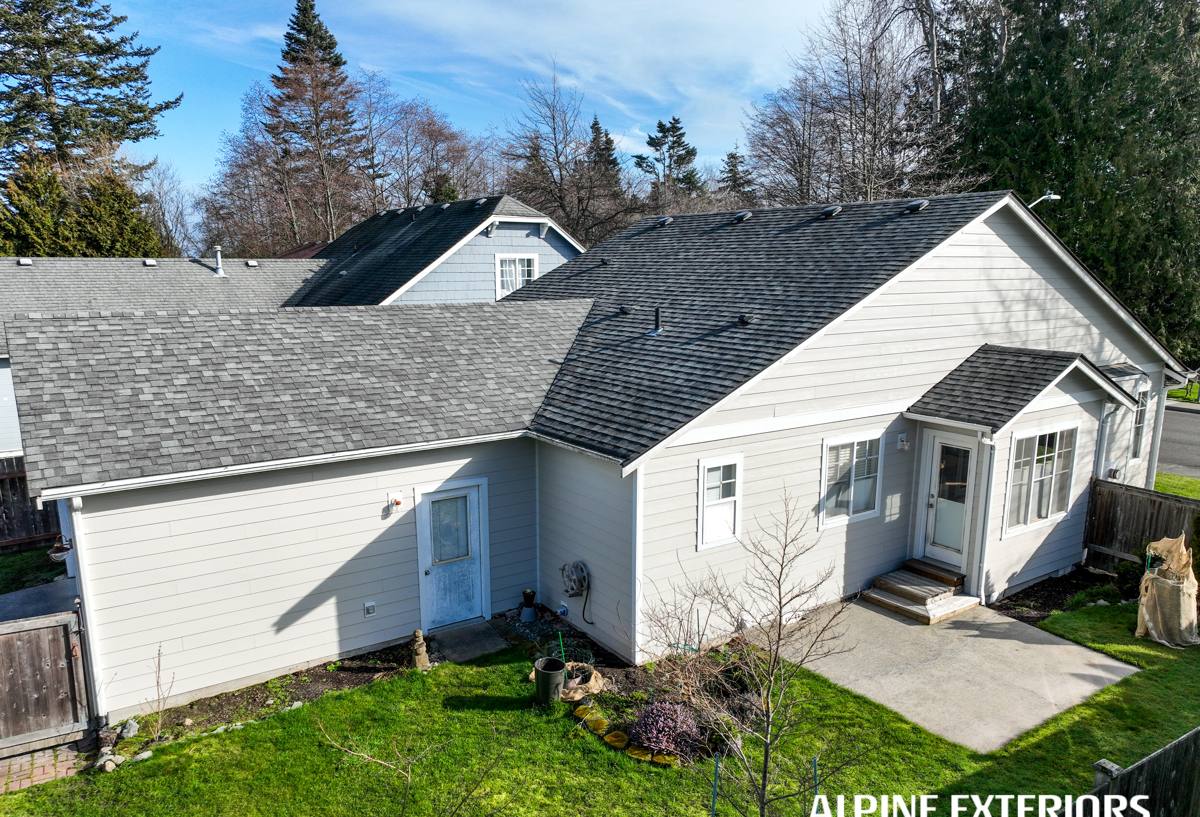
What Salt Air and Coastal Moisture Actually Do to a Roof
Proximity to saltwater changes what a roof has to survive. Salt in the air accelerates corrosion on any exposed metal — fasteners, flashing, panel edges — especially where the coating has been scratched or where two dissimilar metals touch and set up galvanic corrosion. It's a slow process, but over years it's the difference between fasteners that hold and fasteners that start weeping rust streaks down the panels.
Driving rain adds a second problem: wind-driven water doesn't just fall straight down, it gets pushed sideways and upward under laps, around penetrations, and into any gap that a calmer climate could get away with ignoring. That means underlayment quality, seam design, and flashing detail matter more here than they would on a roof twenty miles inland.
Then there's the shade. Homes tucked under fir and cedar canopy near Larrabee stay damp longer after a storm than homes in open exposure. That extended moisture window is exactly what moss, lichen, and moisture-loving debris need to get established — and once organic growth takes hold on a roofing surface, it holds water against that surface and speeds up wear underneath it.
Why This Combination Is Harder Than Any One Factor Alone
Any one of these — salt air, wind-driven rain, or heavy shade — is manageable on its own. It's the combination that's demanding: a roof here needs corrosion resistance at every exposed metal point, watertight detailing at every seam and penetration, and a surface and slope that don't give moss anywhere comfortable to grow. That's the standard we install to for Larrabee homes, not a generic package pulled off a shelf.
Why Metal Holds Up Better Here Than the Alternatives
We install metal roofing on this stretch of the Chuckanut coastline because, done right, it addresses all three stresses at once in a way other common roofing materials don't manage as well together.
- Steep shed capacity: Properly installed metal panels shed wind-driven rain faster than a shingle surface, giving water less time to find a way under a lap.
- Non-porous surface: Metal doesn't absorb water the way asphalt granules or wood shakes can, which limits how much moisture stays in contact with the roofing material after a storm.
- Poor footing for moss: A smooth, sloped metal surface gives moss spores far less to grip onto than a textured shingle surface, especially on steeper pitches.
- Long service life: A correctly installed and coated metal roof is built to outlast several cycles of asphalt shingle replacement, which matters when re-roofing means working around mature trees and difficult access.
None of that is automatic, though. Metal roofing only delivers those advantages when the coating system, fastener choice, and installation detail are matched to a coastal, shaded environment. Get any of those wrong and you can end up with a metal roof that corrodes at the fasteners or grows moss in the valleys just as readily as a poorly maintained shingle roof would.
Metal Roofing Options That Make Sense for a Larrabee Property
Not every metal roofing system is a good fit for this environment. Here's how the main options compare for a home in this setting:
| System | Fastener Exposure | Best Fit For | Coastal Consideration |
|---|---|---|---|
| Standing seam (concealed fastener) | Fasteners hidden under interlocking seams | Most Larrabee homes, especially near the water | Best corrosion resistance since fasteners aren't exposed to salt air directly |
| Exposed-fastener panel | Fasteners visible, driven through the panel face | Outbuildings, shops, budget-driven projects | Requires premium gasketed fasteners and more frequent inspection in salt air |
| Stone-coated steel | Concealed, similar to standing seam | Homeowners wanting a shake or shingle profile look | Good moisture shedding; coating and underlayment detail still critical |
For most homes in this area we lean toward concealed-fastener standing seam because it removes the single biggest long-term weak point — exposed fasteners in salt air — from the equation entirely. Where an exposed-fastener system fits the budget or the building better, we don't rule it out; we just make sure the fastener spec and maintenance expectations are honest with the homeowner upfront.
What a Correct Installation Involves
The panels themselves get most of the attention, but the parts of a metal roof that actually determine whether it performs well in Larrabee's climate are mostly things you won't see once the job is done.
Underlayment
We use a synthetic, high-temperature underlayment rated for the extended exposure and moisture load a coastal, shaded roof deals with. In driving rain, the underlayment is the backup system that catches whatever the panels don't shed — it's not optional, and it's not the place to cut corners.
Fastener and flashing hardware
Every fastener, screw, and flashing piece on a salt-air roof needs to be matched to the panel metal to avoid galvanic corrosion, and rated for the exposure. This is one of the most common shortcuts we see on roofs that failed early — mismatched or standard-grade hardware that started corroding within a few years while the panels themselves were still fine.
Flashing and penetration detail
Chimneys, vent stacks, skylights, and valleys are where wind-driven rain finds its way in. Correct step flashing, valley metal, and penetration boots — installed with the right lap direction and sealant — are what keep those points watertight through winter storms coming off the bay.
Ventilation
A roof deck that can't breathe traps moisture underneath the roofing material, which causes rot regardless of how good the metal above it is. On shaded, damp lots like many around Larrabee, proper intake and exhaust ventilation is part of doing the job right, not an upsell.
Moss, Debris, and Ongoing Maintenance
Even a well-installed metal roof in this setting benefits from periodic upkeep, because the shade and moisture that make moss a problem for shingles don't disappear just because the roofing material changed.
- Clear needles, leaves, and branch debris from valleys and gutters, ideally each fall before winter storms and again in spring.
- Keep overhanging branches trimmed back where practical to reduce shade and debris buildup on the roof plane.
- Check gutters and downspouts for clogs — overflowing gutters push water back up under roof edges during heavy rain.
- Watch for any streaking or discoloration at fasteners or seams, which can be an early sign of a coating or hardware issue worth a look.
- Avoid pressure washing metal panels; a soft brush and low-pressure rinse removes moss and debris without damaging the coating.
None of this is heavy lifting, and a metal roof needs far less of it than a moss-prone shingle roof does. But "low maintenance" isn't "no maintenance," and we're upfront with every Larrabee homeowner about what a realistic care routine looks like for their specific lot and tree cover.
Our Process, Start to Finish
We keep the process straightforward and communicate at each step, because re-roofing is disruptive enough without surprises.
- On-site assessment: We look at your existing roof, deck condition, ventilation, tree cover, and drainage patterns specific to your property before recommending anything.
- System recommendation: Based on that assessment, we recommend the panel type, fastener system, and detailing that fit your home's exposure — not a one-size-fits-all package.
- Written estimate: You get a clear, itemized estimate before any work begins, with no pressure to decide on the spot.
- Tear-off and deck check: We remove the old roofing and inspect the deck underneath for any rot or damage before covering it back up.
- Underlayment and flashing: The waterproofing layer and all flashing detail go in first, since this is what protects the home even before panels are installed.
- Panel installation: Panels go on with fastener and seam spacing matched to the manufacturer's spec and the exposure this site sees.
- Final walkthrough and cleanup: We walk the finished roof with you, answer questions, and make sure the site is left clean.
What Affects the Cost of a Metal Roof in This Area
| Factor | Why It Matters Here |
|---|---|
| Panel and fastener system | Concealed-fastener standing seam costs more upfront than exposed-fastener panels but reduces long-term corrosion risk in salt air |
| Roof access and tree cover | Wooded, sloped lots near Larrabee can add setup and material-handling time compared to open, flat-access sites |
| Existing deck condition | Roofs that have had moss or moisture sitting on them for years sometimes need deck repair once the old roofing comes off |
| Roof complexity | Valleys, dormers, and multiple penetrations all add flashing and labor time regardless of panel type |
| Ventilation upgrades | Older homes often need intake or exhaust vent additions to meet current best practice, which is worth budgeting for |
We don't quote a job without seeing the roof, because guessing at these factors from a phone call does homeowners a disservice. What we can say honestly is that metal roofing carries a higher upfront cost than asphalt shingles, and that difference is generally offset over time by the reduced maintenance and longer service life — particularly in a climate that's hard on shingle roofs.
Why Hiring a Crew That Already Works This Coastline Matters
Metal roofing installation isn't forgiving of shortcuts, and a crew that mostly works drier, more sheltered parts of Whatcom County can miss details that matter specifically here — hardware grade for salt exposure, flashing lap direction for wind-driven rain, or ventilation sized for a shaded, damp roof deck. We work this stretch of coastline regularly, which means we're not guessing at how Larrabee's combination of salt air, storm exposure, and tree cover behaves over a roof's lifespan. That local, repeated experience is what keeps a metal roof performing the way it's supposed to for decades instead of needing early repairs.
If you're considering a metal roof for your home near Larrabee, we're happy to take a look and walk you through what makes sense for your specific property. Fill out the form below for a free, no-pressure estimate.