 Chuckanut Exterior
 Siding Built for Larrabee's Coastal, Tree-Shaded Setting
Homes in Larrabee sit in one of the more demanding microclimates in Whatcom County. The mix of marine air off the water, heavy rainfall carried in on southwest storms, and thick evergreen tree cover creates conditions that wear on exterior siding faster than in drier, more open parts of the county. If you're planning a siding installation in Larrabee, the product and the installation details matter more here than they would on a typical inland lot.
We install James Hardie fiber cement siding exclusively, and on properties like the ones in Larrabee, that standard exists for a reason. This page walks through what the local climate does to siding, what a correct installation actually involves, and why the details of the job matter as much as the product itself.
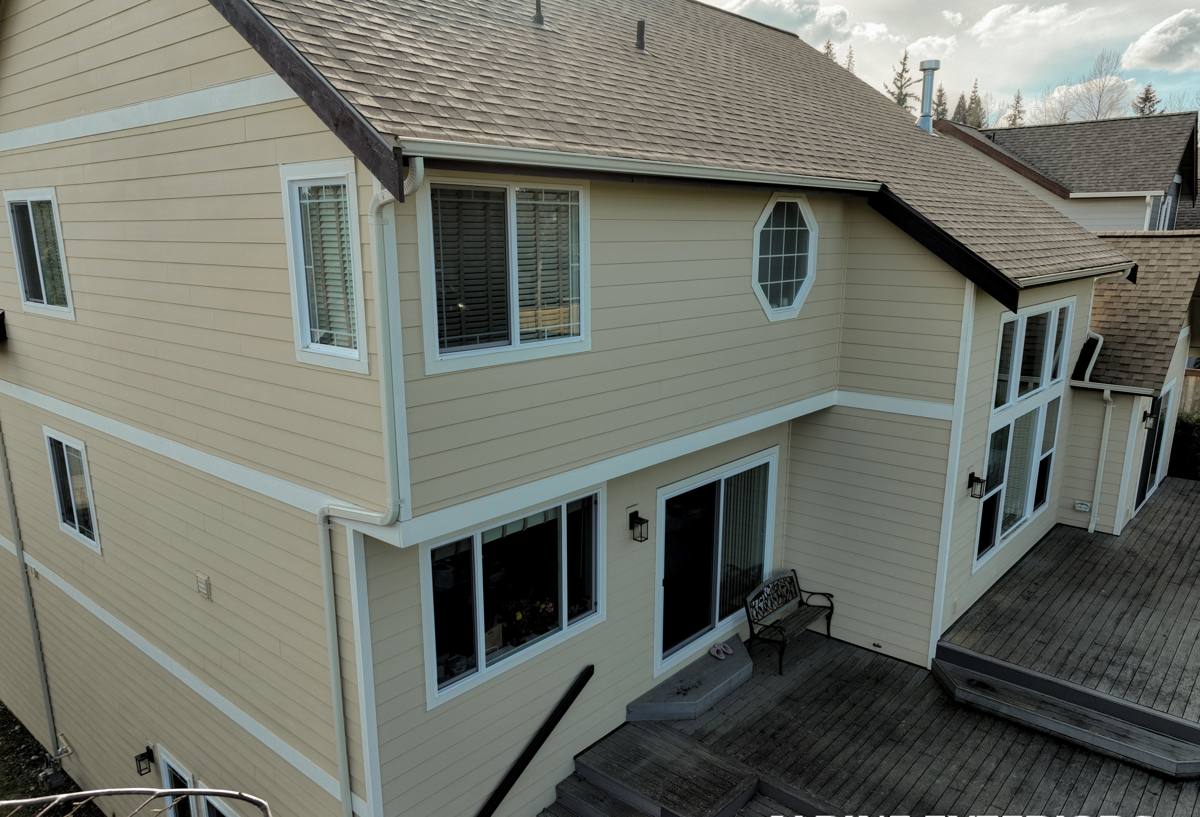
What Larrabee's Climate Does to Exterior Siding
Salt Air and Moisture
Proximity to the water means siding, trim, and fasteners are exposed to salt-laden air on a near-constant basis. Salt air accelerates corrosion in exposed metal fasteners and flashing, and it can degrade certain paints and coatings faster than manufacturers' standard weathering estimates assume. Products that rely on a thin factory coating or field-applied paint are the first to show it — chalking, fading, and eventually cracking at the surface.
Driving Rain
Whatcom County gets plenty of rain, but the driving, wind-pushed rain that comes through wooded, elevated, or waterfront lots like those around Larrabee is a different problem than a light, straight-down drizzle. Wind-driven rain gets pushed sideways into laps, seams, and penetrations that would stay dry in calmer conditions. That makes the water-resistive barrier, flashing details, and lap spacing behind the siding just as important as the siding material itself.
Moss and Shade
Heavy tree cover, common on wooded lots throughout this part of the county, means long stretches of shade, slower drying times after rain, and a real moss and algae season that can run most of the year on north-facing or heavily shaded walls. Moss holds moisture against the siding surface long after a storm has passed, which is hard on any material that isn't dimensionally stable or that absorbs water into its core.
Why We Install James Hardie Fiber Cement — and Nothing Else
We made a decision as a company to install only James Hardie fiber cement siding. We don't install vinyl, LP SmartSide, Cemplank, Allura, primed spruce, or cedar. That's not a marketing position — it's a standard we hold to because of what we see on real homes in real Whatcom County weather, including conditions like Larrabee's.
Fiber cement is dimensionally stable. It doesn't expand and contract with moisture the way wood-based products do, and it doesn't soften or delaminate the way some engineered wood products can if water gets behind them. James Hardie's ColorPlus factory finish is baked on and warrantied against fading and chipping, which matters directly in a salt-air environment where field-applied paint takes a beating. Hardie's HZ5 product line is engineered specifically for the freeze-thaw and moisture cycling this region sees.
None of that means other products are without merit — vinyl is inexpensive, cedar has real character, engineered wood installs quickly. But in a setting like Larrabee, where salt air, driving rain, and moss all stack up against the siding at once, we've found the trade-offs on those products (repainting cycles, moisture sensitivity at cut edges, warranty limitations) aren't worth it. Fiber cement, installed correctly, holds up.
What a Correct Siding Installation Actually Involves
The siding itself is only part of the system. Most siding failures we get called out to inspect — regardless of brand — trace back to something behind the siding, not the siding panel itself. A correct installation gets these details right:
- A continuous, properly lapped water-resistive barrier installed shingle-style so water sheds outward at every seam
- Correct flashing at every window, door, deck ledger, and roof-to-wall intersection — the points where wind-driven rain actually gets in
- Proper fastener type, spacing, and depth, matched to Hardie's published fastening schedule rather than "close enough"
- Minimum clearance between the bottom of the siding and grade, decks, patios, and roof lines, so splash-back and standing water don't sit against the material
- Correct lap and gap sizing at every joint and corner to allow for expansion without trapping water
- Rain screen or drainage gap detailing on walls that see heavy, sustained moisture exposure
Skip any one of these and you can end up with moisture problems behind a perfectly good siding product. This is where hiring an installer who understands the local exposure, not just the general instructions, makes the real difference.
Choosing the Right Hardie Product for a Larrabee Home
James Hardie makes several product lines, and the right choice depends on the home's exposure, architectural style, and how much of the year a given wall stays shaded and damp.
| Product | Best Suited For | Notes for This Climate |
|---|---|---|
| HardiePlank lap siding | Most home styles, traditional lap look | Available in HZ5 formulation engineered for this region's moisture and freeze-thaw cycling |
| HardiePanel vertical siding | Modern or mixed-material facades, accent walls | Clean lines; flashing detail at seams is critical on shaded, damp walls |
| HardieShingle | Craftsman and cottage-style homes | More seams than lap siding, so correct detailing matters even more in wet, shaded areas |
| Panel & Batten | Board-and-batten aesthetic | Works well on covered porches and protected elevations less exposed to driving rain |
ColorPlus factory-finished color is worth strong consideration on any Larrabee project — it removes on-site painting variables and gives a longer, more consistent warranty on the finish itself, which is a real advantage where field-applied paint has to fight salt air every season.
Our Installation Process
- On-site assessment — we walk the exterior, note sun and shade exposure on each wall, existing moisture or moss patterns, and any trouble spots around windows, decks, and roof intersections.
- Tear-off and inspection — once old siding comes off, we inspect the sheathing for hidden rot or moisture damage before anything new goes up. This step catches problems that aren't visible from outside.
- Water-resistive barrier and flashing — a new barrier is installed and lapped correctly, with flashing integrated at every penetration and intersection.
- Hardie installation — siding is installed to manufacturer fastening specs, with correct clearances and gaps built in from the start.
- Trim, caulking, and final detail — trim and joints are sealed where Hardie's specifications call for it, and left open where they call for drainage instead.
- Walkthrough — we go over the finished work with the homeowner before calling the job done.
What Siding Installation Costs Depend On
We don't quote pricing sight-unseen, but the main factors that move a Larrabee siding project up or down are consistent enough to lay out honestly:
| Factor | Why It Matters |
|---|---|
| Tear-off scope | Removing old cedar, vinyl, or engineered wood adds labor and disposal cost versus new construction |
| Sheathing repair | Hidden moisture or rot found during tear-off has to be repaired before new siding goes on |
| Home access and site conditions | Steep, wooded, or waterfront lots common around Larrabee can add staging and access time |
| Product line and finish | Plank versus panel versus shingle profiles, and factory ColorPlus finish versus field paint, price differently |
| Trim and detail work | Homes with more windows, corners, and roof intersections require more flashing and trim labor |
Living With Fiber Cement Siding in a Moss-Prone, Salt-Air Setting
Correctly installed Hardie siding is low-maintenance, but "low" doesn't mean "none," especially in an environment like Larrabee's. A little seasonal attention keeps it performing the way it's designed to:
- Rinse siding periodically to clear salt residue and organic buildup, especially on shaded, north-facing walls
- Keep gutters clear so overflow doesn't run down the face of the siding
- Trim back tree limbs and brush that keep a wall in constant shade and slow drying
- Check caulking at trim and penetrations every year or two and re-seal if it's cracked or pulling away
- Address moss on siding early with a gentle wash rather than letting it build up over a season
- Watch for and correct any splash-back areas near grade, patios, or downspouts
None of this is heavy maintenance — it's the kind of upkeep that keeps a well-installed system performing for decades instead of years.
Why Hiring a Crew That Already Works Larrabee Matters
Siding installation isn't identical from one Whatcom County neighborhood to the next. A crew that's used to open, inland lots can miss the details that matter on a wooded, waterfront-adjacent property like the ones around Larrabee — how much shade a given wall actually gets, where driving rain off the water tends to hit hardest, or how aggressively moss takes hold on a north wall under tree cover. Crews familiar with this specific stretch of Chuckanut also tend to have a better read on permitting expectations, typical site access challenges, and how local wind and rain patterns behave season to season.
That familiarity shows up in the finished job — correct flashing where it's actually needed, siding cleared of grade and deck contact where splash-back is a real risk, and a finish that's built to hold up rather than just look good on installation day.
If you're planning a siding project for a Larrabee home, we'd be glad to take a look and talk through what your home specifically needs. Reach out for a free, no-pressure estimate using the form below.