 Chuckanut Exterior
 Building a Deck for Larrabee's Particular Climate
Larrabee sits close enough to saltwater that airborne salt is a constant factor in how a deck ages, and close enough to the hills and tree cover that shade and moisture linger longer than they do a few miles inland. Add Whatcom County's long wet season — months of driving rain followed by a stretch of low sun angles and heavy dew — and you get a set of conditions that a generic deck design isn't built to handle. A deck that would hold up fine in a dry inland climate can start showing corrosion, soft spots, or a slick green film within a couple of seasons out here if the materials and details weren't chosen with this specific site in mind.
This isn't a sales pitch for exotic materials. It's a practical reality: the difference between a deck that looks and performs well after ten years and one that needs early repairs almost always comes down to a handful of decisions made before the first board goes down — fastener choice, flashing, drainage, and how the structure handles moisture that doesn't dry out quickly.
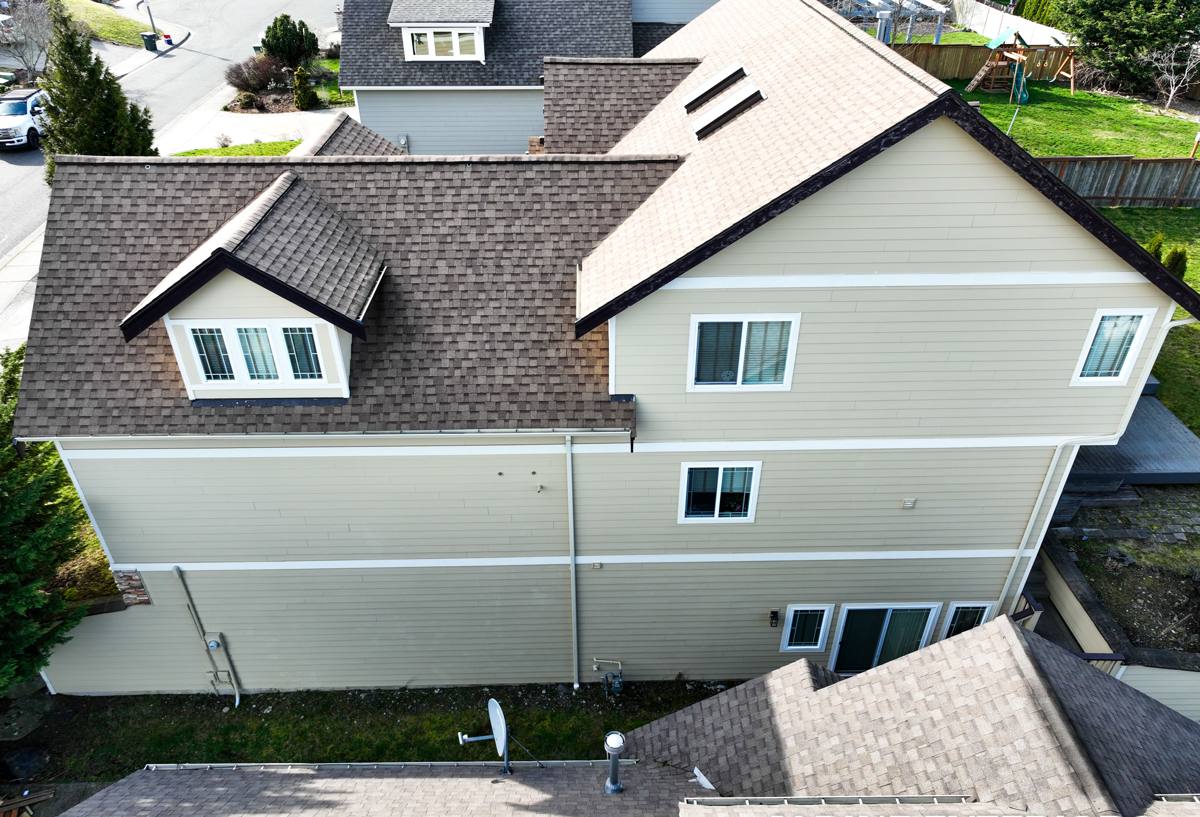
What Salt Air and Moss Actually Do to a Deck
Corrosion at the Fasteners and Hardware
Salt-laden air accelerates corrosion on any exposed metal, and a deck has a lot of exposed metal — screws, joist hangers, bolts, post bases, and railing brackets. Standard electro-galvanized fasteners are fine in a lot of the country, but near Chuckanut Bay they can start showing rust streaks and pitting well before the wood around them shows any wear. Once a fastener starts corroding, it loses holding strength quietly, often with no visible sign until a board starts to lift or a railing feels less solid than it should.
Moss and Algae on Walking Surfaces
The other side of the climate equation is moss. Shaded decks, north-facing decks, and anything under mature trees stay damp for extended stretches through fall, winter, and spring. That moisture, combined with organic debris (needles, leaf litter, pollen), gives moss and algae exactly what they need to take hold on decking surfaces, especially in the gaps between boards and in low spots where water doesn't drain freely. Beyond looking bad, a mossy deck surface is genuinely slick and can become a fall hazard, particularly on stairs.
Choosing the Right Decking Material for This Site
There's no single "best" decking material — the right choice depends on how much sun and shade the deck gets, how much upkeep the homeowner wants to do, and budget. We walk every Larrabee property before recommending anything, because a deck tucked under fir trees needs different answers than one that gets full afternoon sun off the water.
| Material | How It Handles This Climate | Upkeep |
|---|---|---|
| Pressure-treated fir/hem-fir | Affordable, structurally solid; needs a quality finish to resist moisture and moss in shaded areas | Re-stain or seal every 2-3 years |
| Cedar | Naturally more rot-resistant and handles damp shade reasonably well, but still needs periodic finishing to keep its color and resist surface graying | Clean and refinish every 2-3 years |
| Composite decking | Resists rot and moss growth far better than wood; performs well in salt air since it has no bare wood surface to corrode or absorb moisture into | Periodic washing; no staining |
| Tropical hardwoods | Very dense and naturally decay-resistant, but heavy, pricier, and less forgiving to install correctly | Oil treatments to maintain color |
For decks with heavy shade or close proximity to the water, we lean toward recommending composite or a well-finished cedar over standard pressure-treated lumber, simply because both hold up better against the moss-and-moisture cycle without constant homeowner maintenance. That said, plenty of well-built pressure-treated decks in this area last decades — the finish schedule just has to actually happen, not get skipped a season or two.
The Structural Details That Actually Matter
Decking material gets most of the attention, but the parts you don't see are what determine whether a deck stays solid and dry underneath. This is where a lot of decks — including some built by contractors who don't work this area regularly — run into trouble years down the line.
Ledger Flashing and the House Connection
Where a deck attaches to the house, water intrusion at the ledger board is one of the most common sources of hidden rot in this climate. Proper flashing — installed so water sheds outward and away from the house framing rather than behind the siding — is non-negotiable on every attached deck we build.
Joist Protection and Fastener Selection
We use joist tape or an equivalent protective barrier on top of framing lumber to keep standing water from sitting directly on cut joist tops, which is exactly where rot starts first. For fasteners and structural hardware, we specify stainless steel or heavy hot-dip galvanized components rated for the exposure — not the lighter-duty coated fasteners that are fine in a drier inland climate but corrode faster here.
Footings, Drainage, and Airflow Underneath
Footings need to be set to the correct frost depth and bearing conditions for the specific lot — soil and drainage vary even within Larrabee depending on slope and tree cover. Underneath the deck, we grade and leave clearance so air can actually move and moisture doesn't just sit and stagnate, which is one of the bigger contributors to premature rot and a persistent moss problem on lower decks.
Our Process, Start to Finish
- Site walk and design conversation. We look at sun exposure, tree cover, drainage, and how the space will actually be used before talking materials.
- Material and layout recommendation. Based on that walk, we recommend decking, framing, and finish options suited to the specific spot on the property — not a one-size answer.
- Permitting. We handle the permit application and inspection scheduling required for the build.
- Demo and structural work. Removal of any old structure, footings, framing, ledger flashing, and joist protection go in first.
- Decking, railings, and finish details. Surface material, railing systems, stairs, and any lighting or built-ins are installed last.
- Final walkthrough. We go over care and maintenance specific to the materials chosen so there are no surprises down the road.
Permits, Code, and Railings
Most new and replacement decks above a certain height require a building permit and inspection, and guardrail height, baluster spacing, and stair requirements are set by code, not preference. We handle the permit process as part of the build rather than leaving it to the homeowner, and we build railings to meet current code requirements rather than whatever was allowed when an older deck was originally put up. If you're replacing an existing deck, it's common to find that the old railing or stair layout wouldn't pass inspection today — worth knowing before assuming a straight swap is possible.
Keeping a Larrabee Deck Looking Good Year After Year
Every deck in this area benefits from a basic seasonal routine. None of it is complicated, but skipping it is exactly how moss gets a foothold and finish starts to fail early.
- Sweep debris (needles, leaves, pollen) off the surface regularly, especially in fall
- Rinse or wash the deck surface a couple of times a year to interrupt moss and algae growth before it establishes
- Check fastener heads and hardware periodically for early rust staining, especially on decks closer to the water
- Re-stain or seal wood decking on the schedule appropriate to the finish product used — don't wait until it visibly fails
- Keep gutters and downspouts near the deck clear so runoff isn't dumping extra water onto or under the structure
- Trim back overhanging branches where practical to reduce shade and debris load on the deck surface
Why a Crew That Already Works Larrabee Matters
A lot of the decisions above aren't things you'd know to ask about unless you'd already seen what happens when they're skipped. A crew that regularly builds and repairs decks in Larrabee and the broader Chuckanut area has usually already seen the ledger board that wasn't flashed right, the fasteners that rusted early, and the shaded deck that turned green within two seasons. That experience shows up in small decisions — where to add extra clearance underneath, which fastener spec to use, how to grade for drainage on a specific lot — that a contractor unfamiliar with this exact stretch of Whatcom County coastline might not think to build in from the start.
It also matters for permitting and inspection — knowing the local process and what inspectors here are looking for keeps a project moving instead of stalling on avoidable back-and-forth.
If you're planning a new deck or replacing one that's showing its age, we're happy to walk the site with you and talk through what makes sense for your specific spot — no pressure, no obligation. Use the form below to request a free estimate.