 Chuckanut Exterior
 South Hill's Climate Is Harder on Siding Than Most Homeowners Realize
South Hill sits close enough to the water and the weather patterns that roll through Whatcom County that siding here takes a different kind of beating than siding fifty miles inland. Salt-laden air works into seams and fasteners over years, not weeks, so the damage is slow and easy to miss until paint starts failing or trim starts softening. Add in driving rain that comes sideways during winter storms, and any weak point in a siding system — a gap in flashing, a caulk joint that was never meant to be the primary water barrier, a panel that wasn't left room to move — becomes the place water finds first.
Then there's moss. Whatcom County's long, wet, mild season is close to ideal moss-growing weather, and siding that stays shaded or sits near trees and shrubs holds moisture longer than siding on a more exposed wall. Moss itself doesn't destroy fiber cement the way it can rot wood, but it holds water against the surface for extended periods, which stresses paint film, caulk, and any seams underneath. Siding that's rated and installed for this kind of exposure holds up. Siding that isn't starts showing problems in years, not decades.
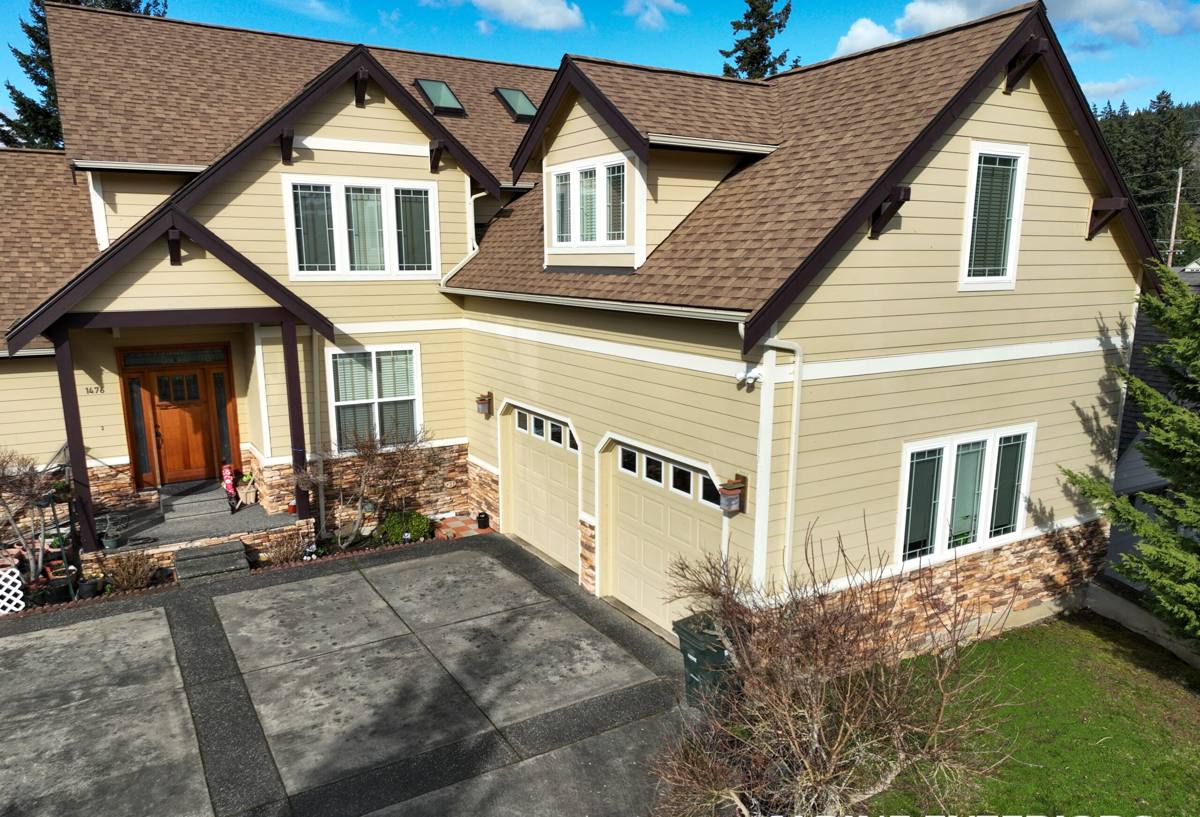
Why We Only Talk About James Hardie for South Hill Homes
We install James Hardie fiber cement siding exclusively — we don't offer vinyl, LP SmartSide, primed spruce, cedar, or other fiber cement brands. That's a deliberate standard, not a sales pitch. Fiber cement doesn't absorb water the way wood-based products can, so it doesn't swell, rot, or feed fungal growth the way engineered wood siding eventually can under sustained moisture exposure. It's also non-combustible, which matters more every year as wildfire smoke and ember exposure become a regional concern even west of the Cascades. James Hardie's ColorPlus factory finish is baked on under controlled conditions, which gives it better fade and chip resistance than field-applied paint, and it's backed by a transferable warranty that stays meaningful if you sell the house.
None of that means other products are junk — vinyl and engineered wood have legitimate uses and reasonable installed cost. But for a South Hill home dealing with salt air, driving rain, and a moss season that lasts most of the year, we don't think they hold up as well over a 30-40 year ownership horizon, and we'd rather turn down work than install something we don't believe will perform here.
What a Correct James Hardie Installation Actually Involves
Flashing and Water Management Come First
Siding is not the primary waterproofing layer on a wall — the weather-resistive barrier and flashing details behind it are. A correct Hardie installation starts with proper house wrap, flashed and taped window and door openings, and metal flashing at every horizontal transition: roof-to-wall intersections, deck ledgers, and anywhere a horizontal surface meets a vertical wall. In a climate with as much driving rain as South Hill sees, skipping or shortcutting this step is the single most common cause of hidden water damage behind siding that looks fine from the street.
Clearances and Fastening
James Hardie's installation instructions specify minimum clearances from grade, roofing, and horizontal surfaces, plus specific fastener types, spacing, and penetration depth. These aren't suggestions — following them is what keeps the manufacturer's warranty valid and what keeps water from wicking up into the bottom edge of the siding. We also leave the gaps at butt joints and corners that Hardie's specs call for, so the panels have room to move seasonally without stressing the caulk or paint film.
Caulk and Sealant Discipline
Caulk is a maintenance item, not a permanent seal — it should be backing up good flashing, not substituting for it. We use sealants rated for the exposure and only at the joints Hardie's details call for, which keeps future maintenance simple instead of turning the whole wall into a caulk-dependent system.
Which Hardie Products Make Sense on South Hill Homes
James Hardie makes climate-engineered product lines, and for this area we generally recommend the HZ5 formulation, which is engineered for wetter, colder climates like the Pacific Northwest. Beyond the formulation, the choice of profile is mostly about the look you want and how your home is built:
| Product | Best Use | Notes for South Hill |
|---|---|---|
| HardiePlank lap siding | Most single-family homes, traditional look | Most common choice; wide range of widths and textures |
| HardiePanel vertical siding | Modern styling, accent walls, gable ends | Works well paired with lap siding for visual breaks |
| HardieShingle siding | Craftsman or cottage-style homes | More detail work at joints; still holds up well to moisture |
| HardieTrim boards | Corners, window and door trim, fascia | Should always be paired with Hardie siding for consistent expansion and finish |
Common Problems We See on South Hill Siding
- Caulk that was used to bridge gaps that should have been flashed instead, leading to hidden moisture behind the wall
- Siding installed too close to grade or to a deck or patio surface, wicking moisture up from below
- Moss and algae buildup on shaded or north-facing walls that hasn't been cleaned, holding moisture against the surface longer than it should
- Fastener corrosion or over-driven nails that break the factory finish and create a spot for water to enter
- Panels installed without expansion gaps, causing buckling or cracked caulk joints after a few seasonal cycles
Most of these trace back to installation shortcuts rather than a flaw in the material itself, which is why the crew doing the work matters as much as the product they're using.
Our Process for South Hill Siding Projects
- On-site assessment — we look at your existing siding, the condition of the sheathing and water barrier underneath where accessible, and any specific exposure issues on your lot, like heavy shade or wind-driven rain patterns.
- Product and color selection — we walk through profile options and ColorPlus finishes, factoring in your home's exposure and HOA or neighborhood expectations if applicable.
- Written estimate — a clear scope of work, product list, and price before anything is scheduled.
- Tear-off and prep — removal of old siding, repair of any damaged sheathing found underneath, and installation or repair of the water-resistive barrier and flashing.
- Installation to Hardie's published specifications — correct fastening, clearances, and joint treatment throughout.
- Final walkthrough — we go over the finished work with you before calling the job done.
What Drives the Cost
| Factor | Why It Matters |
|---|---|
| Home size and wall complexity | More corners, gables, and trim details mean more labor and cut waste |
| Condition of existing sheathing | Rot or water damage found during tear-off adds repair scope |
| Product line and profile | Shingle-style and specialty trim take more time than straight lap siding |
| Access and site conditions | Steep lots, limited staging area, or tall walls affect labor and equipment needs |
| Existing siding removal | Multiple layers of old siding add to tear-off time and disposal cost |
Why a Crew That Already Works South Hill Matters
A crew that regularly works this part of Chuckanut already knows what South Hill's exposure does to a wall over time — where moss tends to build up, which sides of a home take the worst of the driving rain, and how salt air affects fasteners and finishes differently than it would on a home twenty miles inland. That's not a marketing point, it's a practical one: it means fewer surprises during tear-off, better judgment about flashing details for your specific lot, and a finished job that's built for the conditions it actually has to survive, not a generic installation spec.
It also means someone local is available if a warranty question or maintenance question comes up years down the road, instead of chasing down a crew that worked one job in the area and moved on.
Maintaining Your Siding After Installation
- Rinse siding annually, more often on shaded walls, to keep moss and algae from taking hold
- Keep shrubs and trees trimmed back from siding to improve airflow and drying time
- Inspect caulk joints yearly and re-caulk any that have cracked or pulled away
- Repaint or touch up only with products compatible with ColorPlus finishes if a repaint is ever needed
- Address any impact damage or cracked panels promptly rather than letting water find its way behind the wall
James Hardie siding installed to spec is genuinely low-maintenance compared to wood-based alternatives, but "low-maintenance" isn't "no-maintenance" — a little attention once or twice a year goes a long way in this climate.
Get a Straight Answer About Your South Hill Home
If your siding is showing its age, or you're planning ahead for a replacement, we're happy to take a look and give you an honest read on what your home actually needs — no pressure, no inflated scope. Fill out the form below for a free estimate, and we'll walk you through what we see and what it would take to do the job right.