 Chuckanut Exterior
 Windows Built for South Hill's Weather, Not Just Its View
South Hill homes sit close enough to the water and the hillside tree cover that they take a different kind of weather beating than homes further inland in Whatcom County. Salt-laden air moves through window hardware and finishes faster than most homeowners expect, driving rain gets pushed sideways into frames during winter storms, and the long moss season that comes with our marine climate keeps exterior surfaces damp for months at a stretch. Windows here don't fail because of one bad storm. They fail slowly, from years of moisture finding small gaps and metal components that were never rated for a salt-air environment.
When we install windows in South Hill, we're not just fitting glass into an opening. We're building a moisture management system around that opening — flashing, sealants, drainage paths, and hardware — that's specifically suited to this stretch of Chuckanut. That's a different job than window installation in a dry inland climate, and it's worth understanding before you hire anyone.
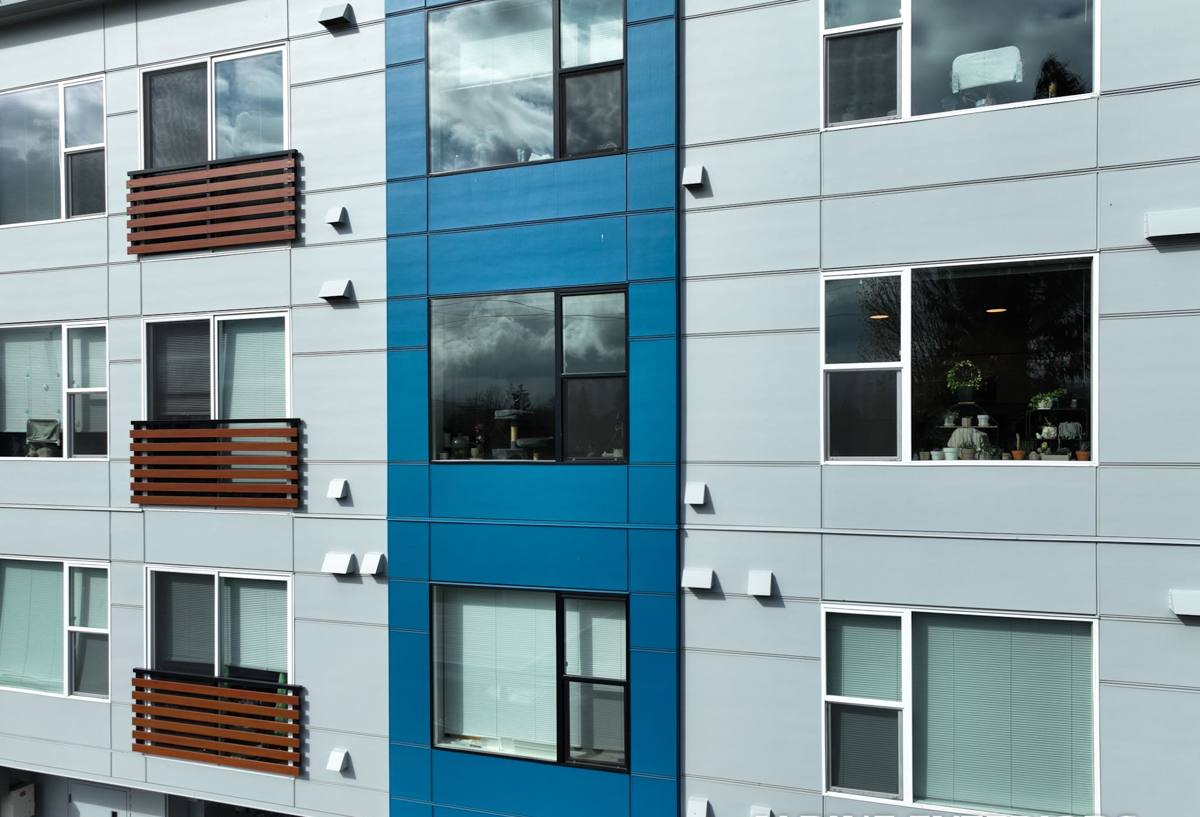
What South Hill's Climate Actually Does to Windows
Salt Air and Hardware
Homes on South Hill's elevated lots often get direct exposure to salt-carrying wind off the water. Salt accelerates corrosion in cheap window hardware — hinges, locks, balance systems, and screen frames — well before the glass or vinyl itself shows any wear. Once hardware corrodes, windows stop sealing tightly, which lets in more moisture, which accelerates further damage. It's a cycle that starts small and compounds.
Driving Rain
Storms coming off the water don't just fall straight down here — they arrive at an angle, driven by wind, and that changes how water behaves at a window opening. Water gets pushed up under sills and into any gap in the flashing that a calmer climate would never test. A window that would be perfectly fine in a low-wind region can leak in South Hill if the flashing detail wasn't built for wind-driven rain specifically.
Moss and Prolonged Dampness
Whatcom County's long moss season means exterior wood trim, sills, and even some vinyl surfaces stay damp for extended stretches rather than drying out quickly between rain events. That prolonged dampness is hard on wood sills and trim in particular, and it's exactly the condition that lets small installation flaws turn into rot or water intrusion over a few seasons instead of showing up immediately.
What a Correct Window Installation Involves Here
A lot of window problems we get called out to fix in South Hill aren't product failures — they're installation shortcuts. Here's what we consider non-negotiable on every job in this area:
- Full removal of the old window and inspection of the rough opening framing for hidden rot before anything new goes in
- Correct flashing sequence (sill pan, side flashing, head flashing) installed to shed water outward, not trap it
- Sealants and tapes rated for cold, wet, coastal conditions — not general-purpose caulk that hardens and cracks within a couple of seasons
- Shimming and leveling that keeps the sash operating smoothly for years, not just on install day
- Insulation of the gap between the window frame and rough opening, done without over-packing (which can bow frames)
- Exterior trim and caulk lines finished cleanly so water has nowhere to collect against the house
Skip any one of these steps and the window itself — no matter how good the brand — is set up to fail early in our climate.
Choosing Materials for a Marine Climate
We steer South Hill homeowners toward frame materials and hardware finishes that hold up specifically against salt air and sustained moisture, rather than whatever's cheapest to stock. That's a professional judgment call based on how materials behave over time in this climate, not a knock on any manufacturer.
| Frame Material | How It Handles Salt Air & Moisture | Maintenance Burden |
|---|---|---|
| Vinyl (quality-grade) | Won't corrode or rot; performs well against salt air when welds and seals are done right | Low — occasional cleaning |
| Fiberglass | Very stable in temperature swings and moisture; strong long-term option for coastal exposure | Low |
| Wood-clad | Attractive, but cladding seams are a moisture entry point if not detailed carefully | Higher — needs monitoring at joints |
| Bare wood | Most vulnerable to our long damp season without diligent upkeep | Highest |
| Aluminum | Prone to corrosion pitting in salt air unless finish is specifically rated for coastal use | Moderate to high |
We're happy to walk through the trade-offs on any of these in person — the right choice depends on your home's exposure, budget, and how much upkeep you want to take on.
Our Process for South Hill Window Installation
1. On-Site Assessment
We walk the exterior with you, look at existing window condition, framing, and how exposed each elevation of the house is to wind and salt air. South Hill lots vary a lot in exposure depending on elevation and tree cover, so this isn't a one-size assessment.
2. Product Recommendation
Based on that walk-through, we recommend frame material, glass package, and hardware finish suited to your specific exposure — not just a standard package we push on every job.
3. Removal and Opening Inspection
Old windows come out fully so we can inspect the framing underneath. This is often where hidden moisture damage from years of a poor seal gets found and addressed before it's covered back up.
4. Flashing and Installation
We install flashing in the correct shingle-style sequence so water is always directed outward and down, set the window plumb and level, and insulate the gap properly.
5. Finish and Seal
Exterior trim, caulking, and touch-up paint are finished to shed water cleanly, with attention to the details that matter most in a high-moss, high-rain environment.
6. Walkthrough
We test operation on every window, check seals, and walk the job with you before we call it done.
Signs South Hill Homeowners Should Watch For
If you're not sure whether your current windows need attention, these are the signals we hear about most often from homes in this part of Chuckanut:
- Condensation forming between panes (a sign the seal has failed)
- Hardware that's stiff, corroded, or won't latch fully
- Soft or discolored wood trim around the frame
- Drafts you can feel near the frame on windy days
- Visible moss or persistent green staining on sills or trim
- Difficulty opening or closing sashes that used to move freely
Any one of these on its own isn't an emergency, but in this climate they tend to get worse quickly once they start, especially heading into the wetter months.
Timing Your Project Around Our Weather
We can install windows for South Hill homeowners across most of the year, but we plan around the region's weather patterns. Drier stretches make for a cleaner install with less risk of moisture getting into the opening mid-project. If you're planning ahead of the wettest months, scheduling earlier gives us more flexibility to pick good install windows and gives your new windows a full dry season to settle in before winter's driving rain tests them.
Why Local Installation Experience Matters
Window installation isn't a generic skill that transfers evenly from one climate to another. A crew that mostly works drier inland regions may do fine work there and still miss the flashing and sealant details that matter on a South Hill lot facing direct salt air and wind-driven rain. We work in Whatcom County's coastal conditions regularly, which means we're not guessing at how a given product or detail will hold up here — we've seen how installs age in this specific climate, on homes with the same exposure yours has.
That local pattern-recognition is often the difference between a window installation that's still performing well in fifteen years and one that starts showing moisture problems in three or four.
What to Expect Cost-Wise
Window installation pricing depends on the number of openings, frame material, glass package, and how much of the existing framing needs repair once we open things up. Rather than quote a number that doesn't reflect your home, we'd rather walk your property, look at your current windows and their exposure, and give you a straightforward, honest estimate based on what your house actually needs.
If you're weighing a window project for your South Hill home, we're glad to come take a look and talk through your options — no pressure, no obligation. Fill out the form below and we'll set up a time to walk your property and give you a straightforward estimate.