 Chuckanut Exterior
 Building a Deck That Actually Holds Up in South Hill
A deck in South Hill isn't just an outdoor room — it's an exterior structure that has to survive everything Whatcom County throws at it for twelve months a year. That means salt-laden air drifting in off the water, long stretches of driving rain, and a moss season that can run from fall through spring. A deck built the way it might be built in a dry inland climate will show problems here within a few seasons: soft spots, corroding hardware, slick boards, and framing that never fully dries out between storms.
Custom deck work in this neighborhood means designing and building around those realities from the start, not patching them later. That covers material selection, framing details, fastener choice, drainage, and a maintenance plan that fits how this climate actually behaves — not a generic checklist copied from somewhere drier.
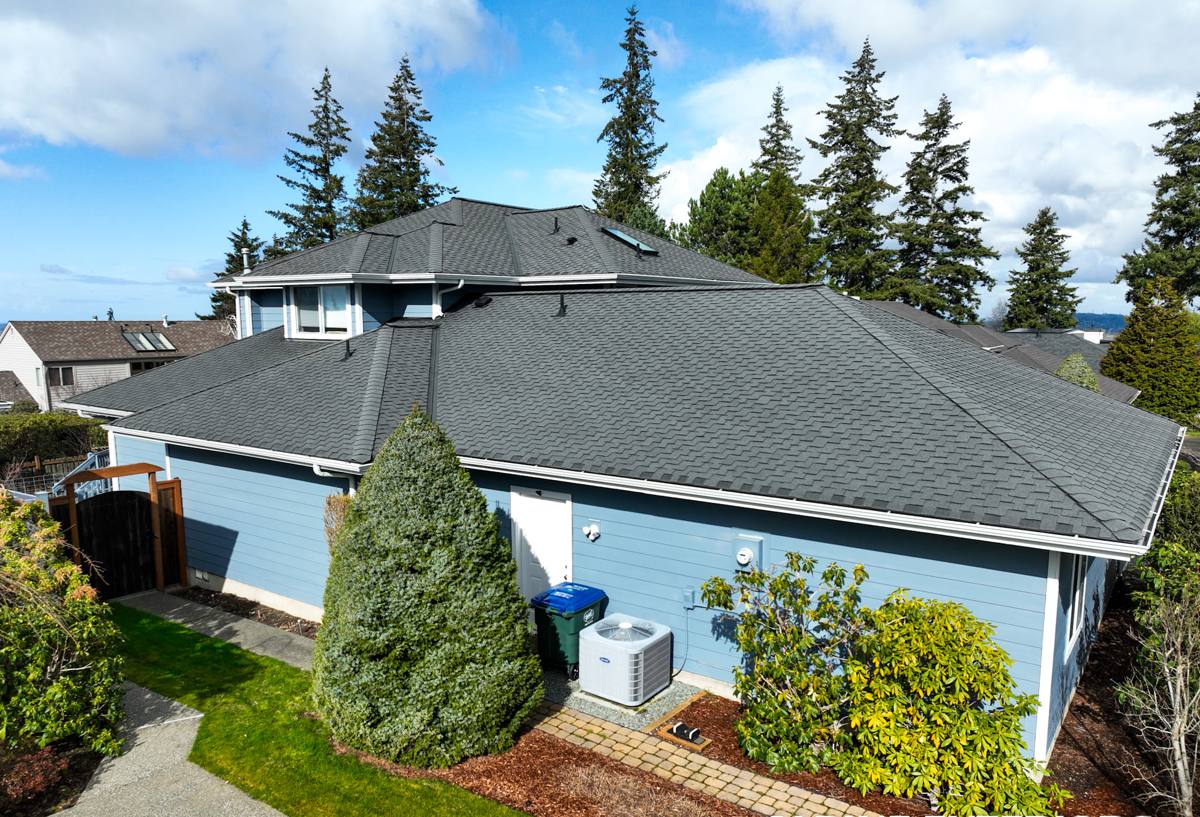
What Chuckanut's Weather Does to an Outdoor Deck
Salt Air and Metal Fasteners
Homes closer to the water deal with airborne salt that settles on every exposed surface, including deck hardware. Standard fasteners and connectors corrode faster in this environment, and corrosion doesn't stay cosmetic — a rusted joist hanger or bolt loses holding strength long before it looks obviously bad. Anything holding a deck together in this area needs a corrosion rating built for coastal exposure, not just a general-purpose fastener pulled off the shelf.
Driving Rain and Moisture Intrusion
Whatcom County rain doesn't just fall straight down — wind-driven storms push water sideways, into ledger connections, under railings, and into any gap where flashing was skipped or done wrong. Wood that stays wet longer between dry spells is wood that rots faster, and a deck ledger that leaks water into the house rim joist is one of the most common — and most expensive — deck failures we see.
Moss, Algae, and Shade
Between the tree cover common in this area and the long wet season, moss and algae get a real head start on any deck surface that doesn't shed water and dry out quickly. Beyond looking bad, a mossy deck surface is a slip hazard, and moss holding moisture against a board surface accelerates wear on both wood and lower-grade composite products.
Design Decisions That Matter for South Hill Properties
Sun Exposure and Orientation
Where a deck sits relative to the house and surrounding trees affects how much sun it gets and how fast it dries after rain. A deck tucked under heavy tree cover needs different material and spacing choices than one that gets afternoon sun — we look at this on-site rather than assuming one layout fits every lot.
Grade, Drainage, and Footings
Lot grading in this part of Whatcom County varies, and a deck built without accounting for how water moves across and under the site will end up with standing water at the footings, which is a slow path to frost heave and structural movement over time. Footing depth and placement need to match the actual soil and drainage conditions on your property, not a one-size assumption.
Matching Your Home's Style
Custom means the deck should look like it belongs to your house, not like an add-on. That includes railing style, board direction, stair placement, and how the structure ties into existing rooflines or siding — decisions we work through with you before anything gets built.
Decking Material Options for This Climate
There's no single "best" decking material for South Hill — there's a best fit for your budget, your maintenance appetite, and how exposed the deck is to rain, salt air, and shade. Here's how the common options actually compare in this environment:
| Material | Moisture & Salt Air Performance | Maintenance | Typical Lifespan |
|---|---|---|---|
| Pressure-treated wood | Good if sealed and re-sealed on schedule; end grain and fastener points are the weak spots | Annual cleaning and re-sealing recommended in this climate | 10–15 years with upkeep |
| Cedar | Naturally moisture- and insect-resistant, but still needs sealing to fight moss and graying | Periodic cleaning and finish maintenance | 15–20 years with upkeep |
| Capped composite | Strong resistance to moisture absorption and salt exposure; won't rot | Occasional washing; no sealing or staining | 25–30+ years, manufacturer-backed |
| PVC decking | Fully synthetic, handles constant wet exposure well | Lowest maintenance; wash as needed | 25–30+ years, manufacturer-backed |
Wood costs less up front and can look excellent, but it demands real upkeep to hold up against this much rain and moss pressure — skip a season of sealing and you start losing ground fast. Capped composite and PVC cost more initially but hold up with far less intervention, which matters if you don't want deck maintenance on your yearly to-do list. We'll walk you through the honest trade-offs for your specific deck rather than pushing one material by default.
What a Correctly Built Deck Actually Involves
The visible surface is the easiest part to get right. The structure underneath is where most long-term deck failures start, and it's where a rushed or corner-cutting build shows up years later as soft framing, sagging joists, or a ledger board pulling away from the house.
- Footings sized and set to the correct depth for local frost and soil conditions
- Ledger board properly flashed and sealed where the deck ties into the house, so water is directed away from the rim joist instead of into it
- Joist hangers, screws, and structural connectors rated for coastal and high-moisture exposure — not general-purpose hardware
- Joist spacing and blocking that match the actual decking material's span rating, not a generic layout
- Board gapping set to allow drainage and airflow underneath, reducing moss buildup and trapped moisture
- Guardrails, stair stringers, and baluster spacing built to current code, not just "close enough"
Every one of these details either helps a deck shed the moisture this area produces year-round, or fails to — there's not much middle ground.
How Our Process Works
- On-site consultation. We walk the property, look at drainage, sun exposure, tree cover, and how the deck should connect to your home, and talk through what you actually want to use the space for.
- Design and material selection. We put together a layout and material plan that fits your budget and this climate, with honest pros and cons for each option — no upselling toward the most expensive product by default.
- Permitting. Deck projects in Whatcom County typically require permitting depending on size and height; we handle that process so it's not left on your plate.
- Construction. Framing first, with every structural connection and fastener chosen for this environment, followed by decking, railings, and stairs.
- Final walkthrough. We go over the finished deck with you, cover any maintenance specific to the material you chose, and make sure everything meets what we discussed at the start.
Maintaining a Deck Through Whatcom County's Wet Season
Even a well-built deck needs some seasonal attention in this climate — the goal is keeping moisture and moss from getting a foothold rather than dealing with damage after the fact.
- Clear leaves and debris from board gaps and against the house before the wet season sets in
- Sweep or rinse off moss and algae growth before it spreads across the surface
- Check that gutters and downspouts near the deck are directing water away, not onto it
- Inspect ledger flashing and railing connections annually for movement or gaps
- For wood decks, keep sealing on schedule — don't let a season slide
- Watch for standing water at or near footings after heavy rain and address drainage if it's not clearing
Why Hire a Crew That Already Works in South Hill
A contractor who mainly builds decks in drier inland climates is working from a different set of assumptions than what South Hill actually requires. Crews already familiar with this part of Whatcom County know which fastener grades hold up to the salt air, how local grading tends to drain, and where moss pressure is worst on a given lot orientation — none of which is guesswork when you've built and maintained decks in these exact conditions before. That experience shows up in fewer callbacks, fewer surprises, and a deck that's still solid well past the point a poorly built one would be showing rot.
If you're planning a custom deck in South Hill and want an honest look at what your property needs, we're happy to walk the site with you and put together a free, no-pressure estimate — just use the form below to get started.