 Chuckanut Exterior
 Asphalt Shingle Roofing Built for South Hill's Weather, Not Just the Manufacturer's Spec Sheet
South Hill sits close enough to the water and the tree line that its roofs take a different kind of beating than roofs twenty miles inland. Salt-laden air off the bay works into fasteners and flashing over time. Driving rain, pushed sideways by wind off the water, finds every gap in a poorly lapped shingle course. And the long, damp moss season that Whatcom County is known for doesn't just make a roof look neglected — it holds moisture against the shingle mat and shortens its working life. An asphalt shingle roof installed here needs to be built for those three things specifically, not just installed to a generic code minimum.
We work on homes throughout the Chuckanut area, and South Hill roofs tend to share a common story: the shingles themselves are often fine, but the details around them — underlayment choice, ventilation, flashing, and moss management — were treated as afterthoughts. This page covers what a correctly built asphalt shingle roof looks like for a South Hill home, and what our process does differently.
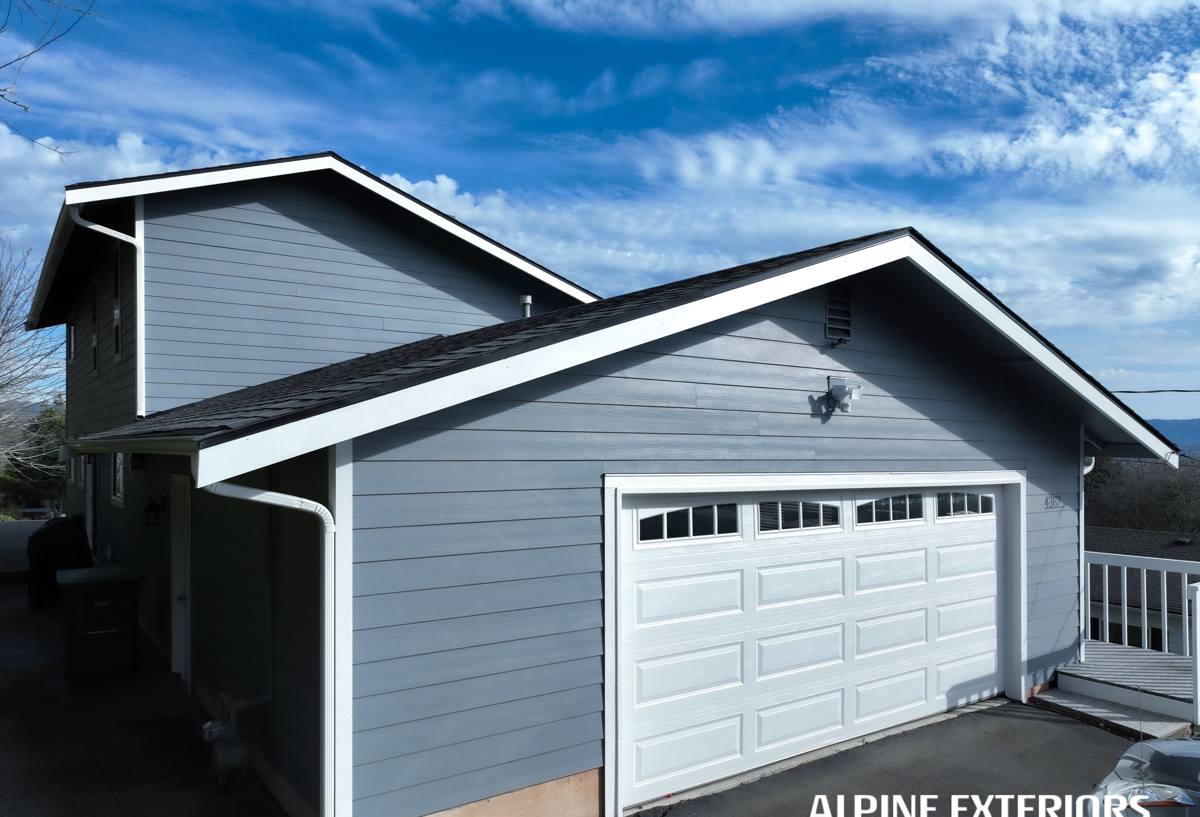
Why the Local Climate Changes the Job
Salt Air and Metal Components
It's easy to think of asphalt shingles as immune to salt corrosion since the shingle mat itself isn't metal. But every roof has metal in it — nails, drip edge, step flashing, valley metal, vent stacks — and salt air accelerates corrosion in all of it. When those components fail quietly under the shingles, the roof can look fine from the ground while water is already getting behind it.
Driving Rain and Wind-Driven Water
Standard rain falls straight down and mostly respects the shingle's designed water path. Wind-driven rain off the water doesn't. It can be pushed sideways and even slightly upward under shingle edges, which is why lap direction, nail placement, and starter strip adhesion matter more here than in a calmer inland climate.
Moss and Prolonged Dampness
Whatcom County's moss season runs long — shaded, north-facing slopes and roofs under tree cover can stay damp for weeks at a stretch. Moss doesn't just sit on top of shingles; its root structure lifts shingle edges and traps moisture underneath, which accelerates granule loss and can work water backward under the shingle over several seasons.
What a Correctly Installed Asphalt Shingle Roof Needs Here
A shingle roof is a system, not just a single product. For South Hill homes, the parts that deserve extra attention are:
- Ice and water shield at eaves and valleys — a self-adhering membrane under the first few courses and in every valley, giving a sealed backup layer where wind-driven rain and ice dams do the most damage.
- Synthetic underlayment across the full field — more tear-resistant and more consistently waterproof than old-style felt, especially useful during the stretch of days between tear-off and dry-in when weather can turn fast.
- Balanced attic ventilation — intake at the eaves and exhaust at the ridge, sized to the attic's square footage. Without it, moisture from the living space condenses on the underside of the roof deck regardless of how good the shingles are.
- Corrosion-resistant flashing and fasteners — stepped flashing at walls and chimneys, and fasteners rated for coastal exposure, so the metal doesn't become the weak point before the shingles do.
- Correct nailing pattern — six nails per shingle in high-wind exposures rather than the four-nail minimum some manufacturers allow, placed in the manufacturer's nailing zone, not just "close enough."
Choosing a Shingle for This Climate
Not every asphalt shingle line is built the same way, and for a South Hill home the differences that matter are algae resistance, wind rating, and how the shingle performs when it's wet more often than dry.
| Shingle Type | Typical Wind Rating | Algae/Moss Resistance | Best Fit |
|---|---|---|---|
| Standard 3-tab | Lower end of range | Minimal unless treated | Budget-driven projects, low roof exposure |
| Architectural (dimensional) | Mid-to-high | Often available with algae-resistant granules | Most South Hill homes — best balance of cost and durability |
| Impact-resistant / high-wind rated | Highest available | Usually includes algae-resistant granules | Exposed sites, open water views, mature-tree properties |
Algae-resistant granules (usually copper-infused) don't stop moss outright, but they meaningfully slow the black algae staining and biological growth that thrives in this climate. On a shaded or north-facing South Hill roof, that upgrade tends to pay for itself in slower aging and a cleaner-looking roof for longer.
Moss and Algae: What Actually Helps
Moss is the single most common complaint we hear from South Hill homeowners, and most of it is preventable with the right combination of choices at install time and light upkeep afterward.
At Installation
Zinc or copper strips installed near the ridge allow rain to carry trace metal ions down the roof slope, which discourages moss and algae growth over the years without any ongoing effort from the homeowner. This is a low-cost addition during a reroof and difficult to add cleanly afterward.
Ongoing Care
Pressure washing shingles is one of the fastest ways to strip granules and shorten a roof's life — we don't recommend it. Gentle moss removal by hand or with a soft-bristle approach, followed by a manufacturer-approved treatment, protects the granule layer while still clearing growth.
Tree Cover
Overhanging branches keep a roof shaded and damp longer after rain, which is exactly the condition moss needs. Trimming back branches that shade the roof is one of the simplest things a South Hill homeowner can do to extend a shingle roof's working life.
Our Installation Process
The steps below are the same whether it's a full reroof or a targeted repair — the scope changes, the standard doesn't.
- Inspection and scoping. We check the existing roof deck, flashing, ventilation, and any moss or moisture damage before quoting, so the estimate reflects what your roof actually needs.
- Tear-off and deck check. Old material comes off down to the deck, which is inspected for soft spots or rot — common where moss has held moisture against the roof for years.
- Underlayment and ice/water shield. Synthetic underlayment across the field, with self-adhering membrane at eaves, valleys, and penetrations.
- Flashing. New step flashing at walls and chimneys, new valley metal where needed, and corrosion-resistant fasteners throughout.
- Shingle installation. Correct starter course, proper nailing pattern and placement, and manufacturer-specified exposure and lap.
- Ventilation check. Ridge and soffit ventilation confirmed or corrected so the finished roof can actually breathe.
- Cleanup and walkthrough. Magnetic sweep for stray fasteners, full site cleanup, and a walkthrough of what was done and what to watch for going forward.
Maintenance Checklist for South Hill Homeowners
- Have gutters cleared at least twice a year — clogged gutters back water up under the first course of shingles.
- Trim back branches that shade the roof or drop debris onto it.
- Watch for moss starting at the north-facing slope or under tree cover, and address it early rather than after it's established.
- After any major windstorm, do a visual check from the ground for lifted or missing shingles.
- Schedule a professional inspection every few years, or sooner after a hard storm season.
- Avoid pressure washing — it removes protective granules and shortens shingle life.
Repair vs. Replacement: What Actually Drives the Decision
| Factor | Leans Toward Repair | Leans Toward Replacement |
|---|---|---|
| Age of roof | Under half its expected life | Near or past expected lifespan |
| Extent of damage | Isolated to one area or slope | Spread across multiple slopes |
| Deck condition | Solid, no soft spots | Rot or soft decking found |
| Moss/algae history | Minor, surface-level | Long-term, granule loss visible |
| Underlying ventilation | Already adequate | Undersized or missing |
Cost is always a factor, but the honest answer depends on what's actually happening under the shingles — which is why we look at the deck and flashing before quoting either option, not just the visible surface layer.
Why Hire a Crew That Already Works South Hill
A roofing crew that works this area regularly already knows which slopes tend to hold moss, which exposures take the worst of the wind-driven rain, and which flashing details fail first in salt air. That's not a substitute for doing the job right — it's what lets us scope the job accurately the first time, instead of finding surprises mid-project that turn into change orders. For a South Hill homeowner, that familiarity with Chuckanut and the broader Whatcom County climate translates into fewer callbacks and a roof that's built for the conditions it will actually face, not a textbook average.
If you're dealing with an aging roof, ongoing moss problems, or you're just planning ahead, we're happy to take a look and give you a straight, no-pressure estimate. Use the form below to get started.