 Chuckanut Exterior
 Building a Deck That Holds Up on South Hill
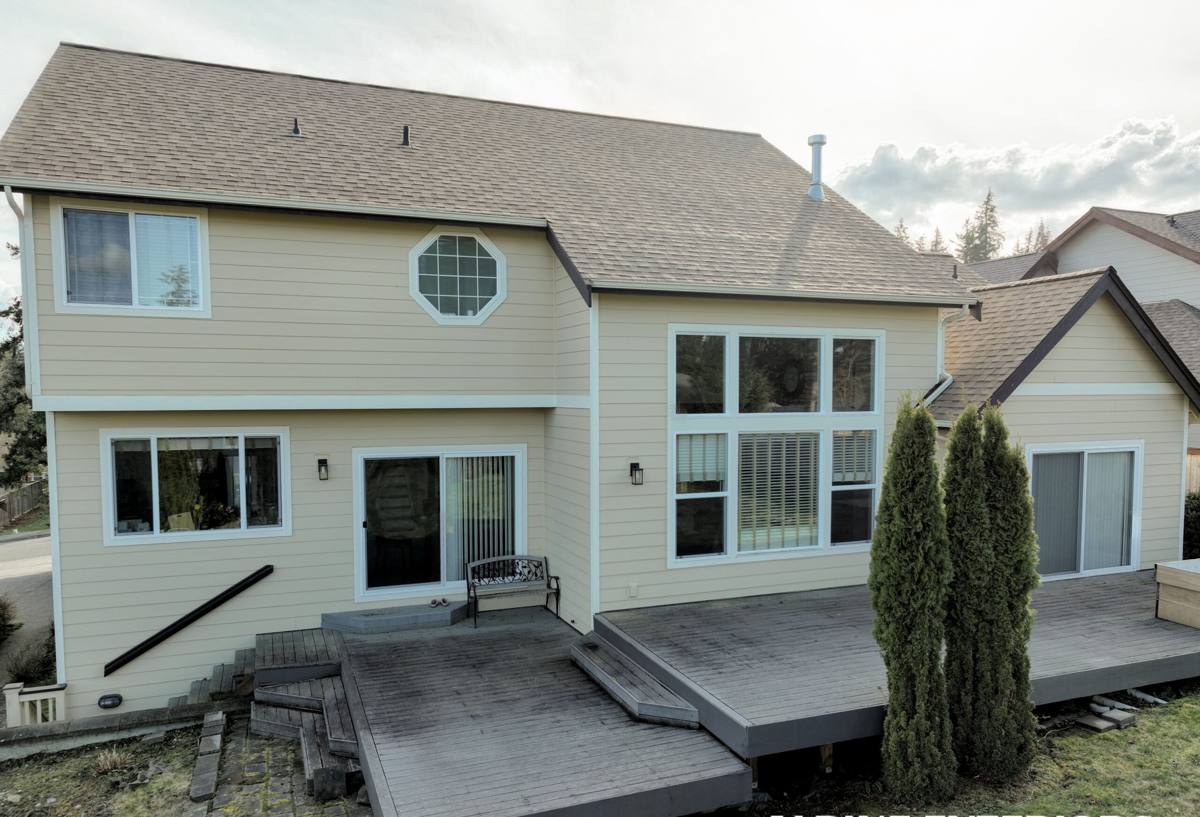
South Hill sits above Chuckanut on lots that catch more weather than most homeowners expect. A deck built here has to do more than hold weight — it has to shed driving rain, resist salt-laden air off the water, and stay safe underfoot through a long stretch of the year when moss and algae are trying to take over every horizontal surface. We build decks specifically for that reality, using framing, fasteners, and drainage details that a generic deck design pulled off a shelf usually skips. It's the difference between a deck that ages gracefully and one that needs real repair work inside a decade.
What the Chuckanut Climate Does to an Outdoor Deck
Whatcom County's marine climate is part of why people love living here, and it's also the reason decks fail faster than expected when they're not built for it. Three factors show up again and again on South Hill jobs.
Salt Air and Hardware Corrosion
Proximity to the water means airborne salt reaches decks, railings, and fasteners even on lots without a direct waterfront view. Standard hardware corrodes faster in this environment — screw heads rust, joist hangers pit, and budget railing brackets fail years before they should. The fix isn't complicated, but it does mean spending on the right grade of stainless or coated hardware instead of whatever's cheapest at the box store.
Driving Rain and Moisture Intrusion
Rain here doesn't fall straight down. Wind off the water drives it sideways into ledger boards, under railing posts, and into any gap in flashing or decking that wasn't sealed correctly. A deck that would hold up fine in a drier inland climate can rot from the inside within a few seasons here if water gets behind the ledger board or pools where it shouldn't.
Moss, Algae, and a Long Wet Season
South Hill's tree cover and the region's extended damp season give moss and algae months to establish themselves on any deck surface that doesn't drain and dry quickly. Beyond looking bad, a mossy deck surface is a slip hazard, and moss left sitting on wood decking holds moisture against the boards and speeds up rot underneath it. Shadier, tree-covered yards need this factored into the material choice from the start, not treated as an afterthought.
Hillside Terrain: What South Hill's Slopes Mean for a Deck
Many South Hill lots are sloped, which changes the engineering of a deck before the climate even enters the picture. Taller decks need deeper, engineered footings to stay stable on a grade. Elevated decks change how guardrails are sized and how stairs are laid out to reach the yard below. And a deck built over a slope needs a real plan for where water goes once it runs off the surface — send it toward the house and you've traded a deck problem for a foundation problem.
Sloped lots also affect access during construction. Getting equipment and materials to a hillside build site takes more planning than a flat backyard job, and framing a level deck surface over uneven ground takes more careful layout work up front. It's one more reason experience with this specific terrain matters when you're choosing who builds the deck.
What a Correctly Built Deck Requires in This Climate
Ledger Attachment and Flashing
Where a deck attaches to the house is the single most common point of failure on any deck, anywhere. In a climate that drives rain sideways, that connection needs proper flashing, correct fastener spacing, and a drainage path so water can't collect between the ledger board and the house wall.
Footings and Framing
Footings need to reach below frost depth and bear on undisturbed or properly compacted soil, which matters more on a hillside lot than a flat one. Framing lumber should be rated for its exposure — ground contact where it's close to grade, standard exterior grade elsewhere — and joists need consistent spacing so decking doesn't flex or trap water between boards over time.
Fasteners and Connectors
Every screw, joist hanger, and structural connector on a South Hill deck should be rated for the exposure it will actually see — stainless steel or a heavy-duty coated fastener system, not standard galvanized hardware that starts showing rust within a couple of years this close to the water.
Airflow and Drainage Underneath
A deck that can't breathe underneath stays damp longer after every rain, which is exactly what moss and rot need to get established. Proper joist spacing, board gapping, and — where the deck sits low to the ground — clearance or ventilation underneath all help the structure dry out between storms instead of staying wet through the winter months.
Railings and Hardware at the Coast
Railings take the brunt of salt exposure because they're vertical, exposed on all sides, and often include metal components. We use fastener and bracket hardware rated for coastal exposure and pay close attention to how each railing system handles water at the post base — a detail that's easy to overlook and one of the more common places we see premature failure on older decks in this area. Cable and metal-baluster railing systems look great but need extra scrutiny here, since some hardware finishes hold up to salt air far better than others.
Choosing a Decking Material for Salt Air and Moss
There's no single right answer for every deck, but the trade-offs are worth understanding before you commit to a material.
| Material | Moisture & Moss Behavior | Maintenance | Typical Lifespan |
|---|---|---|---|
| Pressure-Treated Wood | Absorbs water; holds moss and algae if not cleaned and sealed regularly | Annual cleaning, periodic staining or sealing | 10-15 years with upkeep |
| Cedar | Naturally more moisture-resistant than treated pine but still needs sealing here | Regular cleaning and re-sealing | 15-20 years with upkeep |
| Capped Composite | Resists moisture absorption; sheds moss more easily than bare wood | Periodic washing, no staining or sealing | 25-30 years |
| PVC Decking | Fully moisture-resistant; best moss resistance of the common options | Occasional washing | 25-30+ years |
We install both wood and composite or PVC decking, and brands like Trex and TimberTech are common, well-established options in the capped composite category. The decision usually comes down to upfront budget versus long-term maintenance. Wood costs less to install but demands ongoing attention to keep moss and moisture from getting ahead of you. Capped composite and PVC cost more upfront and largely remove that maintenance burden. We also factor in how much sun versus shade a yard gets — a shaded, tree-covered South Hill lot that stays damp longer is a stronger case for a low-maintenance material than a sunnier spot that dries out faster between storms.
Our Deck Building Process
- On-site assessment of the lot, slope, sun and shade exposure, and how the deck will tie into the house
- Design and material selection, with honest trade-offs explained for wood versus composite or PVC
- Permitting and engineering as required for the deck's size, height, and jurisdiction
- Footings, framing, and correct ledger flashing completed and inspected before any decking goes down
- Decking installation with proper gapping and fastening for this climate
- Railing, stairs, and final hardware installation
- Final walkthrough with care guidance specific to the material installed
Permits and Local Code Considerations
Deck permitting requirements vary depending on where in Whatcom County the property sits, and the specifics depend on the deck's height, size, and whether it's attached to the house. Elevated decks typically trigger guardrail height and baluster spacing requirements, and taller decks need engineered footings reviewed by the local building department before work proceeds. We handle the permitting process as part of the job so homeowners aren't left figuring out code requirements on their own, and we build to pass inspection the first time rather than leaving corrections for later. Skipping permits on a deck project might save time up front, but it can turn into a real problem at resale when a buyer's inspector or the county asks for documentation that doesn't exist.
Maintenance: Keeping a South Hill Deck Ahead of the Moss
Whatever material you choose, a little seasonal attention goes a long way in this climate. A basic maintenance routine we recommend to South Hill homeowners:
- Sweep debris and standing leaves off the deck surface regularly, especially in fall
- Wash the deck at least once or twice a year to remove moss and algae before it takes hold
- Check and clear gaps between boards so water keeps draining instead of pooling
- Inspect railing post bases and hardware annually for rust or loosening
- Re-seal or re-stain wood decking on the schedule the product calls for, rather than waiting until it looks bad
- Confirm gutters and downspouts near the deck aren't dumping extra water onto or under it
Why Hire a Crew That Already Works in South Hill
A deck design that works fine in a dry inland climate can be the wrong call on a South Hill lot with salt air, hillside drainage, and a long moss season all working against it. We build decks throughout the Chuckanut area and know which details actually matter here — the hardware grade, the ledger flashing, the footing depth on a sloped lot — versus which upgrades are just upsells. We also know how to time a build around this region's wetter stretches so framing and footings aren't fighting the weather on the way in.
That local experience is the difference between a deck that needs real repair work in five years and one that's still solid two decades from now. If you're planning a new deck or replacing one that's starting to show its age, we're happy to come take a look at your property and put together a free, no-pressure estimate — just fill out the form below.