 Chuckanut Exterior
 Fiber Cement Siding for South Hill Homes
South Hill sits up on the higher ground above Chuckanut, which means its homes catch weather a little differently than properties down closer to sea level. Elevation and exposure change how hard wind-driven rain hits a wall, how long a shaded lot stays damp after a storm passes, and how much salt-laden air a home's siding is dealing with over the course of a year. We install James Hardie fiber cement siding specifically, and on South Hill that choice comes from watching what this exact combination of salt air, driving rain, and a long moss season does to exterior materials over time, not from a generic sales pitch about siding in general.
This page is about that one service, in this one area: what a South Hill home actually needs from its siding, what a correct fiber cement installation involves, and how our process works from first walkthrough to final inspection.
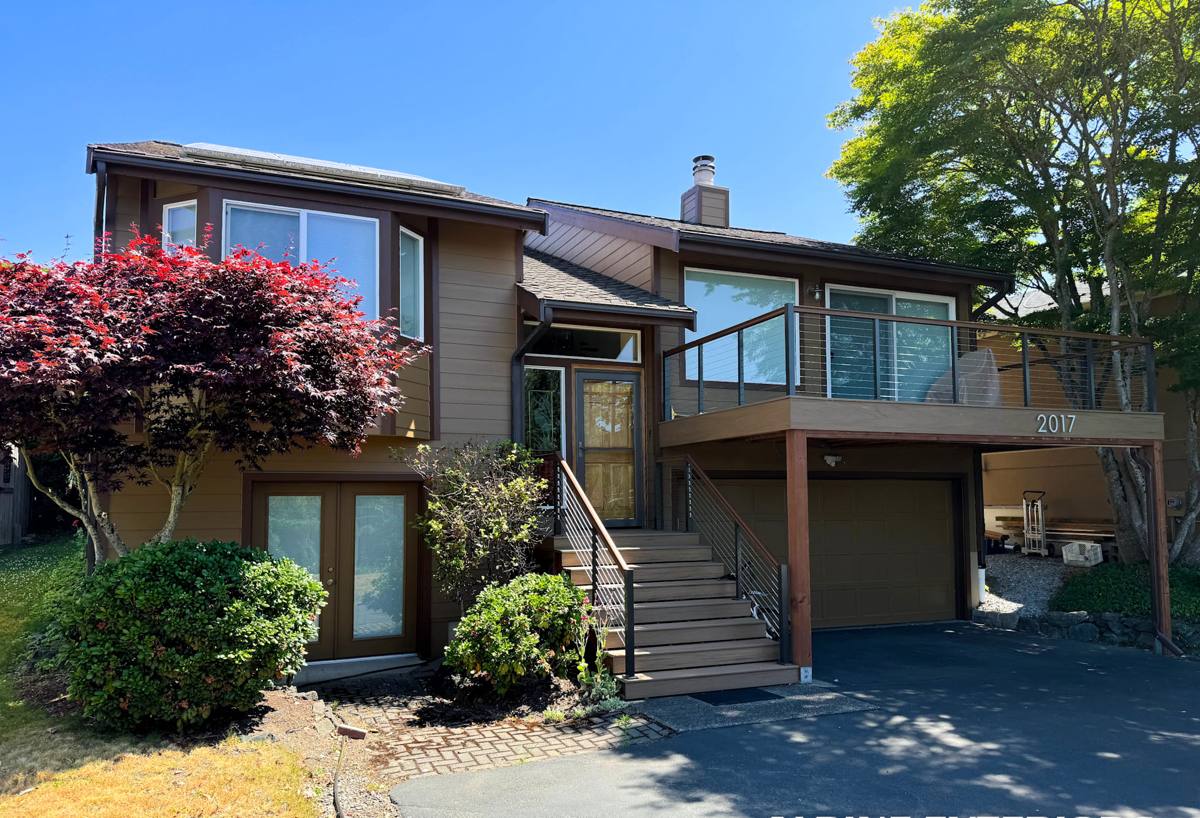
What South Hill's Climate Asks of a Siding Material
Salt Air and Corrosion
Marine air moving through this part of Whatcom County carries salt that works on anything metal or painted, and it doesn't stop at the coastline — it travels up the hill. Fasteners, flashing, and any field-applied finish are all exposed to that steady low-grade corrosion year-round, which is part of why fastener choice and finish quality matter more here than they would in a drier, inland location.
Wind-Driven Rain Against Elevated Walls
Storms off the water rarely just drop rain straight down by the time they reach the higher ground around South Hill. Wind pushes it sideways into whichever walls face the weather, forcing water into seams, laps, and fastener points that a finish coat or caulk bead is supposed to be keeping sealed. A home's elevation and orientation on the hill change which walls take the brunt of that exposure, which is exactly the kind of property-specific detail a generic install doesn't account for.
Moss on Shaded, Slow-Drying Walls
Tree cover is common on South Hill lots, and shaded or north-facing walls under that cover stay damp far longer after a storm than open, sun-exposed siding does. That extended dampness is what moss and mildew need to establish, and once they take hold on a wood-based or wood-look surface, they become a recurring maintenance problem instead of a one-time cleanup. A long moss season is one of the more visible, year-round signs of how much work this climate puts on a home's exterior.
None of this means siding is doomed to fail on South Hill. It means the margin for error is smaller than it is somewhere drier and more sheltered, and the products and installation habits that might get away with being "good enough" elsewhere tend to get found out faster up here.
Why We Install Only James Hardie Fiber Cement
We don't offer vinyl, LP SmartSide or other engineered wood siding, primed spruce, cedar, or competing fiber cement brands like Cemplank or Allura, on South Hill or anywhere else we work. That's a standard we set on purpose. Every one of those products can be installed competently and can look good the day the crew leaves — the question that actually matters is how a material behaves five, ten, and twenty years into this specific climate, on a hillside taking salt air and driving rain from multiple directions.
Fiber cement's core is cement, sand, and cellulose fiber, not wood, so it doesn't absorb moisture and swell, cup, or delaminate at cut edges the way wood-based products can. It's also non-combustible, which matters to us as a standard regardless of the specific property. James Hardie's ColorPlus finish is baked on at the factory under controlled conditions and carries its own finish warranty, which is a real advantage over field-applied paint in a climate that's hard on any exterior coating year-round. Hardie also builds HZ product lines engineered for regions like this one, dealing with sustained moisture and coastal exposure, rather than selling one generic formulation everywhere in the country.
Material Comparison for South Hill's Exposure
| Material | Moisture Behavior in This Climate | Ongoing Maintenance |
|---|---|---|
| James Hardie fiber cement | Dimensionally stable; doesn't absorb and swell like wood-based siding | Low; factory finish resists fading and moss growth |
| Vinyl siding | Doesn't absorb water, but expands and contracts with temperature, which can open seams over time | Low upfront, but hidden gaps at seams are easy to miss |
| LP SmartSide / engineered wood | Wood-fiber core absorbs moisture readily at cut edges and any damaged coating | Moderate; edge sealing and coating need regular upkeep |
| Cedar / primed wood | Absorbs and releases moisture continuously with humidity swings | High; recurring re-staining or repainting on a set schedule |
What a Correct Fiber Cement Installation Involves
Fiber cement's long-term performance depends on installation details more than most homeowners expect. The material itself is engineered to handle this climate; the installation is what determines whether it actually gets to. On every South Hill project, we hold to the same short list of non-negotiables:
- House wrap or weather-resistive barrier installed and correctly lapped before any siding goes up
- Flashing sequenced properly at every window, door, and roof-to-wall intersection, so water sheds outward and down rather than sideways into the wall
- Fasteners rated for this climate, sized and spaced to James Hardie's published specification for the specific product being installed
- Proper clearance maintained between the bottom of the siding and grade, decks, and roof lines, where moisture and debris tend to collect and linger
- Field-cut edges primed and sealed before installation, since an unsealed cut edge is the one place factory-finished fiber cement loses its built-in protection
- Consistent joint treatment — caulking or flashing applied the same way at every seam, not improvised job to job
Skip any one of these on a hillside property and the wall can still look correct for a season or two. The problems that follow — staining at joints, soft trim near grade, finish failure around an opening — take a wet season or two to show up, which is exactly why they're easy for a rushed install to get away with until the homeowner is the one dealing with it.
Our Process for a South Hill Fiber Cement Project
Walkthrough and Assessment
We start by looking at the specific walls involved on your property — which ones take the most direct wind and rain given the home's orientation on the hill, which are shaded and slower to dry, and whether the existing wall assembly already has moisture or substrate issues that need addressing before new siding goes up. Installing new fiber cement over a wall with hidden rot just buries the same problem under new material.
Planning the Details Before Install Day
Before crews start cutting material, we work out flashing details, fastening layout, and how the siding will meet trim, windows, and rooflines. Deciding those details on paper first, rather than improvising in the field, is what keeps a job consistent from the first board to the last.
Installation to Manufacturer Spec
Every fastener, gap, and flashing lap follows James Hardie's published installation requirements for this climate zone. That's what keeps the manufacturer's warranty intact, and it's the same standard that determines whether the wall performs for decades rather than years.
Final Walkthrough
We walk the finished job with you, point out anything worth knowing about the installation, and cover what little maintenance ColorPlus fiber cement actually needs going forward, so you know what a healthy wall looks like if you ever want to check it yourself.
Cost Factors for Fiber Cement Siding on South Hill
| Factor | Why It Affects the Estimate |
|---|---|
| Home size and wall complexity | More corners, dormers, and roof lines mean more cutting, flashing, and labor time |
| Existing siding removal | Tear-off and disposal of current material adds labor beyond a straightforward install |
| Substrate condition | Any rot or moisture damage found underneath existing siding needs repair before new material goes on |
| Site access and slope | Hillside lots, steep grades, and limited staging space can add equipment needs and labor time |
| Trim, color, and profile choices | ColorPlus finish options, wider trim boards, and certain reveal profiles carry different material costs |
| Scope beyond siding | Bundling in trim, flashing repair, or work at window and door openings changes both cost and schedule |
We won't put a number on a project without seeing the property, but knowing what actually drives the estimate makes that first conversation more useful than a rough per-square-foot guess.
Signs Your Current Siding Needs a Closer Look
- Moss, algae, or mildew that keeps coming back after cleaning, especially on shaded or north-facing walls
- Paint or finish that's chalking, peeling, or failing faster than it used to
- Soft spots, bubbling, or visible warping anywhere on the siding surface
- Gaps opening up at seams, corners, or trim boards
- Water stains or discoloration on interior walls near exterior corners or window openings
- Fasteners or trim hardware showing rust or corrosion
- Siding that's simply reached the end of its expected service life, regardless of visible damage
Why Hire a Crew That Already Works South Hill
A lot of what makes a fiber cement installation hold up on this specific hill comes down to judgment calls a generic, one-size-fits-all install doesn't make room for: which walls take the most sustained wind and rain given a property's exact position and orientation, where moss is likely to establish first given the tree cover on a given lot, how much clearance siding needs above grade given how slowly the ground dries out on a shaded slope, and how flashing needs to sequence to shed water through an entire wet season, not just look right on a dry install day.
A crew that installs fiber cement across South Hill and the surrounding Chuckanut area regularly sees these patterns repeat from property to property. That familiarity shows up in small, mostly invisible decisions on-site — fastener placement, where a joint gets flashed versus caulked, how much clearance a given wall actually needs — that a homeowner rarely notices in the moment but absolutely feels in how the siding performs over the following decade.
If you're weighing fiber cement siding for a home on South Hill, we're glad to walk the property, talk through your walls' specific sun exposure, wind direction, and moss risk, and give you a straightforward, no-pressure estimate. There's a form below — reach out and we'll set up a time to take a look.