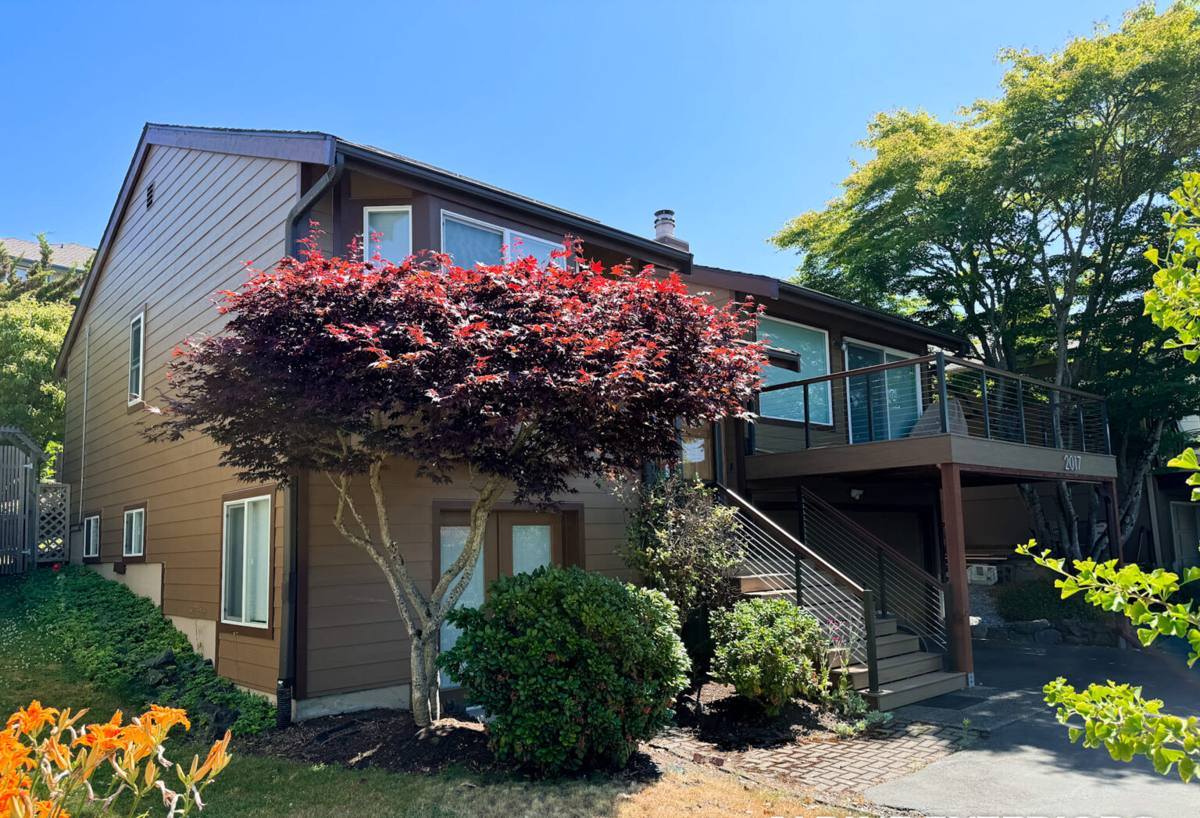
 Chuckanut Exterior
 Metal Roofing Built for South Hill's Weather, Not Just Its Look
South Hill sits close enough to the water that homes here take on a different mix of weather stress than roofs even a few miles inland. You're dealing with salt-laden air off the bay, long stretches of driving rain that comes in sideways during winter storms, and shaded, damp conditions that make moss a year-round concern rather than a seasonal nuisance. A metal roof can handle all of that better than most materials on the market — but only if it's specified and installed with this specific environment in mind. A metal roof installed the same way you'd do it in a dry inland climate will underperform here, sometimes badly, within a few years.
This page is about metal roofing specifically for South Hill homes: what the climate actually demands, what a correct installation looks like, and how we approach the job differently because we already know this neighborhood.
What South Hill's Climate Actually Does to a Roof
Salt Air and Metal Corrosion
Homes closer to Bellingham Bay get exposed to airborne salt that settles on every exterior surface, including the roof. Left unmanaged, salt exposure accelerates corrosion on fasteners, cut edges, and any coating that's been scratched or under-specified for a coastal environment. This doesn't mean metal roofing is a bad fit — it's actually one of the more corrosion-resistant options available when the coating system and fastener hardware are matched to the exposure level. It does mean that a generic, big-box specification isn't good enough this close to the water.
Driving Rain and Wind-Driven Water
Whatcom County storms don't always drop rain straight down. Wind off the water pushes it sideways and up under laps, ridges, and penetrations that would stay dry in a calmer climate. A metal roof's water-shedding performance depends heavily on lap design, fastener placement, and flashing details — the parts of the job that are invisible once it's finished but determine whether water finds its way in five years from now.
Shade, Moisture, and Moss
Mature tree cover and persistent damp conditions mean moss isn't a cosmetic issue here — it's a moisture-retention problem. Moss holds water against roofing surfaces long after the rain stops, which shortens the life of anything moss can get a foothold on. Metal's smooth, hard surface is far more resistant to moss establishment than shingles or shake, but valleys, low-slope sections, and shaded north faces still need attention during design and installation to keep moss from gaining a start.
What a Correct Metal Roof Installation Involves
The metal panels themselves are the most visible part of the job, but they're not what determines whether the roof performs. The details underneath and around them do.
- Underlayment: A high-temperature, self-adhering or synthetic underlayment rated for the panel type — this is the backup water barrier if wind-driven rain gets past the panel laps.
- Fastener selection: Corrosion-resistant fasteners matched to the panel metal, to avoid galvanic reaction between dissimilar metals in a salt-air environment.
- Flashing detail at every penetration: Vents, chimneys, skylights, and wall transitions are where most metal roof leaks actually start — not the field panels.
- Ridge and hip ventilation: Proper ventilation keeps moisture from condensing under the panels, which matters in a consistently damp climate.
- Panel seam type matched to slope: Low-slope sections need a mechanically seamed or higher-lap panel system; standard exposed-fastener panels can be adequate on steeper, well-drained sections.
- Edge and eave treatment: Proper drip edge and eave flashing to keep wind-driven rain from wicking back under the first course.
Skipping or under-specifying any one of these items is how a metal roof that looks fine on installation day ends up with a leak or coating failure well before it should.
Standing Seam vs. Exposed Fastener: Which Fits a South Hill Home
Both systems have a place, but the right choice depends on slope, budget, and how close the home is to the water.
| Factor | Standing Seam | Exposed Fastener |
|---|---|---|
| Fastener exposure | Concealed clips, no exposed screws | Screws penetrate the panel face |
| Best suited for | Low-slope areas, homes closer to the bay, longer-term ownership | Steeper roofs, secondary structures, tighter budgets |
| Maintenance | Minimal — no fastener gaskets to monitor | Fastener gaskets should be checked periodically and can need replacement over time |
| Upfront cost | Higher | Lower |
| Salt-air performance | Better long-term, since there's no exposed fastener to corrode | Adequate with the right fastener spec, but more maintenance-sensitive |
For homes on South Hill with direct exposure to bay air or a lot of shaded, moisture-holding roof area, we generally steer people toward standing seam. For steeper roofs set back from the water with good sun exposure, a well-installed exposed-fastener system is a legitimate, more budget-friendly option. We'll walk through which situation your home is actually in rather than defaulting to one system for everyone.
Our Process, Start to Finish
1. On-Site Assessment
We look at slope, shade patterns, existing moss or moisture staining, current ventilation, and how exposed the roof is to wind and salt air. This tells us which panel system and detailing actually make sense for your specific roof, not a generic recommendation.
2. Written Scope and Estimate
You get a clear breakdown of panel type, underlayment, flashing approach, and ventilation plan before any work starts — no vague line items.
3. Tear-Off and Deck Inspection
Once the old roofing is off, we inspect the deck for rot or moisture damage that's common under aging roofing in a climate this damp, and address it before anything new goes down.
4. Installation
Underlayment, panels, flashing, and ventilation go in following the detailing appropriate to your slope and exposure — not a one-size-fits-all install.
5. Final Walkthrough
We go over the finished roof with you, including what maintenance (if any) it needs and what to watch for seasonally.
Long-Term Maintenance for a South Hill Metal Roof
Metal roofing is low-maintenance compared to other materials, but "low" isn't "none," especially in this climate.
- Clear debris from valleys and low-slope areas each fall, before the wet season sets in — trapped leaves and needles hold moisture against the panel.
- Have shaded, moss-prone sections checked periodically rather than waiting until moss is visibly established.
- Keep gutters and downspouts clear so water isn't backing up under eave flashing during heavy rain.
- After any major windstorm, a quick visual check for lifted flashing or debris impact is worthwhile.
- If you have an exposed-fastener system, periodic checks of fastener gaskets catch wear before it becomes a leak.
What Drives the Cost of a Metal Roof in This Area
| Factor | Why It Matters Here |
|---|---|
| Panel system (standing seam vs. exposed fastener) | Standing seam costs more upfront but reduces long-term maintenance in salt air |
| Roof complexity | More valleys, penetrations, and slope changes mean more flashing work, which is where labor cost concentrates |
| Deck condition | Damp climates increase the odds of deck repair being needed once old roofing is removed |
| Ventilation upgrades | Older homes often need ridge or soffit ventilation improved as part of the reroof |
| Access and pitch | Steeper roofs and limited access add labor time regardless of material |
We won't quote a number without seeing the roof, but we're happy to talk through broad ranges and what typically drives cost up or down for a home like yours during the estimate visit.
Why Local Experience on South Hill Roofs Matters
A metal roof spec that works fine in a dry, sunny region can fail early here if the crew installing it hasn't accounted for salt exposure, wind-driven rain, and moss-prone shade. We work in Chuckanut and the surrounding Whatcom County area regularly, which means we're not guessing at how a roof in this neighborhood will actually hold up — we've seen how these specific conditions play out on homes like yours over time, and we specify and install accordingly.
Questions Worth Asking Before You Hire
- Will the underlayment and fastener hardware be specified for coastal/salt-air exposure, or is it a standard inland spec?
- How will valleys and shaded low-slope sections be detailed to resist moss and standing moisture?
- What's the flashing plan at every roof penetration, not just the field panels?
- Is ventilation being addressed as part of the job, or just the panels themselves?
- What does the written warranty actually cover — materials, workmanship, or both — and for how long?
If you're weighing metal roofing for a South Hill home, we're glad to come take a look and talk through what your specific roof needs — no pressure, no obligation. Use the form below to request a free estimate.