 Chuckanut Exterior
 Fairhaven's Roofs Work Harder Than Most
Fairhaven sits close enough to the water that salt-laden air is part of daily life, and that air doesn't stop at the shoreline — it moves up through the neighborhood and settles on every exposed surface, including your roof. Combine that with the driving rain that blows in off the water during fall and winter storms, and a moss season that can stretch from late fall well into spring, and you've got a roofing environment that's genuinely different from what a roof faces in a drier, more sheltered part of Whatcom County. A roof replacement here isn't just about swapping old shingles for new ones. It's about building a system that's matched to these specific conditions from the decking up.
We work on homes throughout the Fairhaven area and see the same patterns over and over: roofs that failed early not because the materials were bad, but because the installation didn't account for the moisture load this location puts on a home. That's the gap we aim to close.
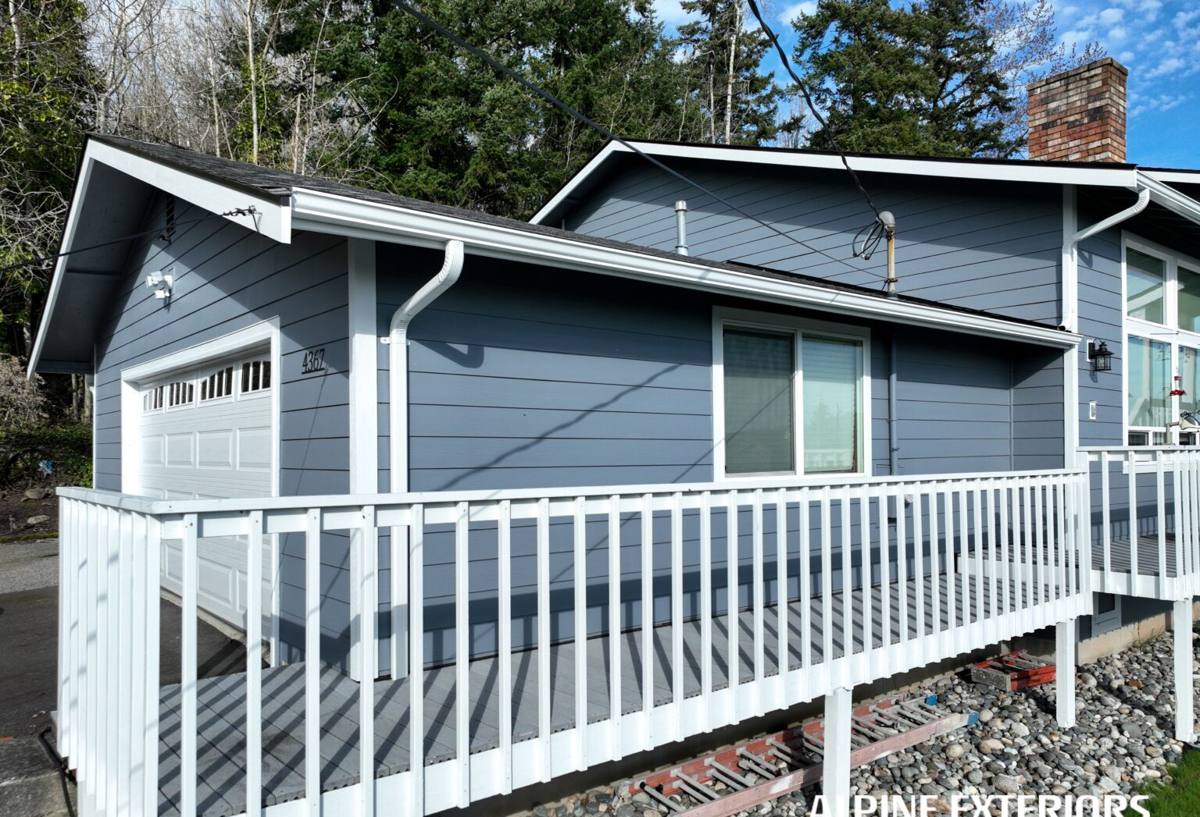
What Salt Air, Driving Rain, and Moss Actually Do to a Roof
Salt Air
Airborne salt is corrosive. It accelerates the breakdown of exposed metal fasteners, flashing, and vent components, and it can shorten the working life of lower-grade metal roofing products if they aren't specified correctly for coastal exposure. Over years, this shows up as rust streaking, pitting on flashing, and fasteners that back out or fail well ahead of schedule.
Driving Rain
Wind-driven rain doesn't just fall straight down — it gets pushed sideways and even upward under eaves, ridge caps, and around penetrations like vent pipes and chimneys. A roofing system built for calmer climates often relies on gravity alone to shed water. That's not enough here. Every transition point — valleys, sidewalls, eaves — needs sealing and flashing details that assume water will be tested from more than one direction.
Moss and Sustained Moisture
Moss thrives wherever shade, moisture, and organic debris linger, and a long moss season means more months where a roof surface stays damp. Moss holds water against the shingle or shake surface far longer than open air would allow, which speeds up granule loss on asphalt roofing and accelerates rot on untreated wood. Left unaddressed, moss also lifts shingle edges as it grows, creating small gaps where wind-driven rain can work its way underneath.
Signs a Fairhaven Roof Is Ready for Replacement
Repairs make sense when the damage is isolated. Replacement becomes the honest recommendation when the roofing system as a whole has aged out or when moisture has gotten past the surface layer. Signs worth taking seriously include:
- Granule loss heavy enough that you can see bald patches or find granules collecting in gutters
- Shingles that are cupping, curling, or cracking, especially on south- and west-facing slopes
- Moss buildup that returns within a season or two of cleaning
- Soft spots, sagging, or a spongy feel when walked on the roof deck
- Staining or discoloration on interior ceilings, especially after wind-driven rain events
- Rusted, lifted, or missing flashing around chimneys, skylights, and vent pipes
- A roof that's at or past the manufacturer's expected service life for its material and this climate
- Daylight visible through the attic decking
Any one of these on its own might just need attention. Several together usually mean the roof is telling you it's done.
Choosing the Right Roofing System for a Coastal Whatcom County Home
There's no single "best" roofing material for every home — the right choice depends on your roof's exposure, your budget, and how much long-term maintenance you're willing to take on. Here's how the common options stack up specifically for salt air, driving rain, and moss exposure:
| Material | Coastal / Salt Air Performance | Moss Resistance | Maintenance Load |
|---|---|---|---|
| Architectural asphalt shingle | Good, when fasteners and flashing are corrosion-resistant | Moderate — benefits from zinc/copper strips or periodic cleaning | Low to moderate |
| Standing seam metal | Very good with marine-grade coatings and stainless fasteners | Very good — sheds debris, little surface for moss to grip | Low |
| Cedar shake | Fair — attractive, but wood is more sensitive to sustained moisture | Poor without diligent upkeep — moss and rot risk are real concerns here | High |
| Synthetic composite shake/slate | Good — engineered to resist moisture absorption | Good | Low to moderate |
We're straightforward with homeowners about cedar shake: it can look great, but in a climate with this much sustained moisture and moss pressure, it demands a maintenance commitment — regular cleaning, moss treatment, and closer inspection — that many homeowners underestimate when they choose it. That's not a knock on the product; it's a fact about wood in a wet marine climate, and it's worth weighing honestly before you commit to it.
What a Correct Roof Replacement Actually Involves
A roof replacement is more than laying new shingles over what's there. Done right, for a home in this location, it includes:
Full Tear-Off and Deck Inspection
We remove the existing roofing down to the deck so we can actually see what's underneath — rot, soft spots, and hidden moisture damage don't show up until the old material is off. Any compromised decking gets replaced before anything new goes down; this step matters more here than in drier climates because sustained moisture exposure tends to find the weak spots in old decking.
Ice-and-Water Shield and Underlayment
Given how much wind-driven rain this area sees, we pay close attention to underlayment coverage at eaves, valleys, and around every penetration, using self-adhering waterproof membrane in the areas most exposed to wind-driven water rather than relying on standard felt alone in those spots.
Flashing Details
Chimneys, skylights, sidewalls, and valleys are where most roof leaks actually start — not out in the open field of the roof. We use corrosion-resistant flashing materials and install them to shed water from multiple directions, not just straight down.
Fasteners and Hardware
Given the corrosive effect of salt air, we use fasteners and hardware rated for coastal exposure rather than standard-grade options that can rust and fail early.
Ventilation
Covered in more detail below — but it's a core part of the installation, not an afterthought.
Ventilation and Moisture Control: The Overlooked Half of the Job
A new roof surface doesn't mean much if the attic underneath it can't breathe properly. Balanced intake and exhaust ventilation pulls moist, warm air out of the attic before it condenses on the underside of the deck. In a climate with this much ambient moisture, poor ventilation shortens the life of even a high-quality roofing system from the inside out — you can end up with a roof that looks fine on the surface while the decking underneath is deteriorating. We evaluate intake and exhaust balance as part of every replacement, not as an optional add-on, and we'll tell you plainly if your attic's ventilation needs correcting alongside the roof work.
Our Process, Start to Finish
- On-site assessment. We walk the roof and attic, check for soft decking, look at existing ventilation, and note the specific exposure conditions of your property.
- Honest scope and estimate. You get a clear, written explanation of what we recommend and why — including where a repair might genuinely be enough, if that's the case.
- Material selection. We walk through the trade-offs for your roof specifically, factoring in exposure, budget, and how much maintenance you want to take on long-term.
- Tear-off and deck repair. Old roofing comes off, the deck is inspected, and any damaged sections are replaced before new material goes on.
- Installation. Underlayment, flashing, ventilation components, and the finish roofing material are installed to manufacturer specifications and matched to this climate's demands.
- Cleanup and walk-through. We clear debris and nails from the property and walk the finished job with you before calling it done.
Why a Crew That Already Works Fairhaven Matters
Roofing crews that mostly work inland or in milder microclimates sometimes underestimate what Fairhaven's location demands — lighter flashing details, standard-grade fasteners, or underlayment choices that would be fine elsewhere in Whatcom County but fall short this close to the water. Working this neighborhood regularly means we've seen firsthand how salt air, storm-driven rain, and moss behave on roofs here across different orientations and roof pitches, and we build that experience into every estimate and every install. That's a practical advantage, not a sales pitch — it means fewer surprises during the job and a roof that's actually specified for where it sits.
What Affects the Cost of a Roof Replacement
Every roof is priced individually, but the same handful of factors drive most of the variation we see on Fairhaven homes:
| Factor | Why It Matters |
|---|---|
| Roof size and pitch | More square footage and steeper pitches mean more material and labor time |
| Number of layers to remove | Tearing off multiple old layers adds disposal and labor cost |
| Decking condition | Rotted or soft decking sections need replacing before new roofing goes on |
| Material choice | Asphalt, metal, and composite/synthetic options carry different material and install costs |
| Roof complexity | Valleys, dormers, chimneys, and skylights all add flashing and labor time |
| Ventilation upgrades | Correcting inadequate intake/exhaust ventilation adds to the scope but protects the investment |
For most Fairhaven-area homes, a full roof replacement falls in a broad range of roughly $9,000 to $25,000 or more, depending on the factors above. We won't know where your project lands until we've actually seen the roof, which is why every estimate starts with an on-site look, not a phone-quote guess.
If your roof is showing its age or you're just planning ahead, we're happy to take a look and give you a straightforward, no-pressure assessment. Fill out the form below to schedule a free estimate.