 Chuckanut Exterior
 Fairhaven Siding Takes a Different Kind of Beating
Fairhaven sits close enough to the water that siding here ages differently than it does even a few miles inland. The combination of salt-laden air rolling off Bellingham Bay, driving rain that comes in sideways during winter storms, and a moss season that can stretch from October well into spring means siding problems show up earlier and progress faster than most homeowners expect. A house that would need a repair inspection every five years elsewhere often needs one every two or three years in Fairhaven.
This page is about one thing: siding repair, done right, for Fairhaven homes. Not a general overview of siding options, not a sales pitch for a full tear-off you don't need — just what actually goes wrong with siding in this specific pocket of Whatcom County, how to tell repair from replacement, and what a correct repair job looks like when it's done by a crew that already knows this neighborhood's quirks.
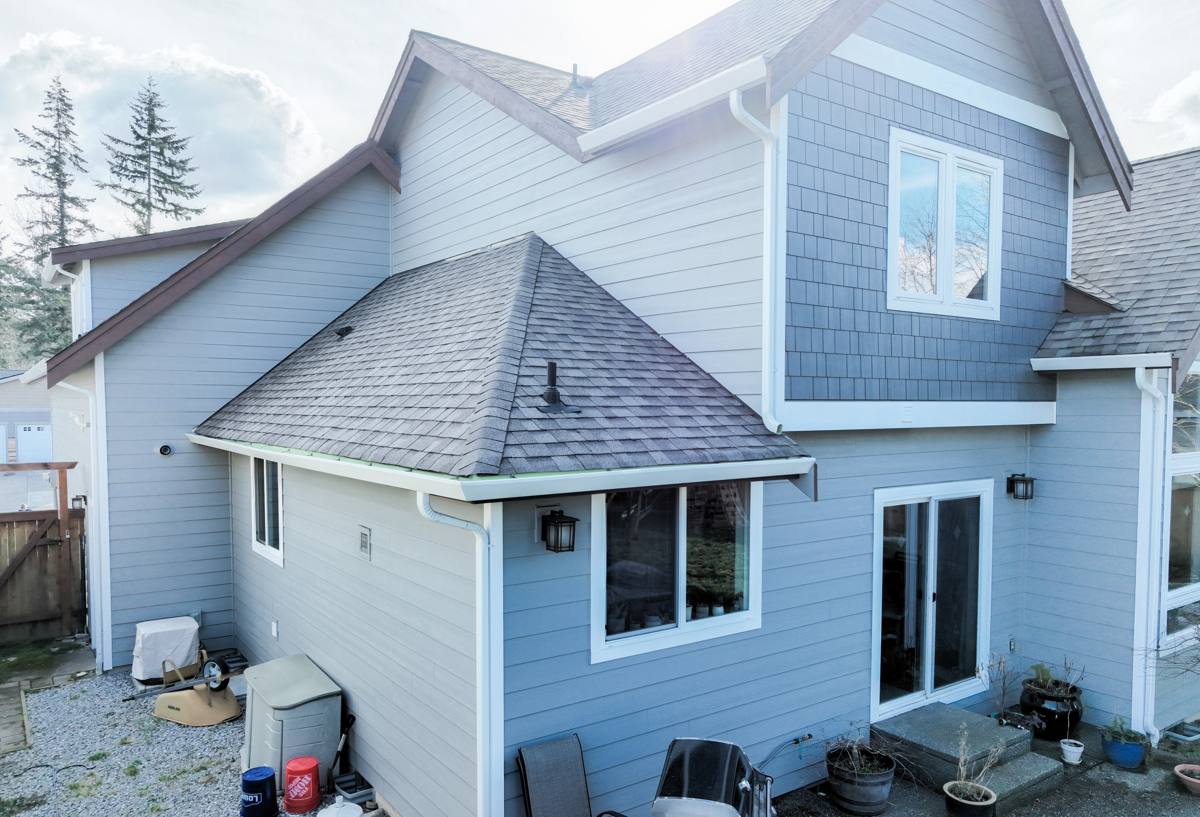
What Salt Air, Rain, and Moss Actually Do to Siding
Salt Air
Airborne salt doesn't just sit on the surface — it works into seams, fastener heads, and any place paint or caulking has started to fail. On untreated or poorly sealed materials, that salt exposure accelerates corrosion of fasteners and speeds up the breakdown of caulked joints. Over time you get streaking, chalky residue, and finish that fails faster than the manufacturer's warranty would suggest.
Driving Rain
Fairhaven's exposure to weather coming off the Strait means rain doesn't fall straight down — it drives sideways into wall assemblies. Siding systems that rely on tight caulk lines and perfect factory finishes to stay watertight are more exposed here than in a sheltered inland lot. Wind-driven rain finds gaps at butt joints, around trim, and at penetrations for hose bibs, vents, and light fixtures. Once water gets behind the siding, the damage usually shows up on the sheathing or framing long before it's visible from the outside.
Moss and Sustained Moisture
Whatcom County's long, wet shoulder seasons keep siding damp for extended stretches, and shaded north- and west-facing walls in Fairhaven's tree-lined lots rarely get a real chance to dry out between storms. That sustained dampness is what lets moss and algae take hold on siding surfaces, especially at the bottom courses near grade and under eaves with poor overhang. Moss itself doesn't destroy siding, but it holds moisture against the surface for weeks at a time, and that's exactly the condition that lets rot, delamination, and paint failure get started.
Signs Your Fairhaven Home Needs a Siding Repair
Not every issue means a full section needs replacing, but every issue is worth having looked at before it spreads. Here's what we check for on repair calls in this area:
- Soft, spongy, or crumbling spots when you press on the siding, especially near the bottom few feet
- Visible gaps or separation at butt joints, corners, or where siding meets trim and window casings
- Paint that's bubbling, peeling in sheets, or chalking heavily on one side of the house more than others
- Persistent moss or dark streaking that keeps returning within a season of cleaning
- Warping, cupping, or boards that no longer sit flat against the wall
- Staining or discoloration on interior walls or ceilings near exterior corners
- Rusted or backed-out fasteners, or nail heads that have popped through the finish
- A musty smell in a room that borders an exterior wall with visible siding issues
If you're only seeing one or two of these in a localized spot, you're usually looking at a repair, not a replacement. If several of these are showing up across multiple walls, that's often a sign the siding's underlying material or the original installation wasn't built for this climate in the first place.
Repair vs. Replace: How We Make the Call
| Situation | Usually Means | Why |
|---|---|---|
| Isolated soft spot or crack, siding otherwise sound | Spot repair | Damage hasn't spread; surrounding material is still structurally solid |
| Recurring moss/algae on one wall, no rot underneath | Cleaning + repair of the moisture source (grading, gutters, overhangs) | The siding is a symptom, not the root cause |
| Multiple soft spots across several courses | Section replacement | Water has likely tracked behind the wall over a wider area than it looks |
| Widespread warping, delamination, or fastener failure on original siding | Full replacement | The material or install method is failing broadly, not in one spot |
| Damage concentrated at grade level or under poor overhangs | Repair plus a drainage or overhang fix | Repairing siding without fixing the water source just buys a few more years |
We won't recommend a full replacement when a targeted repair will genuinely hold up — but we also won't patch something that's going to fail again in a year because the real problem was never addressed.
What a Correct Siding Repair Job Actually Involves
A repair that looks fine on the day it's finished but fails again in two years usually skipped one of these steps:
1. Find the Actual Water Path, Not Just the Visible Damage
Damaged siding is often the end result of water that entered somewhere else — a failed flashing detail, a gap at a window head, or a downspout dumping water against the wall. Cutting out and replacing the visibly bad boards without tracing back to the entry point means the repair fails at the same spot again.
2. Check the Sheathing and Framing Underneath
Once the damaged siding is removed, the wall behind it gets inspected before anything new goes back on. Soft sheathing, rotted framing, or missing house wrap have to be addressed at this stage — covering them back up with new siding doesn't fix the underlying problem, it just hides it for a while.
3. Match the Existing Reveal, Profile, and Fastening Pattern
Patched-in repairs stand out badly when the exposure (reveal) doesn't line up or the fastening pattern is different from the original run. On a repair job, getting this detail right is what separates a seamless fix from a visible patch.
4. Rebuild Flashing and Drainage Correctly
Any repair that touches a window, door, corner, or penetration is an opportunity to correct flashing that was likely inadequate in the first place. In a climate with this much wind-driven rain, flashing details matter more than the siding material itself.
5. Finish and Seal to the Right Standard
Caulk and paint are the last line of defense against salt air and rain, not the first. They need to be applied to manufacturer spec, with joints and fastener heads properly treated — not just enough to make the repair look finished from the curb.
Why Fiber Cement Holds Up Differently in This Climate
We only install James Hardie fiber cement siding, and repair calls are part of why. Fiber cement doesn't rot, doesn't support moss growth the way wood fibers can, and isn't affected by salt air the way bare or thinly coated wood products are. Hardie's factory-applied ColorPlus finish is baked on and warranted against fading and chipping in a way that field-applied paint simply can't match over time, and Hardie's HZ5 product line is engineered specifically for wet, cold-weather climates like Whatcom County's.
That doesn't mean Hardie siding never needs repair — impact damage, poor original installation, or neglected caulk joints can still cause problems on any siding material. But when we're called out to repair Hardie siding in Fairhaven, the underlying material is almost never the cause. It's usually a flashing detail, a caulk joint, or a drainage issue — problems that are straightforward to correct and don't come back once fixed. That's a very different repair conversation than the one we have on homes with wood, vinyl, or other fiber cement products that weren't built for this specific climate.
Our Repair Process for Fairhaven Homes
- On-site assessment — we look at the damage, the wall assembly behind it, and the likely water source, not just the surface symptom
- Honest scope — you get a clear answer on whether this is a spot repair, a section replacement, or something bigger, with the reasoning explained
- Written estimate — no vague ranges; you know what's being repaired and what it involves before work starts
- Repair or replacement — matched materials, corrected flashing and drainage where needed, and fastening to spec
- Finish and cleanup — sealed, finished, and matched as closely as possible to the surrounding siding
Because we already work regularly in this part of Whatcom County, we're familiar with the typical lot conditions, exposure patterns, and moisture issues that show up in Fairhaven specifically — the tree cover, the proximity to the water, and the way certain walls just never get enough sun to dry out. That familiarity means fewer surprises once we open up a wall.
Between Repairs: Reducing How Often You Need One
A few habits go a long way toward stretching the time between siding repairs in a climate like this:
- Keep gutters clear so water isn't overflowing directly onto siding below
- Trim back vegetation that keeps walls shaded and damp longer than necessary
- Rinse moss and algae off siding surfaces before it builds up thick enough to hold moisture
- Re-caulk joints around windows, doors, and trim every few years rather than waiting for visible gaps
- Walk the exterior after major windstorms and check for anything that's come loose or shifted
None of this eliminates the need for repairs eventually — Fairhaven's climate is simply too demanding for that — but it does reduce how often and how extensively you'll need them.
Get a Straight Answer on Your Siding
If you're seeing soft spots, persistent moss, failing paint, or gaps opening up on your Fairhaven home, it's worth having someone look at it before the next round of winter storms. We'll give you an honest read on whether you're looking at a repair or something bigger, with no pressure either way. Use the form below to request a free estimate.