 Chuckanut Exterior
 Deck Building in Fairhaven's Coastal Climate
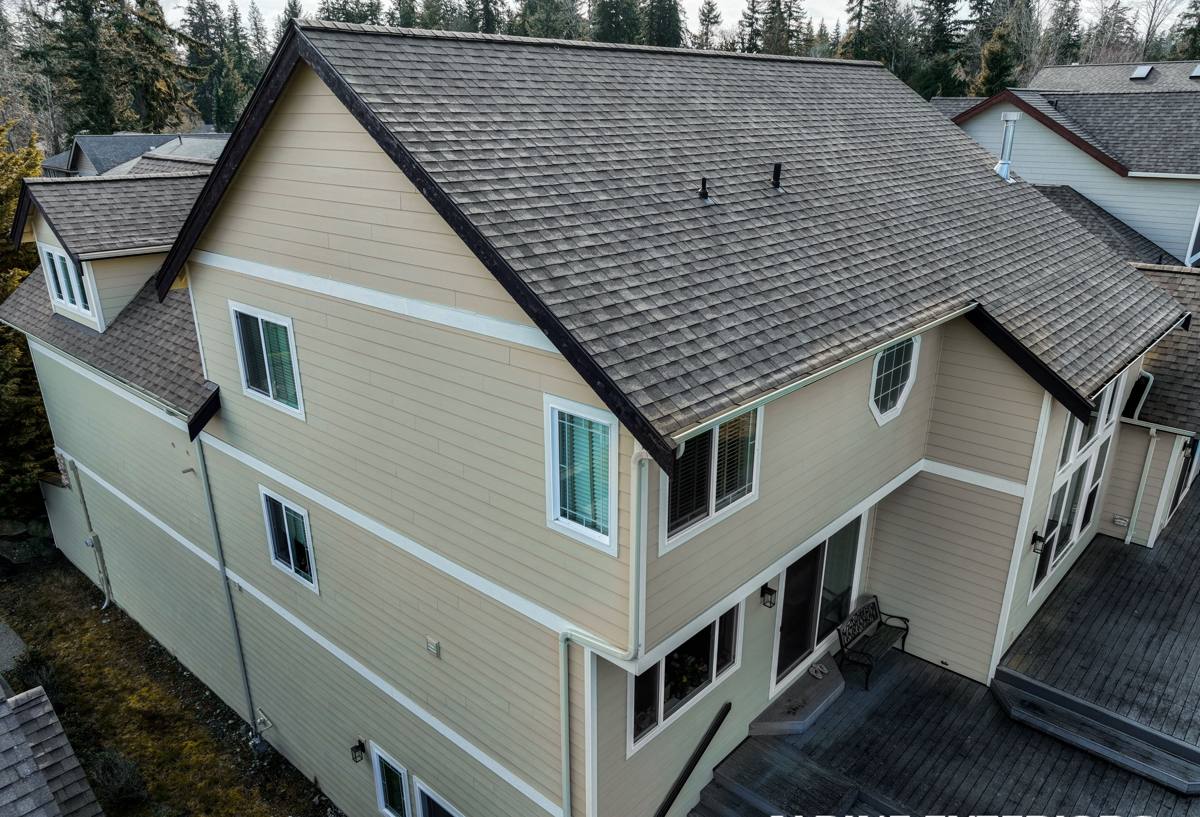
Fairhaven sits close enough to the water that salt air is part of daily life, and that changes what a deck needs to survive. Add in the driving rain that rolls through Whatcom County most of the year and the long stretch of gray, damp months where moss gets a real foothold on anything horizontal, and you've got a climate that's tough on outdoor structures in ways that inland decks never have to deal with. A deck built the same way you'd build one in a dry climate will show problems here years before it should — soft spots in the framing, corroded fasteners, slick moss-covered boards, railings that loosen because the wood around the posts has started to break down.
Building decks for this specific environment isn't a different trade, but it is a different set of decisions at almost every step: what material goes down, what hardware holds it together, how the frame is protected from standing water, and how the whole thing is oriented to shed rain and get what sun it can. This page walks through what actually matters for a deck in Fairhaven, not generic deck-building advice that ignores where you live.
What Coastal Moisture and Salt Air Actually Do to a Deck
It helps to understand the failure points before talking about the fix. In a marine climate like this one, decks don't usually fail all at once — they fail slowly, from the inside out, in a few predictable places:
- Fastener corrosion — salt-laden air speeds up rust on any hardware that isn't rated for coastal exposure, and once a fastener weakens, the board around it starts to move and split.
- Trapped moisture at the ledger board — where the deck attaches to the house is the single most common place for rot to start, especially without proper flashing.
- Moss and algae growth — shaded, damp surfaces in this region grow moss fast, and moss holds moisture against the decking material, which shortens its life and makes the surface dangerously slick.
- End-grain water absorption — cut ends of boards, especially on wood decking, soak up water fastest and are usually where rot shows up first.
- Poor drainage under the deck — standing water beneath a low deck keeps the framing damp far longer than it should ever stay wet.
None of these are exotic problems. They're the ordinary result of building outdoor structures in a wet, coastal region, and every one of them has a straightforward fix when it's addressed during construction instead of ignored until it's a repair.
Choosing Decking Material for a Fairhaven Property
There's no single "best" decking material — the right choice depends on your budget, how much upkeep you want to do, and how close your property sits to salt air and shade. Here's an honest comparison of the common options for this climate:
| Material | How It Handles This Climate | Maintenance | Typical Lifespan Here |
|---|---|---|---|
| Pressure-treated wood | Affordable and strong, but needs consistent sealing to resist moisture and moss | Annual cleaning and re-sealing recommended | 10-15 years with upkeep |
| Cedar | Naturally moisture- and insect-resistant, weathers to a gray patina if left untreated | Periodic staining/sealing if you want to keep the original color | 15-20 years with care |
| Composite decking | Resists rot and doesn't absorb water like wood, though it can still grow surface moss if shaded and not cleaned | Occasional washing, no sealing or staining | 25-30 years, brand-dependent |
| PVC decking | Fully synthetic, best moisture resistance of the common options, holds up well in salt air | Low — mostly just cleaning | 25-30+ years |
We'll talk through these trade-offs honestly during your estimate. A lot of homeowners assume composite or PVC is automatically the right call, and it often is for low-maintenance living — but a well-built cedar deck, properly sealed and cared for, still holds up fine in this climate and has a warmth that synthetic materials don't match. The wrong choice isn't a bad material, it's a material picked without a plan for maintaining it.
A Note on Hidden Fastener Systems
Many composite and PVC decking lines use hidden fastener clips instead of face-screwed boards. These look better and eliminate the exposed screw holes where water likes to sit, but they need to be installed correctly and matched to the right board profile — a mismatched clip system is a common cause of boards popping loose after a few wet seasons. We only use fastener systems rated for the specific decking product going down.
Framing and Substructure — Where Most Deck Failures Start
The decking surface is what you see, but the framing underneath is what determines whether the deck is actually safe. In a climate like this, the substructure needs attention that's easy to skip if a crew is moving fast:
- Ledger board flashing that actually sheds water away from the house band joist, not just a bead of caulk
- Joist tape or flashing on top of every joist to keep water from wicking into the wood through deck screw holes
- Corrosion-resistant joist hangers and structural screws rated for treated lumber and exterior exposure
- Proper post footings set below frost depth and sized for the soil conditions on your lot
- Adequate slope and gap spacing so water drains off the surface instead of pooling
This is the part of a deck build that nobody sees once it's finished, which is exactly why it's the part most likely to get shortcut. We build the frame to hold up for decades, not just to pass a quick glance.
Railings, Hardware, and Fasteners for Salt Air
Standard galvanized hardware is fine in a lot of the country, but in a marine air environment it corrodes faster than it should. We spec stainless steel or coated fasteners rated for coastal/salt exposure on the connections that matter most — ledger bolts, joist hangers, and any hardware holding a railing post, since a failed railing connection is a safety issue, not just a cosmetic one. Railing posts themselves get the same moisture protection as the framing: proper flashing where they meet the deck surface, and blocking to keep them rigid over time.
How We Approach a Deck Build in Fairhaven
1. On-Site Assessment and Design
We start by looking at your specific lot — sun exposure, drainage, proximity to the water, existing structure if you're replacing a deck, and what you actually want to use the space for. That shapes both the layout and the material recommendation.
2. Permitting
Most new decks and many deck rebuilds in Whatcom County require a permit, particularly for anything above a certain height or attached to the house. We handle the permit process so you're not the one tracking down requirements or inspections.
3. Construction
Demolition of the old deck if applicable, footings and framing built to code with the moisture protection covered above, then decking, railings, and any stairs. We keep the site clean and walk you through progress at the framing stage, before decking covers it up, so you can see the work that's going into the part you won't see later.
4. Final Walkthrough
We go over the finished deck with you, cover basic care for whatever material you chose, and make sure everything from railings to stair treads meets code and feels solid before we call it done.
Living With a Deck Through a Long Moss Season
No deck in this region is maintenance-free forever, even the low-maintenance materials. A little seasonal attention goes a long way toward keeping a deck safe and looking good:
- Sweep leaves and debris off regularly, especially in fall — trapped debris holds moisture and feeds moss growth
- Rinse or wash the surface at least once or twice a year to knock back algae and moss before it gets established
- Check railings and stair connections annually for any looseness, especially after winter storms
- Re-seal wood decking on the schedule recommended for your specific product — don't wait until it looks dry and gray
- Keep gutters and downspouts near the deck clear so runoff isn't dumping extra water onto or under the structure
- Trim back overhanging branches that keep the deck shaded and slow to dry
None of this is a huge time commitment, but skipping it is exactly how a well-built deck in this climate starts to age faster than it should.
Why Local Deck-Building Experience Matters
A deck built by a crew that hasn't worked in this specific climate can still look great on the day it's finished — the problems show up later, in year three or four, when the ledger flashing wasn't detailed for this much rain or the fasteners weren't rated for the salt air coming off the water. Working regularly in Fairhaven and the surrounding Chuckanut area means we already know how this climate treats a deck over time, what Whatcom County permitting actually requires, and which material and hardware choices hold up here versus which ones just look good in a showroom. That experience is part of what you're paying for — not just the labor to build it, but the judgment to build it right for where it actually sits.
If you're planning a new deck or need to replace one that's showing its age, we're happy to take a look and talk through honest options for your property. Fill out the form below for a free, no-pressure estimate — no obligation, just a straight assessment of what your deck needs.