 Chuckanut Exterior
 Fairhaven's Climate Doesn't Go Easy on Windows
Fairhaven sits close enough to the water that salt-laden air is a constant, not an occasional nuisance. That air works on window hardware, aluminum components, and exposed fasteners year-round, and it doesn't take a storm to do it — a steady, low-grade exposure is often worse than the occasional big blow because it never really lets up. Add in Whatcom County's driving rain, which tends to come in sideways off the water rather than straight down, and you've got moisture finding its way into gaps that would stay dry in a more sheltered inland location.
Then there's moss season, which around here isn't really a season so much as most of the year. Shaded sills, north-facing exposures, and anywhere water sits instead of shedding will grow moss and algae given enough damp weeks in a row. On windows, that shows up as dark streaking on frames, soft or spongy wood at the sill, and finish that fails years before it should.
None of this means Fairhaven homes need exotic materials or gimmicks. It means the basics — flashing, sealant, drainage, and frame material — have to be done right, every time, because the climate here won't forgive shortcuts the way a drier region might.
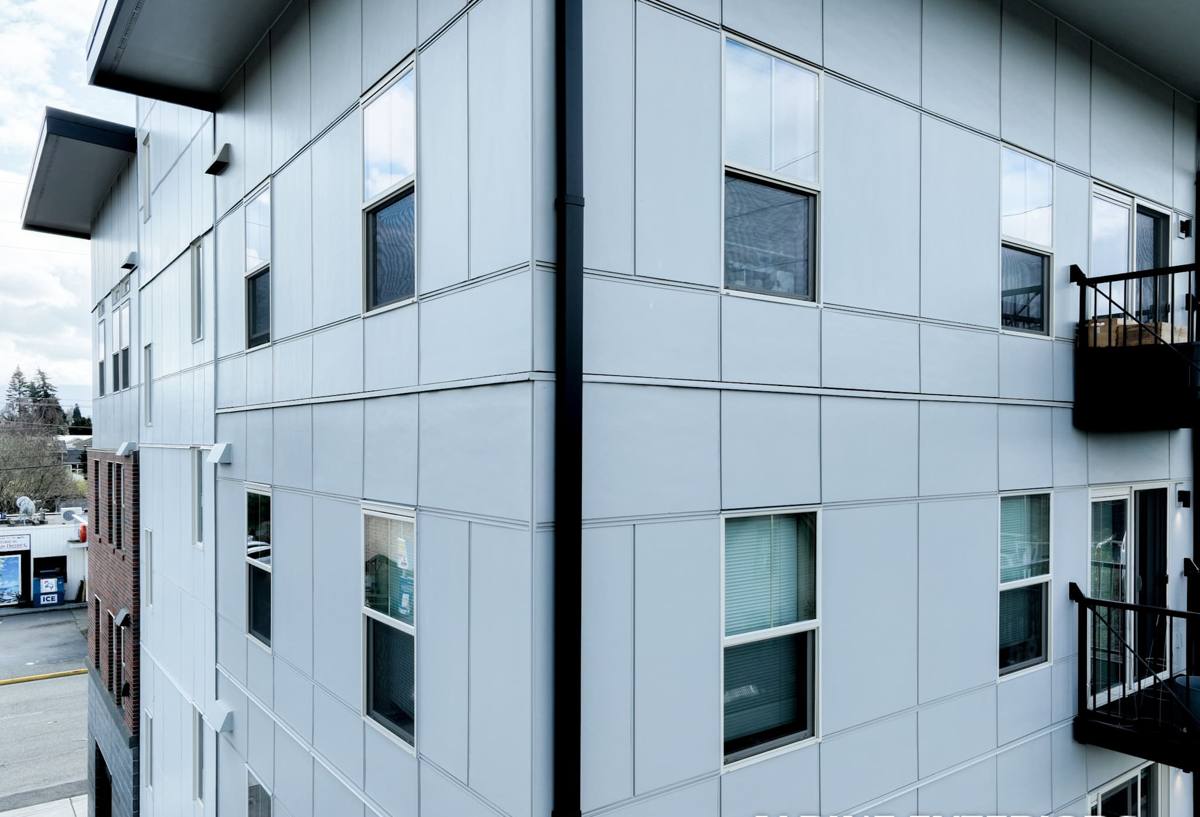
What "Energy-Efficient" Should Actually Mean Here
Energy efficiency gets marketed as a single number, usually U-factor, but in a marine climate like this one, air sealing and water management matter just as much as glass performance. A window with excellent lab-rated U-factor that's installed with a poor moisture barrier will leak heat and water around the frame no matter how good the glass is.
For Fairhaven homes, we look at efficiency as three things working together:
- Glass and frame thermal performance — how much heat transfers through the window itself
- Air infiltration — how tight the seal is around the sash and frame
- Water management — flashing and drainage that keep wind-driven rain from finding a path inward
A window can score well on paper and still underperform on a Whatcom County home if the installation doesn't account for driving rain and salt exposure. That's why we treat the install itself as part of the efficiency equation, not just the product spec sheet.
U-Factor, Solar Heat Gain, and What They Mean for This Neighborhood
Fairhaven's marine climate is mild but overcast for long stretches, so the tradeoffs are a little different than in a hot, sunny climate. Low U-factor (better insulation) matters more here than solar heat gain coefficient, since you're rarely fighting excessive solar heat and more often fighting heat loss on grey, damp days. We size glass packages to that reality rather than defaulting to a one-size-fits-all spec.
Signs Your Windows Are Costing You Comfort and Efficiency
Most homeowners don't call about windows because of an energy bill — they call because something feels off. Here's what tends to show up first in this climate:
- Condensation or fogging between the panes (a sign the seal has failed)
- Soft, discolored, or spongy wood at the sill or bottom corners
- Visible moss, algae, or dark streaking on the frame or sill
- Noticeable draft or cold spot near the window even with it closed
- Difficulty opening, closing, or latching — swollen wood or corroded hardware
- Paint or finish failing well ahead of schedule on one side of the house
- Higher heating bills without a clear explanation
Any one of these is worth a look. A few of them together usually means the window's ability to manage moisture has already broken down, and replacement will save more money over time than another round of caulk and touch-up paint.
Frame Materials: What Holds Up in Salt Air and Rain
Frame material matters more in Fairhaven than it would somewhere dry and inland, because you're weighing thermal performance against how the material handles constant moisture and airborne salt.
| Material | How It Handles This Climate | Tradeoffs |
|---|---|---|
| Vinyl | Doesn't corrode or rot; handles salt air well; low maintenance | Frame color/finish options are more limited than wood; quality varies a lot between manufacturers |
| Fiberglass | Very stable in temperature swings and moisture; strong resistance to warping | Higher upfront cost than vinyl |
| Wood (clad exterior) | Warm interior look; exterior cladding protects the wood from direct weather | Any breach in the cladding lets moisture reach wood underneath — requires diligent upkeep near the water |
| Aluminum | Strong and slim sightlines | Conducts heat and cold readily; more prone to corrosion pitting in salt air over time without proper coatings |
We don't push one material on every job. A lot of it comes down to how exposed the window is — a window facing prevailing wind and rain off the water gets treated differently than one tucked under an eave on a sheltered wall.
Glass Packages Worth Considering
Double-pane, low-E, gas-filled glass is standard for a reason, but there are a few upgrades worth discussing depending on the window's exposure:
| Option | What It Does | Best For |
|---|---|---|
| Standard double-pane, low-E | Reduces heat transfer and UV fading | Most walls of the house |
| Argon or krypton gas fill | Improves insulation between panes | Any window where comfort near the glass matters, like a living room or bedroom |
| Warm-edge spacers | Reduces condensation risk at the glass edge | Windows in humid rooms or on consistently damp walls |
| Laminated or impact-resistant glass | Adds sound dampening and durability | Windows facing wind-driven debris or road/water noise |
Our Installation Process
The window is only half the job. The other half is how it's tied into the wall, and that's where most premature failures start on homes in this climate.
- Assessment — we look at each window's exposure, current condition, and any sign of past water intrusion before recommending anything
- Removal — old windows come out carefully, and we inspect the framing underneath for hidden rot or moisture damage before moving forward
- Flashing and moisture barrier — proper flashing tape and sill pans are installed so any water that does reach the opening drains back out, not into the wall
- Setting and shimming — the new window is leveled, plumb, and squared so it operates smoothly and seals evenly for years
- Sealing — exterior sealant and interior air sealing are both addressed, since a gap on either side undercuts efficiency
- Final check — we test operation, look for any visible gaps, and walk the job with the homeowner before we call it done
Skipping the flashing and drainage steps is the single most common shortcut that leads to rot and leaks down the line — and it's invisible from the outside once the trim goes back on. It's also the step that matters most in a place that gets this much driving rain.
What Affects Cost
Every home is different, but a few factors consistently move the price on a Fairhaven window job:
| Factor | Why It Matters |
|---|---|
| Frame material chosen | Vinyl, fiberglass, and clad-wood carry different material costs |
| Window size and style | Larger openings, bays, and custom shapes cost more than standard double-hungs or sliders |
| Condition of the existing framing | Hidden rot found during removal adds repair work before the new window goes in |
| Number of windows done at once | Bundling multiple windows in one visit is more efficient than one-off replacements |
| Exposure and access | Upper-story or hard-to-reach windows take more time and equipment |
We give straightforward, itemized estimates so you can see what's driving the number rather than a single lump figure.
Why It Matters to Hire a Crew That Knows Fairhaven
A window install that works fine in a dry inland climate can fail within a few years here if it's not detailed for salt air and driving rain. Flashing details, sealant choices, and even which side of the house gets extra attention are things we've learned from doing this work specifically in this kind of coastal, wet-winter environment — not from a general install checklist written for somewhere else.
We also know what moss and salt exposure look like once they've already done damage, which helps us catch problems during the initial assessment instead of after the new windows are in. That's the value of hiring a crew that works this specific area regularly, rather than one passing through Whatcom County on a broader regional route.
Maintenance After Installation
Even a well-installed, high-quality window benefits from a little upkeep in this climate:
- Rinse salt residue off frames and glass periodically, especially after storms
- Keep sills and tracks clear of moss, leaves, and standing water
- Check and re-lubricate hardware annually so locks and hinges don't seize
- Inspect exterior caulking yearly and touch up before gaps widen
- Trim back vegetation that keeps a window in constant shade and dampness
None of this is heavy work, but skipping it is how a good window install gets a shorter lifespan than it should in a marine climate like this one.
If your windows are drafty, fogged, or just past their prime, we're happy to take a look and give you a straightforward, no-pressure estimate. There's a form below — reach out and we'll walk through what your home actually needs.