 Chuckanut Exterior
 Metal Roofing Built for Fairhaven's Coastal Climate
Fairhaven sits close enough to the water that salt air is part of daily life, and that changes what a roof has to withstand. Add in the driving, sideways rain that blows through Whatcom County in the fall and winter, plus a moss season that can stretch nearly year-round on shaded, north-facing slopes, and you've got a climate that is genuinely hard on roofing materials. Metal roofing, installed correctly, handles all three of those conditions better than most alternatives — but "installed correctly" is doing a lot of work in that sentence. A metal roof that's flashed wrong or fastened with the wrong hardware near saltwater can fail faster than a well-built asphalt roof. This page is about what a correct metal roofing job looks like for a Fairhaven home, and why local experience matters when you're picking who does it.
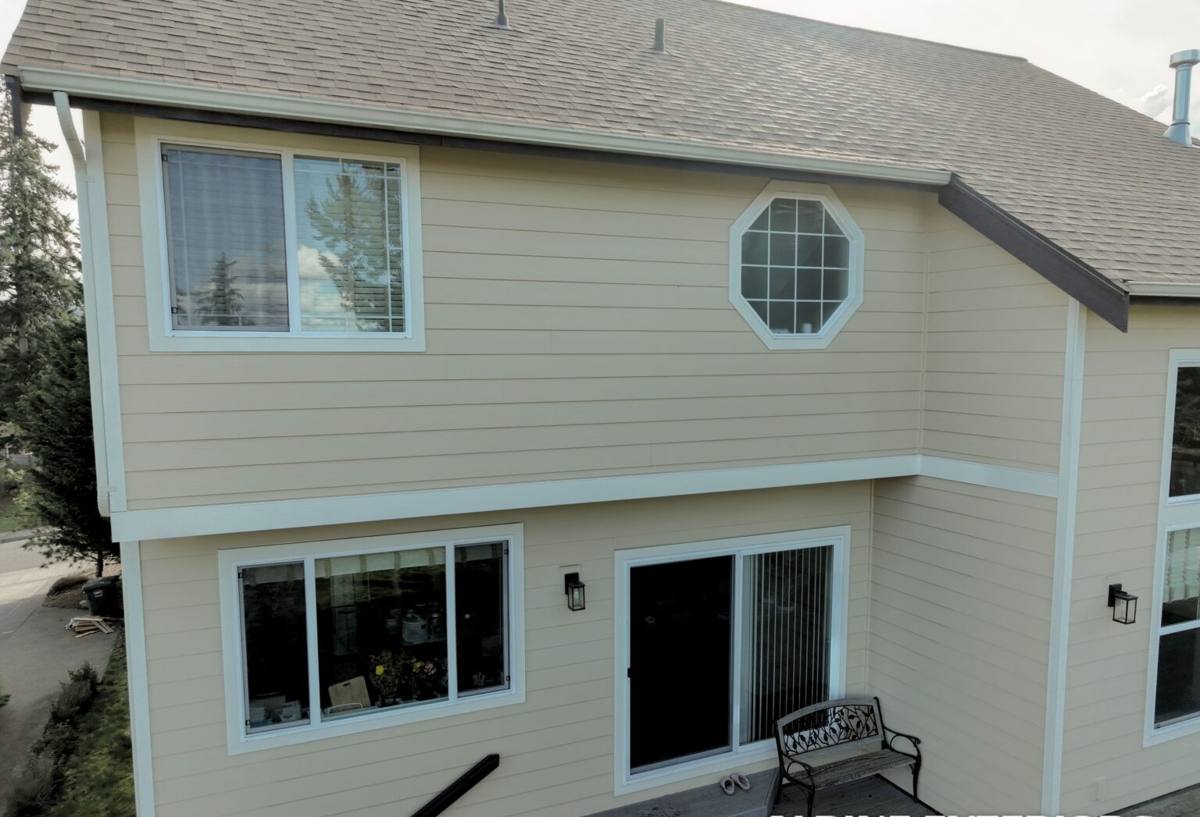
What Fairhaven's Climate Actually Does to a Roof
Salt Air and Corrosion
Homes near Bellingham Bay live with a steady drift of salt-laden air, even at a distance from the shoreline. Salt accelerates corrosion on any exposed metal — fasteners, flashing edges, cut panel ends, and lower-grade coatings all show it first. This is why the coating and fastener choice matters more here than it would for a metal roof going up inland. It's not that metal roofing is a bad fit for salt air; it's that the wrong metal roofing is a bad fit for salt air.
Driving Rain
Wind-driven rain doesn't just fall straight down — it gets pushed sideways and upward under laps, around penetrations, and into anything that isn't properly lapped or sealed. A roof in this region needs underlayment and flashing details built for wind-driven moisture, not just a standard dry-climate installation.
Moss and Shade
Tree cover and persistent damp conditions make moss a near-constant presence on north- and west-facing roof sections. Moss holds moisture against a roofing surface and, on the wrong material, can work into seams and fastener penetrations over time. Metal roofing resists moss far better than asphalt or wood, but it isn't immune, and roof pitch, panel profile, and surrounding tree cover all affect how much of a problem it becomes on a given house.
Why Metal Roofing Fits This Environment Well
When it's specified and installed correctly, metal roofing addresses the three issues above more directly than most other roofing materials:
- Smooth, non-porous panel surfaces give moss far less to hold onto compared to the granular texture of asphalt shingles
- Properly coated steel or aluminum resists the corrosive effect of salt air far longer than uncoated or poorly coated metal, or than exposed fasteners on other roof types
- Interlocking panel seams shed wind-driven rain more reliably than shingle laps, provided the underlying flashing and underlayment are done right
- Steep or shallow, metal sheds standing water and snow load well, which matters on the varied rooflines common in this area
None of that is automatic, though. The material only performs as well as the installation behind it.
Choosing the Right Metal Roofing System
Not all metal roofing is the same, and the right choice depends on the home's roof pitch, budget, and how exposed it is to wind and salt air.
| System | Best For | Trade-Offs |
|---|---|---|
| Standing seam (concealed fasteners) | Homes with direct wind or salt exposure, long-term low maintenance | Higher upfront cost, requires experienced installation crew |
| Exposed-fastener panels | Budget-conscious projects, outbuildings, lower-exposure roof sections | Fasteners need periodic inspection and eventual replacement as gaskets age |
| Steel with a quality protective coating | Most residential applications in this region | Coating quality varies widely; this is not the place to cut corners near salt air |
| Aluminum | Coastal-adjacent homes wanting maximum corrosion resistance | Higher material cost, softer surface needs careful handling during install |
For most Fairhaven homes, we lean toward standing seam with a quality coated steel or aluminum panel, specifically because concealed fasteners remove the most common long-term failure point in a salt-air environment: exposed screw heads slowly corroding and backing out. We'll walk through the honest trade-offs for your specific roof rather than pushing one system by default.
What a Correct Installation Actually Involves
The panels themselves are only part of the job. Most metal roof problems we get called out to inspect trace back to what's underneath or around the panels, not the panels themselves.
Underlayment
A high-temperature-rated synthetic or self-adhered underlayment gives the roof a second line of defense against wind-driven rain and ice, which matters given how much sideways weather this region sees.
Flashing and Penetrations
Valleys, chimneys, vents, and skylights are where roofs actually leak. Flashing has to be formed and lapped correctly, in the right order relative to the panels, and sealed with materials rated for long-term outdoor and coastal exposure — not general-purpose caulk that breaks down in a year or two.
Fasteners and Hardware
In a salt-air environment, fastener grade is not a place to save money. Stainless steel or a comparable corrosion-resistant fastener, matched correctly to the panel material to avoid galvanic reaction between dissimilar metals, is standard on our jobs.
Ventilation
Metal roofing performs best over a properly ventilated deck. Trapped moisture underneath the panels, especially on shaded, damp roof sections, can cause deck rot and condensation issues that have nothing to do with the metal itself but will still show up as a "roof problem."
Our Process for Fairhaven Roofs
- On-site evaluation. We walk the roof, check the deck condition, note tree cover and shade patterns, and look at how the existing roof has handled moisture and moss.
- System recommendation. Based on pitch, exposure, and budget, we recommend a panel type and coating, and explain the trade-offs plainly.
- Tear-off and deck check. We remove the old roofing and inspect the deck for rot or soft spots before anything new goes down — this step gets skipped by crews in a hurry, and it's where hidden problems get found.
- Underlayment and flashing. Installed to handle wind-driven rain, with extra attention at valleys, penetrations, and roof-to-wall transitions.
- Panel installation. Fastened or seamed with hardware matched to the panel material and to this region's salt-air exposure.
- Final walkthrough. We review the finished roof with you, including what routine maintenance it does and doesn't need going forward.
Maintaining a Metal Roof Through Moss Season
Metal roofing needs far less maintenance than shingles, but "far less" isn't "none," especially on a shaded Whatcom County roofline.
- Clear overhanging branches and debris that hold moisture against the roof surface
- Keep gutters and valleys free of needles and leaf litter, which is where moss gets its first foothold
- Do a visual check after major windstorms for lifted flashing or debris impact
- Rinse visible moss or algae growth gently rather than scraping or pressure-washing it, which can damage coatings
- Have fasteners and seams checked periodically on exposed-fastener systems, since gaskets do wear over time
Cost Factors to Understand Before You Get Quotes
| Factor | Why It Matters Here |
|---|---|
| Panel material and coating grade | Higher-grade coatings cost more upfront but resist salt-air corrosion far longer |
| Roof complexity | Valleys, dormers, and multiple roof planes increase flashing work and labor time |
| Deck condition | Rot or soft decking found during tear-off adds repair cost but is far cheaper to fix now than after new panels go down |
| Standing seam vs. exposed fastener | Standing seam costs more installed but reduces long-term maintenance in this climate |
| Access and roof pitch | Steep or hard-to-access rooflines affect labor and equipment needs |
We're not going to quote a number on this page, because a fair price depends entirely on your specific roof — but we will give you a clear, itemized estimate before any work starts, and explain exactly what's driving the cost.
Why a Crew That Already Works Fairhaven Matters
A roofing crew that regularly works in Fairhaven and the surrounding Chuckanut area already understands the practical realities of building here: how much salt-air exposure a given roof orientation actually gets, how tree cover and shade patterns affect moss growth on different roof pitches, and how the region's driving rain behaves around valleys and penetrations. That's not something you can fully substitute with a generic checklist. It also means we're not learning on your roof — we've made the material and hardware decisions for this climate before, and we know which shortcuts cause problems two or three winters down the road instead of showing up right away.
Local presence matters after the job is done, too. If a question comes up during a windstorm or after a heavy rain event, you're working with a crew that's still nearby and familiar with your roof, not a company that moved on to the next region.
Get a Straight Answer for Your Roof
If you're weighing metal roofing for a Fairhaven home, we're glad to take a look and give you an honest read on what your specific roof needs — no pressure, no inflated scare tactics about moss or rain damage. Request a free estimate using the form below and we'll schedule a time to walk the roof with you.