 Chuckanut Exterior
 Storm Damage Roof Repair, Built for How Blanchard Actually Weathers
Blanchard sits close enough to the water and the timber line that its roofs deal with a different mix of stress than homes further inland. Salt-laden air moves through on the wind, driving rain comes in sideways during winter fronts, and the tree cover that makes the area beautiful also means shade, needle drop, and a moss season that never fully quits. When a storm rolls through, the damage it leaves behind on a Blanchard roof often looks different than what you'd see on a roof in a drier, more open part of Whatcom County — and it needs to be diagnosed and repaired with that difference in mind.
This page is about one thing: storm damage roof repair for homes in and around Blanchard. Not a general roofing overview, not a sales pitch for a full tear-off you don't need — just a straight explanation of what storm damage looks like here, how a correct repair is done, and what to expect if you call us after a bad blow.
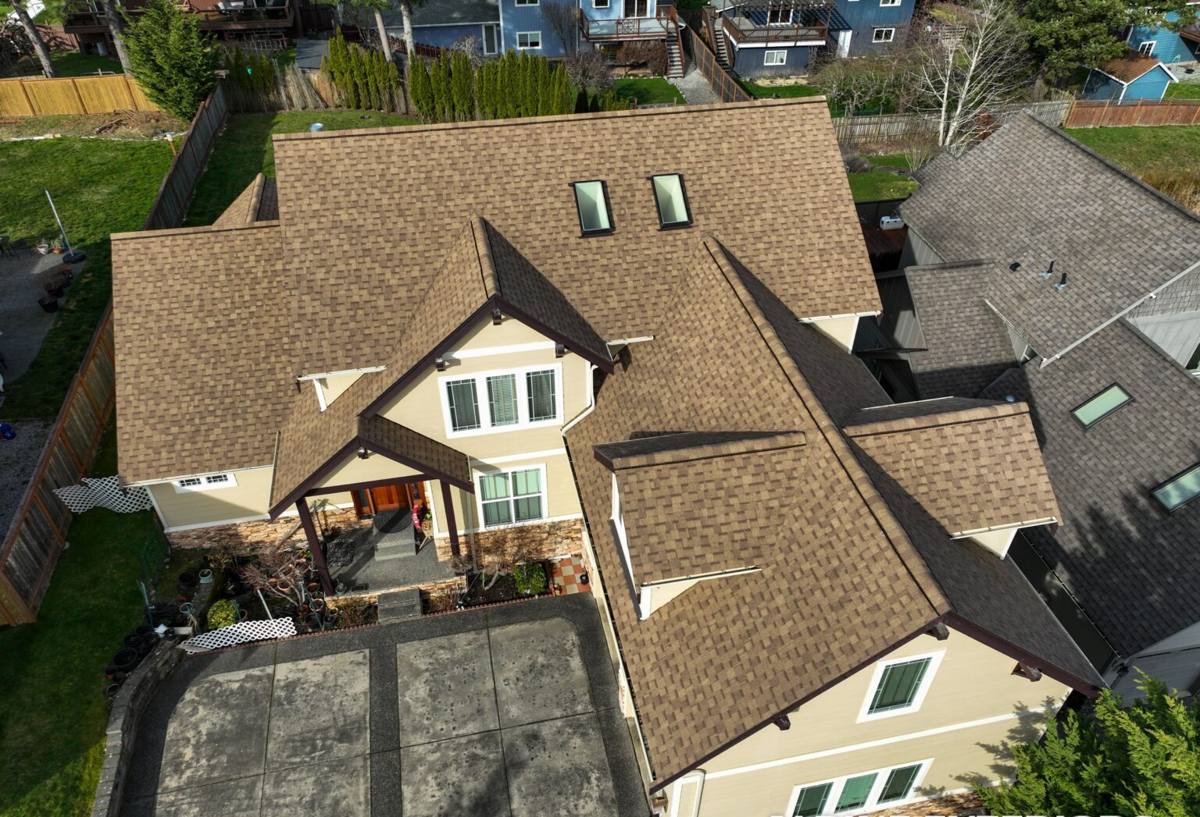
Why Blanchard Roofs Take a Different Kind of Beating
Three things define the climate load on a roof in this part of Whatcom County, and all three show up in the repair work we do.
Salt Air and Corrosion
Proximity to the water means metal components age faster here than they would twenty or thirty miles inland. Flashing, fasteners, gutter hardware, and exposed nail heads are all vulnerable to accelerated corrosion when salt air is a regular part of the weather cycle. A storm doesn't have to be severe to expose a flashing seam or fastener that was already weakened by years of salt exposure — it just has to be the event that finally pries it loose.
Driving Rain
Wind-driven rain doesn't behave like a straight downpour. It gets pushed sideways and upward under shingle edges, into open laps, and behind flashing that would otherwise shed water fine in calmer conditions. This is why storm damage here is so often about water intrusion at transitions — valleys, chimneys, skylights, wall-to-roof junctions — rather than dramatic missing sections of roof.
A Long Moss Season
Tree cover and consistent moisture give moss a long runway to establish itself on north-facing slopes and shaded sections of roof. Moss holds water against the roofing material, works its way under shingle tabs, and adds weight and friction that make wind uplift more likely during a storm. A roof that's carrying a moss load going into a windstorm is simply more exposed than a clean one.
What Counts as Storm Damage — Even When It Isn't Obvious
Most homeowners picture storm damage as a missing patch of shingles or a tree limb through the decking. That's real, but it's the minority of what we actually get called out for in Blanchard. The more common damage is quieter and easier to miss from the ground.
- Lifted or creased shingle tabs — wind can lift a shingle just enough to break its seal without tearing it off entirely.
- Loosened or bent flashing — around chimneys, vents, skylights, and roof-to-wall junctions, where wind and rain work together to pry seams open.
- Granule loss — heavy, wind-driven rain and hail can strip protective granules, leaving shingles more exposed to UV and moisture even though nothing looks visibly broken.
- Debris impact — branches and fir cones knocked loose by wind can bruise or puncture shingles without leaving an obvious hole.
- Gutter and fascia damage — overflow from clogged or storm-battered gutters can push water back up under the roof edge.
- Ridge cap separation — one of the first things to go in high wind, and one of the easiest to miss from the driveway.
None of these require a full roof replacement on their own. But left alone through a wet Whatcom County winter, any one of them turns into a slow leak, then rot in the decking, then a much bigger and more expensive job.
Our Storm Damage Repair Process
1. Inspection, Inside and Out
We start on the roof itself, checking shingles, flashing, ridge caps, and valleys for the damage patterns above. Then we check the attic or roof-to-ceiling transitions from the inside where accessible, since interior staining or damp insulation often tells us more about where water is actually getting in than what we can see from outside.
2. Plain-Language Documentation
You get a clear written account of what we found, what caused it, and what repair it needs — in terms you can actually use, whether that's for your own decision-making or for a conversation with your insurance carrier.
3. Repair Scoped to the Actual Damage
We fix what's damaged. If a section of shingles was compromised by wind or debris, we replace that section and tie it into the surrounding roofing correctly, including proper flashing work at any nearby transitions. We don't pad a storm repair into an unnecessary full replacement.
4. Cleanup and Final Check
Debris, old materials, and stray fasteners get cleared from the roof and the ground around your home. We do a final walkthrough so you know exactly what was done and what to watch for going forward.
Repair or Replace? How We Make That Call
Not every storm-damaged roof needs the same answer. The table below covers the factors that actually determine whether a repair is the right call or whether it's time to talk about replacement.
| Factor | Repair Usually Makes Sense | Replacement Should Be Considered |
|---|---|---|
| Extent of damage | Isolated to one section, slope, or feature | Widespread across multiple slopes |
| Roof age | Roof is within its expected service life | Roof is already near the end of its material lifespan |
| Decking condition | Decking is solid underneath the damaged area | Decking shows rot or soft spots in multiple areas |
| Moss/organic buildup | Light, manageable, limited to shaded sections | Heavy, long-term buildup affecting large areas |
| Prior repair history | This is a first or infrequent repair | Repeated patch repairs in the same areas over the years |
We'll tell you honestly which side of that table your roof falls on. Most storm calls in Blanchard end in a repair, not a replacement — but when a roof is genuinely at the end of its life, patching it further isn't doing you any favors.
Materials and Methods We Use — and Why
Given the salt air and driving rain typical of this area, we pay particular attention to a few things other repairs might treat as afterthoughts:
- Corrosion-resistant fasteners and flashing — standard hardware degrades faster this close to the water; we use materials rated to hold up under salt exposure.
- Proper flashing technique at transitions — since driving rain exploits weak flashing more than open field shingle, we prioritize getting laps, step flashing, and counterflashing right rather than relying on sealant to compensate for a poor mechanical fit.
- Matched shingle profile and color — we make a genuine effort to match your existing roofing so a repair doesn't stand out as a patch.
- Moss-aware detailing — on shaded slopes, we make sure repaired sections don't create new debris traps or flat spots where moisture and moss can re-establish.
None of this is exotic. It's just choosing materials and techniques that match the actual conditions a Blanchard roof lives in, rather than defaulting to whatever's fastest.
Storm Damage and Insurance: What We Can and Can't Do
We're not adjusters and won't pretend to be. What we can do is give you an honest, detailed assessment of the damage, timestamped documentation, and a clear scope of repair that you can bring to your insurance carrier if you choose to file a claim. We price and describe the work the same way whether or not insurance is involved — the roof needs what it needs regardless of who's paying for it. If you're unsure whether a claim is worth filing, we're happy to walk through what we found so you can make that call with full information.
After a Storm: A Quick Checklist for Blanchard Homeowners
- Check your yard and gutters for granules, shingle pieces, or flashing fragments — a sign your roof took a direct hit.
- Look at ceilings and attic spaces for new staining, damp spots, or musty smells after heavy rain.
- Note any new debris resting on the roof itself, especially branches near valleys or vents.
- Avoid climbing onto the roof yourself, especially on wet or moss-covered surfaces — this is exactly the kind of footing that causes falls.
- Get an inspection soon after the storm rather than waiting — small entry points get worse fast in a wet climate.
- Keep any photos or notes you take; they're useful whether or not you end up filing an insurance claim.
Why a Crew That Already Works Blanchard Matters
A roofer who mostly works drier, inland territory can still do competent work, but they're guessing at conditions we deal with routinely: how fast moss regrows on a shaded north slope near the water, which flashing details actually hold up against driving rain off Chuckanut, and how much extra corrosion protection is worth building into a repair given the salt air. That's not a knock on general roofing skill — it's just the difference between knowing a climate in theory and having repaired roofs in it, storm after storm, for years. When we look at a damaged roof in Blanchard, we're not calibrating from scratch. We already know what this area does to a roof over time, and we build the repair accordingly.
Get a Free, No-Pressure Estimate
If a recent storm has you wondering about a leak, a loose section of shingles, or damage you can't quite see from the ground, we'll take a look and give you a straight answer — repair, monitor, or replace — with no pressure either way. Use the form below to request a free estimate for storm damage roof repair on your Blanchard home.