 Chuckanut Exterior
 Blanchard's Climate Is Rough on Siding — Here's Why
Homes in and around Blanchard sit in one of the more punishing microclimates in Whatcom County for exterior materials. You've got salt-laden air drifting in off the water, long stretches of driving, wind-blown rain that hits siding at an angle instead of falling straight down, and a moss and mildew season that can run most of the year in shaded, north-facing spots. Individually, any one of those is manageable. Together, they wear down siding systems faster than most homeowners expect, especially products that weren't engineered with this kind of exposure in mind.
Salt air is corrosive to fasteners and trim metal, and it accelerates the breakdown of paint films and caulk joints. Driving rain finds every gap, seam, and nail hole that wasn't sealed or flashed correctly, and pushes moisture behind the siding rather than letting it run off the face. Moss and algae thrive in the damp, shaded conditions common on tree-lined lots, and once they take hold on organic or absorbent materials, they hold moisture against the surface even longer. A siding product and installation method that doesn't account for all three will show problems years before it should.
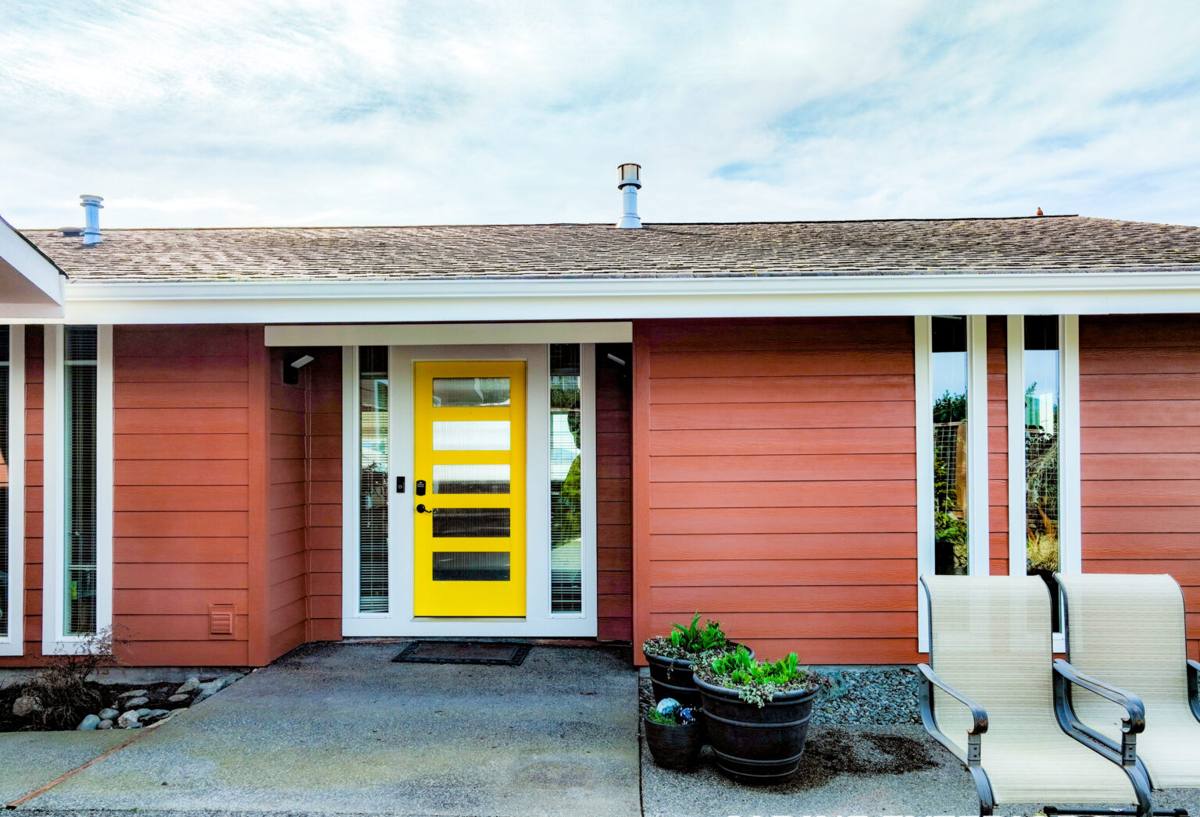
What James Hardie Brings to a Blanchard Home
We install James Hardie fiber cement exclusively, and in a climate like this, that's not a brand preference — it's a practical decision. Hardie's siding is non-combustible fiber cement, engineered to resist moisture absorption, and factory-finished with ColorPlus Technology, which bakes the color onto the board under controlled conditions rather than relying on a field-applied paint job to hold up against salt air and UV exposure.
Hardie also builds its products in specific formulations for different climate zones. The HZ5 line is engineered for regions with more moisture and temperature swing, which fits Whatcom County's wet winters and cool, damp shoulder seasons. That matters more here than in a drier climate, because a siding product that swells, cups, or delaminates when it stays wet for days at a time is going to fail faster the closer you are to the water.
Why This Matters More in Blanchard Than Elsewhere
A home a few miles inland with more sun exposure and less wind-driven rain can get away with a less moisture-resistant product for longer. A home near Blanchard, especially one with tree cover or a north or west-facing exposure to the weather, doesn't have that luxury. The material and the installation both have to be right from the start, because callbacks for moisture intrusion are expensive to fix once water has gotten behind the cladding.
Signs Your Current Siding Is Losing the Fight
If your home already has siding and you're not sure whether it's holding up, there are some fairly reliable warning signs to look for before you call anyone out for an inspection:
- Dark green or black staining that keeps coming back within weeks of being cleaned off
- Soft or spongy spots when you press on the siding, especially near the bottom courses or around windows
- Paint that's peeling, bubbling, or chalking heavily, particularly on the side of the house that faces the prevailing wind and rain
- Visible gaps or separation at seams, corners, or where siding meets trim
- Warping, cupping, or boards that no longer sit flat against the wall
- A musty smell in an adjacent interior room, which can indicate moisture has already worked its way through
None of these are emergencies on their own, but they're the kind of thing that gets worse quietly, behind the wall, long before it's obvious from the street.
What a Correct James Hardie Installation Actually Involves
Hardie siding is a good product, but it only performs the way it's supposed to when it's installed to spec — and in a wet, salt-exposed climate, the installation details matter as much as the material itself. A correct install includes:
- Proper starter strip and flashing at the base of the wall so water is directed out and away from the framing
- Correct fastener type and placement — Hardie has specific nailing patterns, and using the wrong fastener in a salt-air environment invites corrosion and staining down the road
- Adequate clearance between the bottom of the siding and grade, decks, patios, and roof lines, so splash-back and standing moisture don't sit against the board
- Rain-screen or drainage detailing behind the siding where the wall assembly calls for it, so any moisture that does get past the surface has somewhere to go
- Correctly sized gaps at butt joints and around penetrations, caulked with a product rated for the movement and moisture conditions here, not just whatever's on the shelf
- Flashing integrated properly at windows, doors, and roof-to-wall transitions — the majority of moisture problems we see trace back to flashing details, not the siding material itself
Skip any one of these steps and you can end up with a home wearing a premium product that fails early anyway. That's the gap between "we installed Hardie" and "we installed Hardie correctly for this climate."
How Materials Compare in This Kind of Climate
Homeowners in Blanchard often ask us to explain, plainly, why we don't offer alternatives like vinyl or LP SmartSide. Here's an honest breakdown of the trade-offs as they play out in salt air, driving rain, and a long moss season:
| Factor | James Hardie Fiber Cement | Vinyl | Engineered Wood (e.g. LP SmartSide) |
|---|---|---|---|
| Moisture behavior | Non-combustible, engineered for moisture resistance; doesn't rot | Doesn't absorb moisture itself, but seams and panels can allow water behind the cladding | Wood-based core is vulnerable to swelling and rot if moisture gets in or finish is compromised |
| Finish durability | Factory-baked ColorPlus finish resists fading and chalking | Color is through-body but can fade and become brittle with UV exposure over time | Relies on factory or field-applied coating; edges and cut ends need careful sealing |
| Fastener/salt exposure | Engineered for coastal and marine-adjacent conditions with correct fasteners | Generally tolerant of salt air, but can warp or become brittle in temperature swings | More sensitive to sustained moisture exposure near coastal conditions |
| Moss/algae resistance | Cement-based surface doesn't feed organic growth the way wood fiber can | Resists organic growth but can trap moisture and grime in seams | Wood-based composition is more susceptible to sustained moss and mildew if maintenance lapses |
| Warranty structure | Strong, transferable warranty when installed to manufacturer spec | Warranty terms vary widely by manufacturer and grade | Warranty often carries stricter maintenance requirements to stay valid |
None of these alternative products are junk — they all have a place. But given what this climate does to a home over ten, twenty, and thirty years, we made a standardizing decision: we only put Hardie on homes, because it's the product we can stand behind fully, install correctly every time, and back with a straightforward warranty.
Our Process for a Blanchard Siding Project
We keep the process straightforward and don't rush the parts that matter:
- On-site assessment — we look at your home's actual exposure: which walls take the worst weather, where moss and staining are already showing up, and where existing moisture damage might be hiding behind the current siding.
- Scope and estimate — we walk you through what needs to happen, which Hardie products and colors fit the home, and give you a clear, honest number with no pressure to decide on the spot.
- Tear-off and inspection — once the old siding comes off, we inspect the sheathing and framing underneath for any hidden rot or moisture damage before anything new goes up.
- Weather barrier and flashing — this is the step that determines whether the siding performs for decades or fails early. We install house wrap, flashing, and drainage detailing correctly, every time.
- Hardie installation — installed to manufacturer spec, with the correct fasteners, clearances, and joint treatment for this specific climate.
- Final walkthrough and warranty registration — we go over the finished work with you and make sure your Hardie warranty is properly registered.
Why Hiring a Crew That Already Works in Blanchard Matters
Siding installation isn't uniform across regions. A crew that mostly works drier, inland areas can do fine work there and still make choices that don't hold up here — lighter flashing details, less attention to drainage, fastener choices that aren't suited to salt air. A crew that already works this stretch of Whatcom County knows which walls on a typical local home take the worst of the wind-driven rain, how much moss pressure to expect on shaded exposures, and where past installations in this area have run into trouble.
That local familiarity shows up in small decisions throughout a project — where to add extra flashing even when it's not strictly required, how to detail a transition where a deck or patio meets the wall, and which areas of the home need more attention during tear-off inspection because that's where problems tend to show up first in this climate.
Maintaining Hardie Siding in a Marine-Influenced Climate
Hardie siding is low-maintenance compared to wood, but "low-maintenance" doesn't mean "no maintenance," especially with a long moss season and salt air in the mix. A few habits go a long way:
- Rinse siding down once or twice a year, focusing on shaded, north-facing walls where moss and algae tend to establish first
- Keep gutters clear so overflow doesn't run down the face of the siding and feed staining or moss growth
- Trim back vegetation and tree limbs that keep sections of the wall shaded and damp longer than the rest of the house
- Check caulking at trim, seams, and penetrations every couple of years and have gaps resealed before they let moisture in
- Have any impact damage or corner cracks repaired promptly rather than waiting, since small gaps are where water intrusion starts
If your Blanchard home's siding is showing its age, or you're planning ahead for a replacement before problems start, we're happy to come take a look. Estimates are free, there's no pressure, and we'll give you a straight answer about what your home actually needs — just fill out the form below to get started.