 Chuckanut Exterior
 Why Decks in Blanchard Wear Out Faster Than the Instructions Say They Should
Most decking products are rated and warrantied based on generic exposure conditions that don't account for what a deck near Chuckanut actually deals with. Homes in Blanchard sit close enough to the water that salt-laden air reaches wood, metal, and even composite surfaces on a regular basis. Add Whatcom County's long, wet winters and the moss season that seems to stretch from October well into spring, and you have a combination that ages a deck years faster than the same structure would age fifty miles inland.
Salt air accelerates corrosion in fasteners, joist hangers, and any exposed metal hardware. Driving rain, especially the sideways kind that comes off the water during winter storms, finds its way into joints, ledger connections, and end grain that a standard deck design assumes will stay relatively dry. And moss doesn't just look bad — it holds moisture against decking boards and structural framing long after a storm has passed, which is exactly the condition that rot and soft spots need to take hold.
None of this means a deck can't last in this area. It means the materials, fasteners, and construction details matter more here than they do in a drier climate, and a deck built to a generic spec is often the one that fails early.
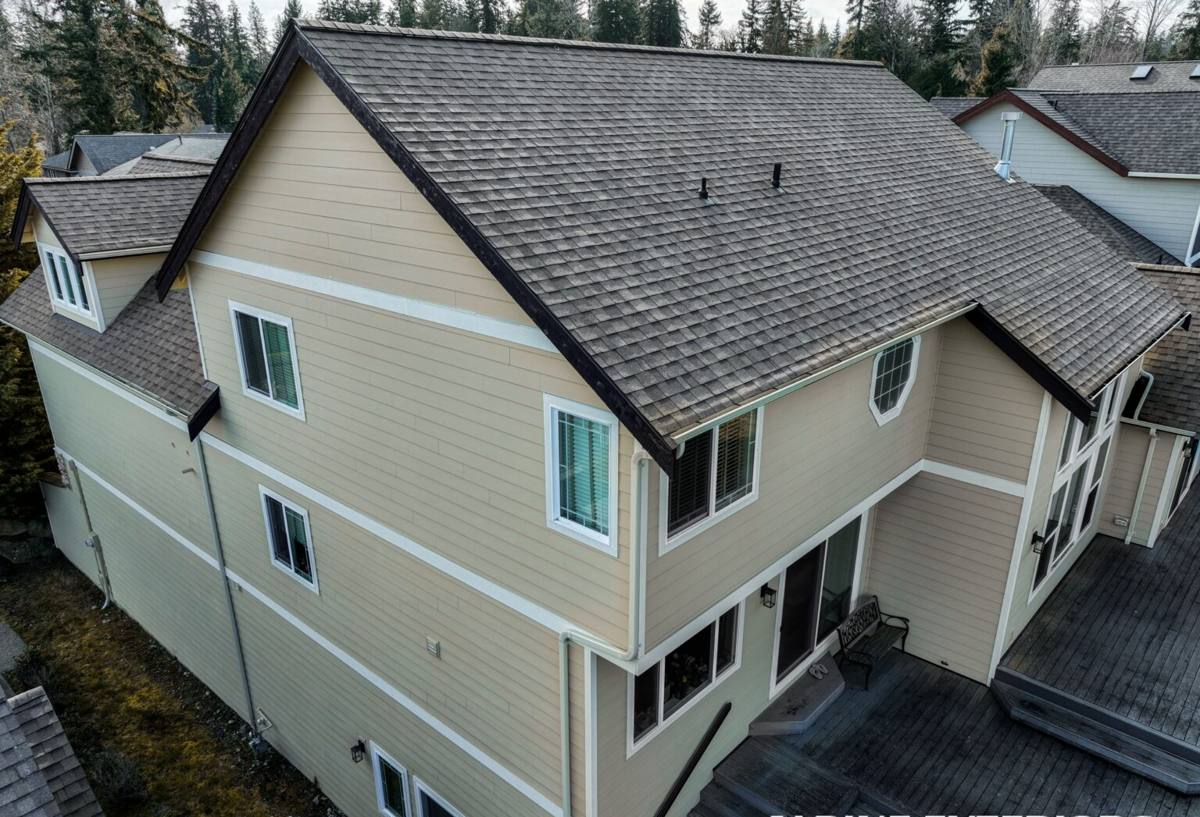
Signs a Blanchard Deck Needs Replacing, Not Just Repairing
Not every deck problem calls for a full rebuild. But there's a point where patching boards or sistering a joist is just delaying an inevitable, more expensive failure. Here's how we tell the difference on a site visit.
- Soft or spongy decking in multiple areas, not just one isolated board
- Rust streaking or crumbling at joist hangers, post bases, or ledger bolts
- Visible gaps or separation where the deck ledger meets the house
- Persistent moss or algae growth that returns within weeks of cleaning
- Posts or footings that feel loose or have visible movement when pushed
- A deck older than 15-20 years built with untreated or standard-grade lumber
- Railings that flex or wiggle under normal hand pressure
A single soft board near a planter is a repair. Soft framing at the ledger connection, corroded hardware throughout, or a deck that's been re-topped once already are signs the structure itself has reached the end of its useful life.
What a Correct Deck Replacement Actually Involves
It Starts Below the Decking
The boards you walk on are the least important part of a deck's lifespan. What determines whether a deck survives twenty years of Chuckanut winters is the framing underneath: joist spacing and sizing appropriate for the span and load, ledger attachment that's properly flashed and bolted (never just nailed) to the house framing, and footings set below frost depth on solid, undisturbed soil.
Flashing Is Not Optional
The ledger board — where the deck attaches to the house — is the single most common failure point on decks in wet climates. Water that gets behind an unflashed or poorly flashed ledger doesn't just rot the deck; it can migrate into the house's rim joist and wall framing. A correct replacement always includes proper ledger flashing, whether the deck is attached or freestanding.
Fasteners and Hardware Rated for the Exposure
Given the salt air this area sees, we don't treat hardware selection as an afterthought. Stainless steel or hot-dip galvanized connectors, hangers, and fasteners rated for coastal exposure cost more up front than standard zinc-coated hardware, but they're the difference between hardware that's still solid in fifteen years and hardware that's rusting through in five.
Drainage and Airflow Underneath
A deck that traps moisture underneath — because it sits too low to the ground, has poor grading beneath it, or lacks any airflow — will grow moss and rot faster no matter what decking material sits on top. Part of a correct replacement is making sure water has somewhere to go and air can actually move under the structure.
Decking Material Options for Salt Air, Rain, and Moss
There's no single "best" decking material for every home — it depends on budget, maintenance tolerance, and how the deck will be used. We walk through the real trade-offs rather than pushing one product.
| Material | How It Handles This Climate | Maintenance | Trade-Offs |
|---|---|---|---|
| Pressure-treated lumber | Good rot resistance when properly sealed; needs consistent upkeep against moss and moisture | Annual cleaning and re-sealing recommended | Lowest material cost; shortest lifespan if maintenance lapses |
| Cedar | Naturally moisture-resistant, but softer and more prone to surface wear from moss and standing water | Periodic cleaning and finish renewal | Attractive natural look; requires more attention than composite |
| Composite decking | Resists rot and moisture well; some early-generation products struggled with mold on the surface in shaded, damp spots | Occasional washing, no sealing or staining | Higher upfront cost; very low ongoing labor |
| PVC/capped polymer decking | Fully sealed surface handles rain and salt air with minimal absorption | Simple washing | Highest material cost; can feel less "natural" underfoot |
We're generally cautious about installing lower-grade composite in fully shaded, poorly ventilated spots near the water, since that's where moisture-related surface issues tend to show up first regardless of brand. It's less about any one product being bad and more about matching the material to how much sun, airflow, and moss exposure a specific deck will actually see.
Our Deck Replacement Process
- On-site assessment — we inspect the existing structure, footings, ledger connection, and surrounding grading to understand why the current deck failed, not just what it looks like on the surface.
- Design and material selection — we walk through decking, railing, and hardware options based on your budget, sun exposure, and how the space is used.
- Permitting — we handle the permit application and inspection scheduling required by Whatcom County for the project.
- Demolition and disposal — the old deck comes down and off-site; we check framing and posts underneath for any hidden damage before rebuilding.
- Framing and flashing — new footings, framing, and ledger flashing are installed to current code, sized for the deck's actual span and load.
- Decking, railing, and finish work — boards, railings, and fasteners are installed with attention to drainage and airflow underneath.
- Final walkthrough — we go over the finished deck with you, including what maintenance (if any) the material you chose requires.
Permits and Local Code Considerations
Most deck replacements in Whatcom County require a permit, especially when footings, framing, or the ledger connection are being redone rather than just the surface boards. Permitted work means an inspector verifies the footings, framing, and ledger attachment before the decking goes on — which matters most on a deck that's going to be exposed to the amount of rain this area gets. Skipping permitting to save time can create real problems later, from insurance issues to complications when the home is sold. We handle the permit process as a standard part of the job.
What Affects the Cost of a Deck Replacement
Every deck project is different, but a few factors consistently drive cost up or down. We give straightforward, itemized estimates rather than a single number that hides what you're actually paying for.
| Factor | Why It Matters |
|---|---|
| Deck size and shape | Multi-level decks, curves, and built-in features add labor beyond a simple rectangular footprint |
| Decking material chosen | Composite and PVC cost more per square foot than treated lumber but need far less upkeep |
| Condition of existing footings | Reusing sound footings costs less than replacing footings that don't meet current frost-depth or sizing requirements |
| Railing style | Cable, glass, and custom railing systems cost more than standard wood or composite balusters |
| Site access | Decks with limited access for equipment or material staging can add labor time |
| Hardware grade | Coastal-rated stainless or galvanized hardware costs more than standard fasteners but lasts significantly longer here |
As a general guideline, most full deck replacements in this area run from the low thousands for a smaller, simple deck in treated lumber up to well into five figures for a large deck in premium composite or PVC with custom railing. We'll give you real numbers specific to your deck after a site visit.
Keeping a New Deck in Good Shape
Whatever material you choose, a little routine attention goes a long way in this climate.
- Sweep debris and standing leaves off the deck regularly, especially in fall
- Rinse or scrub moss and algae off the surface before it gets a foothold
- Check the gap under the deck periodically to make sure airflow and drainage haven't been blocked by plants or debris
- Inspect railings and stair connections once a year for looseness
- For wood decks, plan on re-sealing or staining on the schedule the manufacturer recommends — don't stretch it out
- Look at ledger flashing and the house connection annually for any signs of water staining
Why a Crew That Already Works in Blanchard Matters
A deck built by a crew unfamiliar with this stretch of Whatcom County often gets built to a generic spec — the kind of deck that would be perfectly fine in a drier region but starts showing problems here within a few years. Working regularly in and around Chuckanut and Blanchard means we already know which hardware grades hold up against the salt air, which decking materials handle the moss season without turning into a maintenance headache, and how local permitting and inspection actually work in practice. That local familiarity shows up in fewer surprises during the build and a deck that's actually built for the conditions it has to survive.
If your deck is showing its age or you're planning a full replacement, we're happy to take a look and give you a straightforward, no-pressure estimate. Fill out the form below and we'll get in touch to schedule a site visit.