 Chuckanut Exterior
 Building Decks for Blanchard's Climate, Not a Catalog Photo
Blanchard sits close enough to the water that salt air, wind-driven rain, and shade from the surrounding trees all show up in how a deck ages here. A deck built the way it would be built inland — same fasteners, same footing depth, same ventilation gap — will often start failing years before it should once it's exposed to Chuckanut's version of a Pacific Northwest winter. We build decks for this specific stretch of Whatcom County, and that changes real decisions: what fasteners we use, how we frame for drainage, and how much airflow we leave under the boards.
This page is about one job in one place: deck building for homes in and around Blanchard. Not a general overview of decking materials, not a sales pitch — just what actually holds up out here and how we approach the build.
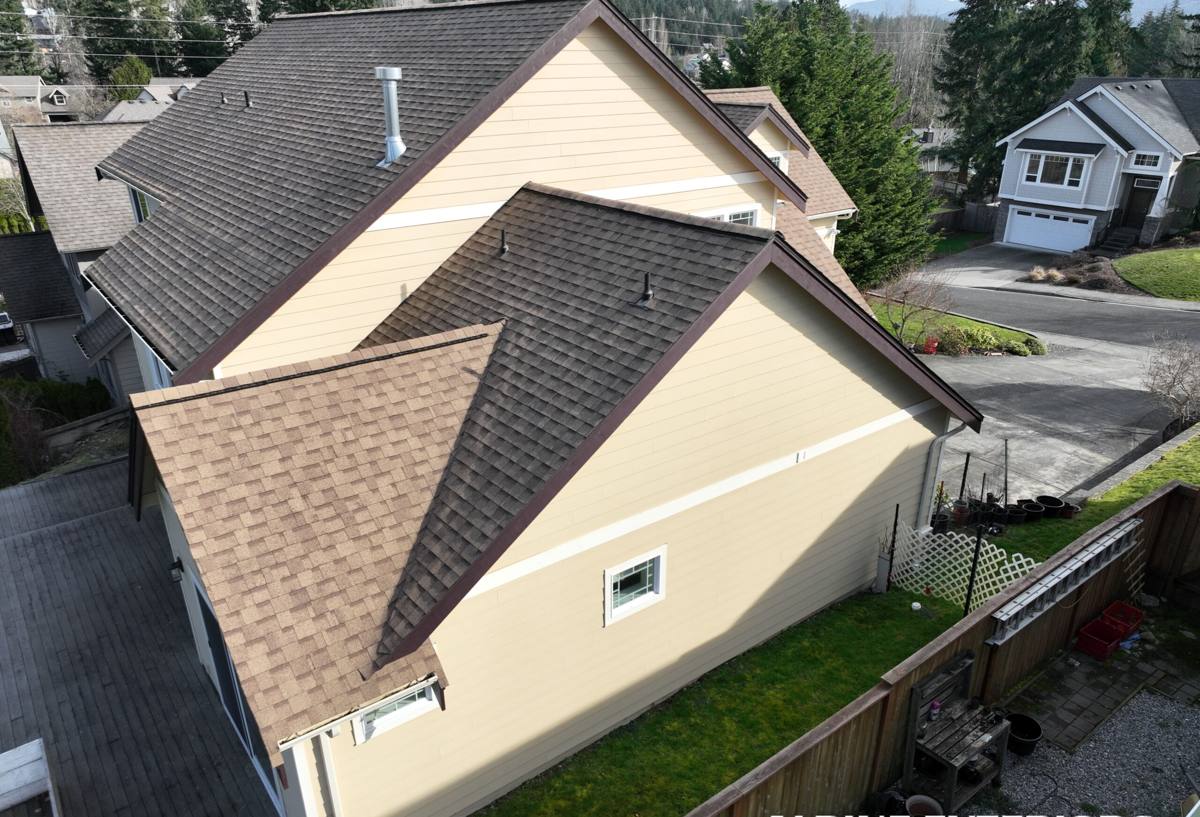
What Blanchard's Climate Does to a Deck
Three things drive almost every deck problem we see in this area, and they compound each other.
Salt Air
Proximity to Samish Bay and the Salish Sea means airborne salt reaches framing and fasteners even on decks that aren't waterfront. Salt accelerates corrosion in standard fasteners and hardware, which is why fastener choice matters more here than it does thirty miles inland.
Driving Rain
Whatcom County gets a lot of rain, and a good share of it comes in sideways during winter storms. That means water isn't just falling on the deck surface — it's getting driven into ledger connections, railing posts, and any joint that isn't properly flashed or sealed. Standing water and slow-draining framing are the enemy of a long-lived deck.
A Long Moss Season
Shade, moisture, and mild temperatures add up to moss and algae growth that can run most of the year on decks that don't get much direct sun. Beyond looking bad, moss holds moisture against the wood or composite surface and creates a genuinely slick, dangerous walking surface — especially on stairs.
None of this means a deck can't last decades in Blanchard. It means the build has to account for these conditions from the footings up, not just at the finish stage.
What a Correct Deck Build Looks Like Here
Framing and Fasteners
We use corrosion-resistant fasteners and hardware rated for the exposure this area sees — not just whatever's cheapest at a big-box store. Galvanized coatings that are adequate in a dry inland climate can start showing rust streaks within a few seasons near salt air. Structural connectors, joist hangers, and ledger bolts get the same treatment; these are the parts you can't easily inspect once the deck is finished, so getting them right the first time matters.
Drainage and Airflow
Every deck we build is framed with drainage in mind — proper slope away from the house, gapping between boards sized for the material, and enough clearance underneath for air to move. Decks built tight to the ground or without adequate ventilation trap moisture, and trapped moisture is what accelerates rot in wood framing and encourages moss and mildew on the surface.
Ledger Attachment and Flashing
Where a deck attaches to the house is the single most common failure point we find on older decks in this area. Driving rain finds its way behind poorly flashed ledger boards, and the damage often isn't visible until it's significant — soft framing, water staining inside the house, or a ledger that's pulled away from the rim joist. Correct flashing detail at this connection isn't optional; it's the difference between a deck that lasts and one that causes a repair bill nobody saw coming.
Decking Material Choice
Wood and composite decking both work in Blanchard's climate, but each comes with real maintenance trade-offs given the moss and moisture pressure here. We'll walk through what fits your budget, your home's exposure, and how much upkeep you actually want to take on — honestly, including what we'd choose for our own house in a shaded, damp lot versus a sunnier one.
Wood vs. Composite Decking in This Climate
| Factor | Wood Decking | Composite Decking |
|---|---|---|
| Moss and algae resistance | Lower — porous surface holds moisture, needs regular cleaning/treating in shaded areas | Higher — but still grows moss in heavy shade without periodic cleaning |
| Upfront cost | Generally lower | Generally higher |
| Maintenance | Periodic cleaning, sealing, and inspection for rot, especially in shaded spots | Occasional washing; no sealing or staining required |
| Fastener/hardware sensitivity | Requires corrosion-resistant fasteners near salt air, same as any framing | Same fastener standard applies underneath, even though surface fasteners are often hidden clips |
| Long-term feel underfoot | Can cup, split, or splinter if maintenance lapses | Dimensionally stable, resists splintering |
| Repairability | Individual boards easy to replace | Board replacement possible but color-matching aged material can be harder |
Neither option is maintenance-free in a climate like this. Wood needs more attention but costs less upfront and is simple to repair board by board. Composite costs more initially but trades routine sealing for occasional washing. What we won't do is install either one without the framing and fastening details above — that's where most premature deck failures actually start, regardless of what decking material sits on top.
Our Process for a Blanchard Deck Build
- On-site assessment. We look at sun/shade exposure, drainage on the lot, existing structure if it's a rebuild, and how exposed the site is to wind-driven rain.
- Design and material discussion. We talk through wood vs. composite, railing style, and layout based on how you'll actually use the space — not just what looks good in a photo.
- Permitting. Deck projects in Whatcom County typically require permits depending on size and height; we handle that process so it's not on your plate.
- Footings and framing. Proper footing depth for our frost line, corrosion-resistant hardware throughout, and framing built with slope and airflow designed in from the start.
- Ledger flashing. Careful attention at the house connection, since this is where driving rain does the most damage over time.
- Decking and railing installation. Installed per manufacturer spec for composite, or with appropriate gapping and fastening for wood.
- Final walkthrough. We go over basic maintenance specific to your deck's exposure — what to watch for with moss, drainage, and seasonal cleaning.
Why a Local Crew Matters for This Job
A deck built by a crew that hasn't worked this stretch of Whatcom County will make reasonable-sounding decisions that don't hold up here — standard-grade fasteners instead of corrosion-resistant ones, framing gaps sized for a drier climate, or no real plan for moss and shade. We work in Chuckanut and the surrounding communities regularly, so these aren't judgment calls we're making for the first time on your project. We've seen how ledger flashing fails in this rain, how fast moss builds on north-facing decks under tree cover, and what fastener corrosion actually looks like a few years in.
That local repetition is also why we can give you a straight answer about maintenance expectations instead of a generic "it'll be fine" — we know what "fine" actually looks like on a Blanchard deck five and ten years out.
Maintenance Checklist for Blanchard Homeowners
- Sweep debris and standing leaves off the deck surface regularly, especially in fall
- Clean moss and algae buildup before it gets slick, particularly on stairs and shaded sections
- Check for gaps or movement at the ledger board connection once a year
- Inspect fasteners and hardware periodically for rust or corrosion, especially on decks closer to the water
- Reseal or stain wood decking on the manufacturer's or installer's recommended schedule
- Keep gutters and downspouts near the deck clear so runoff isn't dumping extra water onto or under the structure
- Trim back overhanging branches where practical to reduce shade-driven moss growth
What Correct Deck Building Costs to Get Right
Deck pricing depends on size, decking material, railing style, height off grade, and site access — there's no single number that applies to every Blanchard property. What we can tell you honestly is that the details covered above — corrosion-resistant fasteners, proper drainage framing, and careful ledger flashing — aren't optional upgrades. They're the baseline for a deck that's actually built for this climate, and cutting them to hit a lower number usually just moves the cost to a repair bill a few years down the road.
If you'd like a clear, no-pressure look at what a deck built correctly for your Blanchard property would involve, we're glad to walk your site and put together a free estimate.