 Chuckanut Exterior
 New Roofs Built for Blanchard's Weather, Not a Generic Climate
Blanchard sits close enough to the water and the tree line that a roof here works harder than a roof almost anywhere else in Whatcom County. You've got salt-laden air drifting in off the Salish Sea, long stretches of driving rain that come in sideways as much as straight down, and a moss season that seems to start earlier and last longer every year under the fir and cedar canopy that surrounds so many Blanchard properties. A roof installed without those three things in mind — salt exposure, wind-driven rain, and constant shade and moisture — will show problems years before it should.
When we install a new roof in Blanchard, we're not just putting shingles or panels on a deck. We're building a system meant to shed water fast, resist corrosion from salt air, and slow down the moss and moisture that eat away at roofs left to sit damp under tree cover. That's the difference between a roof that looks fine on installation day and one that actually performs for its full expected life in this specific microclimate.
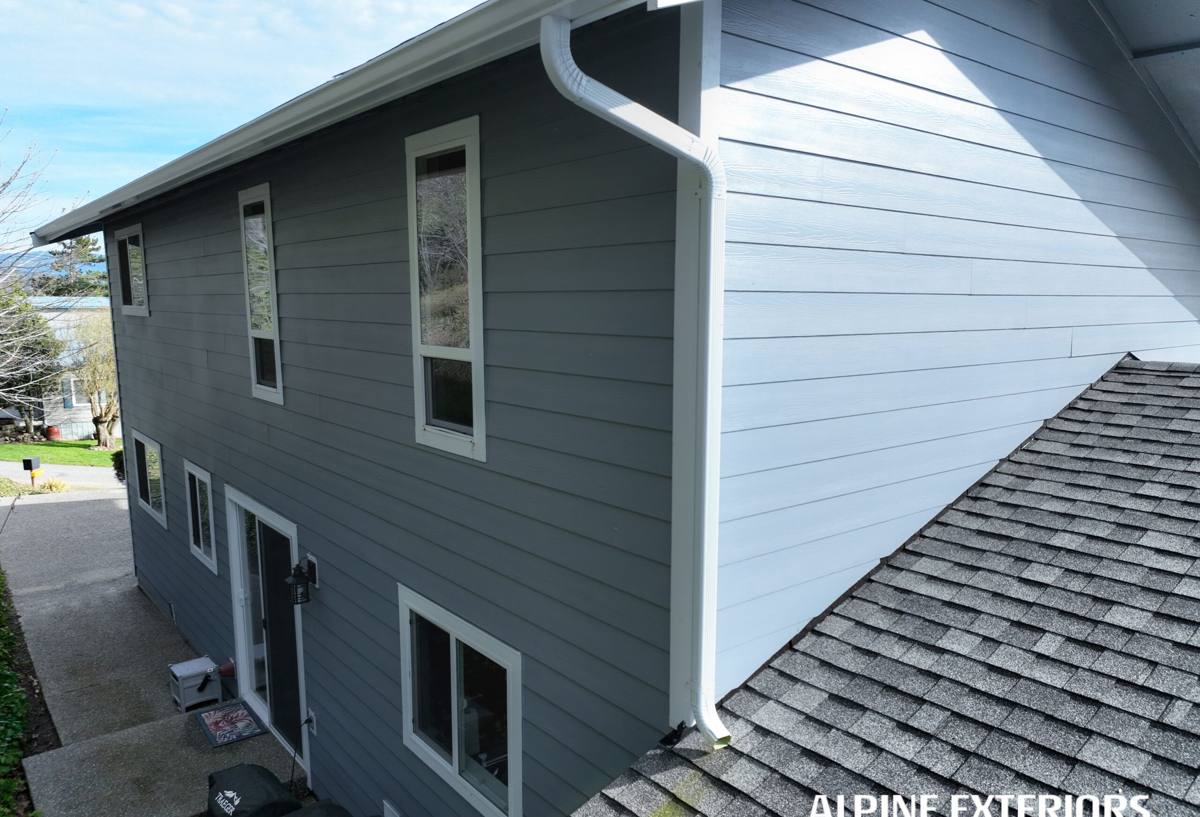
Signs a Blanchard Roof Needs Replacement, Not Another Repair
Not every roof problem means a full replacement. But there's a point where patching becomes a waste of money, and in a climate like ours, that point often arrives sooner than homeowners expect. Watch for:
- Granule loss heavy enough that you're finding grit in gutters and downspouts every time it rains
- Shingles that are cupping, curling, or cracking, especially on slopes that get the most driving rain
- Moss establishing itself in mats rather than light surface growth, particularly on north-facing or shaded slopes
- Soft spots, sagging, or visible deflection when you view the roofline from the ground
- Recurring leaks around the same penetration or valley even after repairs
- Metal fasteners, flashing, or vents showing rust or corrosion streaks — a common early warning in salt-exposed areas
- A roof already past 18-20 years old for asphalt composition, or showing its age well ahead of that
If you're seeing two or more of these at once, it's worth having someone look at the whole roof system rather than chasing one leak at a time.
What an Honest New Roof Installation Actually Involves
Tear-Off and Deck Inspection
A correct installation starts by removing the old roofing down to the deck — not layering over it. That lets us actually see the plywood or OSB underneath, check for soft or delaminated spots, and replace only what's damaged rather than guessing at what's hidden. In a wet climate like Blanchard's, skipping this step is how hidden rot gets sealed under a brand-new roof.
Underlayment and Water Barriers
This is where a lot of the real weather protection happens, long before the visible material goes down. Eaves, valleys, and any area prone to ice or wind-driven rain get self-adhering water-and-ice barrier membrane. The rest of the deck gets a synthetic underlayment rated to handle the kind of sustained, wind-pushed rain that comes through this part of the county.
Flashing Details
Flashing around chimneys, skylights, vent pipes, and wall intersections is where most roof leaks actually start — not in the open field of shingles. We install new flashing rather than reusing old pieces, and we pay particular attention to any flashing exposed to salt air, since corroded flashing fails quietly and often goes unnoticed until water is already inside the wall or ceiling.
Material Installation
Fastening patterns, nail placement, and exposure lines all need to match manufacturer specifications exactly — not just "close enough." In wind-exposed and rain-heavy conditions, a slightly wrong nailing pattern is often the difference between a roof that holds through a coastal storm and one that doesn't.
Choosing a Roofing Material That Handles Salt Air and Moss
There's no single "best" roofing material for every home — it depends on your roof's slope, how much shade and tree cover you have, and your budget. Here's how the common options generally compare for a property in Blanchard's conditions:
| Material | Moss & Moisture Resistance | Salt Air Durability | Typical Lifespan | Maintenance Needs |
|---|---|---|---|---|
| Architectural Asphalt Shingle | Good with proper ventilation; benefits from algae-resistant granules | Good — minimal exposed metal in the field | 25-30 years | Periodic moss treatment and gutter clearing |
| Standing Seam Metal | Excellent — sheds moss and debris quickly due to slick surface | Varies by coating and fastener quality; needs a coastal-rated finish | 40-50+ years | Low; occasional fastener and seam checks |
| Synthetic/Composite Shingle | Very good; resists moisture absorption better than wood | Good | 30-50 years | Low to moderate |
| Cedar Shake | Requires consistent upkeep — natural wood holds moisture and feeds moss growth | Fair; needs regular treatment near salt air | 20-30 years with maintenance | High — regular cleaning and treatment |
We'll walk you through what makes sense for your specific roof rather than pushing one product across every job. A heavily shaded, low-slope roof under fir trees has different needs than an open, wind-exposed roof closer to the water, even within the same neighborhood.
A Note on Product Choices
We don't install every material on the market, and that's a deliberate call, not an oversight. Some products that perform well in drier inland climates carry real trade-offs here — higher maintenance demands, more sensitivity to installation error, or moisture behavior that doesn't hold up under sustained coastal rain and moss pressure. When we recommend against something, it's because we've weighed how it performs specifically in Whatcom County conditions, not because of any issue with the brand itself.
Our New Roof Installation Process
- On-site assessment. We walk the roof, check the attic or crawlspace for existing moisture or ventilation issues, and measure the full roof system.
- Written estimate. You get a clear breakdown of material options, scope, and price — no vague allowances.
- Scheduling around weather. Given how much rain this area sees, we plan installation windows carefully and stage the job to keep your home protected if weather moves in mid-project.
- Tear-off and deck repair. Old roofing comes off, the deck is inspected, and any damaged sections are replaced before anything new goes down.
- Underlayment, flashing, and ventilation installation. The parts you won't see once the job is done, but that determine how long the roof actually lasts.
- Material installation. Installed to manufacturer spec, with attention to fastening and exposure appropriate for wind and rain exposure.
- Final walkthrough and cleanup. We check the completed roof with you, clear debris and old material from the property, and go over warranty documentation.
Ventilation and Moisture Control — the Part Homeowners Rarely See
A new roof surface can still fail early if the attic underneath isn't ventilating properly. In a climate as damp as Blanchard's, trapped moisture in an attic space feeds mold, accelerates deck rot from underneath, and can void material warranties even when the visible roofing looks fine. Balanced intake and exhaust ventilation — soffit vents working together with ridge or roof vents — keeps air moving so moisture doesn't sit and condense against the underside of the deck. We evaluate ventilation as part of every new roof installation, not as an optional add-on, because in this climate it genuinely determines how long the rest of the work lasts.
What a New Roof Typically Costs, and What Moves the Number
Exact pricing depends on your roof's size, pitch, complexity, and the material you choose, so we won't quote a number without seeing the roof. In general, the factors that move a Blanchard roofing estimate up or down include:
| Cost Factor | Why It Matters Here |
|---|---|
| Roof pitch and access | Steeper or harder-to-access roofs take longer and require more safety setup |
| Deck condition | Hidden rot from long-term moisture exposure adds repair costs discovered during tear-off |
| Material choice | Metal and composite systems cost more upfront but often need less maintenance against moss and salt exposure |
| Number of penetrations | Chimneys, skylights, and vent stacks each need individual flashing work |
| Tree cover and moss remediation | Heavily shaded roofs may need extra prep or treatment before installation |
As a broad reference point, a full asphalt shingle roof replacement on an average single-family home generally runs from the high single-digit thousands into the low-to-mid five figures, with metal and premium composite systems running higher. Your written estimate will lay out exactly what's driving your number.
Why It Matters That We Already Work in Blanchard
Roofing crews who only pass through occasionally don't always account for how Blanchard's mix of salt air, tree cover, and rain exposure actually behaves over a full year. A crew based in and around Chuckanut and Whatcom County sees how roofs in this specific area age — which slopes collect moss fastest, which exposures take the worst of the wind-driven rain, and which materials genuinely hold up versus which ones just look good on install day. That local pattern recognition shapes real decisions: where we add extra water barrier, how we detail flashing near the coast, and which materials we're willing to stand behind here.
Before You Get an Estimate: A Quick Homeowner Checklist
- Note any rooms with ceiling stains, musty smells, or drafts — these can point to roof issues even without a visible leak
- Check your attic for daylight, dampness, or visible mold if you can access it safely
- Look at your gutters after a rain for heavy granule buildup or moss debris
- Know roughly how old your current roof is, or when it was last replaced
- Think about how long you plan to stay in the home — it affects whether a lower-maintenance material is worth the upfront cost
- Have any past leak or repair history ready to mention — it helps us know where to look first
If your roof is showing its age or you just want an honest read on how much life it has left, we're happy to come out, take a real look, and give you a straightforward, no-pressure estimate — no scare tactics, just what we'd actually recommend for your home. Use the form below to get started.