 Chuckanut Exterior
 Building New in Blanchard? The Windows Have to Match the Climate, Not Just the Blueprint
When a home is going up from the studs out in Blanchard, the window package is one of the few decisions that gets locked in early and lives with the house for decades. Get it right during framing and rough-in, and you've got a building envelope that sheds Whatcom County weather without a second thought. Get it wrong, and you're chasing leaks, fogged glass, and rot around openings within a few winters — problems that are far more expensive to fix after siding and interior finish work are done than they would have been to prevent at install.
Blanchard sits close enough to the water and the foothills that new construction here deals with a specific combination of stresses: salt-laden air moving off the Sound, long stretches of driving, wind-pushed rain, and a moss season that runs longer than most homeowners expect. New-construction windows aren't just about picking a style out of a catalog — they're about specifying and installing a system that's matched to that environment from day one.
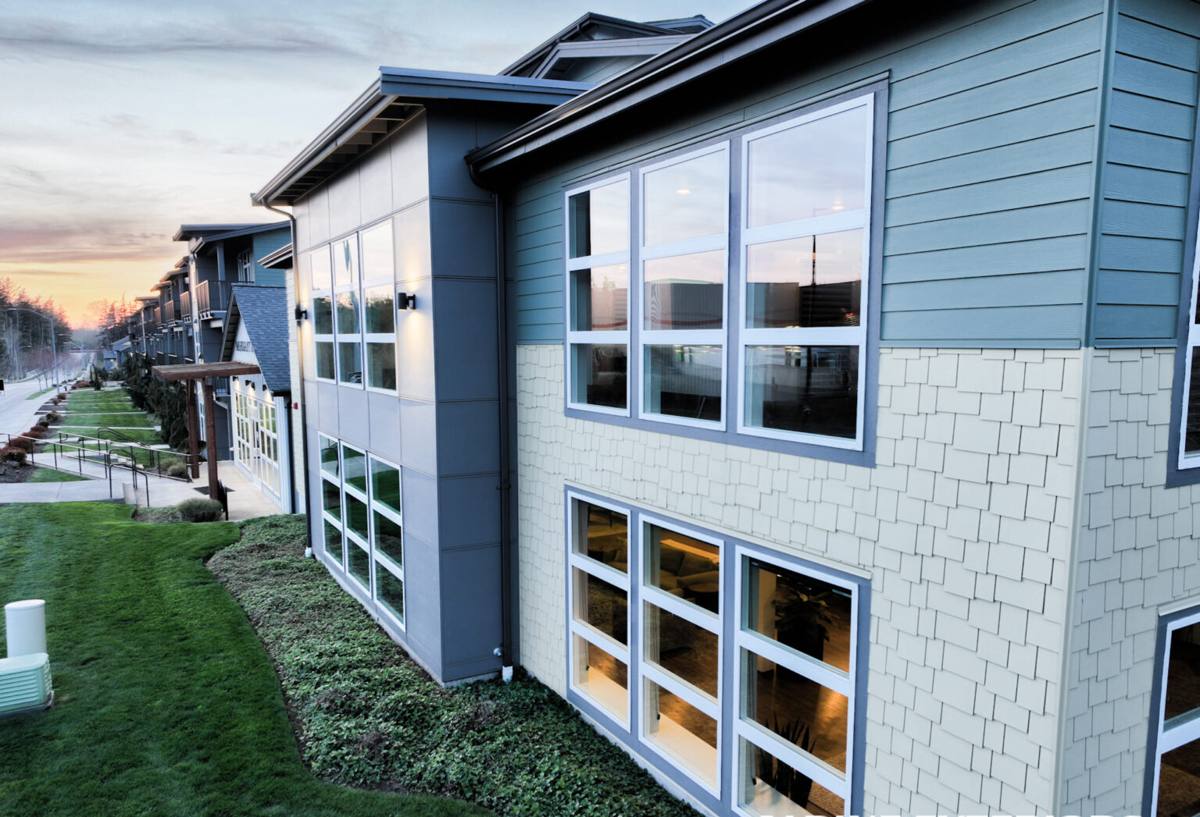
What Blanchard's Climate Actually Does to a Window Opening
Salt Air
Proximity to Puget Sound means airborne salt finds its way onto every exterior surface, including window frames, hardware, and fasteners. Over time, salt exposure accelerates corrosion on lower-grade metal components and can degrade certain finishes faster than the manufacturer's marketing suggests. It doesn't ruin a window overnight, but it does mean hardware quality and finish selection matter more here than they would fifty miles inland.
Driving Rain
Rain in this part of Washington rarely just falls straight down — wind pushes it sideways into wall assemblies, and new-construction openings are the most vulnerable point in that assembly until they're properly flashed and sealed. A window that's simply "installed" (nailed in and caulked around the edges) is not the same as a window that's flashed as a system, with the sill pan, weather-resistive barrier, and flashing tape layered in the correct shingle-lap order so water is directed out, not in.
Moss Season
Moss doesn't just grow on roofs. On north-facing and shaded elevations — common on tree-lined Blanchard lots — moss and algae will colonize window sills, trim, and any horizontal surface that stays damp. Beyond appearance, sustained moisture retention against wood trim and sills accelerates rot if the window wasn't detailed with proper drainage and back-priming during install.
What a Correct New-Construction Window Install Actually Involves
New-construction windows differ from replacement windows in one key respect: the installer has full access to the rough opening, the sheathing, and the weather-resistive barrier before siding goes on. That access is an advantage — but only if it's used correctly. A correct install typically includes:
- Verifying rough openings are square, level, and sized to the window manufacturer's tolerances before the unit ever goes in
- Installing a sloped sill pan flashing so any water that does get past the window drains back outward, not into the wall cavity
- Integrating flashing tape and the weather-resistive barrier in proper shingle-lap sequence — top flashing overlaps the barrier, side and sill flashing tuck underneath
- Setting the window with the correct shim and fastening pattern so the frame isn't racked or bowed, which affects both seal integrity and long-term operation
- Sealing and insulating the gap between the frame and rough opening with a compatible low-expansion product — not just stuffing it with fiberglass
- Confirming interior and exterior sealant beads are continuous, with no gaps at corners where most leaks actually start
Skipping or rushing any one of these steps is how a brand-new house ends up with a moisture problem inside five years — long after the crew that installed it is gone. This is also why we treat window flashing as a system detail, not a caulk-and-move-on task.
How We Approach New-Construction Windows on Blanchard Jobs
Our process is built around the idea that the window install has to work with the rest of the building envelope, not exist as an isolated task on the schedule.
- Plan review and product selection. We look at elevations, exposure, and the builder's or homeowner's window schedule before ordering anything, flagging any openings that face prevailing wind-driven rain or heavy shade where moss and moisture are more likely to be an issue.
- Rough opening verification. Before a single window is set, we confirm openings are square, correctly sized, and that the weather-resistive barrier is properly lapped and ready to receive flashing.
- Sill pan and flashing install. Every opening gets a sloped sill pan and flashing tape integrated in the correct order — this is the step that determines whether the opening actually sheds water.
- Window setting and fastening. Units are shimmed, squared, and fastened per manufacturer specification, then checked for smooth operation before final fastening.
- Air sealing and interior/exterior finish prep. Gaps are sealed with the correct products, and the opening is left ready for interior trim and exterior siding or trim work to proceed cleanly.
- Final walkthrough. We check every unit for square, operation, and seal before signing off, so nothing gets buried behind siding or drywall with an unresolved issue.
Choosing Window Materials and Types for This Environment
There's no single "best" window for every Blanchard lot — the right choice depends on exposure, budget, and the look the home is going for. Here's how the common options generally compare for a coastal Whatcom County build:
| Frame Material | Salt Air Resistance | Maintenance | Typical Trade-Off |
|---|---|---|---|
| Vinyl | Good — won't corrode | Low | Limited color/finish options; can flex on larger units |
| Fiberglass | Very good — dimensionally stable, resists corrosion | Low | Higher upfront cost than vinyl |
| Aluminum-clad wood | Good on exterior face if finish is well-maintained | Moderate — interior wood needs periodic attention | Higher cost; premium look and feel |
| Bare wood | Requires diligent maintenance near salt air | High | Best traditional appearance, most upkeep |
We'll walk through these trade-offs against your specific elevations and budget rather than pushing one product line — the right call for a shaded, moss-prone north wall isn't always the right call for a wide-open south-facing wall taking direct weather.
What Drives Cost on a New-Construction Window Package
Costs vary widely by window count, size, and product tier, so we won't quote a number here that doesn't mean anything without seeing the plans. What we can tell you is what actually moves the number:
| Factor | Why It Matters |
|---|---|
| Frame material and glass package | Fiberglass and clad-wood run higher than vinyl; upgraded glass (low-E coatings, triple pane) adds cost but improves comfort and condensation resistance |
| Window count and size | Larger openings and specialty shapes (arched, oversized picture windows) require more labor and often custom sizing |
| Flashing and detailing complexity | Openings on heavily exposed or shaded elevations may need extra flashing detail to handle driving rain or sustained moisture |
| Access and building stage | Coordinating install timing with framing, sheathing, and siding crews affects scheduling but not usually unit cost |
| Site conditions | Lot access, staging space, and weather windows during the build can affect labor time |
Mistakes We See on Rushed New-Construction Jobs
Most window failures we're called to diagnose in newer Blanchard homes trace back to a handful of avoidable shortcuts:
- No sill pan flashing, or a flat sill pan that doesn't actually drain water back out
- Weather-resistive barrier and flashing tape lapped in the wrong order, letting water get behind the barrier instead of over it
- Windows fastened before confirming the opening is square, leading to operational issues and stressed seals
- Sealant applied inconsistently, with gaps at corners — the most common leak point on any window
- Trim and sills installed without back-priming, which speeds up moss and rot on shaded elevations
None of these are exotic problems. They're the result of treating window install as a fast, standalone task instead of an integrated part of the building envelope. Slowing down at this stage is cheap insurance against expensive repairs later.
Why It Matters to Hire a Crew That Already Works in Blanchard
A window crew based somewhere with a milder or drier climate profile isn't necessarily going to think about sill pan flashing, salt-air hardware selection, or moss-prone shaded elevations as default considerations — because where they normally work, those issues don't come up as often. Crews who regularly build in this part of Whatcom County treat those details as standard practice, not upgrades, because they've seen what happens on the houses where they were skipped.
We work new-construction jobs throughout the Chuckanut area, including Blanchard, and we coordinate directly with builders and homeowners to get window install right the first time — properly flashed, correctly sealed, and matched to the products that make sense for each elevation's exposure.
Ready to Talk Through Your Window Package?
Whether you're a homeowner working with a builder or managing the build yourself, we're happy to look at your plans, walk through material options, and give you a straightforward estimate — no pressure, no upsell. Use the form below to request a free estimate for your Blanchard new-construction window package.