 Chuckanut Exterior
 Siding That Has to Work Year-Round in Sedro-Woolley
Sedro-Woolley sits in a part of Whatcom and Skagit County where the weather doesn't give siding much of a break. Winters bring long stretches of driving rain, spring and fall keep everything damp long enough for moss and algae to take hold, and the humid air off the surrounding valleys and nearby coastline keeps wood-based products from ever fully drying out between storms. Homes here don't fail because owners neglect them — they fail because the exterior material wasn't built for this specific combination of moisture, shade, and time.
We install James Hardie fiber cement siding exclusively, and Sedro-Woolley is one of the areas where that decision matters most. This page walks through what local homes actually need from their siding, what a correct Hardie installation looks like, and how we run the job from first estimate to final walk-through.
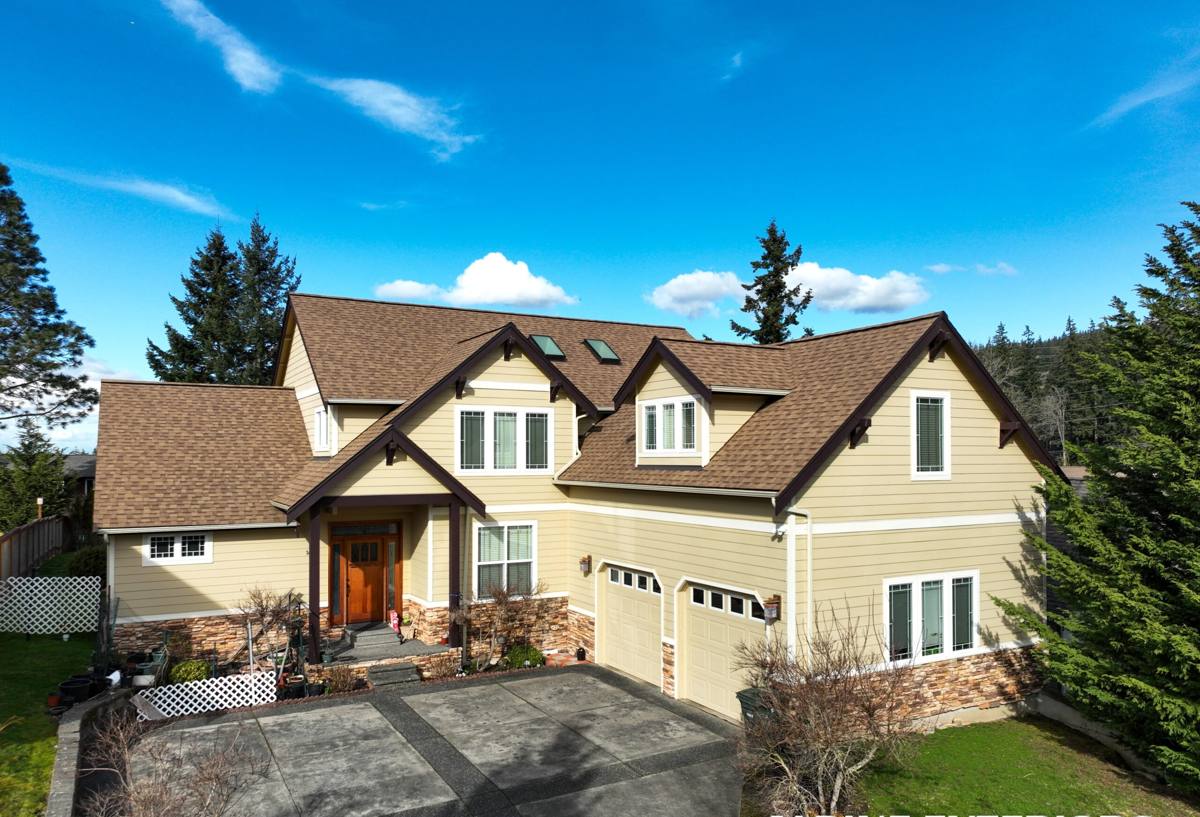
What This Climate Does to a House Over Time
Before talking about the product, it helps to understand the problem it's solving. A few things happen consistently to homes in this part of Whatcom County:
- Moisture stays around longer. Between fall and spring, siding here can go days or weeks without a fully dry stretch, especially on north- and east-facing walls that get less direct sun.
- Moss and algae find a foothold. Shaded siding, gutters that overflow slightly, and tree cover all give organic growth the damp surface it needs to spread — and once it's established, it holds even more moisture against the wall.
- Driving rain gets pushed sideways. Wind-driven rain during winter storms doesn't just fall straight down — it gets forced up under laps, around trim, and into any gap that wasn't sealed or flashed correctly.
- Freeze-thaw cycles are mild but real. Sedro-Woolley doesn't see extreme cold, but repeated light freezes on saturated material still stress cracks and swelling in anything that absorbs water.
None of this is unusual for western Washington. But it's exactly the set of conditions that separates siding materials that hold up for decades from siding materials that need constant attention or early replacement.
Why We Standardized on James Hardie
We don't install LP SmartSide, vinyl, Cemplank, Allura, primed spruce, or cedar. That's not a marketing position — it's a decision made after weighing how each of those materials actually performs against moisture over the long run.
Wood-based and wood-composite products, no matter how well they're treated at the factory, share a vulnerability: the base material is engineered wood, and engineered wood absorbs water at cut edges, fastener penetrations, and any spot where the factory coating gets compromised on the job site. In a climate where siding rarely gets a long dry-out period, that vulnerability shows up faster than it would in a drier region. Vinyl avoids the rot problem but brings its own trade-offs — it can warp in temperature swings, fade unevenly over the years, and it doesn't hold paint if a homeowner ever wants to change the look.
James Hardie siding is fiber cement — cellulose fiber, sand, and cement pressed and cured into a rigid board. It doesn't rot, it doesn't feed pests, and it's non-combustible. It's engineered in specific formulations (Hardie's "HZ" system) for different climate zones, and the Pacific Northwest formulation is built around exactly the wet, temperate conditions Sedro-Woolley sits in. That's the whole reason we made it the only product we put on a house.
What Correct Hardie Installation Actually Involves
Fiber cement siding is only as good as the installation behind it. A rushed or undertrained crew can install Hardie board and still leave a house exposed to the same moisture problems the product is designed to prevent. A correct installation includes:
- Proper starter strip and clearance at the foundation so the bottom edge of the siding never sits in standing water or splash-back
- Correct minimum gaps at butt joints, trim, and window/door casings — sealed and caulked to manufacturer spec, not just butted tight
- Fasteners driven at the right depth and location, never over-driven or placed where they crack the board
- A water-resistive barrier and proper flashing underneath the siding, especially at window heads, door heads, and any horizontal trim that catches water
- Kick-out flashing at roof-to-wall intersections so water is directed away from the siding instead of running down behind it
- Field-cut edges primed or sealed per Hardie's installation guidelines before the board goes up
Every one of these steps matters more in a climate like this one than it would somewhere drier, because any gap left unsealed is a gap that will see sustained rain within weeks, not months.
James Hardie Product Lines We Work With
Hardie makes several distinct siding profiles, and the right choice depends on the home's style and the specific exposure of each wall.
| Product Line | Profile | Best Fit |
|---|---|---|
| HardiePlank | Horizontal lap siding | Most traditional and craftsman-style homes; the most common choice we install |
| HardiePanel | Vertical panel siding | Board-and-batten looks, accent walls, garages, and gable ends |
| HardieShingle | Staggered or straight-edge shingle panels | Homes wanting a shingle-style look without the wood maintenance |
| HardieTrim | Trim boards | Window casings, corner boards, fascia — paired with any of the above |
All of these come pre-finished with Hardie's ColorPlus factory coating, which is baked on under controlled conditions rather than field-painted. That matters here specifically because field-applied paint needs a stretch of dry weather to cure properly — something this area doesn't always offer on a predictable schedule.
Moss, Algae, and Long-Term Maintenance
One of the most common questions we get from Sedro-Woolley homeowners is about moss and green staining on siding. Fiber cement doesn't feed organic growth the way wood does, but moss and algae can still form on the surface of any siding material if it stays damp and shaded long enough. The difference with Hardie is that surface growth stays on the surface — it doesn't work its way into the substrate and start rot or delamination underneath.
Practical upkeep for Hardie siding in this climate is genuinely low relative to alternatives:
- An occasional gentle wash (garden hose and soft brush, or a low-pressure rinse) to keep moss and algae from building up on shaded walls
- Keeping gutters clear so overflow doesn't run down the siding face repeatedly
- Trimming back vegetation and tree limbs that keep a wall shaded and damp
- Periodic caulk inspection at trim and joints — caulk is the one component that ages faster than the board itself
That's a substantially lighter maintenance list than what wood-based siding needs in this same climate, where recoating, spot-treating rot, and replacing damaged boards tend to become recurring costs.
Warranty and What It Actually Covers
James Hardie backs its siding with a non-prorated limited warranty, and the ColorPlus factory finish carries its own separate finish warranty. Both are transferable to a new owner if the home is sold within the coverage period, which is worth knowing if resale is part of the picture. The warranty is tied to installation being done to Hardie's published specifications — which is another reason installation quality isn't optional. A warranty on a product installed incorrectly doesn't protect a homeowner the way it's supposed to.
How We Run a Sedro-Woolley Siding Job
Because we work this area regularly, our process is built around what actually goes wrong on jobs here — not a generic checklist.
- On-site assessment. We walk the full exterior, checking current siding condition, trim, flashing, and any signs of past moisture intrusion before quoting anything.
- Product and profile selection. We talk through which Hardie line and color fit the home, factoring in sun exposure and shaded sides that see more moss and staining.
- Written estimate. Scope, product, and price laid out clearly, with no pressure to sign on the spot.
- Prep and moisture barrier check. Before new siding goes up, we confirm the water-resistive barrier and flashing underneath are sound — this is the step that gets skipped on rushed jobs and causes problems years later.
- Installation to Hardie spec. Correct fastening, clearances, sealing, and flashing at every transition point.
- Final walk-through. We go over the finished work with the homeowner before calling the job done.
Why Local Experience in Sedro-Woolley Matters
A crew that only occasionally works this area doesn't have a feel for which walls on a given lot orientation see the most moss, which roof-to-wall intersections tend to need extra attention because of how driving rain moves through this valley, or how long a given wall stays damp after a storm rolls through. We work Sedro-Woolley regularly, and that shows up in the small decisions on a job — where we add extra flashing attention, which sides get prioritized for drainage detailing, and how we sequence work around the wetter months so materials and caulk cure properly before the next rain.
That local familiarity, combined with installing only one product line we can install correctly and stand behind, is the whole basis of how we approach every siding project in this area.
If your Sedro-Woolley home needs new siding or you're weighing options after noticing moss, staining, or wear on your current exterior, we're glad to take a look and put together a free, no-pressure estimate — just fill out the form below.