 Chuckanut Exterior
 Decks Built for Sedro-Woolley's Weather, Not Just Its Views
A deck in Sedro-Woolley works harder than a deck almost anywhere else in the country. It sits under a marine-influenced sky that swings between long stretches of driving rain and short bursts of bright sun, with salt-tinged air drifting in off the water and settling into every crack and joint. Add a moss season that can stretch from October through April, and you have a structure that's fighting moisture, organic growth, and slow corrosion nearly year-round. A deck built without that reality in mind will show problems early — soft boards, rusted fasteners, slick surfaces, and rot hiding where you can't see it.
We build custom decks specifically for this climate, not a generic version adapted after the fact. That means different framing choices, different fastener specs, different drainage details, and a different maintenance conversation than you'd get from a crew used to building in a dry inland climate.
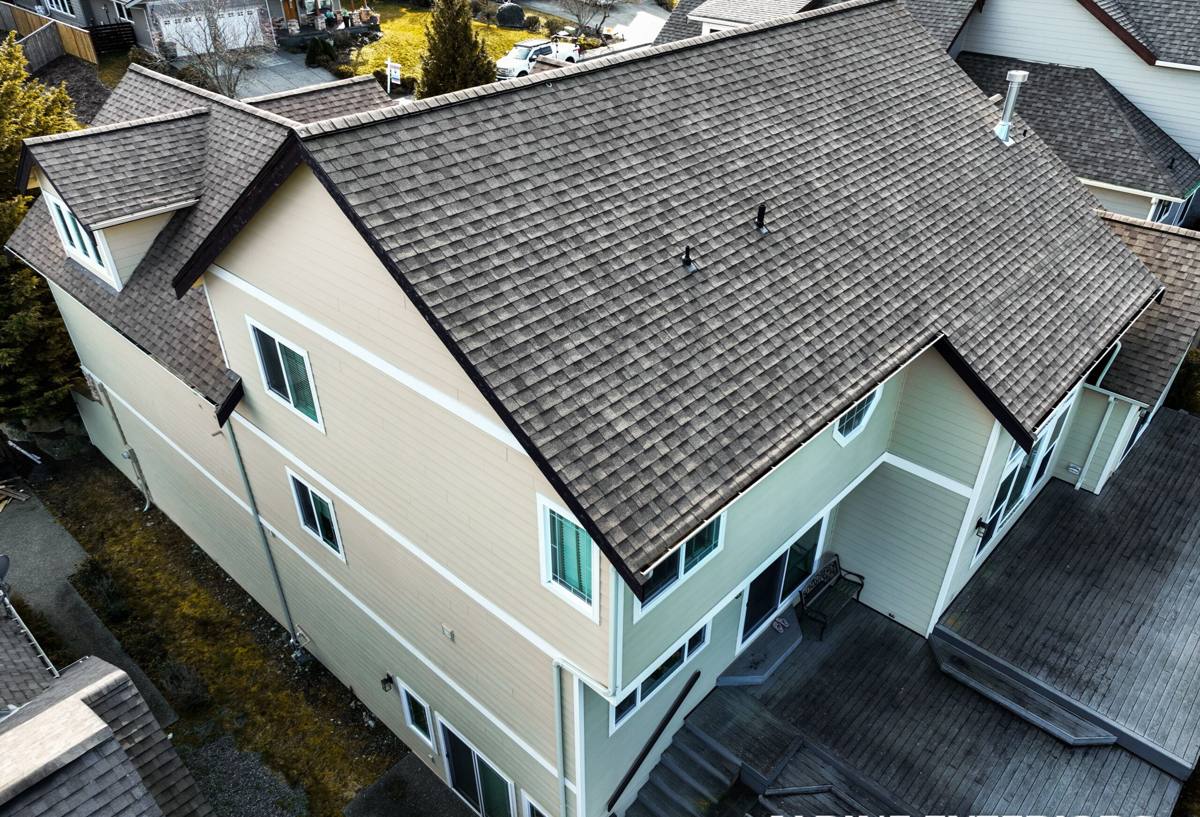
What Sedro-Woolley Homes Actually Need From a Deck
Every deck we design starts with the same question: how is water going to move off this structure, and how fast? In this region, that's not a minor detail — it's the difference between a deck that lasts fifteen years and one that needs major repair in five.
Moisture Management First
Standing water is the enemy. Decking boards need proper gapping and slope so rain sheds instead of pooling. Ledger boards — where the deck attaches to the house — need correct flashing so water can't work its way behind siding and into the wall assembly. This is one of the most common failure points we find on older decks in this area, and it's almost always invisible until the damage is already done.
Moss and Surface Traction
Moss doesn't just look bad — it makes a deck slippery, and it holds moisture against the wood or composite surface longer than open air would. Board spacing, surface texture, and sun exposure all factor into how much moss pressure a given deck will face, and we account for that in the layout and material choice, not just in a maintenance pamphlet handed over at the end.
Corrosion Resistance
Salt-influenced air accelerates corrosion on fasteners, brackets, and hardware faster than most homeowners expect. Hardware that's rated for a dry climate can start showing rust streaks within a couple of seasons here. We spec coated or stainless fasteners and connectors specifically because of this.
Choosing the Right Decking Material
There's no single "best" decking material — there's a best material for your budget, your maintenance appetite, and how much sun or shade your deck actually gets. Here's how the main options compare for this climate specifically.
| Material | Moisture & Moss Behavior | Maintenance | Typical Lifespan Here |
|---|---|---|---|
| Pressure-treated wood | Absorbs moisture; needs sealing to resist moss buildup | Annual cleaning and re-sealing recommended | 10–15 years with upkeep |
| Cedar | Naturally moisture-resistant but softens without upkeep | Periodic oiling or staining | 15–20 years with upkeep |
| Capped composite | Sheds water well; textured surface can still hold moss film | Occasional washing, no sealing | 25+ years |
| PVC decking | Fully synthetic, minimal moisture absorption | Occasional washing | 25–30 years |
Composite and PVC decking cost more upfront but remove the recurring sealing and staining labor that wood demands in a climate like this. Wood costs less initially but only performs well if the maintenance actually happens on schedule — and in our experience, that's the part that slips first.
What a Correctly Built Substructure Involves
The decking boards are what you see. The structure underneath is what determines whether the deck is still safe and level in fifteen years. This is where corners get cut on a rushed job, and it's the part a homeowner has no easy way to inspect once the boards are down.
- Footings sized and set below frost depth, not just poured on the surface
- Ledger flashing installed so water sheds away from the house wall, never behind it
- Joist spacing matched to the decking material's actual span rating, not a generic default
- Corrosion-resistant hardware throughout — joist hangers, structural screws, post bases
- Proper ventilation underneath the deck so trapped moisture can dry out between rain events
- Guardrail and stair framing built to current structural load requirements, not just to "look right"
None of this is optional or upgrade-tier work — it's the baseline for a deck that's actually going to hold up in a wet climate. A deck that looks finished but skips these details is a deck with a shorter lifespan than it should have.
Our Process, Start to Finish
1. On-Site Assessment
We walk the property, look at drainage patterns, sun and shade exposure, and how the deck will connect to the house. This tells us as much about material and structural choices as anything the homeowner tells us up front.
2. Design and Material Selection
We talk through layout, size, railing style, and decking material with honest trade-offs for each — cost, maintenance, and how each option holds up specifically in this climate. No pressure toward the most expensive option; the right answer depends on your budget and how much upkeep you actually want to do.
3. Permitting
Most custom decks require a building permit, particularly if they're attached to the house or elevated above a certain height. We handle the permit application and coordinate inspections so you're not chasing paperwork.
4. Construction
Footings and framing go in first, with every structural connection inspected before decking goes down. Flashing and drainage details are addressed as the framing is built, not patched in afterward.
5. Final Walkthrough
We walk the finished deck with you, review how it drains, point out anything that needs periodic attention, and answer questions before we consider the job done.
Railings, Fasteners, and Hardware Choices
Railings and hardware take a disproportionate amount of weather abuse because they're constantly exposed with no overhang or siding to shield them. We favor coated or stainless structural screws and connectors over standard galvanized hardware wherever budget allows, because standard galvanized coatings tend to break down faster under the salt-air exposure common in this part of Washington. For railing materials, options range from painted or stained wood to low-maintenance metal or composite systems — each with a different balance of upfront cost versus long-term upkeep, which we walk through during design.
Deck Maintenance: What Sedro-Woolley Owners Should Actually Do
A well-built deck still needs some seasonal attention in this climate. The good news is that it doesn't take much — but skipping it entirely is how small issues turn into structural ones.
- Sweep debris and standing leaves off the deck surface regularly, especially in fall
- Wash the surface once or twice a year to slow moss and algae buildup before it takes hold
- Check that gaps between boards stay clear so water keeps draining properly
- Inspect railings and stair connections annually for looseness or corrosion streaks
- Re-seal or re-stain wood decking on the schedule the product actually calls for, not "when it looks bad"
- Look under the deck occasionally for standing water, mold, or signs of poor ventilation
None of this requires a professional visit every time — most of it is a weekend task. But it does need to actually happen, and the maintenance schedule should match the material you chose, not a generic assumption.
Permits, Codes, and Site-Specific Considerations
Deck projects in this area typically need to account for setback requirements, height and guardrail codes, and — depending on the lot — soil conditions that affect how footings are sized. We don't guess on any of this; it gets checked against current local code requirements as part of the design phase, not assumed based on what worked on a different property. Homes on sloped lots or those close to property lines sometimes need additional design consideration, which is part of why the initial site walk matters as much as it does.
Why Hiring a Crew That Already Works Sedro-Woolley Matters
A deck built by a crew unfamiliar with this specific climate often looks fine on day one and starts showing problems within a couple of seasons — moss building up faster than expected, hardware rusting ahead of schedule, or moisture finding its way into framing that wasn't detailed for this much rain. We work in Whatcom County and the surrounding area regularly, which means our material specs, fastener choices, and drainage details are already calibrated to what actually happens here over time, not to a national average. That local pattern recognition is hard to get from a crew that only occasionally works this far into the Pacific Northwest's wetter belt.
It also means faster, more accurate estimates. We're not learning the region's soil, drainage, and weather behavior on your project — we already know it, which keeps the design phase efficient and the final structure built to what this climate actually demands.
Get a Straight Answer on Your Deck Project
If you're planning a new custom deck or replacing one that's showing its age, we're happy to walk the site, talk through material options honestly, and give you a clear picture of what the project involves — no pressure, no upsell. Use the form below to request a free estimate and we'll get back to you to schedule a time.