 Chuckanut Exterior
 Why Sedro-Woolley Decks Take More Punishment Than Most
A deck in Sedro-Woolley doesn't get an easy life. Between salt-laden air drifting in off the water, driving rain that comes sideways more often than straight down, and a moss season that can stretch from fall clear into spring, the structure under your feet is under constant low-grade attack. None of it is dramatic on its own. It's the accumulation — moisture that never fully dries out between storms, fasteners that see more wet-dry cycles than they were rated for, wood that stays damp long enough for rot to get a foothold — that turns a deck built without the local conditions in mind into a problem five or six years down the road instead of twenty-five.
We build decks specifically with Whatcom County's climate in mind, not a generic spec sheet. That shows up in the framing details, the fastener choices, the drainage plan, and the material recommendations we give homeowners in Sedro-Woolley — all things this page walks through.
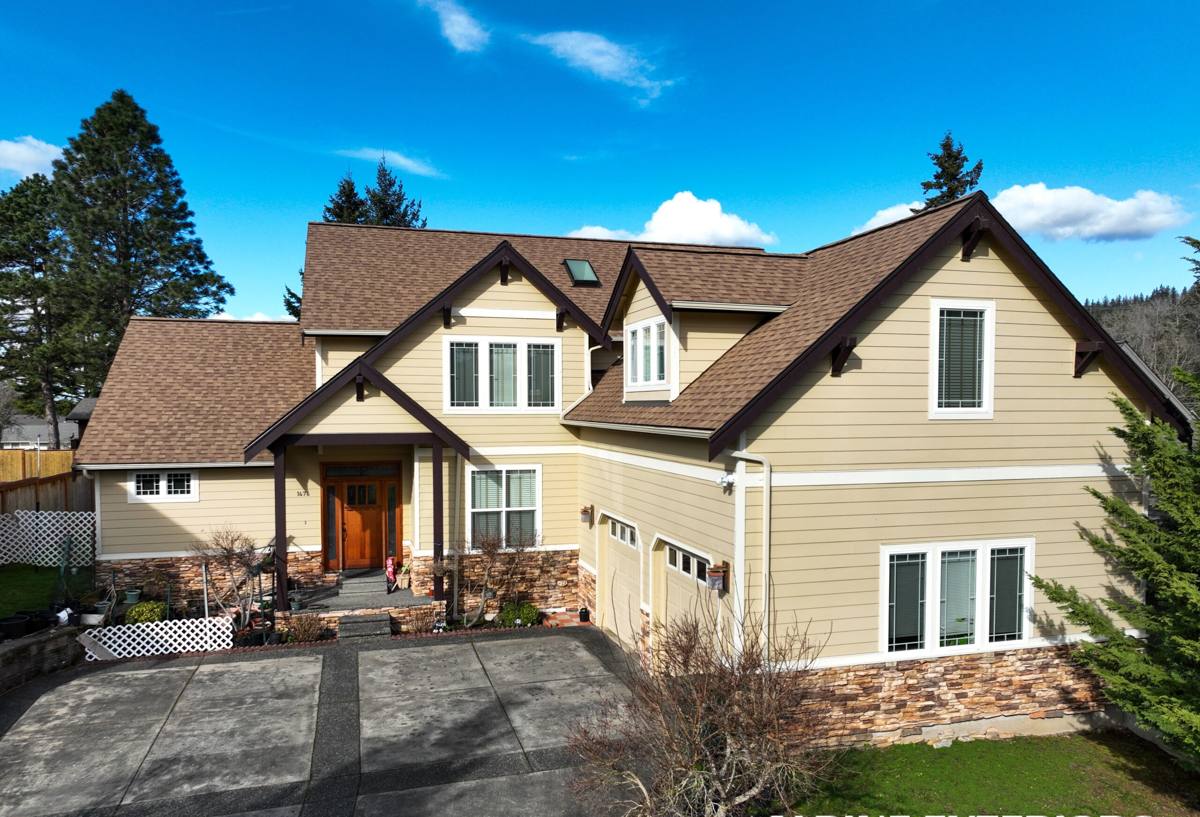
What a Correctly Built Deck Needs Here
A deck that's going to hold up to salt air and prolonged wet weather needs a few things a fair-weather build can skip:
- Corrosion-resistant fasteners and hardware rated for coastal or high-moisture exposure — standard hot-dip galvanized is often not enough near salt air, and we spec accordingly
- Proper flashing at the ledger board where the deck meets the house, so water is directed away from the wall framing instead of into it
- Footings set below frost depth and sized for our soil conditions, not just code minimums
- Joist spacing and beam sizing that accounts for the added weight of wet, moss-covered decking over the winter months
- Air gaps and drainage paths under the decking surface so water doesn't pool and sit against wood or fastener heads
- A surface material and finish that can be reasonably kept clear of moss without a homeowner needing to pressure-wash every few weeks
Skip any one of these and the deck may still look fine walking out of the build. The failures that follow — soft spots near the ledger, rusted-through hardware, a slick moss layer that never fully clears — show up on a timeline of years, which is exactly why they're easy for a rushed contractor to leave for someone else to deal with.
The Ledger Board Is Where Most Deck Failures Start
If there's one detail worth understanding as a homeowner, it's this one. The ledger board — the piece that attaches the deck directly to your house — is the single most common point of structural failure on decks in wet climates, because it's the hardest spot to keep water away from and the hardest to inspect once it's covered. Correct flashing, proper fastener spacing, and a small air gap between the ledger and the siding are not optional extras. We treat this connection as the most important part of the build, because the deck's ability to hold weight over time depends on it.
Choosing the Right Decking Material for This Climate
There's no single "best" decking material — there's a best fit for your budget, your maintenance appetite, and how much moss and moisture you're willing to deal with. Here's how the common options actually compare in Sedro-Woolley conditions:
| Material | Moisture & Moss Behavior | Maintenance | Typical Lifespan Here |
|---|---|---|---|
| Pressure-treated pine | Absorbs water readily; moss and algae take hold quickly without regular cleaning | Annual cleaning, periodic sealing | 10-15 years with upkeep |
| Western red cedar | Naturally moisture- and rot-resistant; still needs airflow underneath to shed water fully | Sealing every 1-2 years to hold color and resist moss | 15-20+ years with upkeep |
| Composite decking | Doesn't absorb water or rot, but moss and algae can still grow on the surface film in shaded, damp spots | Occasional washing; no sealing or staining | 25-30 years, per manufacturer warranty |
| PVC decking | Fully non-absorbent; least prone to sustained moss growth | Lowest — occasional rinse | 25-30+ years, per manufacturer warranty |
We don't push one material over another as a rule — we walk through the trade-offs with you. Pressure-treated wood costs less up front but asks the most of you in upkeep, which matters if the deck sits under tree cover where moss thrives. Composite and PVC cost more initially but take moisture out of the maintenance equation almost entirely. Cedar sits in between: it looks and feels like real wood because it is, but it needs a homeowner who's willing to seal it on a schedule.
Framing and Substructure: Where the Real Work Happens
The decking boards are what you see and walk on, but the framing underneath is what determines whether the deck is still solid in fifteen years. In a climate that stays wet for long stretches, we pay particular attention to a few things most homeowners never see once the build is finished:
- Joist tape or flashing on top of every joist, so fasteners driving into the wood don't create an entry point for water to sit and rot the joist from the inside out
- Beam and post connections using hardware rated for exterior, high-moisture exposure — not interior-grade brackets
- Post base standoffs that keep posts from sitting directly in standing water at ground level
- Adequate under-deck clearance for airflow, especially on lower decks close to grade, where moisture gets trapped without it
This is also where cutting corners is easiest to hide and most costly to fix. A framing shortcut is invisible once the decking goes down — until the deck starts feeling spongy in one corner, and by then the fix means tearing up the surface to get at what's underneath.
Moss, Algae, and Managing a Long Wet Season
Moss doesn't mean a deck was built badly — it means the deck is doing what decks in this region do, which is sit outside through months of damp, low-light weather. But there's a real difference between a deck that sheds water and clears out each spring with light cleaning, and one that stays damp underfoot because of poor drainage or the wrong surface material. We build and grade decks to encourage water to move off the surface and out from underneath, which cuts down on how aggressively moss and algae take hold in the first place. It won't eliminate the need for occasional cleaning — nothing here does that — but it keeps the surface from becoming genuinely slick and keeps moisture from lingering against the structure itself.
Railings, Stairs, and Code Requirements
Railings and stairs get wet the same as decking does, and they take a different kind of abuse — hands gripping them, weight leaning on them, ice underfoot in a cold snap. We build these to current code requirements for height, baluster spacing, and load, and we use the same moisture-conscious hardware and connection details as the rest of the deck. If your project needs a permit — which most raised decks and any deck attached to the house do in Whatcom County — we handle that as part of the process rather than leaving it for you to sort out.
How We Approach a Sedro-Woolley Deck Build
- Site visit and assessment. We look at grade, drainage, sun exposure, existing structure (if replacing a deck), and how the space will actually be used before recommending anything.
- Material and design conversation. We walk through the material trade-offs above in the context of your budget and how much upkeep you want to take on.
- Permitting. We prepare and submit what's needed for your project and coordinate inspections as required.
- Build. Footings, framing, flashing, and decking, in that order, with the moisture-management details above built in at every stage rather than added as an afterthought.
- Final walkthrough. We go over the finished deck with you, including what maintenance it will need and on what schedule.
A Simple Maintenance Checklist We Give Every Client
- Sweep debris and standing leaves off the deck surface regularly, especially in fall
- Clean moss and algae buildup at least once a year, more often in shaded areas
- Check and clear any gaps between boards so water keeps draining through rather than pooling
- Reseal wood decking on the schedule appropriate to the product (typically every 1-2 years)
- Inspect the ledger board area and railing connections annually for looseness or soft spots
Why a Local Crew Makes a Real Difference
A deck built to a national average spec is a deck built for somewhere else's weather. We work in Whatcom County conditions every week, which means we're not guessing at how much moisture exposure this build needs to handle or what a "normal" moss season looks like here — we're building for what we actually see happen to decks in Sedro-Woolley and the surrounding area, year after year. That translates into specific, practical decisions: which fastener grade to use, how much air gap to leave under the decking, which flashing detail actually keeps a ledger board dry. Those are the choices that determine whether a deck is still solid in fifteen years or starting to show problems in five.
Get a Straightforward Estimate
If you're planning a new deck or replacing one that's past its prime, we're happy to take a look and give you an honest read on what your project needs — no pressure, no upsell. Fill out the form below and we'll set up a time to talk through your space, your budget, and the right materials for a deck built to hold up to Sedro-Woolley's weather.