 Chuckanut Exterior
 Why Siding Replacement Looks Different in Sedro-Woolley
Every siding replacement job in this part of Washington has to answer to the same three things: salt-laden air moving in off the water, driving rain that hits walls sideways instead of straight down, and a moss season that seems to stretch longer every year. Sedro-Woolley homes take that punishment on every exposed wall, not just the ones facing the weather, and it shows up first in the siding. We've worked enough houses in this area to know that a siding system that holds up fine forty miles inland can fail early here, and that changes what "correct installation" actually means on your specific house.
This page is about one job, in one place: replacing siding on a Sedro-Woolley home. Not a general siding overview, not a different city's climate. What follows is what we look for, what we install, and how we run the job from first estimate to final cleanup.
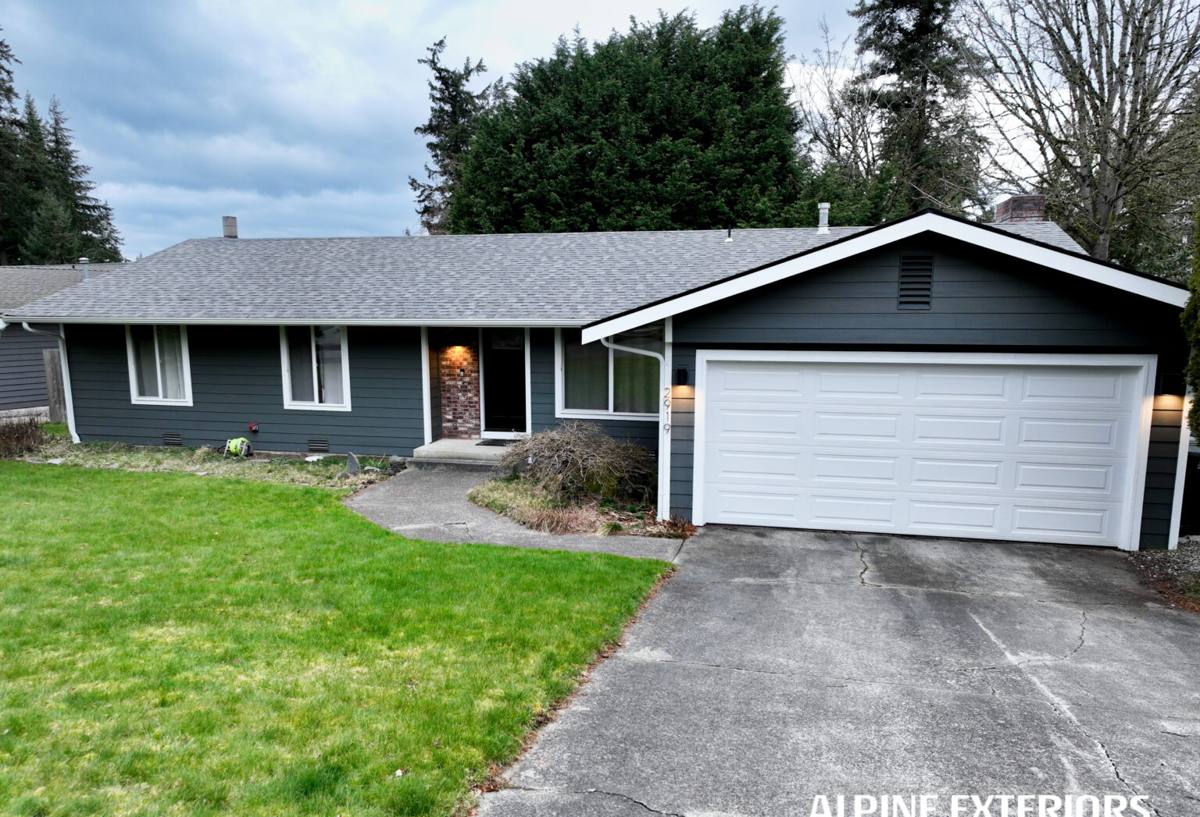
What Whatcom County Weather Does to Siding Over Time
Salt air is corrosive to fasteners and hard on any coating that isn't built to resist it. Combined with driving rain — the kind that gets pushed horizontally into laps, seams, and trim joints instead of running straight off — the real enemy of siding here isn't any single storm, it's moisture that finds a way behind the cladding and never fully dries out between soakings.
Then there's moss and algae growth, which thrives in the shaded, damp, slow-to-dry conditions that are common on north- and west-facing walls around Sedro-Woolley for a good chunk of the year. Moss holds moisture against the surface long after a storm has passed, and on the wrong siding material that constant damp contact accelerates surface breakdown, paint failure, and in wood-based products, actual rot. None of this means siding is doomed here — it means the material, the water management behind it, and the installation details all have to be chosen with this specific weather pattern in mind, not a generic one.
Why This Matters More at Replacement Time Than at Repair Time
A patch or a repair can mask a symptom for a season or two. A full replacement is the one point where you can actually fix the underlying moisture path — house wrap, flashing, weep points, siding material — instead of just covering the old problem back up. If you're already committing to a full tear-off, it's worth doing that part right.
Signs a Sedro-Woolley Home Needs Full Replacement, Not Another Repair
Homeowners often call us thinking they need a patch, and sometimes that's true. But there are specific signs, especially common on homes exposed to this area's rain and salt air, that mean the whole wall system needs to come off rather than be spot-fixed.
- Soft or spongy spots when you press on the siding, especially near the bottom courses or under windows
- Paint that keeps failing in the same spots within a year or two of repainting
- Persistent moss or dark streaking that comes back within months of cleaning
- Visible gaps, warping, or buckling panels, particularly on the sides that take the worst of the driving rain
- Cracked or crumbling caulk lines around trim, windows, and corners that keep reopening
- A musty smell or discoloration on interior walls that back onto exterior siding
- Fastener heads rusting through or backing out of the siding face
If more than one or two of these show up on the same wall, that's usually a sign the water management behind the siding has already failed in that area, not just the visible surface.
What a Correct Siding Replacement Actually Involves
Replacing siding is not a swap-the-skin job. Done right, it's a rebuild of the entire drainage plane on your home's exterior. Here's what that means in practice:
Full Tear-Off, Not Overlay
We remove the existing siding down to the sheathing rather than installing new material over old. Overlaying traps whatever moisture problems already exist and hides them behind a new surface — the opposite of what a replacement should accomplish.
Sheathing Inspection and Repair
Once the old siding is off, we can actually see the wall. Any soft, rotted, or water-damaged sheathing gets cut out and replaced before anything new goes up. This step is impossible to do properly without a full tear-off, which is one more reason overlay jobs are a poor fit for this climate.
Weather-Resistive Barrier and Flashing
A new, continuous water-resistive barrier goes over the sheathing, with flashing detailed at every window, door, and penetration so that any water that does get behind the cladding has a clear path down and out rather than pooling against the wall. Given how much horizontal, wind-driven rain this area sees, this layer matters as much as the siding itself.
Correct Fastening and Clearances
Fasteners, starter strips, and ground clearances all get installed to the manufacturer's specifications — not "close enough." Under-driven or over-driven fasteners, missing clearance at grade, or skipped starter strips are common shortcuts that don't show up as problems for a year or two, which is exactly why they're easy for an unqualified crew to get away with.
Why We Install Only James Hardie Fiber Cement Siding
We install James Hardie fiber cement exclusively — not vinyl, not LP SmartSide, not cedar, not primed spruce. That's a deliberate standard, not a lack of options.
Vinyl siding is affordable and low-maintenance, but it's a thin material that can warp or crack in temperature swings and offers limited resistance to wind-driven impacts. Wood-based products like cedar and primed spruce look great and are genuinely renewable materials, but they demand consistent maintenance to keep moisture out, and in a climate with this much sustained dampness and moss pressure, that maintenance burden is steep. Engineered wood products like LP SmartSide perform reasonably when installed and maintained correctly, but they still rely on wood fiber that can swell or degrade if the water-resistive layer behind it is ever compromised.
James Hardie fiber cement is non-combustible, dimensionally stable, and doesn't feed moss or rot the way wood-based siding can. Its ColorPlus factory finish is baked on under controlled conditions rather than field-applied, which gives it more consistent resistance to the fading and peeling that salt air and constant damp cycles cause on site-painted surfaces. Hardie also engineers specific product lines (its HZ5 line, for example) for harsher climate zones, which is relevant anywhere driving rain and salt air are part of daily weather rather than the exception. Paired with a strong, transferable warranty, it's the system we're willing to put our name behind on homes in this area.
How Our Replacement Process Works
- On-site assessment: We walk the exterior with you, check for the failure signs above, and look at drainage, grading, and existing moisture damage before quoting anything.
- Written estimate: You get a clear scope — tear-off, sheathing repair allowance, barrier and flashing detail, Hardie product line and color, and timeline.
- Tear-off and inspection: Old siding comes off, sheathing gets inspected, and any damage is documented and repaired before moving forward.
- Water management install: New barrier and flashing go in at every penetration and transition.
- Hardie siding installation: Installed to manufacturer spec for fastening, clearances, and joint treatment.
- Final walkthrough: We go over the finished work with you, including care and maintenance specific to this climate, before calling the job done.
Cost Factors for a Sedro-Woolley Siding Replacement
Every house is different, and we won't quote a number without seeing the walls, but these are the factors that most often move the price up or down on a job like this:
| Factor | Why It Affects Cost |
|---|---|
| Sheathing condition | Hidden rot found at tear-off adds repair scope that can't be priced sight unseen |
| Home size and wall complexity | More corners, dormers, and trim details mean more labor and cut waste |
| Siding profile and color | Lap width, ColorPlus finish selection, and trim style all carry different material costs |
| Access and site conditions | Steep grades, tight side yards, or multi-story walls change staging and labor time |
| Existing moisture damage | Homes with visible rot or long-standing leaks typically need more extensive rebuild than a straightforward tear-off |
| Window and door trim work | Replacing or re-flashing trim alongside siding adds scope but improves the overall moisture seal |
We'd rather give you an honest range after actually seeing the house than a number over the phone that changes once we open the wall.
Choosing a Contractor Who Already Works in Sedro-Woolley
A crew that mainly works other regions can still do competent general carpentry, but they won't necessarily know how aggressively moss establishes on north-facing walls here, or how much clearance at grade actually matters given how wet the ground stays for parts of the year. Local experience shows up in small decisions — flashing details, fastener choice, where extra drainage gaps get added — that don't show up on a proposal but matter a great deal five years later.
Before hiring anyone for a siding replacement in this area, it's worth asking:
- Do you do a full tear-off, or do you ever install over existing siding?
- What's your written scope for the weather-resistive barrier and flashing, not just the siding brand?
- Are you licensed and insured, and can you provide proof before work starts?
- What siding products do you install, and why did you choose them?
- How do you handle sheathing damage discovered mid-project?
- Can I see your process in writing before I sign anything?
A contractor who answers these clearly and specifically, without dodging into vague reassurances, is generally one who's actually done the work before in a climate like this one.
Caring for New Siding Through the Seasons Here
Even the best-installed siding benefits from a little seasonal attention in this climate. A rinse-down once or twice a year — particularly on shaded, north-facing walls — keeps moss and algae from getting a foothold in the first place. Keeping gutters clear prevents overflow from running down and pooling against the siding at corners. And a quick visual check after any major storm, looking for loose trim or displaced caulking, catches small issues while they're still small. James Hardie's factory finish reduces how much of this maintenance falls on you compared to field-painted materials, but no siding material is entirely maintenance-free in an environment with this much sustained moisture.
If your Sedro-Woolley home is showing any of the signs above, or you're just planning ahead for a replacement done right the first time, we're happy to walk the property with you and give you a straightforward, no-pressure estimate. There's a form just below this page to get that started.