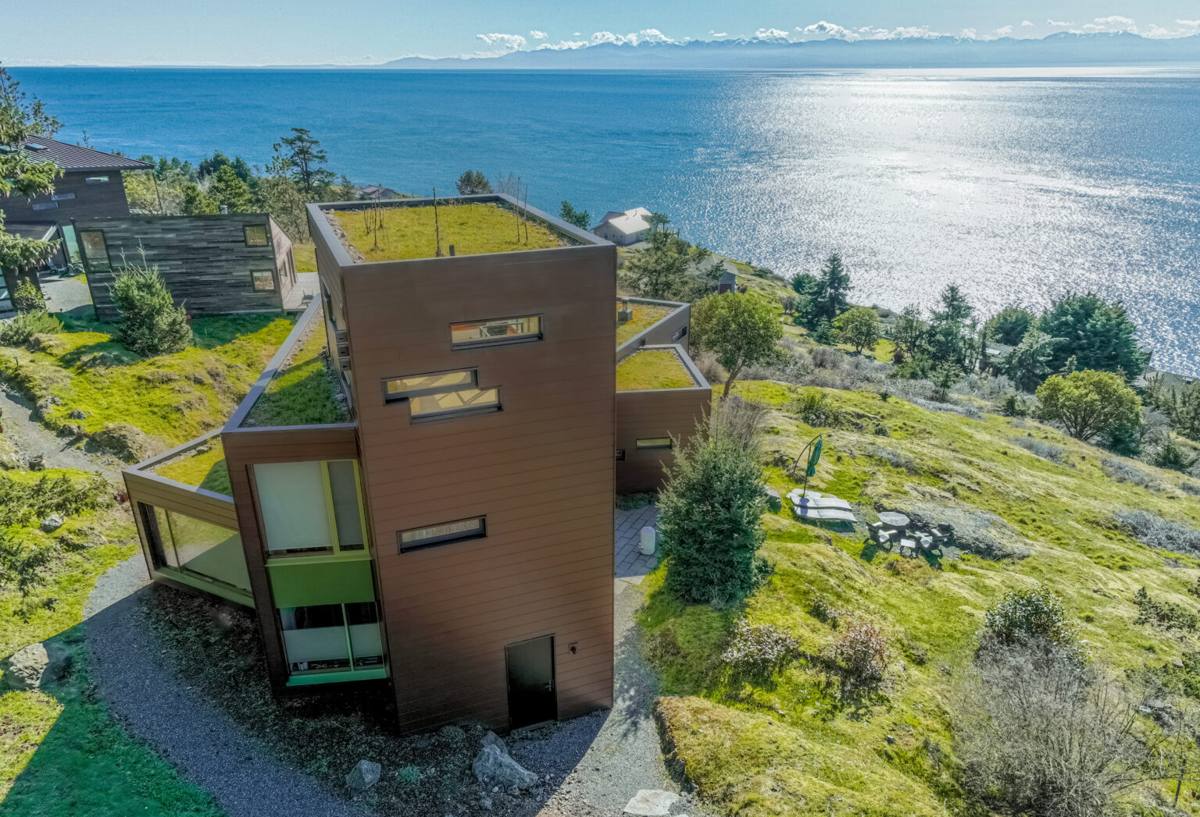
 Chuckanut Exterior
 Why Board & Batten Needs to Be Built Right in Burlington
Board and batten has a strong presence on homes in and around Burlington — the vertical lines suit the farmhouse and craftsman styles that are common in this part of Whatcom County, and it gives a house a cleaner, more custom look than standard lap siding. But the same vertical profile that makes it attractive also makes it less forgiving if it's built wrong. Every seam and every batten joint runs top to bottom, which means every one of them is a potential path for water to work its way behind the siding.
That matters more here than in a lot of places. Homes in the Chuckanut service area deal with salt air carried in off the Sound, wind-driven rain that hits siding sideways instead of straight down, and a moss season that can stretch from early fall through late spring. Salt air accelerates corrosion on fasteners and trim, driving rain tests flashing and caulk joints that a calmer climate would never stress, and prolonged dampness gives moss and algae a foothold anywhere moisture lingers. A board and batten job that looks fine the day it's finished can fail quietly behind the boards if the assembly underneath wasn't built for this climate.
What a Correct Board & Batten Assembly Involves
A Real Drainage Plane
Vertical siding needs somewhere for water to go if it gets past the surface — and in driving rain, some water always gets past the surface. That means a proper weather-resistant barrier behind the panel, correctly lapped and sealed at every penetration, plus a drainage gap (a rainscreen) so any moisture that does get in can drain and dry instead of sitting against the wall sheathing.
Batten Spacing and Fastening
Battens have to land over solid backing — not just decoration nailed wherever it looks even — and be spaced and fastened according to the manufacturer's engineering, not guesswork. Fasteners placed too close to a panel seam, or battens that don't tie into framing, are one of the most common reasons board and batten siding fails early.
Corners, Trim, and Penetrations
Outside corners, window and door trim, and every place a hose bib, vent, or light fixture penetrates the wall are where water intrusion actually starts. These details take more time to do correctly than the flat field of siding does, and they're the first thing we check when we're asked to look at a board and batten job that's underperforming.
Why This Company Installs James Hardie for This Job — and Nothing Else
We install James Hardie fiber cement exclusively. For board and batten specifically, that means Hardie's vertical panel system with matched batten trim, factory-finished in ColorPlus rather than field-painted. A few reasons that matters here:
- Fiber cement doesn't absorb moisture and swell the way wood or engineered wood panel products can, which matters directly in a climate with this much driving rain and dampness.
- ColorPlus finish is baked on and warranted against fading and chalking — salt air is hard on field-applied paint, and repainting vertical board and batten (with all its trim edges) is expensive and disruptive to redo every several years.
- Hardie's HZ5 product line is engineered for climates like ours, with freeze-thaw and moisture exposure specifically accounted for, rather than a one-size-fits-all product.
- It's non-combustible, which matters for insurance and for long-term peace of mind regardless of region.
- The warranty is transferable, which protects resale value if the home changes hands.
We don't install vinyl board and batten, engineered wood panel products, or unfinished cedar for this application. Each has legitimate uses elsewhere, but for the moisture load and maintenance reality of this climate, we don't think they hold up to the standard we want to stand behind — so we don't put our name on them.
How the Options Compare
| Material | Moisture Behavior | Finish Durability in Salt Air | Ongoing Maintenance | Typical Warranty |
|---|---|---|---|---|
| James Hardie fiber cement | Does not swell, rot, or absorb water like wood-based products | Factory ColorPlus finish resists fading/chalking | Occasional rinse; no repainting cycle | Long-term, transferable |
| Cedar board and batten | Absorbs moisture; prone to cupping and checking if not maintained | Field finish weathers faster near salt air | Refinish/reseal on a recurring cycle | Typically material only, shorter |
| Engineered wood panel | Vulnerable at cut edges and seams if moisture gets in | Field or factory finish, variable durability | Moderate; watch edge sealing | Varies by manufacturer |
| Vinyl vertical panel | Doesn't rot, but can warp/distort with heat and won't stop water behind it | Can fade and become brittle over time | Low, but limited repair options if damaged | Prorated, often shorter |
Our Installation Process in Burlington
- Walkthrough and assessment — we look at existing siding, wall condition, exposure (which sides take the worst of the wind-driven rain), and trim details before we quote anything.
- Tear-off and sheathing check — removing the old siding is when hidden moisture damage shows up. We address any rot or compromised sheathing before anything new goes on.
- Weather barrier and flashing — new WRB, correctly lapped, with flashing at every window, door, and penetration.
- Rainscreen furring — creating the drainage gap that lets the wall assembly dry properly instead of trapping moisture.
- Panel and batten installation — set to Hardie's fastening schedule and spacing, tied into structural framing, not just the sheathing.
- Trim and detail work — corners, window and door surrounds, and penetration sealing, done before we consider the job complete.
- Final walkthrough — we go over the finished work with the homeowner before we're done.
Living With Board & Batten Through Moss Season
James Hardie siding installed correctly is low-maintenance, not no-maintenance. In a climate with a long damp season, a little seasonal attention keeps it looking right and keeps water moving away from the wall the way it's supposed to.
- Rinse off accumulated pollen, dirt, and early moss growth once or twice a year, especially on north-facing or shaded walls.
- Keep gutters and downspouts clear — clogged gutters send sheet water down the siding face, which is exactly the kind of sustained moisture exposure that shortens the life of any siding.
- Trim back shrubs and trees near the walls so siding can air-dry between rain events instead of staying damp.
- Check caulking annually at trim joints, penetrations, and corners — caulk is a maintenance item on every siding system, including ours.
- Watch the bottom few inches of siding near grade and hard surfaces, where splash-back moisture and moss tend to concentrate first.
What Actually Drives the Cost
Every board and batten project is priced around the specifics of the house, not a flat rate. The factors below are what actually move a quote up or down.
| Factor | Why It Matters |
|---|---|
| Existing siding removal | Tear-off, disposal, and what we find underneath (rot, old moisture damage) add time before new siding goes up. |
| Wall height and access | Multi-story walls and difficult access (steep grade, tight side yards) take longer and require more equipment. |
| Trim and corner complexity | More windows, dormers, and architectural detail mean more precision work relative to the flat field area. |
| Batten spacing and reveal chosen | Tighter batten spacing uses more material and labor per square foot than a wider reveal. |
| Color and finish selection | Standard ColorPlus colors are the most cost-effective; custom or specialty finishes carry a premium. |
Why Hiring a Crew That Already Works in Burlington Matters
A crew that works this area regularly already knows which exposures take the worst of the driving rain, how much salt air exposure to plan around, and what the moss and moisture cycle here actually does to a wall assembly over time — not in theory, but from having opened up enough existing walls to see what works and what doesn't. That's the difference between a crew following a generic installation manual and one that's building for this specific climate on purpose.
It also matters after the job is done. A local crew is the one you call if a question comes up two years down the road, and it's the one standing behind the workmanship warranty alongside James Hardie's product warranty — not a name that did one job in the area and moved on.
If you're considering board and batten siding for a home in Burlington, we're happy to take a look and walk you through what your specific walls and exposure would need. There's no pressure and no cost to get a straight answer — just fill out the form below and we'll set up a time to take a look.