 Chuckanut Exterior
 Building a Deck That Actually Holds Up in Burlington
A deck in Burlington doesn't fail the same way a deck fails in a dry climate. Out here, the problem usually isn't sun damage — it's moisture that never fully leaves. Salt air off the water, long stretches of driving rain, and a moss season that can run most of the year all work on a deck at the same time, and they work on the parts homeowners rarely think to check: the fasteners, the ledger connection, the framing underneath the boards you actually walk on. A deck that looks fine on the surface can still be losing the fight underneath it.
Building a deck correctly for this area means designing for water management first and appearance second — not because looks don't matter, but because a deck that manages moisture well tends to look good for a lot longer than one that doesn't.
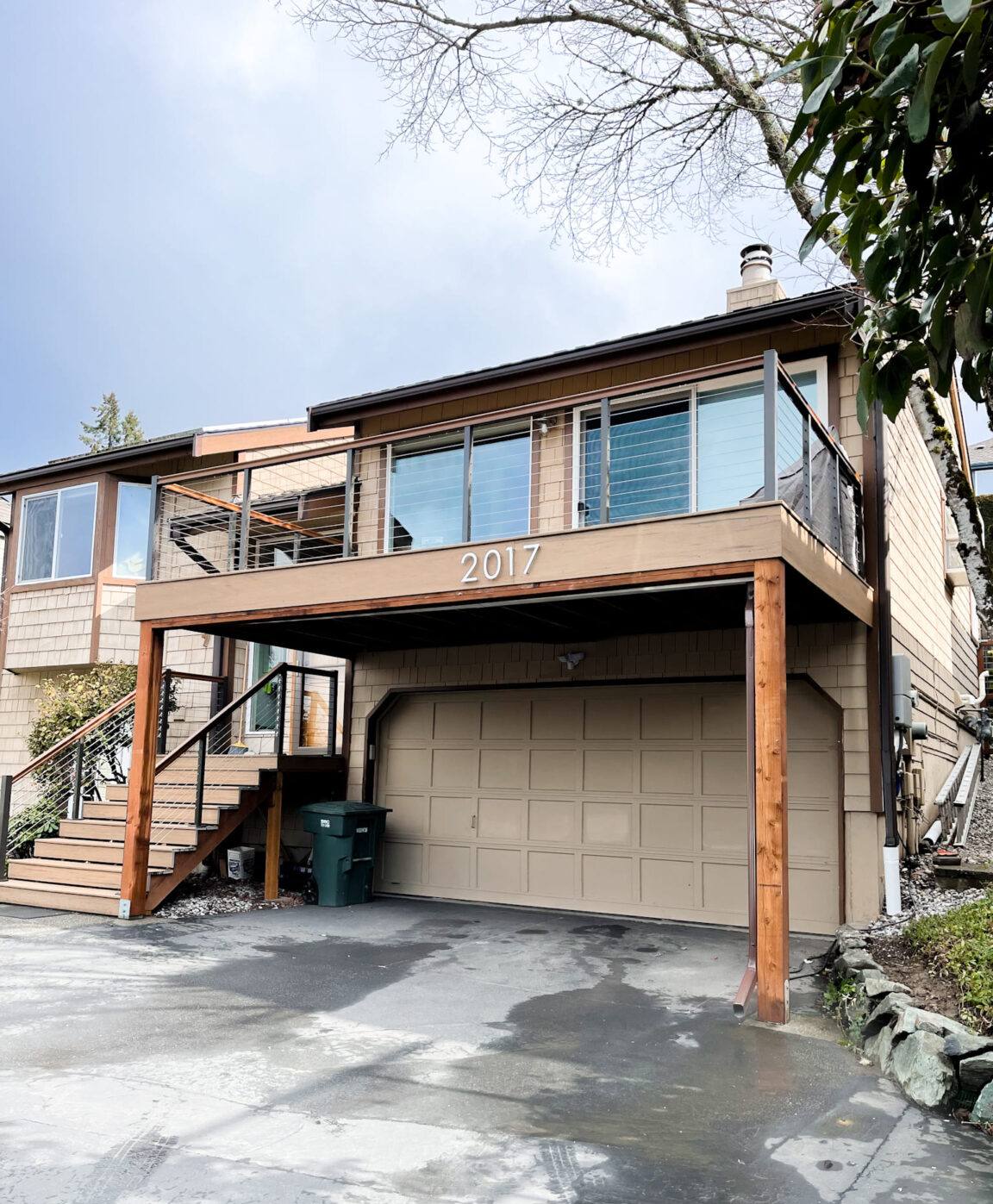
What Salt Air, Rain, and Moss Actually Do to a Deck
Each of these factors attacks a deck differently, and understanding the mechanism helps explain why certain shortcuts show up as problems years later instead of immediately.
- Salt air accelerates corrosion on any exposed metal — fasteners, brackets, railing hardware — especially on decks with any exposure toward open water or prevailing wind.
- Driving rain doesn't just fall straight down here; wind-driven rain gets pushed sideways into gaps, under flashing, and behind ledger boards where standard construction sometimes doesn't account for it.
- Moss and algae take hold anywhere moisture sits and airflow is limited — shaded understructures, tight board spacing, and north-facing sections are the usual first spots.
- Freeze-thaw cycles, while less extreme here than inland, still open up small cracks in concrete footings and fastener holes over repeated winters.
None of these are dramatic on their own. The damage is cumulative, which is exactly why a deck that was built with shortcuts often looks perfectly normal for the first several years.
Choosing the Right Decking Material for This Climate
There's no single "correct" material for every deck — it depends on budget, how much upkeep you want to do, and how exposed the deck is to weather. Here's how the common options actually compare once you factor in Burlington's conditions specifically.
| Material | How it handles our climate | Maintenance |
|---|---|---|
| Pressure-treated wood | Affordable and strong, but needs consistent sealing to resist the constant damp — skipped maintenance shows up fast as graying, splitting, or soft spots | Annual cleaning and periodic re-sealing |
| Cedar | Naturally more rot-resistant than most softwoods and holds up well to moisture, but is softer and more prone to surface wear | Regular cleaning, occasional oil or stain |
| Capped composite | Strong performer against moss growth and moisture absorption since the cap layer sheds water; doesn't need sealing | Occasional washing, no sealing or staining |
| PVC decking | Fully synthetic, essentially impervious to moisture and rot; performs consistently in wet, shaded areas prone to moss | Lowest maintenance of the group |
We're honest with homeowners about trade-offs rather than pushing one product. Wood costs less up front but demands real upkeep to earn its lifespan here. Composite and PVC cost more initially but remove most of the moisture-related maintenance burden — which matters more in a climate like this than it would somewhere drier.
Framing and Structure: Where Most Deck Problems Actually Start
The decking surface gets all the attention, but the framing underneath is what determines whether a deck is safe and long-lasting. This is also where cutting corners is easiest to hide — and hardest to catch until something fails.
The Ledger Connection
Where a deck attaches to the house is the single most important structural point and the most common source of water intrusion if it's not flashed correctly. Rain that gets behind an improperly flashed ledger board doesn't just damage the deck — it can work its way into the house's wall assembly.
Joists and Fasteners
In a climate with this much sustained moisture and salt exposure, fastener choice isn't a minor detail — it's the difference between hardware that lasts the life of the deck and hardware that starts corroding within a few seasons. Galvanized fasteners can perform adequately in low-exposure areas, but stainless steel is the more reliable choice anywhere salt air or standing moisture is a regular factor.
Footings and Posts
Footings need to be sized and set below frost depth per code, with post bases that keep wood from sitting in direct contact with wet soil or standing water — a detail that matters more here than in drier regions where ground moisture isn't a constant.
Railings and Hardware That Won't Corrode on You
Railings take a disproportionate amount of weather exposure because they're vertical, unshaded, and handled constantly. Cheap or mismatched hardware on a railing system is one of the more common places we see early failure on decks that are otherwise in decent shape.
- Stainless steel or coated fasteners rated for exterior/coastal use, not generic interior-grade hardware
- Aluminum or composite railing systems where low maintenance is the priority
- Wood railings sealed and inspected on the same schedule as the decking itself, since they weather faster than horizontal surfaces
- Connection points checked for movement or corrosion at least once a year, since a loose railing is a safety issue, not just a cosmetic one
Designing for Drainage, Airflow, and Moss Prevention
A lot of moss and mildew problems on decks aren't a maintenance failure — they're a design failure that maintenance can't fully fix. If a deck doesn't have enough airflow underneath it, or if board spacing doesn't allow water to drain through, moss will keep coming back no matter how often it's cleaned.
Correct design accounts for this from the start: proper board gapping for drainage, ventilation underneath low-clearance decks, grading that moves water away from posts and footings instead of pooling around them, and thoughtful placement relative to shade and prevailing wind. A deck built this way needs far less aggressive cleaning to stay ahead of moss than one that was built without these details in mind.
Our Deck Building Process
We approach every deck project the same structured way, whether it's a straightforward rebuild or a larger custom design.
- On-site assessment — we look at sun/shade exposure, drainage patterns, existing structure (if it's a rebuild), and any site-specific moisture concerns before recommending materials.
- Material and design discussion — we walk through the honest trade-offs between wood, cedar, composite, and PVC based on your budget, maintenance preference, and how exposed the deck will be.
- Permitting — we handle the permit process for the jurisdiction the project falls under, since deck permitting requirements vary by size, height, and attachment to the home.
- Framing and structural work — ledger flashing, joist layout, footings, and fastener selection done to code, with extra attention to the moisture-management details this climate demands.
- Decking, railing, and finish work — installed with correct spacing and hardware for long-term drainage and corrosion resistance.
- Final walkthrough — we go over basic care for whatever material you chose so you know what upkeep to expect going forward.
Permits and Local Building Considerations
Deck construction is regulated by local building codes, and requirements can shift based on deck height, size, and whether it's attached to the home or freestanding. Rather than guessing at what applies, we pull the correct permit for the specific jurisdiction a project falls in and build to the structural requirements that come with it — footing depth, railing height, guard spacing, and ledger attachment standards all factor in. Skipping this step is one of the more common problems we find when we're called out to look at an older or previously unpermitted deck.
Maintenance Checklist for Burlington Homeowners
Whatever material you choose, a little consistent upkeep goes a long way in this climate. Here's a realistic seasonal checklist:
- Clear leaves and debris from between boards and along the deck's edges before wet season sets in
- Check for early moss or algae growth in shaded or low-airflow spots and clean it before it spreads
- Inspect railing connections and structural hardware annually for movement or corrosion
- Reseal or restain wood decking on the schedule appropriate to the product — don't wait until it's visibly failing
- Confirm drainage paths under and around the deck aren't blocked by plantings, soil buildup, or debris
- Look underneath the deck occasionally, not just at the walking surface — that's where early moisture problems usually show first
Why Hire a Crew That Already Works in Burlington
A deck builder unfamiliar with this specific climate can build something structurally sound on paper that still underperforms here — using fastener grades meant for drier regions, skipping ventilation details that matter in a wet climate, or recommending materials without being upfront about the maintenance they'll actually require given the rain and moss exposure. Working regularly in Burlington and the surrounding Whatcom County area means we're not guessing at how salt air, sustained rain, and moss pressure affect a deck over time — we're building around it as a matter of standard practice, not an afterthought.
If you're planning a new deck or replacing one that's showing its age, we're happy to take a look and talk through honest options for your situation. Reach out for a free, no-pressure estimate using the form below.