 Chuckanut Exterior
 Siding Repair Built for Burlington's Climate, Not a Generic Checklist
Homes in the Burlington area near Chuckanut deal with a specific combination of weather that doesn't show up the same way everywhere in Washington: salty marine air off the water, long stretches of driving rain, and a moss season that can run for months. None of these three things is dramatic on its own, but together they wear siding down faster than homeowners expect, and they wear it down in ways that aren't always obvious from the ground. A siding repair crew that understands this combination looks for different failure patterns than a crew used to drier inland conditions.
This page is about one service, in one area: siding repair for Burlington-area homes. Not a full replacement pitch, not a generic "we fix siding" page. If your siding is doing its job in most places but failing in a few, repair is often the right call — but only if the repair addresses what actually caused the damage, not just the visible symptom.
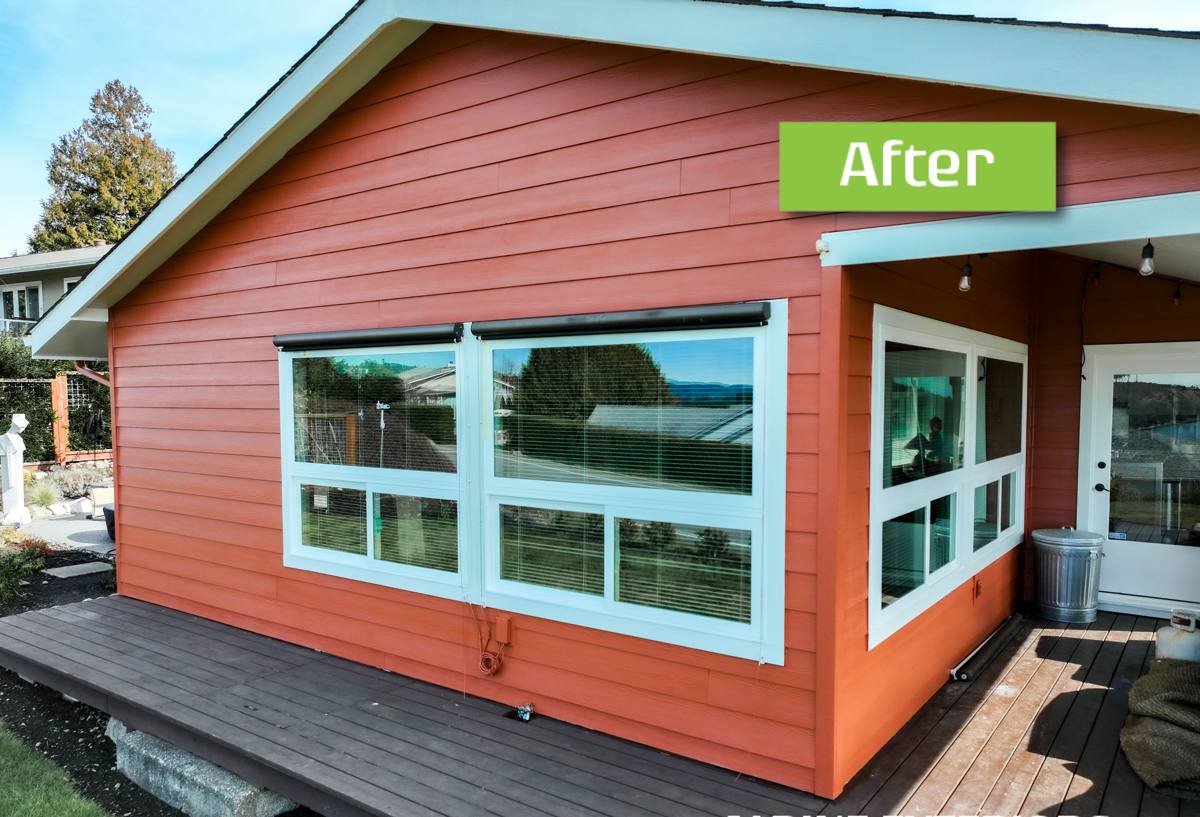
What Salt Air, Driving Rain, and Moss Season Actually Do to Siding
Moisture Intrusion Behind the Cladding
Driving rain doesn't just wet the surface of siding — wind pushes water sideways and upward, forcing it into any gap, unsealed joint, or failed caulk line it can find. Once moisture gets behind the cladding, the damage happens out of sight: sheathing softens, framing can rot, and insulation loses its effectiveness. By the time a stain or soft spot shows up on the outside, the problem has usually been developing for a while underneath.
Fastener and Trim Corrosion
Salt-laden air accelerates corrosion on anything metal — nail heads, trim flashing, hose bib fittings near the wall, even fastener heads that were properly coated when installed. Corroded fasteners lose their grip, which loosens siding panels and opens small gaps that rain then exploits. This is a slower, quieter failure mode than storm damage, and it's one reason siding that looks fine from the street can have real problems at close inspection.
Moss, Algae, and Lichen Growth
A long moss season means more months where siding surfaces stay damp longer after every rain. Moss and algae themselves don't destroy fiber cement siding the way they can degrade wood, but they hold moisture against the surface and, more importantly, they often grow heaviest exactly where drainage or ventilation is already marginal — meaning visible moss growth is frequently a symptom pointing to a bigger issue, not just a cosmetic nuisance.
Signs Burlington-Area Homes Should Get Siding Checked
Most siding repair calls we get start with one of these signs. None of them automatically means a full re-side is needed, but each one is worth having looked at before it spreads.
- Soft, spongy, or slightly bowed panels, especially near the bottom courses or around windows
- Visible gaps, cracks, or separated joints where caulking has failed or shrunk
- Persistent dark staining, streaking, or bubbling paint in one or two localized spots
- Heavy moss or algae buildup concentrated in shaded or north-facing wall sections
- Rust streaks below fasteners or trim, or visibly corroded flashing at corners and butt joints
- Interior signs like a musty smell, peeling paint, or a damp patch on an exterior-facing wall
- Loose panels that flex or rattle in wind, especially after a hard storm
What a Correct Siding Repair Actually Involves
A repair that only replaces the damaged piece of siding and stops there often fails again within a season or two, because it never addressed why that section failed in the first place. A correct repair works backward from the damage to the cause.
Step One: Find the Water, Not Just the Damage
Before any siding comes off, the damaged area and the surrounding sections get checked for moisture — both visually and, where needed, with a moisture meter. Water travels, so the source of intrusion is often several inches or even a few feet from where the damage is visible.
Step Two: Check What's Behind the Siding
Once panels are removed, the weather-resistant barrier, flashing, and sheathing underneath get inspected. If the barrier is torn, the flashing is corroded, or the sheathing is soft, replacing siding over that same problem just resets the clock on the same failure.
Step Three: Repair the Water Management, Then the Siding
Damaged sheathing gets replaced, flashing gets corrected or replaced, and the drainage plane gets restored before any new siding goes back on. Only then does the visible repair — new panels, trim, and paint — happen.
Repair Scope: Matching the Fix to the Problem
Not every repair call needs the same scope of work. Part of an honest assessment is telling a homeowner when a small patch is genuinely enough, and when it isn't.
| Repair Scope | Best For | What's Involved |
|---|---|---|
| Spot Patch | Isolated impact damage or a single failed joint with no underlying rot | Remove and replace individual panels, re-seal, touch-up finish match |
| Section Replacement | A wall face or corner with moisture damage found behind several panels | Remove panel run, repair sheathing/flashing/barrier, reinstall matching siding |
| Full Re-Side Evaluation | Repeated failures across multiple walls, or siding near the end of its service life | Full exterior assessment; repair is compared honestly against replacement cost |
We'll always recommend the smallest scope that actually solves the problem. If a full re-side genuinely makes more sense — because the damage is widespread or the existing material is failing broadly — we'll say so plainly, but that's not the default answer.
Why We Repair With James Hardie Fiber Cement, and Only That
We install and repair exclusively with James Hardie fiber cement siding. We don't install or patch with vinyl, LP SmartSide, Cemplank, Allura, primed spruce, or cedar, and that standard matters as much during repair work as it does on a full installation.
When a wall section needs new material, matching matters. Fiber cement, engineered wood, and vinyl all move, weather, and finish differently, so a patch using a different substrate than what's already on the wall tends to look mismatched and can behave differently at the seams over time. Hardie's HZ5 product line is engineered for the kind of moisture exposure and freeze-thaw cycling common in this part of Washington, and its factory-applied ColorPlus finish holds color consistency far better than field-painted trim, which matters when you're trying to blend a repaired section into existing siding.
Fiber cement is also non-combustible and doesn't absorb and swell with moisture the way wood-based products can, which is a real advantage in a climate where wall assemblies stay damp for extended stretches during moss season. That doesn't mean every alternative product is a bad choice for every homeowner — it means we've chosen to build our repair and installation standard around one material system we can stand behind fully, rather than stocking several products with different maintenance and moisture behaviors.
Our Process for a Burlington-Area Repair Call
- Inspection. We look at the reported problem area and the whole wall system around it, including trim, flashing, and drainage.
- Moisture and cause assessment. We identify what let water in, not just where it shows up, before proposing any fix.
- Scope proposal in plain terms. You get a clear explanation of what's damaged, why, and what size of repair actually solves it.
- Repair. Water management is corrected first, then matching Hardie siding, trim, and finish go back on.
- Final check. We confirm sealant, fastening, and finish match before considering the job done.
Matching Existing Hardie Siding
If your home already has James Hardie siding, a well-matched repair is usually straightforward — profiles and ColorPlus finishes are consistent and traceable. If the existing siding has faded unevenly over the years or is an older discontinued color, we'll walk through realistic options honestly, including whether a slightly visible transition on a less prominent wall is an acceptable trade-off versus a larger repaint or re-side scope.
Why Hiring a Crew That Already Works This Area Matters
A repair crew that regularly works Burlington and the surrounding Chuckanut area has already seen how salt air, wind-driven rain, and moss growth show up on homes here — which wall exposures fail first, which flashing details tend to be the weak point on homes of a certain age, and how long a "small" issue typically takes to become a bigger one in this specific climate. That's not something a crew coming from a drier inland market picks up on the first visit. It shows up in faster, more accurate diagnosis and fewer repairs that need to be revisited.
Whatcom County's marine-influenced weather is consistent enough that local experience translates directly into better repair decisions — knowing when a patch is genuinely sufficient, and when the honest answer is a larger scope of work.
If you're seeing soft spots, staining, moss buildup, or loose panels on your Burlington-area home, we're happy to take a look and give you a straight answer on what's actually needed. Request a free, no-pressure estimate using the form below — there's no obligation, and no upsell script.