 Chuckanut Exterior
 Building Decks for Burlington's Wet Side of Washington
Burlington sits in the Skagit Valley, close enough to the water and low enough in the valley that its decks deal with a specific mix of weather: long stretches of steady rain from fall through spring, heavy morning dew even in the drier months, and the kind of marine-influenced air that comes with living near the Salish Sea. A deck built the way it would be in a drier climate simply does not hold up here the same way. We build and repair custom decks in Burlington regularly, and the design choices we make — from footing depth to fastener type to which boards we recommend — are shaped by what this specific stretch of the Pacific Northwest actually does to wood and hardware over time.
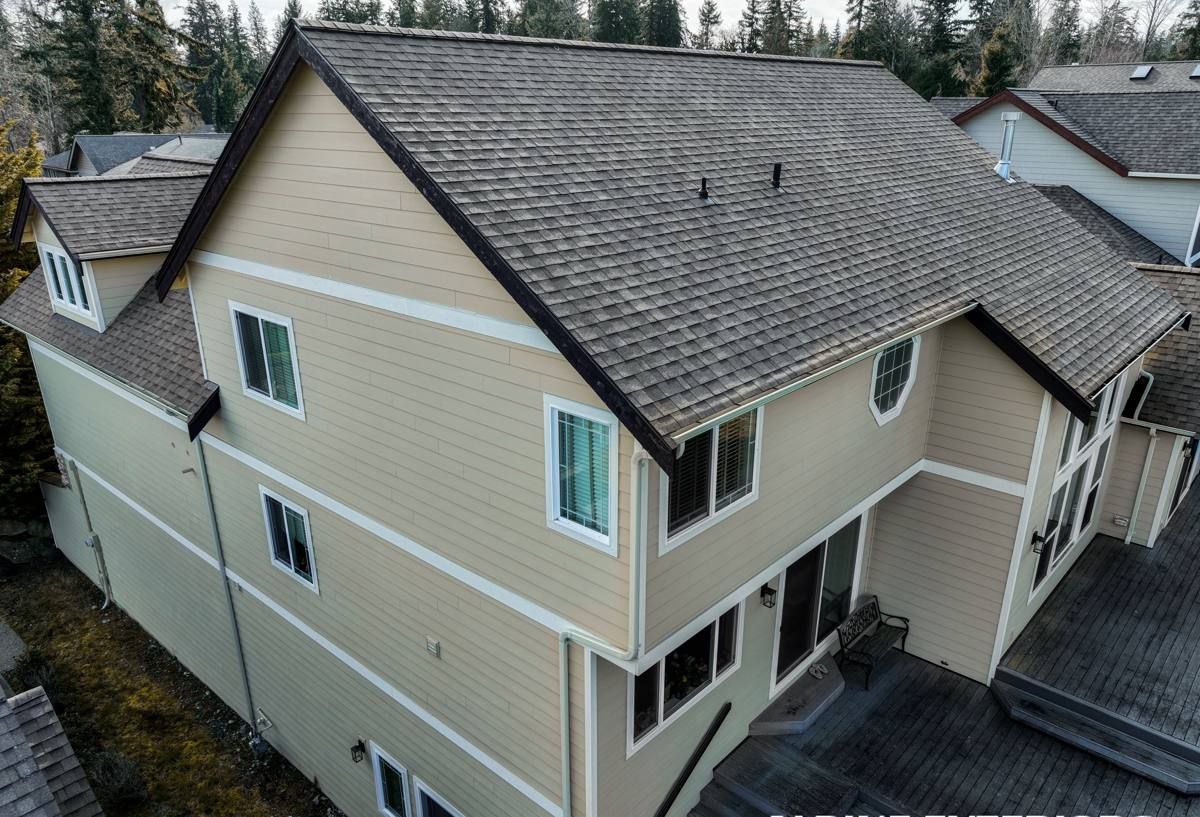
What This Climate Does to a Deck
Rain and standing moisture
Burlington gets a long wet season, and it is the slow, steady rain — not the occasional downpour — that causes the most damage. Water that cannot shed properly off a deck surface or drain away from the structure underneath will sit against ledger boards, joists, and post bases. Over years, that trapped moisture is what leads to soft, spongy boards, rot at connection points, and hardware that corrodes from the inside out before it ever shows visible rust on the surface.
Moss and organic growth
A long moss season is part of life in this part of Washington, and decks are one of the first surfaces to show it. Moss and algae hold moisture against the wood surface, make boards slick and dangerous underfoot, and — if left to build up in board gaps and around fasteners — accelerate rot in ways that are easy to miss until a board fails. Deck orientation, board spacing, and how much sun and airflow a deck actually gets all affect how fast moss takes hold.
Salt and marine air
Proximity to Puget Sound and the broader Salish Sea means homes throughout Whatcom and Skagit counties deal with salt-laden air moving inland, especially during storms. Salt air speeds up corrosion on any exposed metal — fasteners, post brackets, railing hardware — long before most homeowners expect it. A deck built with standard, non-rated hardware in this environment will show corrosion issues years earlier than the same deck built somewhere drier and further from the water.
What a Properly Built Deck Actually Requires Here
A deck that holds up in Burlington's climate is not just about picking a good decking board. The board is the part you see; the structure underneath is what determines whether that board still looks good in ten years. A correctly built deck in this area includes:
- Ledger board flashing that actually sheds water away from the house rim joist, not just a bead of caulk behind the board
- Footings set to the frost and bearing depth required by local code, not guessed at
- Joist tape or another moisture barrier on top of framing lumber, so fastener penetrations aren't the entry point for rot
- Corrosion-resistant fasteners and structural connectors rated for exterior, coastal-influenced use
- A drainage plan — grading, gaps, or a proper under-deck drainage system — so water has somewhere to go besides sitting against the frame
- Board spacing and airflow that gives a deck a real chance to dry out between rain events instead of staying damp for days
Skip any one of these and the deck may look fine for the first couple of seasons — the problems show up later, and they show up underneath, where they're expensive to fix.
Choosing the Right Decking Material
There is no single "best" decking material — there's a best material for a given budget, maintenance appetite, and how exposed the deck is to rain, sun, and moss. Here's how the common options actually compare for a Skagit County backyard:
| Material | Moisture behavior | Moss/algae resistance | Maintenance | Typical lifespan |
|---|---|---|---|---|
| Pressure-treated wood | Absorbs and releases moisture; prone to cupping if not sealed | Needs regular cleaning and sealing to resist growth | Annual cleaning, periodic re-staining/sealing | 10–15 years with upkeep |
| Cedar | Naturally moisture-resistant but still an organic material | Better than treated pine, still needs periodic cleaning | Re-staining every few years to hold color and protection | 15–20 years with upkeep |
| Composite decking | Does not absorb water or rot like wood | Can still grow surface moss/algae if not cleaned; doesn't rot from it | Occasional washing, no staining or sealing | 25–30 years, manufacturer warranty dependent |
| PVC/capped polymer decking | Fully sealed surface, minimal water absorption | Most resistant to staining and growth of the options here | Lowest maintenance of the group | 25–30+ years, manufacturer warranty dependent |
We're honest with clients about trade-offs rather than pushing one product. Composite and PVC decking cost more up front but make sense for homeowners who want to spend weekends using the deck instead of maintaining it — which matters more here than in a drier climate, since the maintenance window is shorter and the payoff for skipping a year is worse. Wood costs less initially and gives a natural look many people prefer, but it demands a real maintenance routine in a climate that doesn't give wood much of a break.
Framing and Structure: The Part Nobody Sees
Most deck problems we get called out to repair in this area aren't decking-board problems — they're framing problems that eventually show up as a soft board, a wobbly railing, or a step that's started to sag. Ledger flashing that was never installed correctly, post bases sitting in standing water, or joists without any moisture barrier are the actual root causes, and they're invisible until something fails. This is also why we don't shortcut engineering on ledger attachment or footing depth to save a homeowner money up front — a deck that pulls away from the house or settles unevenly is a safety issue, not just a cosmetic one, and it's far more expensive to fix after the fact than to build correctly the first time.
Our Process for a Burlington Deck Project
We keep the process straightforward and give homeowners a clear picture of what's happening and why at each stage:
- Site visit and assessment — we look at drainage, sun exposure, existing structure (if it's a rebuild), and how the space will actually be used before talking materials.
- Design and material selection — we walk through the material comparison above based on your budget and maintenance preference, and design footing/framing to match the site conditions.
- Permitting — most custom deck builds in this area require a permit; we handle that process so it's not left to the homeowner to sort out.
- Construction — footings, framing, flashing, and drainage go in first and get inspected before decking, railing, and finish work go on top.
- Final walkthrough — we go over the finished deck and, for wood decks, what a realistic maintenance schedule looks like going forward.
Deck Maintenance Checklist for This Climate
Whatever material you choose, a little seasonal attention goes a long way in a climate with this much rain and moss pressure:
- Clear leaves and debris from board gaps and drainage points before the wet season sets in
- Check for moss buildup on shaded or north-facing sections and clean it off before it spreads
- Inspect fasteners and metal hardware for early corrosion, especially near the coast-facing side of the home
- Look underneath the deck once a year for signs of moisture pooling against posts or framing
- For wood decks, re-seal or re-stain on the manufacturer's recommended schedule, not just when it looks worn
- Keep gutters and downspouts near the deck clear so roof runoff isn't adding extra water load
Repairs vs. Replacement
Not every aging deck in Burlington needs to be torn out. If the framing and footings are sound and the damage is limited to surface boards or railing, targeted repair or a board replacement can extend a deck's life for a reasonable cost. But if we find rot at the ledger connection, posts that have shifted, or framing that was never properly protected from moisture, that's a structural issue — patching the visible symptoms without addressing the framing underneath just delays a bigger repair later. Part of our estimate process is being upfront about which category your deck falls into before any work starts.
Why Local Experience on This Specific Job Matters
Deck building looks similar on paper everywhere, but the details that make a deck last in Skagit and Whatcom counties — footing depth for local frost conditions, flashing details that account for how much rain this area actually gets, hardware choices that hold up against marine air — come from building here repeatedly, not from a generic install. We also know the local permitting process, which keeps projects moving instead of stalling on paperwork. A crew that already works in Burlington isn't guessing at how this climate treats a deck over time — we're building to what we've already seen happen to decks that weren't.
If you're planning a new deck or dealing with one that's showing its age, we're happy to come take a look. Estimates are free and there's no pressure — just an honest read on what your project needs and what it will cost to do right.