 Chuckanut Exterior
 Roofing in Burlington Has to Handle a Specific Kind of Weather
Burlington sits in a part of Whatcom County where roofs rarely get a break. Salt-tinged air moves in off the water, driving rain comes sideways more often than straight down, and the wet, shaded months stretch on long enough that moss doesn't just visit a roof — it moves in. Any one of those conditions is manageable on its own. Together, over years, they're what separates a roof that makes it to twenty-five years from one that's showing granule loss and soft spots by year twelve.
An asphalt shingle roof installed correctly for this climate looks almost identical to one installed for a dry inland town. The difference is underneath: the underlayment choice, the flashing detail, the ventilation math, and the shingle rating all get adjusted for what Whatcom County actually throws at a roof. Skip those adjustments and you get a roof that looks fine at the curb but fails early where nobody's looking.
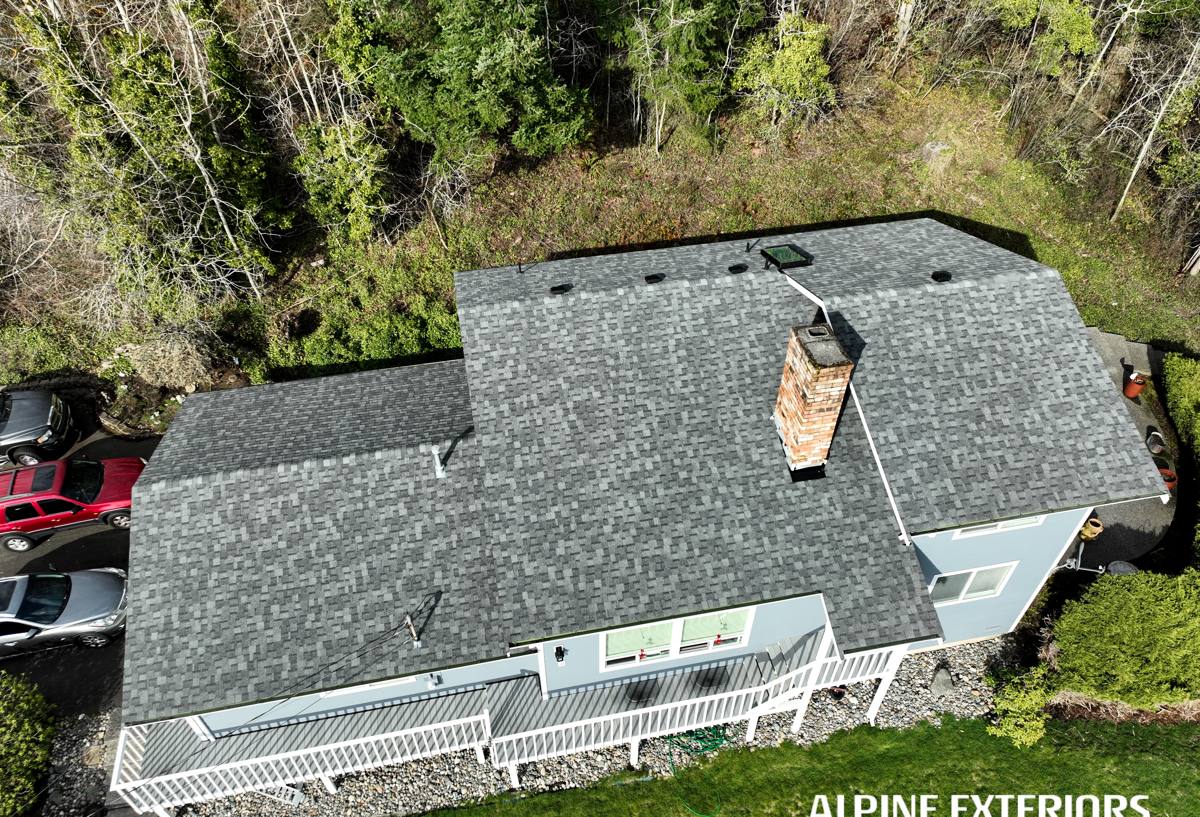
What Burlington Homes Specifically Need From a Shingle Roof
Moisture Management, Not Just Shingles
Driving rain doesn't fall politely onto shingles and run off — wind pushes it sideways and up under laps, especially at eaves, valleys, and anywhere two roof planes meet. That means self-adhered ice-and-water membrane at vulnerable points isn't optional here the way it might be in a drier region; it's the difference between water stopping at the underlayment and water finding its way into the deck.
Algae and Moss Resistance
The long moss season in this part of Whatcom County is driven by shade, moisture, and mild temperatures that never really dry a roof out for long stretches. Standard shingles will grow algae streaking and moss colonies faster here than almost anywhere else in the state. Shingles rated for algae resistance (usually copper-infused granules) buy real time before that streaking sets in, and proper installation — including exposed metal edging in some cases — gives moss fewer footholds to start with.
Ventilation That Matches the Climate
A shingle roof is a system, and the attic underneath it is part of that system. Poor ventilation traps warm, moist air against the underside of the deck, which speeds up rot from the inside while moss works on it from the outside. Balanced intake and exhaust ventilation, sized to the attic volume, is part of doing this job right — not an upsell.
Signs a Burlington Roof Needs a Closer Look
Because moss and algae growth can mask other problems, it's worth knowing what actually signals trouble versus what's just cosmetic:
- Granules collecting in gutters or at the base of downspouts
- Shingles that look cupped, curled at the edges, or noticeably darker than the rest of the roof
- Moss growth thick enough to hold visible moisture after a dry day or two
- Soft or spongy spots when walked (a sign for a professional to check, not a DIY test)
- Daylight or water stains visible from inside the attic
- Flashing around chimneys, skylights, or vent pipes that's lifted, rusted, or gapped
- A roof approaching 18-20 years old with three-tab shingles, or 25+ with architectural shingles
Our Asphalt Shingle Roofing Process
1. Inspection and Honest Estimate
We start on the roof itself, not just from the ground. That means checking the deck condition, flashing, ventilation, and how much of the roof's problems are cosmetic moss versus structural moisture damage. You get a written estimate that separates what needs to happen from what could wait, so you're not guessing at scope.
2. Tear-Off and Deck Inspection
We remove old roofing down to the deck rather than layering over it. That's the only way to find soft or rotted sheathing before it becomes your problem two winters from now, and it lets the new roofing system perform the way it's designed to.
3. Underlayment and Flashing First
This is where a roof built for Burlington's rain and salt air earns its keep. Ice-and-water membrane goes at eaves, valleys, and roof-to-wall transitions; synthetic underlayment covers the field; and flashing at every penetration — vents, chimneys, skylights — gets replaced or reset rather than reused when it's questionable.
4. Shingle Installation
Shingles go down to manufacturer specification for nail placement and pattern, which matters more for wind and wind-driven rain performance than most homeowners realize. A shingle that's technically installed but not installed to spec can void the manufacturer's warranty without ever showing an obvious defect.
5. Ventilation and Final Details
Intake and exhaust venting get checked and corrected if the existing setup is undersized or unbalanced. Ridge caps, drip edge, and any exposed metal go on last, and the site gets cleaned of nails and debris with a magnetic sweep.
Choosing a Shingle for This Climate
Not every asphalt shingle product is a good fit for a coastal, high-moisture, moss-prone area. Here's how the common options compare for a home in the Chuckanut and Burlington area:
| Shingle Type | Algae/Moss Resistance | Wind Rating | Typical Lifespan Here |
|---|---|---|---|
| Standard 3-tab | Low unless treated | Lower | 15-18 years |
| Architectural/laminate | Moderate to high (with algae-resistant granules) | Higher | 22-28 years |
| Impact-resistant architectural | Moderate to high | Highest | 25-30 years |
For most homes in this area, algae-resistant architectural shingles are the practical middle ground — meaningfully better moss and streaking resistance than basic 3-tab, without paying for impact-resistant features that matter more in hail-prone regions than here.
What Actually Drives the Cost
Two roofs of the same square footage in Burlington can price differently for reasons that have nothing to do with the shingle brand:
| Cost Factor | Why It Matters |
|---|---|
| Roof pitch and complexity | Steep or cut-up roofs take longer and need more safety setup |
| Number of existing layers | Tear-off of multiple layers adds labor and disposal cost |
| Deck condition | Rotted sheathing found during tear-off requires repair before shingles go on |
| Ventilation upgrades | Adding or correcting intake/exhaust vents is worth the cost long-term |
| Access and site conditions | Tight lots, tall roofs, or landscaping can add setup time |
| Shingle tier chosen | 3-tab, standard architectural, and premium architectural price differently |
We'd rather walk you through these line by line during the estimate than quote a flat number that hides what you're actually paying for.
Repair or Full Replacement?
Not every roof in the moss and rain belt needs a full tear-off. A localized leak, a damaged section from a fallen branch, or flashing failure around one penetration can often be repaired if the rest of the roof is structurally sound and not near the end of its service life. Full replacement makes more sense when damage is spread across multiple areas, the deck has widespread moisture issues, or the roof is old enough that further repairs would just be delaying the inevitable at diminishing returns. Part of an honest estimate is telling you which category your roof falls into — and being clear when a repair is genuinely the right call, not just the cheaper one.
Why a Crew That Already Works Burlington Matters
A roofing crew that works this specific area regularly has already seen how salt air, driving rain, and moss season play out on real roofs here — which flashing details tend to fail first, which north-facing slopes need extra attention for moss, and how local permitting and inspection typically go. That familiarity shows up in fewer surprises during tear-off and a scope of work that reflects this climate instead of a generic national playbook. It also means a shorter distance to travel if something needs a follow-up check after a storm.
Keeping Your New Roof Performing After Installation
A correctly installed asphalt shingle roof still benefits from basic upkeep in a climate like this one:
- Keep gutters clear so water isn't backing up under the eaves during heavy rain
- Have moss growth treated or removed before it thickens, rather than after it's established
- Keep overhanging branches trimmed back to reduce shade and debris buildup
- Schedule a visual inspection after major windstorms, not just on a fixed annual schedule
- Address small flashing or sealant issues promptly — they're cheap fixes early and expensive ones late
None of this requires a maintenance contract or constant attention — just periodic checks so small issues don't turn into deck damage over a wet winter.
Get a Straightforward Look at Your Roof
If your roof is showing moss, granule loss, or you just want an honest read on how much life it has left, we're happy to take a look. The estimate is free, there's no pressure attached to it, and you'll get a clear explanation of what we find — use the form below to get started.