 Chuckanut Exterior
 Building Decks for Burlington's Specific Climate
Burlington homes sit in one of the more demanding climates in Whatcom County for outdoor structures. Salt-laden air moving in off the water, long stretches of driving rain through fall and winter, and a moss season that can stretch for months all work against a deck that wasn't built with this specific environment in mind. A deck design that performs fine in a dry inland climate can fail here in half the time — not because the homeowner did anything wrong, but because the materials and details weren't matched to what Whatcom County actually throws at a structure.
This page is about one job, done right, for one area: composite decking installed on Burlington homes. Not a general decking overview — the specific choices that matter when salt air, rain, and moss are part of the equation every single year.
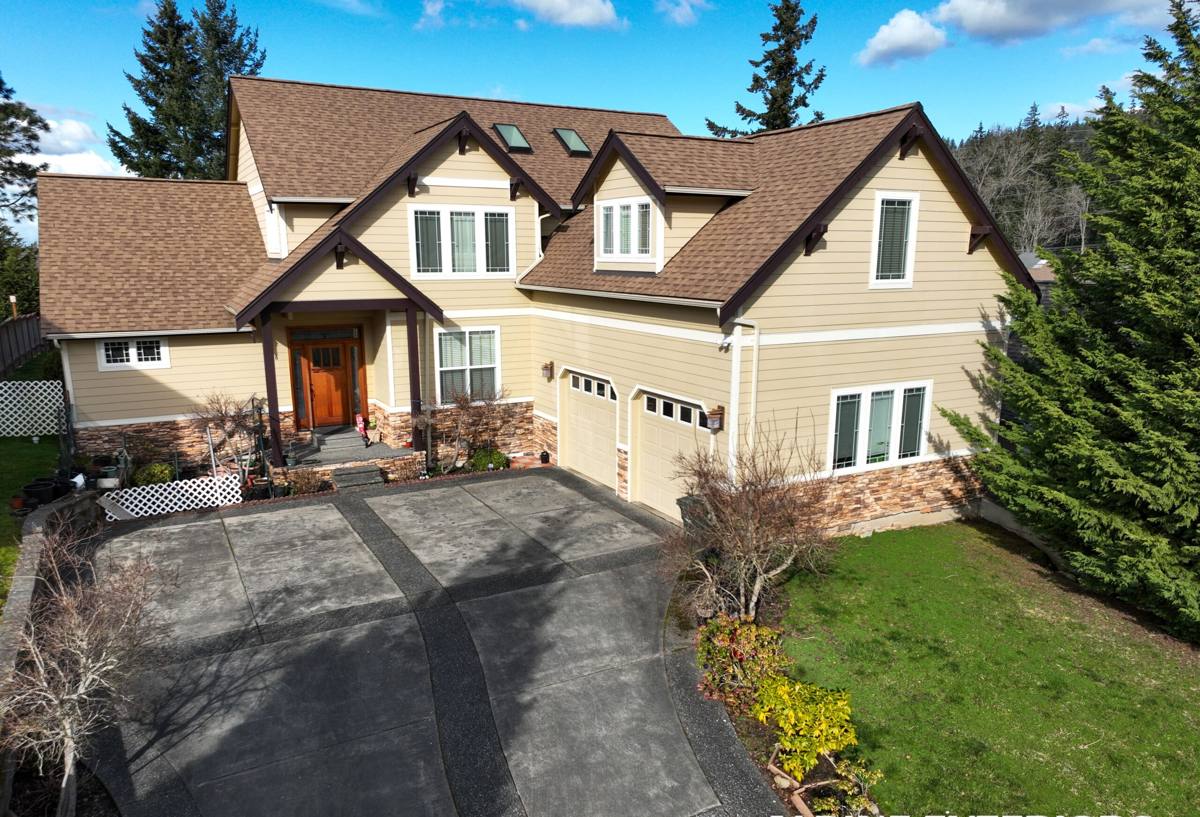
What Salt Air, Rain, and Moss Actually Do to a Deck
Each of these three factors attacks a deck differently, and understanding the mechanism is the difference between a repair that lasts and one that doesn't.
Salt Air
Airborne salt is corrosive to metal. Fasteners, joist hangers, and structural screws that aren't rated for coastal exposure will corrode from the inside out over years, often long before the visible surface of the deck shows any problem. By the time a homeowner notices rust staining on the boards, the hardware underneath may already be compromised.
Driving Rain
Rain that comes in at an angle, rather than straight down, gets pushed into places a deck's design normally assumes will stay dry — ledger board connections, board end grain, and gaps around posts. Water that can't drain and dry quickly is what causes rot in wood-framed structures and delamination or staining in lower-quality composite products.
Moss
A long moss season means more months where a deck surface stays damp and shaded, which is exactly the environment moss needs to establish. Moss holds moisture against the board surface, makes the deck slick and genuinely dangerous underfoot, and on the wrong material can work into the surface texture in a way that's difficult to fully clean out once established.
Why Composite Decking Fits This Climate
Composite decking isn't automatically the right answer for every deck everywhere — but for Burlington's specific conditions, it solves problems that wood decking structurally cannot. Composite boards don't absorb water the way wood fibers do, which removes the freeze-thaw and rot cycle that drives most wood deck failures in wet Pacific Northwest climates. That doesn't mean composite is maintenance-free, and we tell homeowners that directly — it means the maintenance burden shifts from structural repair to surface care, which is a much better trade in a climate like this one.
| Factor | Wood Decking | Composite Decking |
|---|---|---|
| Moisture absorption | Absorbs and swells, drives rot over time | Minimal absorption in the board core |
| Moss resistance | Porous surface, moss can root into grain | Denser surface, easier to clean off |
| Refinishing | Needs regular staining/sealing | No staining or sealing required |
| Splintering/warping | Common as boards age and dry unevenly | Not a factor with quality composite boards |
| Upfront material cost | Lower | Higher |
| Long-term repair frequency | Higher in wet coastal exposure | Lower, concentrated in hardware/substructure |
The honest trade-off: composite costs more upfront than dimensional lumber. For homeowners planning to stay in their Burlington home for the long haul, the reduced maintenance and repair burden usually justifies that difference — but we'll walk through the real numbers for your specific deck rather than just asserting it.
What a Correctly Built Composite Deck Involves
Composite boards are only as good as what's underneath and around them. Most composite deck problems we get called to inspect aren't failures of the board material itself — they're failures of substructure, fastening, or drainage detail that would have caused the same problem regardless of decking material.
Substructure and Framing
The joists and ledger connection have to be built to handle sustained wet exposure, with proper flashing at the house connection so water is directed away from the structure rather than trapped against it. This is the single most common point of failure we see on decks that were built without this climate specifically in mind.
Fasteners and Hardware
Given the salt air exposure in this area, we use stainless or coated fasteners and hardware rated for coastal/corrosive environments — not standard galvanized hardware that's fine inland but degrades faster here. This is a detail that's invisible once the deck is finished, which is exactly why it's the detail that gets skipped by crews not used to building near salt air.
Board Spacing and Drainage
Composite boards need correct gapping for water to shed and airflow to reach the underside of the deck. Too tight, and water sits on the surface and in the gaps longer than it should — which, combined with a long moss season, creates ideal conditions for moss and algae to take hold. Too loose, and the deck feels and looks unfinished. Getting this dialed in correctly matters more here than in drier climates.
Hidden Fastening Systems
Most quality composite systems use a hidden fastener clip rather than face-screwing through the board. Done correctly, this gives a cleaner surface with fewer penetration points where water could otherwise find a path in — and it eliminates the screw-head corrosion staining that shows up on face-fastened decks in salty air over time.
Our Installation Process
- On-site assessment — we look at existing structure (if any), drainage, sun/shade exposure, and how exposed the deck is to prevailing wind and rain direction.
- Design and material selection — board style, color, and railing system selected based on your home and how the space will be used, with honest guidance on which products hold up best in this specific exposure.
- Substructure build or repair — framing, ledger flashing, and joist protection built to coastal-exposure standards, not generic inland standards.
- Composite board installation — hidden fastener systems, correct board spacing, and proper edge/end treatment at every cut.
- Railing, trim, and fascia — matched composite or PVC trim components sized and fastened for long-term coastal durability.
- Final walkthrough — we review the finished deck with you, including what maintenance it actually needs (and what it doesn't).
Composite Board Options and What We Look At
Not all composite decking is built the same way, and the differences matter more in this climate than in a dry one.
Capped vs. Uncapped Composite
Capped composite boards have a polymer shell wrapped around the wood-plastic composite core, which meaningfully improves moisture and stain resistance at the surface — the layer most exposed to rain and moss. Uncapped composite is more affordable but takes on moisture and surface wear faster. In a climate with this much sustained rain exposure, we generally steer homeowners toward capped products for anything beyond a budget-driven decision, and we'll explain why for your specific project rather than just recommending the more expensive option by default.
Surface Texture
Deep wood-grain embossed textures look great but can hold more moisture and grime in the texture grooves, which becomes relevant during a long moss season. Smoother or more moderately textured boards are easier to keep clean without sacrificing much visually, and it's worth weighing that trade-off before locking in a board style.
Color Considerations
Darker composite boards absorb more heat and can show mineral/water staining differently than lighter tones. This isn't a reason to avoid dark colors, but it's a factor worth discussing given how much rain this deck will see over its life.
Maintenance: What Burlington Homeowners Actually Need to Do
Composite decking cuts the maintenance list down significantly compared to wood, but "low maintenance" isn't "no maintenance" — especially with this area's moss season. Here's what actually matters:
- Sweep debris (leaves, needles, moss spores) off the deck surface regularly, especially in shaded areas that stay damp longer
- Rinse the deck surface periodically to prevent moss and algae from establishing, particularly through the wetter months
- Keep gutters and downspouts near the deck clear so water isn't dumping onto or pooling near the structure
- Check railing hardware and fastener points annually for any early signs of corrosion, even with coastal-rated hardware
- Trim back overhanging vegetation that keeps sections of the deck shaded and slow to dry
- Avoid pressure-washing at high pressure directly into board seams, which can force water where it shouldn't go
What Affects the Cost of a Composite Deck Project
| Cost Factor | Why It Matters |
|---|---|
| Deck size and shape | More linear footage of framing, boards, and fascia; complex shapes add labor |
| Substructure condition | New framing vs. reusing an existing structure changes scope significantly |
| Board tier (capped vs. uncapped) | Capped composite costs more but performs better in sustained rain exposure |
| Height and railing requirements | Taller decks and code-required railing add material and labor |
| Site access | Slope, existing landscaping, or tight access can affect labor time |
| Fastener and hardware spec | Coastal-rated hardware costs more than standard-grade hardware |
We don't quote a Burlington deck project off a generic per-square-foot number pulled from somewhere else. Every deck gets an on-site look because the substructure condition and site access change the real cost more than most homeowners expect.
Why Hiring a Crew That Already Works in Burlington Matters
A deck built by a crew unfamiliar with this specific coastal climate can look identical to one built correctly — for the first year or two. The differences show up later: corroding standard hardware, framing that wasn't flashed for driving rain, or board spacing that never accounted for how long moss has to establish here. A crew that already builds decks in Burlington and the surrounding Whatcom County area has already made the adjustments — hardware spec, flashing detail, drainage spacing — that this climate requires, rather than learning them on your project.
We also know what existing decks in this area tend to need when we're asked to repair or replace rather than build new — which framing details tend to fail first, and which shortcuts from a prior build tend to cause problems down the line. That's the kind of knowledge that only comes from working this specific area over time, not from a general decking background.
Get a Straightforward Estimate
If you're considering a new composite deck or replacing an aging wood deck at your Burlington home, we're happy to take a look and give you an honest, no-pressure estimate — including what your site specifically needs to hold up against the salt air, rain, and moss this area sees every year. Use the form below to get started.