 Chuckanut Exterior
 Why Window Installation in Burlington Is Different From a Catalog Job
Burlington sits close enough to the water and the marine weather patterns of Whatcom County that windows here take a beating most inland homes never see. Wind-driven rain doesn't just fall on a window — it gets pushed sideways into every gap in the flashing and trim. Salt-laden air off the coast accelerates corrosion on hardware and fasteners that would last decades somewhere drier. And the long, wet moss season keeps roof and wall surfaces damp for months at a stretch, which means any water that finds its way behind a window has little chance to dry out before the next storm arrives.
That combination — salt, sustained rain, and prolonged dampness — is why window installation in this area isn't just about picking a good window. It's about how the window gets tied into the wall so water never gets a path in, in the first place. A window that's perfectly installed in Spokane can fail in a few years here if the installer treats it like a generic swap-and-caulk job.
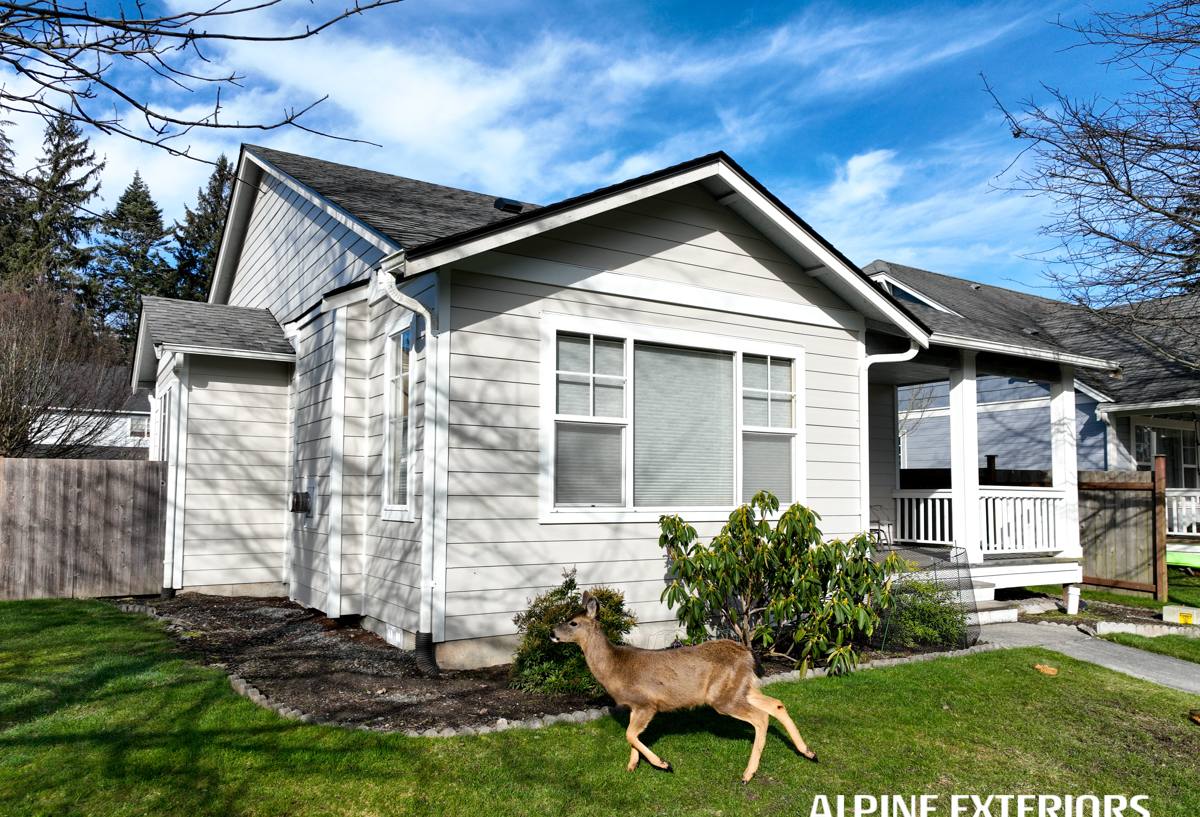
What Driving Rain and Salt Air Actually Do to a Window Over Time
Homeowners often notice the symptoms years before they understand the cause. Here's what's usually happening underneath:
Water Intrusion at the Frame
Wind-driven rain pressurizes against the wall and finds any seam that isn't properly lapped or sealed. Once water gets behind the trim, it travels — often showing up as staining, soft drywall, or a musty smell on an interior wall that has nothing directly above it.
Hardware and Fastener Corrosion
Salt in the air speeds up oxidation on hinges, cranks, locks, and even the screws holding the frame in place. A window that operates smoothly for the first few years can start binding, sticking, or developing rust streaks well before its expected lifespan — especially on homes closer to open water or exposed to prevailing coastal winds.
Moss and Organic Growth Around the Frame
Whatcom County's long wet season keeps north-facing and shaded elevations damp for extended stretches. Moss and algae can take hold in poorly draining sill areas or on trim that doesn't shed water cleanly, holding moisture against the wood or composite longer than it should ever sit.
Seal Failure in Insulated Glass
Constant temperature and humidity swings stress the seals on dual-pane glass. Once that seal fails, moisture gets between the panes and you get permanent fogging — a sign the insulated glass unit needs replacing, not just cleaning.
Signs It's Time to Replace, Not Just Repair
- Fogging or condensation trapped between the panes of glass
- Visible daylight or a noticeable draft around the frame when the window is closed
- Wood trim or sill that's soft, discolored, or crumbling to the touch
- Windows that are difficult to open, close, or lock without extra force
- Rising heating bills without any other obvious cause
- Moss, algae, or persistent staining building up on the exterior sill or trim
- Visible gaps or cracked caulk between the window frame and the siding
If you're seeing more than one or two of these, it's worth having the window and the surrounding wall assembly looked at together rather than treating them as separate problems — because in this climate, they usually are connected.
What a Correct Installation Actually Involves
Most window failures we're called out to fix in this region aren't a bad window — they're a window that was installed without proper flashing and sequencing. A correct installation, done right the first time, follows a specific order so water always has somewhere to go and never a place to collect.
Removal and Opening Inspection
Once the old window is out, the rough opening gets inspected for hidden rot, soft sheathing, or prior water damage. This is often the only point in a window's life where that framing is fully visible — skipping this step just seals a problem back into the wall.
Sill Pan Flashing
A sloped sill pan directs any water that does get past the window back outside rather than letting it pool on the sill or migrate into the wall cavity. This is one of the most commonly skipped steps on lower-cost installs, and one of the most important in a wet climate like ours.
Weather-Resistive Barrier Integration
Flashing tape and the house wrap need to be layered correctly — shingle-style, from the bottom up — so water is always directed over the layer below it, never trapped behind it. Get this order wrong and you've built a pocket for water to collect instead of a path for it to drain.
Window Setting and Shimming
The window gets set level, plumb, and square, shimmed at the manufacturer's specified points so the frame doesn't rack or bow — a distorted frame is one of the fastest ways to compromise both the seal and the operation of the window.
Fastening and Insulation
Corrosion-resistant fasteners matter more here than in drier regions, given how salt air treats standard hardware over time. The gap between the frame and the rough opening gets insulated without overpacking, which can bow the frame inward.
Exterior Sealing and Trim
The final sealant bead and trim work is what's visible, but it's the last line of defense, not the first. A good caulk job can't make up for skipped flashing underneath it.
Choosing the Right Window for a Coastal, Wet Climate
There's no single "best" window material — the right choice depends on the home, the elevation's sun and wind exposure, and how much upkeep you want to take on. Here's how the common options stack up for a Whatcom County home:
| Frame Material | Moisture & Salt-Air Resistance | Maintenance | Typical Trade-Offs |
|---|---|---|---|
| Vinyl | Good — won't rot or rust | Low — occasional cleaning | Can't be repainted; performance varies by manufacturer grade |
| Fiberglass | Excellent — very stable in moisture and temperature swings | Low | Higher upfront cost |
| Aluminum | Fair — prone to corrosion near salt air unless well-coated | Moderate | Thermally conductive; can feel cold and condense in winter |
| Wood (clad exterior) | Good on the exterior face, but vulnerable if the cladding is breached | Higher — exposed wood needs monitoring | Warm appearance, but installation quality matters more than usual |
We steer most Burlington homeowners away from bare wood exteriors and lower-grade aluminum for this reason: it's not that those materials can't work, it's that they demand a level of upkeep and installation precision that isn't realistic for most people given how much rain this area sees. A clad or fiberglass frame, properly flashed, gives you far more margin for error over the life of the window.
Our Installation Process
- On-site assessment — we look at the existing windows, the wall assembly where accessible, and any signs of past water intrusion before recommending anything.
- Product selection — we walk through frame material, glass package, and hardware options based on the home's exposure, not just what's cheapest to stock.
- Scheduling around the weather — openings are only exposed for as short a window as possible, and we plan around forecasted rain rather than hoping it holds off.
- Removal and opening inspection — as described above, this is where hidden problems get caught early instead of sealed back in.
- Flashing, setting, and sealing — done in the sequence that actually sheds water, not just what looks finished from the street.
- Final walkthrough — every window is opened, closed, and checked for square and smooth operation before we consider the job done.
What Window Installation Typically Costs
Pricing depends heavily on the number of openings, frame material, glass upgrades, and how much of the surrounding trim or siding needs to be opened up. In broad terms:
| Cost Factor | How It Affects the Bid |
|---|---|
| Frame material (vinyl vs. fiberglass vs. clad wood) | Fiberglass and clad wood run higher upfront than standard vinyl |
| Glass package (standard vs. upgraded low-E or laminated) | Better glass adds cost but improves comfort and noise control |
| Number of openings replaced at once | Bundling windows into one project typically lowers the per-window cost |
| Condition of the existing rough opening | Hidden rot or damaged sheathing adds labor and material not visible until demo |
| Trim and siding disruption | Full-frame replacements that require siding removal cost more than insert-style replacements where the old frame stays in place |
We'd rather give you an honest, itemized number after seeing the actual openings than a rough figure over the phone that doesn't hold up once we're on site.
Why It Matters to Hire a Crew That Already Works in Burlington
Window installation isn't a one-size-fits-all trade skill. A crew that mostly works drier, inland climates may not think twice about sill pan flashing or fastener corrosion resistance — because where they usually work, it rarely bites them. A crew that works Whatcom County regularly has already seen what happens when those steps get skipped here: the callbacks, the rot behind the trim, the moss creeping into a sill that never drains right.
Familiarity with the area also means knowing what to expect from the local building department, understanding typical framing and siding conditions found in homes around Burlington and the surrounding Chuckanut area, and being realistic about scheduling around the wet months rather than promising a timeline the weather won't allow.
Ready for a Straight Answer on Your Windows?
If your windows are fogging, sticking, drafting, or just showing their age, we're glad to take a look and give you an honest assessment — no pressure, no upsell script. Fill out the form below to schedule a free estimate for your Burlington home.