 Chuckanut Exterior
 Why Roofs in York Wear Out Faster Than the Manufacturer's Warranty Suggests
Every asphalt shingle sold in Whatcom County comes with a lifespan number printed on the wrapper — 25 years, 30 years, sometimes "lifetime." Those numbers are calculated in a lab, not on a roof slope a few miles from saltwater with rain moving sideways half the year. Homes in the York area sit close enough to the water that salt-laden air settles on roofing materials daily, and that air carries moisture that never fully dries off north-facing slopes and shaded valleys. Add a rainy season that runs long and heavy, and you get a climate that ages a roof faster than the same shingle would age in a dry inland town.
Salt air corrodes exposed metal fasteners and flashing edges years before they'd fail elsewhere. Driving rain finds every gap in flashing and underlayment that a light drizzle would never expose. And moss — which needs shade, moisture, and organic debris to take hold — has all three in spades on tree-lined lots throughout Chuckanut. None of this means a roof in York is doomed early. It means the materials, the ventilation, and the installation details have to be chosen for this specific climate, not a national average one.
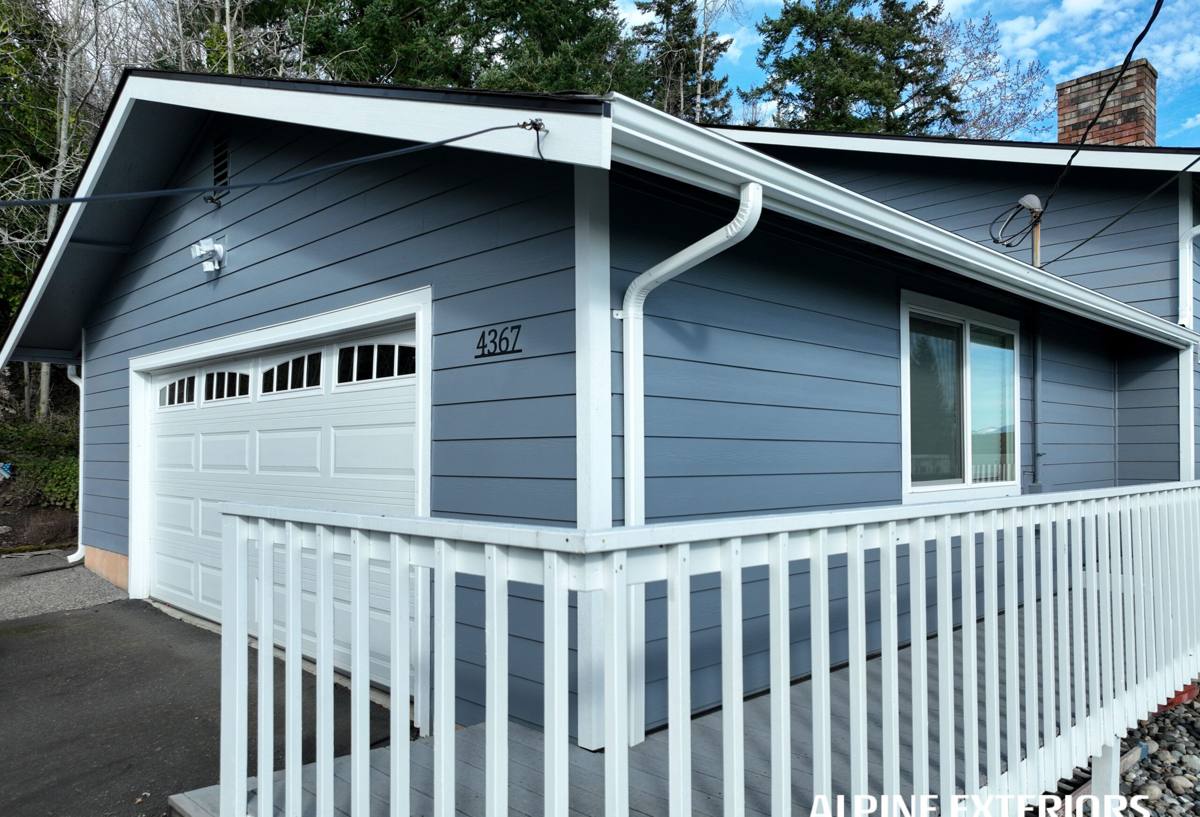
Signs a York Home Needs Replacement, Not Another Repair
Not every roof problem calls for a full tear-off. But there's a point where patching becomes a waste of money, and knowing where that line sits saves homeowners from either overpaying for premature replacement or under-investing in a roof that's already failing underneath.
Repair is usually still the right call when:
- Damage is isolated to one area — a single flashing leak, a handful of cracked shingles, storm damage to one slope
- The roof is under 15 years old and the underlying decking is sound
- Moss is present but hasn't lifted shingle edges or caused granule loss underneath it
Replacement becomes the honest recommendation when:
- Shingles are curling, cupping, or losing granules across large sections, not just one spot
- There's evidence of moisture in the attic — dark staining on sheathing, damp insulation, or a musty smell
- Moss or moisture has been established long enough to lift shingles or soften the decking underneath
- The roof has already been patched multiple times and keeps leaking in new spots
- Flashing around chimneys, vents, or valleys is rusted, cracked, or was never properly integrated with the shingle courses
A roof that's chronically damp under the surface is a bigger problem than a roof that's simply old. Age alone doesn't always justify replacement — trapped moisture almost always does.
What a Correct Roof Replacement Actually Involves
A roof replacement is more than stripping old shingles and nailing down new ones. In a climate like Chuckanut's, the parts homeowners can't see from the ground are usually the parts that determine whether the new roof lasts 15 years or 30.
Full tear-off, not a layover
Installing new shingles over old ones is faster and cheaper, but it traps moisture that's already working its way into the old layer and hides decking problems that need to be fixed before new material goes down. A proper replacement removes everything down to the deck.
Decking inspection and repair
Once the old roofing is off, every section of sheathing gets inspected. Any wood that's soft, delaminated, or water-stained gets replaced — not covered over. This is the step that gets skipped by crews trying to hit a lower bid, and it's the one that causes early failures.
Underlayment built for wet climates
A synthetic, water-resistant underlayment goes down as the roof's second line of defense, with extra ice-and-water barrier at eaves, valleys, and around every roof penetration — the spots where driving rain is most likely to get pushed uphill under the shingle line by wind.
Flashing done right, not reused
Flashing around chimneys, skylights, vent pipes, and roof-to-wall transitions should be new, correctly lapped, and sealed — not the old, salt-corroded pieces bent back into place to save time.
Ventilation that matches the house
Balanced intake and exhaust ventilation keeps the attic space closer to outdoor temperature and humidity, which slows moss growth on the roof and reduces condensation in the attic. This is calculated per house, not applied as a one-size template.
Choosing Materials for a Salt-Air, High-Moisture Climate
There's no single "best" roofing material for every home — the right choice depends on the home's exposure, roof pitch, budget, and how much tree cover surrounds the property. Here's how the common options actually perform in a coastal Whatcom County climate:
| Material | Typical Lifespan | Moss & Moisture Resistance | Salt Air / Coastal Suitability |
|---|---|---|---|
| Architectural asphalt shingle | 20–30 years | Good, with proper ventilation and zinc/copper strips | Good — the standard choice for most homes in the area |
| 3-tab asphalt shingle | 15–20 years | Fair — thinner profile sheds debris less effectively | Fair — budget option, shorter service life near the water |
| Standing seam metal | 40–50+ years | Excellent — moss struggles to gain a foothold on smooth metal | Excellent, when fasteners and coatings are rated for coastal exposure |
| Cedar shake | 20–30 years with upkeep | Poor without regular treatment — organic material invites moss | Requires the most maintenance in a wet, salty climate |
For most homes in York, a quality architectural shingle strikes the best balance of upfront cost and coastal durability. Metal roofing costs more initially but makes sense for homeowners planning to stay long-term or dealing with heavy tree cover and chronic moss pressure. We don't install cedar shake as a primary recommendation in this climate — not because it's a poor product, but because it demands a maintenance schedule most homeowners underestimate, and the moisture-retention risk on shaded, coastal lots is real.
Moss: The Slow Damage Most Homeowners Underestimate
Moss doesn't just look bad. It holds moisture directly against the shingle surface, works its way under tabs as it grows, and can lift shingles enough to let wind-driven rain underneath. On older roofs, thick moss growth is often hiding granule loss and softened decking underneath it.
A correct roof replacement addresses moss at the source, not just the symptom:
- Zinc or copper control strips installed near the ridge, which release trace metal ions that inhibit moss growth as rain washes over the roof
- Proper attic ventilation to reduce the temperature differential that keeps north-facing slopes damp longer than sun-exposed ones
- Trimming recommendations for overhanging branches that keep certain roof sections in permanent shade
None of this makes moss impossible — Whatcom County's climate is simply moss country — but it dramatically slows how fast it returns and how much damage it does before a homeowner notices.
Our Replacement Process
1. On-site inspection and honest assessment
We walk the roof (not just the ground) and check the attic from inside, because moisture problems often show up there first. We'll tell you plainly if repair is still a reasonable option.
2. Written estimate with material options
You get a clear scope of work — tear-off, decking allowance, underlayment type, flashing, ventilation changes, and material choice — so you know what's included before any work starts.
3. Scheduling around the weather
Roofing in a rainy coastal climate means watching the forecast closely and staging materials so a section of open roof is never left exposed overnight longer than necessary.
4. Tear-off, deck repair, and reroofing
Old roofing comes off, decking gets inspected and repaired as needed, and the new system goes on in the sequence that keeps the house protected at every stage.
5. Cleanup and final walkthrough
Magnetic sweeps for nails, debris removal, and a walkthrough so you can see the finished ventilation, flashing, and edge work before we consider the job done.
Why It Matters That a Crew Already Works York
Roofing crews that work across a wide, generic service area tend to apply the same specs everywhere. A crew that regularly works the York area and the rest of Chuckanut already knows which slopes catch the worst of the driving rain, which lots hold moisture longest under tree cover, and how much wind exposure to plan for on homes closer to open water. That local pattern recognition shows up in small decisions — where to add extra ice-and-water barrier, how much ventilation a particular roof shape actually needs, which flashing details fail first in this climate — that a generic spec sheet won't catch.
It also matters for permitting and code familiarity specific to Whatcom County, and for being reachable afterward if a question comes up during the next wet season rather than months after the crew has moved on to another region.
Questions to Ask Before You Sign a Roofing Contract
- Is the bid based on a full tear-off, or does it include the option to layer over existing shingles?
- Does the estimate include a decking repair allowance, and how is additional rot priced if it's found?
- What underlayment and ice-and-water barrier are specified, and where will they be installed?
- Is attic ventilation being evaluated and addressed, or just the shingle layer?
- What's the manufacturer's warranty on materials, and what's the contractor's own workmanship warranty?
- Are they licensed and insured for roofing work in Washington State, and can they provide proof?
A contractor who answers these clearly and in writing, without hedging, is telling you something about how they'll handle the job itself.
Caring for a New Roof in a Wet, Salty Climate
A roof replacement isn't a "done and forget it" purchase in coastal Whatcom County. A little ongoing attention extends its life significantly:
- Keep gutters clear so water isn't backing up under the roof edge during heavy rain
- Trim back branches that keep sections of roof shaded and damp
- Have moss growth addressed early, before it lifts shingles or spreads across a full slope
- Schedule a periodic visual inspection, especially after major windstorms
If you're weighing whether your current roof needs repair or full replacement, or you're ready to move forward with a new roof built for York's climate, we're happy to take a look and walk you through what we find — no pressure, no obligation. The estimate form below is the easiest way to get started.