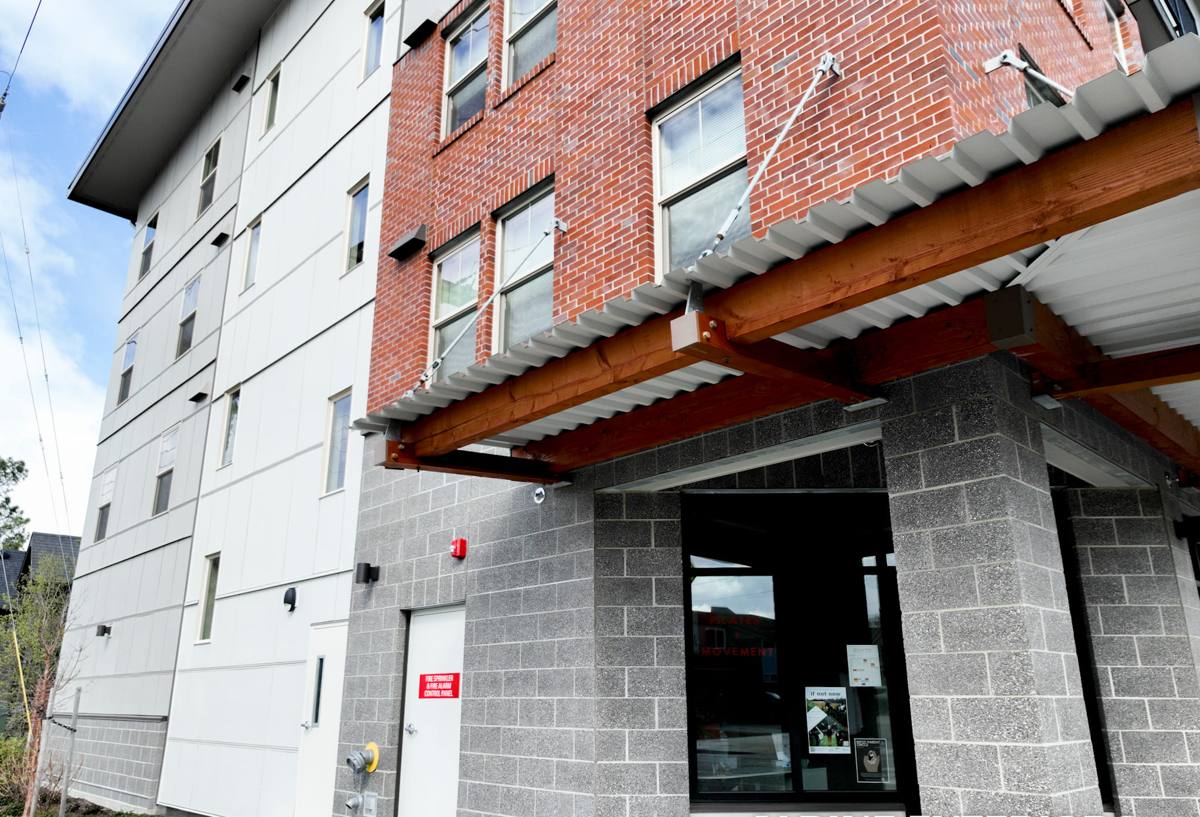
 Chuckanut Exterior
 Building New in Bow Means Building for the Coast
Bow sits close enough to the water that every new-construction decision has to account for it. Salt-laden air moves off the Salish Sea and settles on everything, driving rain comes in sideways during winter storms, and the damp, low-light stretches of fall and winter keep siding, trim, and window sills wet longer than homeowners further inland ever have to deal with. When you're framing a new home or an addition, the windows you choose and how they're installed set the tone for how the whole building envelope performs for the next 20-plus years. Get the sequencing and flashing right during construction, and you avoid problems you'd otherwise be chasing for decades. Get it wrong, and no amount of caulking after the fact fixes it.
New-construction window work is a different job than replacing an old window in an existing wall. It happens at a specific point in the framing schedule, it has to coordinate with the weather-resistive barrier and siding trades, and it's the last real chance to build a window opening that sheds water instead of collecting it.
What Bow's Climate Actually Demands From a New Window Opening
Salt Air and Corrosion
Homes in and around Bow deal with airborne salt that accelerates corrosion on anything not rated for coastal exposure — fasteners, hinges, cranks, and lesser window hardware included. This isn't a cosmetic issue. Corroded fasteners at a nailing fin or corroded flashing behind the cladding can fail quietly, out of sight, long before a homeowner notices a problem at the surface.
Driving Rain
Wind-driven rain doesn't just fall on a window, it gets pushed sideways and upward under laps and edges that would stay dry in a calmer climate. A new-construction opening has to be built with that in mind: proper slope at the sill, flashing that laps correctly with the weather-resistive barrier, and a drainage path for any water that does get behind the cladding.
Moss and Prolonged Dampness
The long moss season here isn't just a roof and siding problem. Moss and algae hold moisture against trim and window casings, extending the amount of time wood and lesser composite trim stays wet. That matters when you're deciding what material to use around a new window and how it gets flashed and sealed.
New Construction vs. Replacement: Why the Install Method Is Different
A lot of homeowners assume a window is a window, but a new-construction window and a replacement window are built and installed differently, and mixing up the two approach causes real problems.
- New-construction (nail-fin) windows have a flange around the perimeter that gets fastened to the wall sheathing before the weather-resistive barrier and siding go on. This is the correct approach for new builds and additions because it lets the window integrate directly into the drainage plane.
- Replacement (block-frame) windows install into an existing finished opening, fastened through the frame itself, with the exterior finish already in place around it.
- Using a replacement-style install on new construction — or vice versa — either creates a weak flashing detail or means redoing finished work. On a new build, there's no excuse to get this wrong, because the wall is open and every layer is accessible.
What a Correct Installation Actually Involves
On a new build in a coastal climate like Bow's, the sequence matters as much as the window itself. Skipping a step or doing them out of order is how a brand-new home ends up with a hidden leak within a few years.
- Rough opening check. Confirm the opening is square, level, and sized correctly before the window ever gets set. Framing tolerances that would be fine in a dry climate can create bigger problems here once water is involved.
- Sill pan flashing. A sloped, sealed pan at the bottom of the opening directs any water that gets past the window back outside rather than into the framing. This is one of the most commonly skipped steps on production builds, and one of the most important in a driving-rain climate.
- Weather-resistive barrier integration. The barrier has to be cut, lapped, and taped so water sheds over each layer like shingles — barrier over the sill pan, side flashing over the barrier, head flashing over the side flashing.
- Setting the window. Shimmed square and plumb, fastened per the manufacturer's schedule, with corrosion-resistant fasteners appropriate for salt-air exposure.
- Sealant at the right joints only. Sealing every gap sounds thorough but it isn't correct — some joints need to stay open so incidental water can drain back out rather than get trapped.
- Interior air sealing. A continuous air seal on the interior side reduces condensation risk, which matters through Bow's damp, cool winters.
Choosing the Right Window Frame Material for a Coastal Bow Build
Frame material affects how a window holds up against salt air and moisture over time, and it's worth deciding deliberately rather than defaulting to whatever a builder's standard spec happens to be.
| Frame Material | Coastal Durability | Maintenance | Typical Trade-offs |
|---|---|---|---|
| Vinyl | Good — won't corrode or rot | Low | Can't be painted to match changing exterior colors; performance varies by manufacturer quality |
| Fiberglass | Very good — dimensionally stable, resists moisture and corrosion | Low | Higher upfront cost than vinyl |
| Aluminum-clad wood | Good exterior protection if flashed well; interior wood still needs a dry assembly | Moderate | Relies heavily on correct installation to keep moisture out of the wood core |
| Wood, uncladded | Lower in direct coastal exposure without diligent upkeep | High | Best suited to protected elevations or homeowners committed to regular maintenance |
Hardware matters just as much as frame material. Cranks, hinges, and locking hardware should carry a corrosion-resistant finish rated for coastal or marine-adjacent use — standard interior-grade hardware tends to show pitting and stiffness within a few years out here.
How We Work New-Construction Windows Into Your Build Schedule
New-construction window work only goes smoothly if it's coordinated with the framing and siding schedule, not squeezed in as an afterthought.
- We review rough openings against the window schedule before delivery, catching sizing mismatches while they're still cheap to fix.
- We install sill pans and flashing in the correct shingle-lap order, tied into whatever weather-resistive barrier the builder is using.
- We set and fasten windows to manufacturer spec, using fasteners suited to Bow's salt-air exposure.
- We coordinate directly with the general contractor or siding crew so the barrier and cladding close up over our flashing correctly, with no gaps left for the next trade to guess at.
- We document flashing details with photos before they're covered by siding, so there's a record of what's behind the wall if it's ever needed.
Why a Crew That Already Works Bow Matters Here
Window installation quality on a new build comes down to two things: the person setting the window understanding coastal water management, and that person coordinating well with everyone else on the job site. A crew that regularly works in Bow and along this stretch of Chuckanut has already seen how the local combination of driving rain, salt exposure, and moss-season dampness plays out on real houses — not just in a manufacturer's install manual. That experience shows up in small decisions: which joints get sealant and which don't, how much slope a sill pan needs, which hardware finishes actually hold up. It also means fewer surprises for your builder, because we already understand how to fit into a normal framing schedule instead of slowing it down.
A Practical Checklist Before Your Windows Go In
- Rough openings measured and confirmed square before window delivery
- Sill pan flashing specified for every opening, not just the most exposed elevations
- Weather-resistive barrier and flashing sequence confirmed with whoever is installing siding
- Frame material and hardware finish chosen with coastal exposure in mind
- Fastener type confirmed as corrosion-resistant, not just whatever ships with the window
- Photo documentation of flashing details taken before they're covered
- Manufacturer installation instructions on hand and followed — not just general best practice
What This Means for Your Project
New-construction windows are one of the few parts of a build where doing it right costs almost nothing extra — it's mostly about sequence, attention, and using materials suited to where the house actually sits. In Bow, that means treating salt air, driving rain, and a long moss season as design inputs from the start, not problems to patch later. A window opening built correctly the first time should give you decades before it needs any real attention.
If you're framing a new home or addition in the Bow area and want windows installed correctly the first time, we're happy to walk your plans and rough openings with you. Use the form below for a free, no-pressure estimate.