 Chuckanut Exterior
 Why Lake Samish Homes Wear Out Siding Differently
Lake Samish sits in a pocket of Whatcom County where tree cover, water, and terrain all work together against exterior siding. Homes tucked under fir and cedar canopy on the hillsides around the lake don't get the sun exposure that dries out siding quickly after a storm. Add the driving rain that rolls through off the Salish Sea, a long moss season that can run from fall through spring, and the humidity that sits over the water itself, and you have siding conditions that are genuinely tougher than what a house a few miles inland in open sun deals with.
This isn't a reason to panic about your siding. It's a reason to repair it correctly the first time, with someone who understands why a north-facing wall under a stand of trees behaves differently than a south wall in full sun. We work this lake regularly, and the patterns repeat: moisture problems cluster in shaded, low-airflow areas, and repairs done without accounting for that tend to fail again within a couple of seasons.
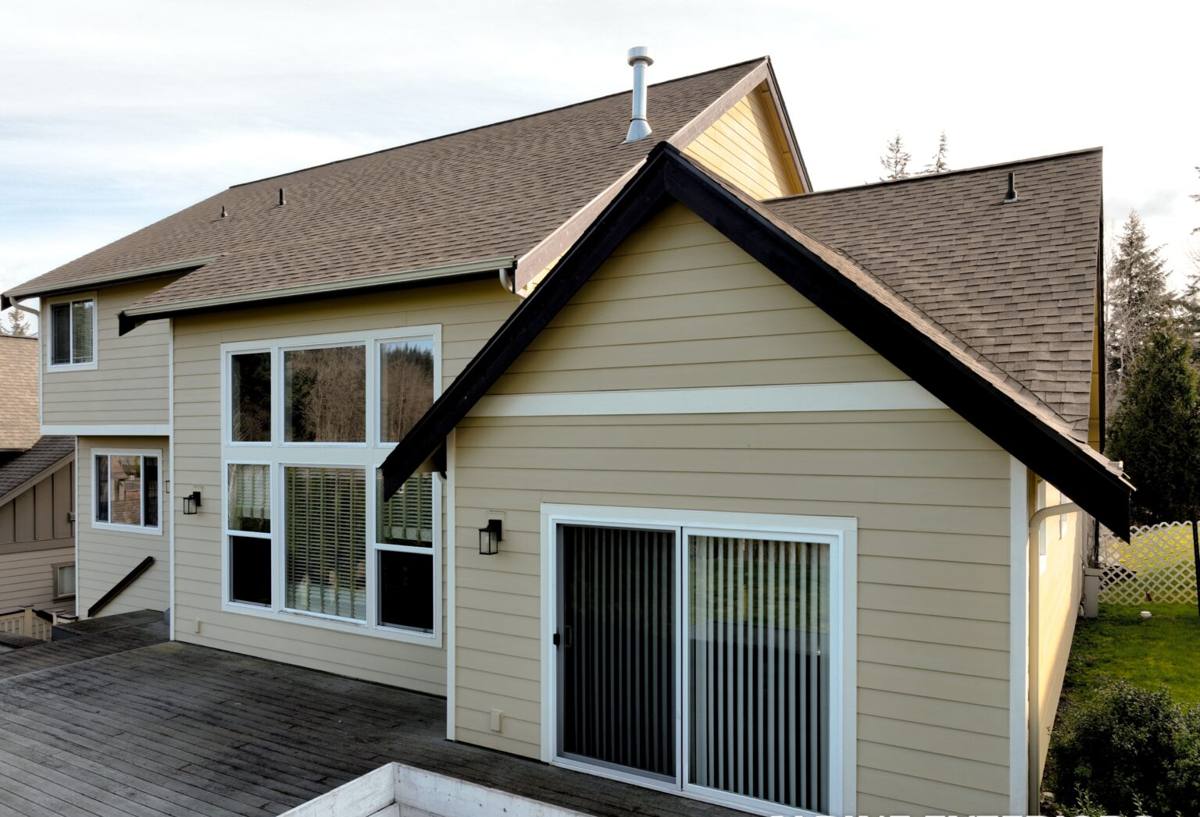
Warning Signs Worth a Closer Look
Moss and Algae Buildup
Some surface algae staining is cosmetic and can be cleaned. But moss that's gained a foothold in seams, at butt joints, or along the bottom courses of siding is holding moisture against the wall surface around the clock. Over a wet Whatcom County winter, that constant dampness is what turns a cosmetic problem into a structural one — especially on wood-based or engineered wood siding products that aren't built to shrug off sustained moisture contact.
Soft Spots, Swelling, or Bubbling Paint
Press gently on siding near the bottom of a wall, around window trim, or under a roofline where water sheds directly onto the siding below. If it gives slightly, feels spongy, or the paint film is bubbling and lifting, water has already gotten past the surface. This is the single most common issue we find on repair calls out here, and it's almost always worse than it looks from the ground.
Cracked, Warped, or Separated Panels
Freeze-thaw cycles, wind-driven rain, and simple age all show up as cracked panel edges, boards that have cupped or bowed away from the wall, or gaps opening up at seams that used to be tight. Once a gap opens, it's a direct path for water behind the cladding — and behind the cladding is where the real damage happens, out of sight, in the sheathing and framing.
Repair or Replace? A Cost-Factor Comparison
Not every damaged section needs full replacement, and not every repair is worth doing instead of replacing. Here's how we think through it on a Lake Samish job:
| Factor | Leans Toward Repair | Leans Toward Replacement |
|---|---|---|
| Extent of damage | Isolated to one or two sections/elevations | Spread across multiple walls or the whole house |
| Underlying moisture | Surface-level, sheathing tests dry | Rot found behind siding or in sheathing |
| Siding material | James Hardie fiber cement in good general condition | Failing wood-based or vinyl siding at end of service life |
| Color/finish match | Recent ColorPlus product, batch info available | Older or discontinued color, poor match likely |
| Age of original install | Under 10-15 years, installed to spec | Original install has recurring, systemic issues |
Some of these factors point in different directions on the same house — a wall with one bad section but a discontinued color, for example. We'll walk you through the actual trade-offs on your specific siding rather than defaulting to the answer that's easiest to sell.
What a Correct Siding Repair Actually Involves
A repair that just covers up the visible damage without addressing why it happened is a repair you'll be paying for again in a few years. Done right, a siding repair on a Lake Samish home includes:
- Removing enough surrounding siding to see the actual extent of the damage, not just the visible part
- Checking the sheathing and house wrap underneath for rot, staining, or compromised moisture barrier
- Inspecting and correcting flashing at windows, doors, and roof-to-wall transitions in the repair area — flashing failure is behind a large share of the moisture damage we find
- Replacing damaged material with matching product, cut and fastened to manufacturer spec
- Re-sealing and re-caulking joints correctly, using products rated for the exposure
- Confirming drainage and airflow around the repair so water doesn't pool or sit against the wall again
Skipping the tear-back and moisture check is the shortcut that causes repeat failures. It's also the step that's easiest for a homeowner to not notice was skipped, since the finished repair can look fine from the outside for a while.
Matching Existing Siding — Why It's Harder Than It Looks
If your home already has James Hardie fiber cement siding, a repair has a real advantage: Hardie's ColorPlus factory-finish system is engineered for consistency, and matching a current product line and color is usually straightforward when we can identify the original specification. That's one of the practical reasons we standardized on James Hardie as the only siding system we install — when a section needs repair five or ten years down the road, there's a documented product and finish to match against, backed by a manufacturer warranty that's designed to transfer with the home.
Matching gets much harder with other materials. Vinyl fades unevenly and discontinued colors and profiles are common. Primed wood or spruce siding weathers differently depending on which side of the house it's on, making new material stand out even with a careful paint match. Engineered wood products have gone through multiple formulation and profile changes over the years, so a repair section from a different production run may not sit flush or take stain and paint the same way. We'll always tell you honestly if a clean match isn't realistic on your existing material before we start.
Our Process for Lake Samish Repairs
We keep the process straightforward and put the emphasis on the parts that actually determine whether a repair holds up:
- On-site assessment. We look at the damaged area and the whole elevation it's on, since problems on one section often signal the same conditions elsewhere on that wall.
- Moisture check. Where damage suggests water intrusion, we open up the area enough to check the sheathing before quoting the repair — this avoids surprises once work starts.
- Honest scope and estimate. You get a clear picture of what's damaged, what's causing it, and what repair versus replacement looks like in real terms.
- Repair work. Matching material, correct flashing and fastening, proper sealing — done to the standard we'd want on our own homes.
- Walkthrough. We show you what we found and what we did, so you understand the condition of your siding going forward.
Why a Crew That Already Works This Lake Matters
Siding repair isn't one-size-fits-all across Whatcom County. A crew that mostly works open, sunny neighborhoods and gets called out to Lake Samish once a year is going to treat your job like a standard repair. A crew that works this area regularly knows to check the shaded north and east walls first, expects moss buildup at ground-level courses near the tree line, and understands that a repair here needs to account for slower drying times after every rain, not just the average forecast.
That local knowledge shows up in small decisions that add up: where we prioritize the moisture check, how we sequence work around wet weather, and which areas of a house we flag for a closer look even when that's not where the visible damage is. It's the difference between a repair that solves the problem and one that just resets the clock on it.
A Quick Homeowner Checklist
Before you call anyone for a repair estimate, a quick walk around your home can help you describe the problem accurately and get a more useful first assessment:
- Note which walls or sections show damage, and whether they're shaded, near the lake side, or under tree cover
- Check for moss or algae at the base of walls and in horizontal seams
- Gently press on any areas that look discolored or swollen — never force or pry at damaged siding
- Look at nearby trim, window sills, and roof-to-wall junctions for staining or gaps
- Take note of how long the damage has been visible, even roughly — it helps gauge how far it may have progressed
If you're seeing any of these signs on a Lake Samish home, it's worth getting a straight answer on what's actually happening behind the siding before it goes another wet season. We're happy to take a look and give you a free, no-pressure estimate — no obligation, just an honest read on what your siding needs.