 Chuckanut Exterior
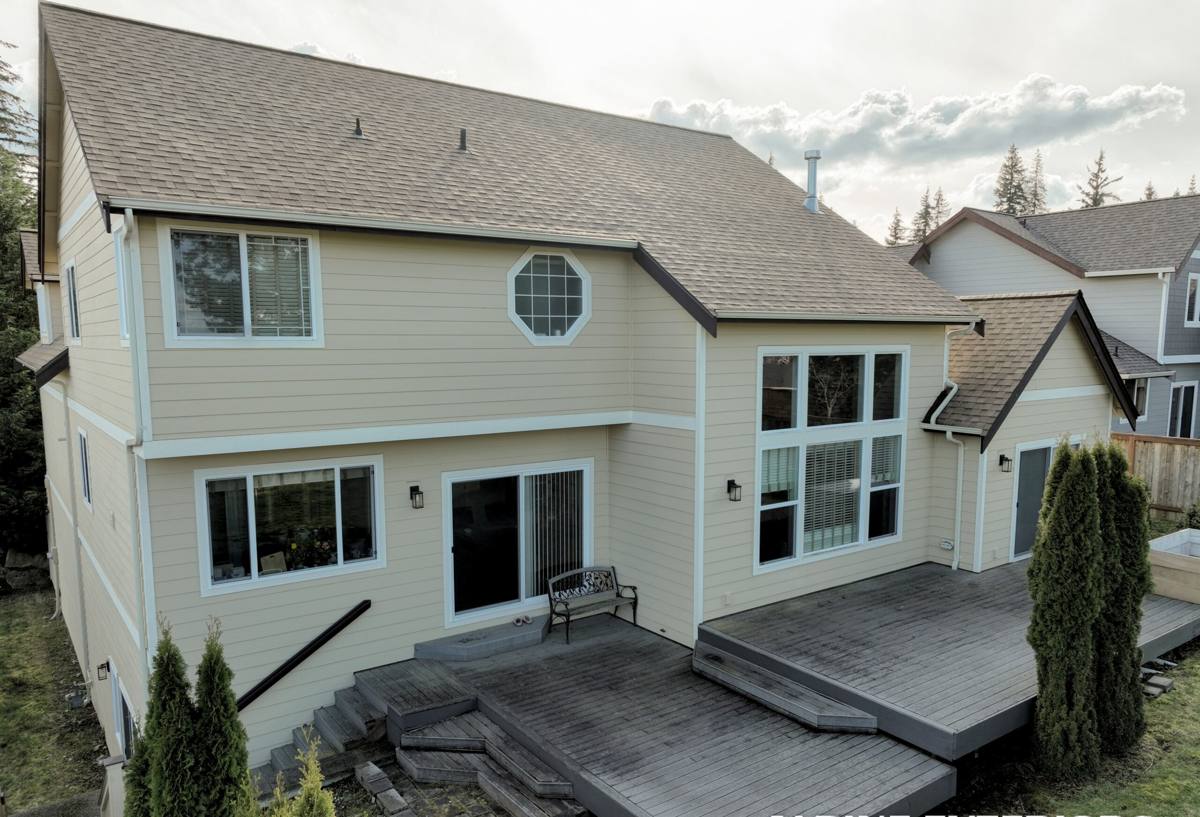
 Why Decks in Bow Take a Different Kind of Beating
Bow sits close enough to the water that salt air is a daily fact of life, not an occasional nuisance. Add in the driving rain that comes through this stretch of Whatcom County most of the year, plus a moss season that can stretch from late fall well into spring, and you've got three separate forces working against any deck that isn't built with them in mind. A deck design that works fine forty miles inland can fail early here — not because the crew that built it was careless, but because they didn't account for what this specific location does to fasteners, wood fibers, and finish coatings over time.
We build decks in Bow the way the site actually demands, not the way a generic spec sheet says to. That means different fastener choices, different flashing details, and a maintenance conversation up front instead of a surprise five years in.
What Salt Air Actually Does to a Deck
Salt-laden air accelerates corrosion on anything metal — screws, joist hangers, bolts, and railing hardware included. Standard exterior-rated fasteners that hold up fine elsewhere can start showing rust streaks and pitting within a few seasons this close to the water. Once a fastener corrodes, it loses holding strength long before it looks obviously bad, which is what makes it dangerous rather than just ugly.
The fix isn't complicated, it's just often skipped to save money: stainless steel or marine-grade coated fasteners throughout, hot-dip galvanized structural hardware rated for coastal exposure, and hardware placement that avoids trapping moisture and salt residue against bare metal. It costs more up front. It's also the difference between a deck that's still solid in fifteen years and one that needs structural hardware replaced in five.
Driving Rain and Water Management
Rain that comes in sideways doesn't behave like rain that falls straight down. It gets up under railing caps, behind ledger boards, and into any gap in a decking pattern that wasn't detailed for it. A deck built for this climate needs:
- Ledger board flashing that sheds water away from the house rim joist, not toward it
- Proper decking board spacing so water drains through instead of pooling on the surface
- Joist tape or flashing on top of every joist to keep standing water off exposed end grain
- Post bases that keep wood off concrete and standing water, not buried or flush to grade
- A slight pitch away from the house on the decking surface itself
Skip any one of these and you're not looking at a hypothetical problem — you're looking at rot showing up at that exact point within a handful of wet seasons.
Moss Season: The Slow Damage Nobody Notices Until It's Bad
Moss and algae growth on deck surfaces isn't just a slipping hazard, though that matters too. Moss holds moisture directly against the wood or composite surface for weeks at a time, which is exactly the condition that accelerates rot in real wood and can dull or stain some composite surfaces if left unaddressed. Shaded decks, decks under trees, and decks on the north side of a house are the worst affected, and a lot of Bow properties have at least one of those conditions.
Design choices that reduce moss buildup include decking board spacing that promotes airflow underneath, keeping surrounding vegetation trimmed back from the deck edge, and choosing a decking material with a surface texture that doesn't hold organic debris in fine grooves. None of this eliminates moss entirely — it's a Pacific Northwest reality — but it stretches the time between cleanings and reduces how much damage builds up between them.
Choosing the Right Decking Material for This Climate
There's no single "best" decking material — there's the right material for how much maintenance a homeowner actually wants to do, matched against how exposed the deck site is to salt air, rain, and shade.
| Material | Salt Air Behavior | Moss/Moisture Resistance | Maintenance |
|---|---|---|---|
| Pressure-treated lumber | Holds up if fasteners are corrosion-rated | Needs sealing to resist moss staining | Annual cleaning and periodic re-sealing |
| Cedar | Naturally decay-resistant, but softer surface | Grays and can stain if not maintained | Regular cleaning, staining every 2-3 years |
| Composite decking | Doesn't corrode; check fastener spec separately | Resists rot, but surface debris still needs washing off | Periodic washing, no staining or sealing |
| PVC decking | Fully inert to moisture and salt | Best moss/algae resistance of the group | Lowest — occasional washing only |
We don't push one material on every job. A shaded, water-exposed lot in Bow is a strong case for composite or PVC decking specifically because of moss and moisture behavior. A sunnier, more open lot might make real wood a perfectly reasonable choice if the homeowner is willing to keep up with sealing. The honest answer depends on the site, not on which product has the best margin.
Framing and Structure: Where the Real Lifespan Gets Decided
The decking surface is what people see, but the framing underneath is what determines whether the deck is still safe in twenty years. Footings need to be sized and set below frost depth per local code, posts need proper base connectors instead of direct wood-to-concrete contact, and joist spacing needs to match the decking material's actual span rating rather than a generic "looks about right" spacing. Composite and PVC boards in particular often require tighter joist spacing than solid wood to avoid flexing — a detail that gets missed when a crew treats decking material as interchangeable at the framing stage.
This is also where corrosion-rated hardware matters most, because structural hardware failure is invisible until it isn't. A rusted joist hanger doesn't announce itself with a squeak — it just quietly loses capacity.
Our Process for a Bow Deck Build
- Site walk and assessment — sun exposure, drainage patterns, distance from water, existing moss or moisture issues on the property
- Material conversation — honest tradeoffs between wood and composite/PVC options based on that specific site, not a default pitch
- Permit and code check — confirming footing depth, railing height, and guard spacing requirements for the jurisdiction
- Framing build-out — corrosion-rated hardware, proper flashing at the ledger, joist spacing matched to the chosen decking
- Decking and railing install — spacing and fastening detailed for drainage and airflow
- Final walkthrough — including a maintenance conversation specific to the material chosen, so there are no surprises about upkeep
Permits and Local Code Considerations
Deck permitting requirements vary by height, size, and whether the deck is attached to the house, and they get enforced. Guard rail height and baluster spacing requirements exist specifically because deck falls are a real injury category, not a paperwork formality. We handle the permit process as part of the job rather than leaving it to the homeowner to figure out — it's one less thing to chase down, and it means the finished deck actually passes inspection the first time.
What Affects the Cost of a Bow Deck
| Cost Factor | Why It Matters |
|---|---|
| Decking material | Pressure-treated is the low end; PVC and premium composites run higher but need less upkeep |
| Deck size and height | Larger footprints and elevated decks need more footings, framing, and railing |
| Site accessibility | Sloped or hard-to-reach lots add labor and equipment time |
| Fastener and hardware grade | Corrosion-rated hardware costs more but is not optional this close to salt air |
| Railing style | Cable, glass, and custom railing systems cost more than standard wood or composite balusters |
We'd rather walk a homeowner through these factors honestly during the estimate than quote a number that doesn't hold up once the actual site conditions are accounted for.
Why It Matters That We Already Work in Bow
A crew that's built decks around Bow before already knows which lots tend to hold moisture, which fastener grades actually hold up against the salt air off the water, and which framing details the local permitting process expects to see. That's not something you get from a national deck-building franchise working off a standard spec — it's built from doing the work in this specific area, repeatedly, and seeing what happens to those decks a few years later.
Before you commit to a contractor for a deck build in Bow, a few questions are worth asking directly:
- What fastener and hardware grade do you use, and is it rated for coastal/salt-air exposure?
- How do you flash the ledger board connection to the house?
- What decking materials do you recommend for a site like mine, and why?
- Is the permit and inspection process included, or is that on me?
- What's the realistic maintenance schedule for the material we choose?
A contractor who answers those clearly and specifically, without hedging, is one who's actually thought through what this climate does to a deck.
If you're planning a new deck or replacing one that's showing its age, we're happy to walk the site with you and put together a straightforward, no-pressure estimate — just fill out the form below.