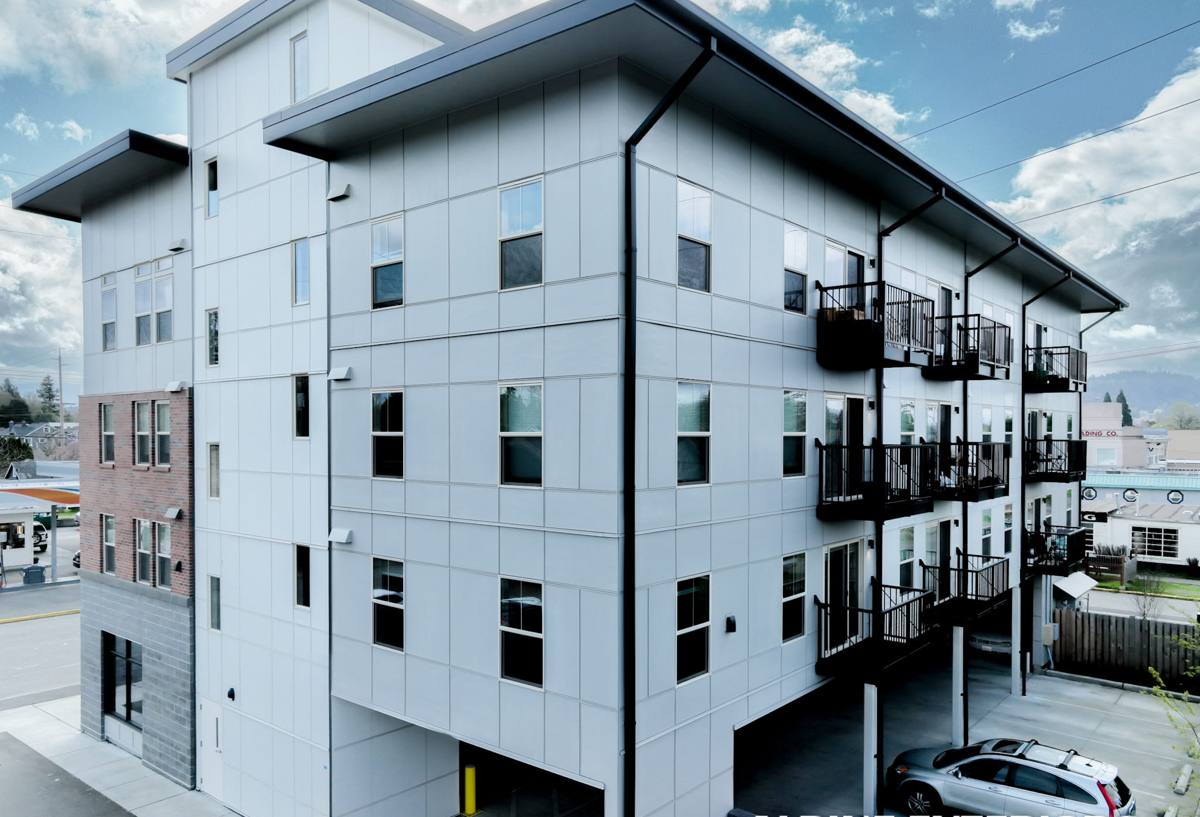
 Chuckanut Exterior
 Windows Built for the Samish Climate, Not a Catalog Somewhere Else
Samish sits close enough to the water that homes here take a different kind of beating than houses twenty minutes inland. Salt-laden air off Samish Bay and Chuckanut Bay works on metal hardware and finishes year-round. Driving rain off Puget Sound doesn't just fall straight down — wind pushes it sideways into window frames and trim. And the long, damp moss season that Whatcom County is known for means anything that stays wet for weeks at a time will eventually show it. A window that's rated "energy-efficient" on a spec sheet still has to survive all of that before the efficiency numbers mean anything.
When we talk about energy-efficient windows for a Samish home, we're not just talking about a U-factor on a label. We're talking about a window and an installation that keeps performing after five winters of wind-driven rain, not just on the day it's installed.
What Salt Air, Rain, and Moss Actually Do to a Window Over Time
Salt Air and Hardware
Salt in the air accelerates corrosion on exposed metal — hinges, locks, cranks, and screws. Cheaper hardware finishes can start pitting or discoloring years before the glass itself shows any wear. This is one reason we pay attention to hardware quality and finish, not just the window unit itself, on any Samish install.
Wind-Driven Rain and Seals
Rain that hits a window straight-on is a much easier problem than rain that's being pushed sideways by coastal wind. Flashing details, sill pans, and the seal between the window frame and the wall have to work together to keep that water out. A window can be excellent and still leak if the flashing around it was rushed or done wrong — this is genuinely more about installation than about the product.
Moss, Mildew, and Prolonged Dampness
Whatcom County's moss season isn't just a roof and siding issue. Wood sills and trim that stay damp for weeks at a stretch are vulnerable to soft spots, paint failure, and mildew staining if they aren't properly primed, sealed, and detailed. Vinyl and fiberglass frames don't rot, but the wood trim and casing around them still need the right prep and finish work to hold up through a wet Whatcom winter.
What "Energy-Efficient" Should Mean for a Coastal Whatcom County Home
Energy efficiency in a window comes down to three things working together: the glass package, the frame material, and how tightly the unit is sealed into the rough opening. Get one wrong and the other two can't make up for it.
Glass and Glazing
Double-pane, low-E glass with an argon gas fill is the standard baseline for this region — it cuts winter heat loss and reduces summer solar gain without needing a dramatic (and expensive) triple-pane upgrade in most cases. For rooms that get direct afternoon sun or face prevailing weather, we'll talk through whether a stronger low-E coating makes sense for that specific elevation of the house.
Frame Material and Thermal Performance
Frame material affects both insulation value and how the window handles our climate long-term. Vinyl and fiberglass frames resist moisture damage and don't require repainting, which matters in a place where trim gets wet for a good chunk of the year. Wood-frame windows can look great and perform well, but they demand more upkeep in a coastal, high-moisture environment — that's a maintenance conversation we have honestly with homeowners rather than glossing over.
Air Sealing at the Rough Opening
A high-performance window installed with gaps, poor flashing, or minimal insulation at the rough opening will underperform a mid-grade window installed correctly. Proper foam or fiberglass insulation around the frame, correct flashing sequence, and a continuous air seal are what actually deliver the energy savings a window is rated for.
Comparing Frame Options for a Samish Property
There's no single "best" window for every home — the right call depends on the home's exposure, budget, and how much upkeep the homeowner wants to take on. Here's how the common options stack up for our climate specifically.
| Frame Material | Moisture Resistance | Maintenance | Typical Fit |
|---|---|---|---|
| Vinyl | Excellent — won't rot or corrode | Low; occasional cleaning | Best value for most Samish homes, especially exposed elevations |
| Fiberglass | Excellent, very stable in temperature swings | Low | Good for larger openings or homes wanting minimal long-term upkeep |
| Wood-clad | Good, but relies on the cladding staying intact | Higher — interior wood needs periodic attention | Homes prioritizing a traditional wood interior look |
| Aluminum | Prone to condensation and corrosion in salt air | Moderate to high | Generally not our recommendation for direct coastal exposure |
For most Samish properties, especially those with more direct exposure to weather off the bay, vinyl or fiberglass frames give the best balance of performance, moisture resistance, and long-term cost. We'll still walk through wood-clad options for homeowners who want that look and understand the maintenance trade-off — it's your home and your call, we just want you making it with full information.
How We Approach a Window Installation in Samish
The process is straightforward, but the details matter more here than they would inland.
- On-site assessment. We look at each window's exposure — which elevations take the brunt of wind-driven rain, where moss and moisture have already caused visible wear, and what the existing flashing and sill conditions look like.
- Product selection. We talk through frame material, glass package, and hardware finish based on that exposure, not a one-size answer for the whole house.
- Removal and opening prep. Old windows come out, and we inspect the rough opening for hidden rot or moisture damage before anything new goes in — this is often where problems that caused the original window to fail get caught.
- Flashing and sill pan installation. This is the step that determines whether wind-driven rain stays out for the next twenty years. We follow a proper flashing sequence — not just caulk and hope.
- Window setting and insulation. The unit is set level and plumb, then properly insulated and air-sealed around the full perimeter.
- Interior and exterior finish work. Trim, caulking, and paint or stain are completed with attention to how they'll hold up through a wet season, not just how they look on install day.
- Final walkthrough. We check operation, seals, and finish work with you before calling the job done.
Signs Your Current Windows Are Already Costing You
Homeowners in Samish often notice these signs well before they get around to calling anyone. Worth checking your own windows against this list:
- Visible condensation or fogging between panes — a sign the seal has failed and the insulating gas has escaped
- Drafts you can feel near the frame on a windy day, even with the window fully latched
- Soft, discolored, or peeling wood trim around the window, especially on the sides facing prevailing weather
- Difficulty opening, closing, or locking — often a sign of frame warping or corroded hardware
- Rooms near certain windows that feel noticeably colder in winter or hotter in summer than the rest of the house
- Noticeable moss or persistent green staining building up on the sill or exterior trim
- A jump in heating costs without a clear explanation elsewhere
Any one of these on its own isn't necessarily an emergency, but a few together usually mean the windows are no longer doing their job efficiently.
Why Local Experience in Chuckanut and Samish Actually Matters
A crew that mostly works drier, inland areas doesn't always think about flashing details, hardware finish, or moss-related trim wear the same way a crew that works this specific stretch of Whatcom County coastline does. We've seen how salt air, driving rain, and a long moss season actually play out on real houses here — not in general, but on this kind of exposure. That shapes which products we recommend, how we detail the flashing, and what we flag to a homeowner before it becomes a bigger repair.
It also means we're not guessing at what "energy-efficient" needs to hold up to in this specific spot. A window package that performs well in a sheltered inland neighborhood isn't automatically the right call for a home taking direct weather off the bay.
Living With New Windows Through Moss Season
Even the right windows, installed correctly, benefit from a little seasonal attention in a climate like ours. A quick rinse of sills and tracks a couple of times a year keeps organic buildup from getting a foothold. Keeping gutters and downspouts clear nearby helps prevent extra water from sheeting across window trim during heavy rain. And a quick visual check each fall — looking for caulk that's cracked or pulling away — catches small issues while they're still small. None of this is heavy maintenance; it's just the kind of upkeep that pays off in a wet coastal climate.
Get a Straight Answer for Your Samish Home
Every house on this stretch of Whatcom County coastline takes weather a little differently depending on its orientation, age, and how it was originally built and trimmed out. We're happy to come take a look, walk through what we're actually seeing on your windows, and give you honest options — no pressure, no upsell for the sake of it. Fill out the form below for a free estimate, and we'll go from there.