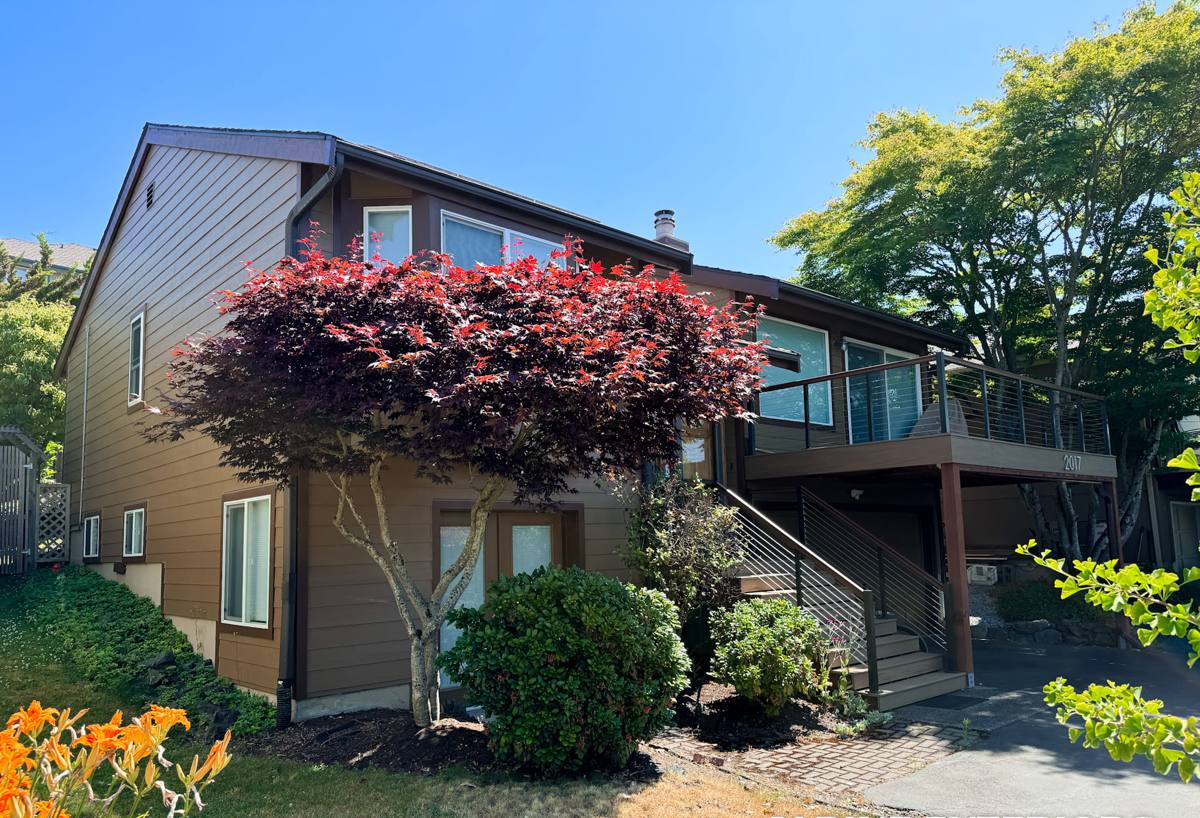
 Chuckanut Exterior
 Why Mount Vernon Roofs Wear Differently Than Roofs Inland
A shingle roof in Mount Vernon doesn't age the same way a shingle roof does forty miles inland. The Skagit Valley sits low, flat, and open to weather moving in off the water, and homes along the corridor that runs from Chuckanut down through Skagit County catch a steady mix of salt-tinged air, wind-driven rain, and heavy tree cover. None of that is dramatic on its own. It's the combination, repeated over years, that shortens the useful life of a roof that wasn't built or installed with this climate in mind.
We're not describing a generic "Pacific Northwest is wet" problem here. Mount Vernon's exposure is specific: coastal air moving up from Samish Bay and the Sound, funneling through the low valley terrain, meeting the moisture and shade that come with the Skagit Valley's farmland and forest edges. A shingle roof installed the way it would be for a dry inland subdivision tends to show its age here faster — curling edges, granule loss, moss creeping up from the north-facing slopes, soft spots at the eaves. A roof installed correctly for this specific stretch of Washington holds up noticeably longer.
What Salt Air, Driving Rain, and Moss Actually Do to a Shingle Roof
Salt-Laden Air
Homes closer to the water pick up airborne salt that settles on roofing, flashing, and fasteners. Over time it accelerates corrosion on exposed metal — nail heads, flashing edges, vent stacks — long before the shingles themselves fail. Once fasteners and flashing start to go, water finds a way in even if the shingle field still looks fine from the ground.
Driving, Wind-Driven Rain
Rain that falls straight down is easy for any roof to shed. Rain that comes in sideways during a Skagit Valley storm is a different problem — it gets pushed up under shingle tabs, into valleys, and around chimneys and skylights unless the underlayment, flashing, and shingle overlap were installed with that wind pattern in mind. This is where a lot of "mystery leaks" actually start: not a failed shingle, but a wind-driven rain event finding a gap that a calmer climate would never have exposed.
Moss and Algae
Shaded, north-facing roof slopes near trees or in low-lying areas stay damp far longer after a storm than a roof out in open sun. That extended damp period is exactly what moss and algae need to establish. Once moss takes hold, it lifts shingle edges, holds moisture against the roof deck, and works its way under the shingle line — turning a cosmetic issue into a structural one if it's left unaddressed through a full moss season.
Choosing an Asphalt Shingle System Built for This Climate
Not all asphalt shingles are built the same, and for a Mount Vernon roof, the differences matter more than they would in a drier region. We generally steer homeowners toward algae-resistant (AR) architectural laminate shingles rather than standard three-tab products, and we're upfront about why: it's a maintenance and longevity decision, not a marketing one.
| Shingle Type | Typical Lifespan Here | Moss/Algae Resistance | Wind Performance |
|---|---|---|---|
| Standard 3-tab | Shorter end of the range, especially on shaded slopes | Low unless treated | Adequate on protected slopes only |
| Algae-resistant (AR) architectural laminate | Longer, more consistent across sun/shade exposure | Higher — copper/zinc-infused granules slow regrowth | Rated higher for wind-driven rain areas |
| Impact/high-wind rated laminate | Comparable to standard laminate, better durability | Varies by product line | Best fit for exposed or storm-facing slopes |
The upcharge for AR shingles is modest compared to the cost of an early moss-driven replacement. We'll always show the tiers side by side during the estimate so it's your call, made with real numbers in front of you rather than a sales pitch.
What a Correct Installation Involves
Most shingle roof problems we get called out for in this area weren't caused by a bad shingle — they were caused by a rushed or incomplete install underneath it. A correct job in a climate like this includes several layers of protection working together, not just shingles laid over old felt.
- Full tear-off and a deck inspection — soft, delaminated, or water-stained sheathing gets replaced, not shingled over
- Ice-and-water shield at eaves, valleys, and around every roof penetration, where wind-driven rain is most likely to intrude
- Synthetic underlayment across the full deck for a consistent moisture barrier under the shingle field
- Corrosion-resistant fasteners, driven at the correct depth and pattern — not overdriven, not underdriven
- New step flashing and counter-flashing at every wall, chimney, and skylight intersection, rather than reusing old flashing
- Proper starter strip along eaves and rakes so the first course seals down the way it's designed to
- Balanced ridge and soffit ventilation, so the attic isn't trapping the moisture that feeds moss from underneath
- Hip and ridge cap shingles rated to match the field shingle's wind exposure
Skip any one of these and the roof can still look right for a year or two. It's the fifth Skagit Valley winter, not the first, where shortcuts usually show up.
Our Process, Start to Finish
We walk every Mount Vernon roof in person before we write an estimate — no drone-only quotes, no guessing at pitch and square footage from a satellite photo. That inspection covers the shingle field, flashing points, ventilation, and a look in the attic where access allows, so what we recommend is based on what your roof actually needs, not a generic package.
Once you approve a scope, we protect landscaping and siding before tear-off begins, remove the old roofing down to bare deck, and replace any damaged sheathing before anything new goes on. Underlayment, flashing, and shingles go down in that order, following manufacturer specs for nailing pattern and exposure — this is what keeps the warranty valid if you ever need it. We run a magnetic sweep for stray nails and do a final walkthrough with you before we call the job finished, so you know exactly what was done and where.
Cost Factors for a Mount Vernon Shingle Roof
We don't post fixed prices because two roofs of the same size can cost very differently once pitch, access, and deck condition come into play. What we can do is tell you honestly what moves the number, so an estimate makes sense instead of feeling arbitrary.
| Factor | Why It Matters |
|---|---|
| Roof pitch and complexity | Steep or cut-up roofs take longer to tear off and flash correctly |
| Number of existing layers | Roofs with multiple old layers need full removal, adding labor and disposal cost |
| Decking condition | Rot or delamination found at tear-off means replacement sheathing before shingles go down |
| Ventilation upgrades | Adding or correcting ridge/soffit venting reduces future moisture and moss issues |
| Access and site conditions | Steep driveways, tight lots, or tree cover common in Skagit Valley properties can affect staging and disposal |
| Shingle tier selected | Standard versus algae-resistant versus impact-rated laminate changes material cost and expected lifespan |
We'll walk through each of these with you during the estimate so you can see exactly where the number comes from, and where you have real choices.
Moss and Algae Management After the New Roof Goes On
A correctly installed AR shingle roof resists moss far better than an untreated one, but "resistant" isn't "immune" — especially on shaded slopes common around Mount Vernon and the wider Skagit Valley. A few habits go a long way toward protecting the investment:
- Keep gutters and valleys clear of needles and leaf litter, which hold moisture against the roof edge
- Trim back overhanging branches where practical, to cut down on shade and debris on north-facing slopes
- Watch for early moss growth along ridge lines and in valleys, and address it early rather than after it's established
- Avoid pressure washing — it strips granules and can force water under shingles; low-pressure treatments are safer for the shingle surface
We're happy to point out early moss or drainage issues on a routine visit rather than waiting for them to turn into a leak call.
Why a Local Chuckanut Crew Matters for This Job
Roofing crews that don't work this specific corridor regularly tend to install roofs the way they would anywhere else — because that's the climate they know. A crew based out of the Chuckanut area that works down through Skagit County and into Mount Vernon on a routine basis has already seen how wind-driven rain behaves off the water here, which slopes hold moss longest, and where flashing tends to fail first on local roof styles. That's not a marketing point — it changes real decisions on the job, like where to add extra ice-and-water shield or how ventilation should be balanced.
It also matters after the job is done. If a warranty question or a storm-related concern comes up two or five years down the road, you're calling a crew that's still working in your area and still stands behind the work — not chasing down a roofing outfit that moved on to the next region after a storm season.
Workmanship, Warranty, and What to Expect After We Leave
An asphalt shingle roof carries two separate protections, and it's worth understanding both. The manufacturer's warranty covers material defects in the shingles themselves. The workmanship warranty — the one we provide — covers whether the roof was installed correctly: flashing, underlayment, fastening, and ventilation. A shingle can be flawless and a roof can still leak from an installation mistake, which is exactly why we install to manufacturer specification on every job, not just where it's convenient.
Before we consider a job complete, we go over what was replaced, what to expect during the first heavy rain and the first moss season, and what routine maintenance looks like going forward. You should never be left guessing what was actually done to your roof.
If your roof is due for a look, or you're planning ahead for a replacement before the next wet season sets in, we're glad to walk the roof with you and put together a straightforward, no-pressure estimate — just fill out the form below to get started.