 Chuckanut Exterior
 Metal Roofing Built for Happy Valley's Weather, Not Just Any Roof
Happy Valley sits close enough to the water and the hills around Chuckanut that its homes take a specific kind of beating year-round: salt-laced air drifting in off the bay, driving rain that comes in sideways during winter storms, and a moss season that seems to start earlier and last longer every year. A roof that works fine in a drier inland town can fail here in half the time. Metal roofing, installed correctly for this exact environment, is one of the few systems that genuinely holds up to all three of those pressures at once — but "installed correctly for this exact environment" is doing a lot of work in that sentence, and it's the part most out-of-area crews skip.
This page is about what metal roofing actually needs to succeed on a Happy Valley home, not a generic rundown of metal roofing in general. If you've gotten a quote that reads like it was written for a house in Spokane, you'll notice the difference here.
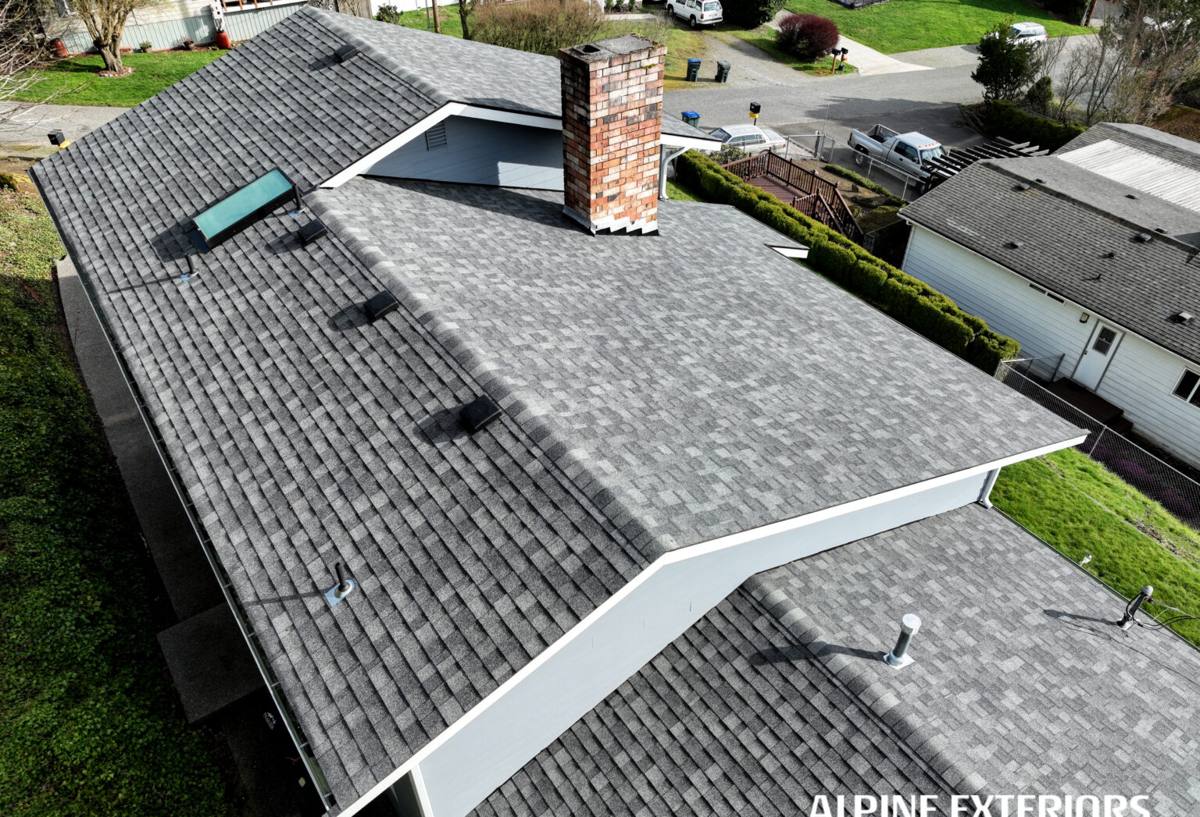
What Happy Valley's Climate Actually Does to a Roof
Salt Air and Metal Fatigue
Proximity to salt water accelerates corrosion on any exposed metal, including roofing panels, fasteners, and flashing. This doesn't mean metal roofing is a bad choice near the coast — it means the coating system and fastener grade matter far more here than they would fifty miles inland. A panel with a marginal paint system or the wrong fastener coating can start showing rust streaks at seams and screw heads years before it should. We select coatings and hardware with coastal exposure in mind, not because a spec sheet says "coastal rated," but because we've seen what happens to roofs around here that weren't.
Driving Rain and Wind-Driven Water
Whatcom County storms don't always drop rain straight down. When wind pushes rain sideways or upward under eaves and around penetrations, a roof succeeds or fails based on details that have nothing to do with the panel itself — underlayment choice, flashing laps, sealant placement at penetrations, and how ridge and hip caps are vented and sealed. Metal roofing sheds bulk water extremely well, but wind-driven rain finds every shortcut in the flashing details. This is where a large share of "my metal roof still leaks" calls actually originate.
Moss, Shade, and Slow-Drying Surfaces
Long moss seasons are a fact of life in this part of Washington, especially on roof sections shaded by trees or facing north. Moss holds moisture against a roofing surface and, on some materials, works into seams and fastener penetrations over time. Metal roofing resists moss far better than composition shingle because it doesn't give moss spores the rough, porous surface they need to establish. It's not moss-proof — organic debris can still build up in valleys and against obstructions — but it dramatically reduces the maintenance burden compared to shingle roofs in shaded Happy Valley lots.
Why Metal Roofing Fits This Neighborhood Specifically
Not every roofing material is a good match for every microclimate, and we say that as a company that installs more than one type of roof. For Happy Valley homes — particularly those with tree cover, partial water exposure, or steep rooflines that funnel a lot of water fast — metal roofing tends to outperform composition shingle on the specific problems this area creates:
- Sheds heavy, wind-driven rain faster than shingle, reducing the window where water can work under the surface
- Resists moss colonization better than porous shingle surfaces, cutting down on regular cleaning
- Handles the freeze-thaw and saturation cycles common in a wet coastal winter without granule loss or curling
- Lasts multiple shingle lifecycles when the coating and fastener system are chosen correctly for salt exposure
- Performs well on steeper pitches where standing water and moss have less chance to accumulate anyway
That said, metal roofing is a bigger upfront investment than shingle, and it's not automatically the right call for every home or budget. Part of an honest estimate is telling you when it isn't — for example, on a roof with a lot of complex geometry where the labor cost of correct flashing work outweighs the benefit, or a home going up for sale within a year or two where the payback horizon doesn't make sense.
What a Correct Metal Roof Installation Involves
Deck and Underlayment
Metal roofing is only as good as what's underneath it. We check the existing deck for soft spots, rot, and proper ventilation before anything goes down. In this climate, we use underlayment rated for the moisture exposure a Happy Valley roof actually sees — not the minimum code-allowed product. Synthetic, high-temp underlayment at eaves, valleys, and penetrations gives a real second line of defense if wind-driven rain ever gets past the panel seams.
Panel System Selection
Standing seam and exposed-fastener panel systems both have a place, but they behave differently over time in salt air and heavy rain, which matters for a Happy Valley install:
| Factor | Standing Seam | Exposed-Fastener Panel |
|---|---|---|
| Water resistance | Concealed clips, no through-panel fasteners — very high | Fasteners penetrate panel; relies on washers staying sealed |
| Salt-air durability | Fewer exposed metal points to corrode | Exposed screw heads are the first place corrosion shows |
| Upfront cost | Higher | Lower |
| Long-term maintenance | Minimal | Fastener washers may need attention over the roof's life |
| Best fit | Homes with heavy rain/wind exposure, longer ownership horizon | Budget-conscious projects, secondary structures, shorter horizons |
We'll walk through which system fits your specific roof, budget, and how long you plan to own the home — this isn't a one-size answer.
Flashing and Penetration Detail
Chimneys, vents, skylights, and valleys are where the vast majority of roof leaks originate, metal or otherwise. Correct metal roofing installation means custom-fabricated flashing at every penetration, proper end laps and side laps sized for this region's wind exposure, and sealant used as a backup — not as the primary water barrier. If a crew's plan for a penetration is "caulk it," that's a maintenance item waiting to happen, not a permanent fix.
Fastener and Coating Selection
Given the salt air in Happy Valley, we specify fasteners and coating systems rated for coastal corrosion resistance, not generic hardware. This is a small cost difference at install time and a significant difference in how the roof looks and performs at year ten and beyond.
Our Process, Start to Finish
- On-site inspection — we walk the existing roof, check the deck and attic ventilation, and note anything specific to your lot (tree cover, water exposure, roof pitch and complexity).
- Honest scope and system recommendation — we tell you which panel system fits your home and budget, and why, including trade-offs.
- Written estimate — clear line items, no vague "materials and labor" lump sum with no detail behind it.
- Tear-off and deck prep — old roofing removed, deck inspected and repaired as needed before anything new goes down.
- Underlayment and flashing installation — the part that actually determines whether the roof stays dry.
- Panel installation — correct fastener spacing, seam engagement, and trim work.
- Final walkthrough — we go over the finished roof with you before we consider the job done.
Maintenance a Happy Valley Metal Roof Actually Needs
One of the real advantages of metal roofing here is how little upkeep it demands compared to shingle, but "little" isn't "none." A short annual routine keeps a metal roof performing the way it should through Chuckanut's wet seasons:
- Clear debris and moss buildup from valleys and against any roof-to-wall transitions, especially on shaded sections
- Check gutters and downspouts before the winter rains start — a metal roof moving water fast is only as good as the drainage it feeds
- Look for any loose or lifted trim at ridges, eaves, and rakes after major windstorms
- Watch for early rust spotting at fastener heads or cut edges, which is easiest and cheapest to address early
- Keep overhanging branches trimmed back to reduce shade, debris, and moss pressure on the roof surface
Cost Factors Specific to This Area
Metal roofing costs vary by panel system, roof complexity, and material gauge, but a few factors weigh more heavily on a Happy Valley project than they would elsewhere:
| Factor | Why It Matters Here |
|---|---|
| Panel and fastener grade | Salt-air corrosion resistance costs more upfront but avoids early degradation |
| Flashing complexity | Roofs with multiple penetrations or valleys need more custom fabrication time |
| Deck condition | Moisture-related deck repair is more common on older, shaded, or moss-affected roofs |
| Roof pitch and access | Steeper Happy Valley rooflines can affect labor time and safety setup |
| Underlayment upgrade | High-temp, wind-driven-rain-rated underlayment costs more than minimum code product but earns its keep here |
We break all of this down in the estimate itself so you know exactly what you're paying for and why, rather than a single number with no explanation behind it.
Why Hiring a Crew That Already Works Happy Valley Matters
A roofing crew that mostly works drier, inland areas can install a technically correct metal roof and still get it wrong for this specific environment — under-specifying the underlayment, using standard-grade fasteners, or skipping the extra flashing detail that wind-driven coastal rain requires. None of that shows up as a problem on installation day. It shows up two or three winters later.
Working regularly in Chuckanut and the surrounding Whatcom County communities means we're not guessing at how this climate treats a roof — we're accounting for it in every material choice and detail from the start. That's the difference between a metal roof that looks right at handoff and one that's actually built to hold up through another twenty Whatcom County winters.
Get a Straight Answer for Your Roof
If you're weighing metal roofing for a Happy Valley home, we're happy to take a look, walk you through what your specific roof needs, and give you a clear, no-pressure estimate — no exaggerated claims, no pushy upsell, just what the job actually requires. Use the form below to get started.