 Chuckanut Exterior
 Roofing in Happy Valley Comes With Its Own Set of Problems
Happy Valley sits close enough to the water and the tree line that its roofs take a different kind of beating than roofs a few miles inland. It's not one dramatic storm that does the damage — it's the steady combination of salt-laden air, driving rain that comes in sideways during a Whatcom County windstorm, and long stretches of shade and dampness that let moss take hold and never really let go. A roof that would last two more years on a dry, open lot somewhere else can be showing real trouble here on the same timeline homeowners expect for a "normal" Pacific Northwest roof.
That's why a roof replacement in this part of Chuckanut isn't just a matter of stripping off old shingles and nailing down new ones. It's a chance to correct the details that let salt air, moisture, and moss cause problems in the first place — details that get skipped more often than they should on jobs done by crews who aren't used to this specific microclimate.
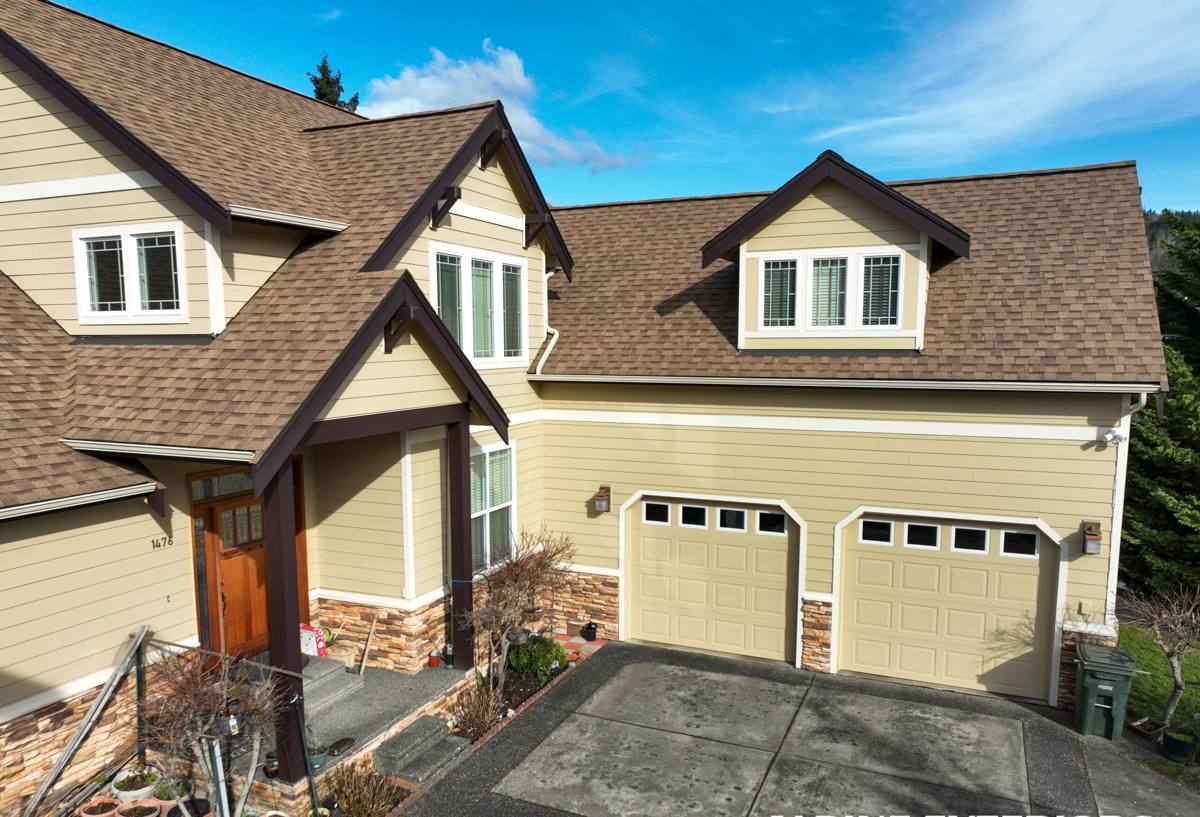
What Salt Air, Rain, and Moss Actually Do to a Roof
Salt Air
Airborne salt accelerates corrosion on anything metal — fasteners, flashing, vent stacks, and gutter hardware. Once corrosion starts on a fastener head or a flashing seam, water finds its way in long before a homeowner sees a stain on the ceiling. Materials and fastener grades that hold up fine forty miles inland can fail early this close to the water.
Driving Rain
Wind-driven rain doesn't just fall on a roof, it pushes sideways and upward under shingle edges, around vent penetrations, and into any flashing detail that was installed loosely or with the wrong lap direction. A roof only needs to shed water correctly in calm conditions to look fine — it needs to shed water correctly under wind pressure to actually protect the house.
Moss and Algae
Shaded, damp roof sections — north-facing slopes, areas under overhanging trees, valleys that stay wet longer than the rest of the roof — grow moss readily in this climate. Moss holds moisture directly against the roofing material, works its way under shingle tabs as it grows, and can lift and separate shingles over time. Left unaddressed, moss doesn't just look bad, it shortens the roof's life.
Signs a Happy Valley Roof Has Reached the End of Its Life
- Granules collecting in gutters or at downspout outlets, leaving bare, shiny patches on shingles
- Shingles that are cupping, curling at the edges, or cracking when you look closely from the ground
- Moss or thick algae staining covering more than a small patch, especially on north-facing slopes
- Soft spots in the decking felt underfoot during any roof access, or sagging visible from the street
- Rusting or lifting flashing around chimneys, skylights, and vent pipes
- Daylight visible through the roof deck from inside the attic, or damp insulation
- Repeated small leaks that keep reappearing in different spots after patching
One or two of these on their own might mean a repair is enough. Several at once, especially on a roof that's already past 20-25 years, usually means replacement is the more honest recommendation — patching a roof in that condition just delays a bigger repair bill later.
What a Correct Roof Replacement Actually Involves
A roof replacement done right in this climate isn't just swapping the top layer. Every step below matters more here than it would in a drier, calmer part of the state.
Full Tear-Off, Not an Overlay
We remove the existing roofing down to the deck rather than layering new shingles over old ones. An overlay hides problems instead of fixing them, and in a wet climate it traps moisture between layers where it can't dry out.
Deck Inspection and Repair
With the old roofing off, we can actually see the decking. Any soft, delaminated, or water-damaged plywood or sheathing gets replaced before anything new goes down. Installing new roofing over a compromised deck is one of the most common shortcuts that leads to early failure.
Underlayment Suited to Wind-Driven Rain
We use synthetic or self-adhered underlayment, with self-adhered membrane specifically at eaves, valleys, and other vulnerable areas, to give the roof a second line of defense if wind pushes water past the surface layer.
Flashing Done Properly
Chimneys, skylights, sidewalls, and vent penetrations are where most roof leaks actually start, not in the open field of shingles. We install new flashing with correct laps and corrosion-resistant materials rather than reusing old flashing or relying on sealant alone to do the job.
Ventilation That Matches the Climate
Proper intake and exhaust ventilation keeps the attic space closer to outside temperature and humidity, which reduces condensation on the underside of the deck and helps shingles last their full rated life. Poor ventilation is a quiet cause of premature roof failure that has nothing to do with the roofing material itself.
Matching the Roofing Material to This Specific Climate
There's no single "best" roofing material for every home — it depends on the roof's exposure, the home's style, and the homeowner's priorities around maintenance and budget. Here's how the common options actually perform under salt air, driving rain, and moss pressure.
| Material | Moss/Algae Resistance | Salt Air Durability | Maintenance Load |
|---|---|---|---|
| Architectural asphalt shingles | Good with algae-resistant granules; still needs periodic cleaning in shaded areas | Good when paired with corrosion-resistant fasteners and flashing | Moderate — periodic moss removal recommended |
| Standing seam metal | Very good — moss struggles to gain a foothold on smooth metal panels | Depends heavily on finish and fastener quality; needs a coating rated for coastal exposure | Low — occasional debris clearing |
| Cedar shake | Requires the most attention — natural wood is more hospitable to moss and needs regular treatment | Fine structurally, but finish and fasteners still need to be corrosion-rated | High — regular cleaning and treatment expected |
| Synthetic/composite shingles | Good — engineered to resist moisture absorption better than wood | Good with proper fastener selection | Moderate — similar to asphalt |
We'll talk through these trade-offs honestly during an estimate rather than steering every homeowner toward one product. The right call depends on your roof's shade exposure, your home's architecture, and how much upkeep you want to take on.
Our Replacement Process, Step by Step
- On-site inspection — we walk the roof and attic, check the deck condition where accessible, and note flashing, ventilation, and moss/moisture problem areas specific to your property.
- Written estimate — a clear scope of work and price, with material options explained rather than a single take-it-or-leave-it number.
- Scheduling around Whatcom County weather — we plan tear-off and dry-in around forecasted rain so your home isn't left exposed longer than necessary.
- Tear-off and deck inspection — old roofing removed, deck checked and repaired as needed.
- Underlayment, flashing, and ventilation installed — the details that determine how the roof actually performs in this climate.
- New roofing installed — to manufacturer specification, not shortcuts.
- Final walkthrough — we review the finished roof with you, including gutters and cleanup, before calling the job done.
What Cost Depends On
We won't quote a number without seeing the roof, but these are the factors that actually move the price on a Happy Valley roof replacement — knowing them ahead of time makes for a more useful conversation when we do come out.
| Factor | Why It Matters |
|---|---|
| Roof size and pitch | More square footage and steeper pitches mean more material and more labor time, plus added safety measures |
| Number of layers to remove | Some older roofs have more than one layer of roofing that needs to come off before deck inspection |
| Deck condition | Sections of rotted or delaminated sheathing found during tear-off need to be replaced, which isn't always visible beforehand |
| Roof complexity | Valleys, dormers, chimneys, and skylights all add flashing work and time |
| Material choice | Asphalt, metal, cedar, and composite options carry different material and labor costs |
| Ventilation upgrades | Adding or correcting intake/exhaust ventilation is often worth the modest added cost for long-term roof life |
Living With the Roof After Installation
A well-installed roof still needs a little attention in this climate to reach its full lifespan. This is the maintenance we recommend to every Happy Valley homeowner after a replacement:
- Have moss growth removed gently (not pressure-washed, which can strip granules) as soon as it appears, especially on shaded slopes
- Keep gutters and downspouts clear so water isn't backing up under the roof edge during heavy rain
- Trim back overhanging branches where practical to reduce shade and debris buildup
- Schedule a roof check after any major windstorm to catch lifted shingles or flashing early
- Have the roof looked at every few years even without visible problems — small issues are cheap to fix, ignored ones aren't
Why It Matters That We Already Work in Happy Valley
A roofing crew that mainly works drier, more sheltered areas of the state doesn't run into moss-choked valleys and salt-corroded flashing as a matter of routine — for us, in Chuckanut and the surrounding Whatcom County communities, it's a normal part of the job. That shows up in the small decisions on your roof: which fastener grade to use, where to add an extra course of self-adhered membrane, which slopes need better ventilation because of how much shade they sit in. Those are judgment calls, and they're easier to get right when a crew has made them on roofs like yours before, not somewhere with a completely different climate.
If your roof is showing its age, or you just want an honest read on how much life it has left, we're glad to come take a look. Reach out for a free, no-pressure estimate using the form below.