 Chuckanut Exterior
 Happy Valley sits close enough to the water and the tree line that its roofs work harder than most. Salt-laden air moves in off the Sound, driving rain comes in sideways during winter storms, and the shaded, damp pockets around the neighborhood give moss a long season to take hold. None of that means a roof is doomed — it means repairs have to be done with those specific conditions in mind, not treated like a generic patch job.
Roofs in Happy Valley Face a Different Kind of Wear
A roof in a dry inland climate ages differently than one here. In Chuckanut, the combination of salt air, persistent moisture, and heavy tree cover means metal components corrode faster, organic growth establishes itself sooner, and small gaps in flashing or underlayment turn into active leaks in less time than they would elsewhere in Whatcom County. We see the pattern often enough that it shapes how we approach every repair call in this area: check for the obvious damage, but also check for the slower-moving problems that salt air and moss cause before they show up as a stain on the ceiling.
Driving rain is its own factor. Wind off the water pushes water sideways and upward under normal shingle laps, which is why leaks in this neighborhood often show up nowhere near where the actual roof damage is. Water tracks along the underlayment or decking before it finds a gap to drip through indoors, so a repair that only addresses the interior stain and ignores the upstream cause will fail again in the next storm.
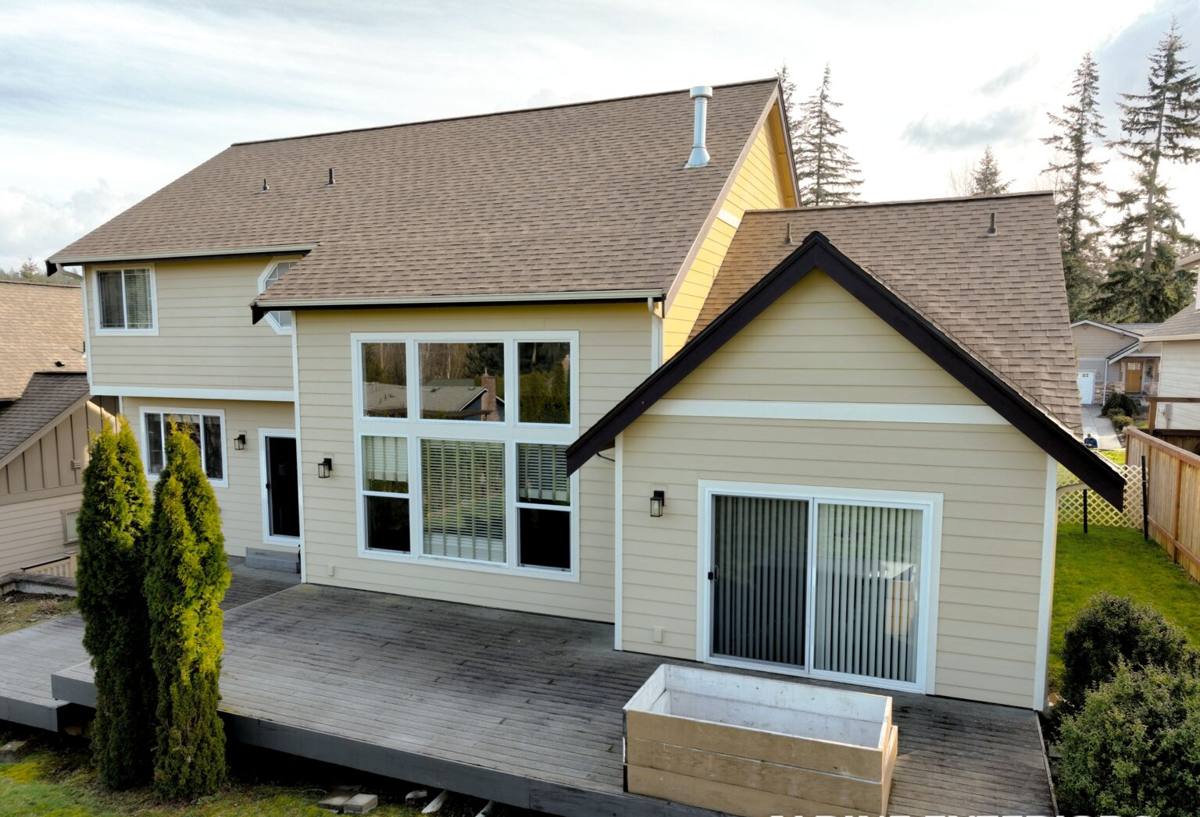
What Roof Repair Actually Involves
Diagnosing the Real Problem
Every repair starts with figuring out where water is actually getting in, not just where it's showing up inside the house. That means checking flashing around chimneys, vents, and skylights, inspecting valleys and eaves, looking at fastener condition, and checking for moss or debris holding moisture against the roof surface longer than it should sit. On older Happy Valley roofs we also look closely at metal flashing and fasteners for salt-driven corrosion, since a rusted-through flashing edge can look fine from the ground but be the actual source of a leak.
Common Repairs We Perform
- Flashing repair or replacement around chimneys, vents, skylights, and wall intersections
- Shingle or panel replacement for wind-lifted, cracked, or granule-worn sections
- Valley and eave repair where water volume concentrates during heavy rain
- Underlayment and decking repair where sustained moisture has caused rot
- Moss and debris removal combined with treatment to slow regrowth
- Sealant and fastener renewal on components nearing the end of their service life
Roof repair is targeted work — fixing the specific failure points on a roof that still has useful life left. It's different from a full replacement, and for most Happy Valley homes with roofs that are still structurally sound, it's the right call.
The Culprits Behind Most Happy Valley Roof Damage
A few conditions come up again and again on repair calls in this part of Chuckanut:
Salt air corrosion. Airborne salt accelerates rust on exposed metal — flashing, fasteners, gutter hardware — well before the roofing material itself is due for replacement. A roof with plenty of life left in the shingles or panels can still develop leaks because the metal details around it have failed first.
Wind-driven rain. Storms moving through Whatcom County often push rain at an angle rather than straight down, forcing water under laps and around penetrations that would stay dry in a calmer climate. This is a major reason flashing and valley work make up such a large share of repair calls here.
Moss and organic growth. Shaded, moisture-retentive roof sections grow moss and lichen readily in this climate. Left alone, moss holds water against the roofing material, lifts shingle edges, and works its way under laps — turning a cosmetic issue into a leak source over a season or two.
Gutter and drainage overflow. Heavy rain events combined with debris-clogged gutters send water back up under the roof edge instead of off the roof, which shows up as rot and staining at eaves and fascia.
Our Roof Repair Process
- Inspection. We walk the roof (or use a close visual and, where needed, interior attic inspection) to trace the actual water path, not just the visible symptom.
- Diagnosis and plan. We identify every failure point contributing to the problem — flashing, moss, fasteners, decking — and explain what's actually needed before any work starts.
- Repair. We replace or repair the specific components at fault, matching materials and technique to what's already on the roof wherever that's the sound approach.
- Moisture check. Where a leak has been active, we check decking and framing for hidden rot rather than covering damaged material with a patch.
- Cleanup and review. We clear debris and moss from the work area and walk you through what was found and what was done.
Repair or Replace? Making the Right Call
Not every roof problem calls for a full replacement, and not every leak can be permanently solved with a patch. The honest answer depends on the roof's age, how widespread the damage is, and whether the underlying structure is still sound.
| Factor | Repair usually makes sense | Replacement should be considered |
|---|---|---|
| Roof age | Roof is within its expected service life, isolated issue | Roof is near or past its expected lifespan |
| Extent of damage | Damage limited to one section, flashing, or penetration | Multiple areas failing, widespread moss or granule loss |
| Decking condition | Decking is dry and sound under the affected area | Rot or soft decking found in more than a small, isolated spot |
| Leak history | First occurrence or a known, fixable cause | Recurring leaks in different spots each season |
| Cost over time | Repair cost is modest relative to remaining roof life | Repeated repairs are approaching the cost of replacement |
We'll always tell you honestly which side of that line your roof is on. A repair that's likely to fail again within a year isn't a good use of your money, and we won't sell it to you as one.
Materials and Approach
Repair materials should match what's already on the roof whenever possible — mismatched shingle profiles or incompatible metal flashing can create new problems instead of solving old ones. Given the salt air in Chuckanut, we lean toward corrosion-resistant flashing and fasteners for any component being replaced, even when the original hardware wasn't built to that standard. It costs a bit more upfront and holds up considerably longer in this air.
| Component | Typical repair approach | Why it matters here |
|---|---|---|
| Flashing | Corrosion-resistant metal, properly lapped and sealed | Salt air shortens the life of standard flashing |
| Fasteners | Matched or upgraded corrosion-resistant fasteners | Rusted fasteners loosen shingles and open leak paths |
| Shingles/panels | Matched material and profile where available | Mismatched patches shed water poorly and stand out visually |
| Underlayment | Replaced wherever exposed during the repair | Old underlayment is often the true point of failure |
Timing Your Repair Around Whatcom County Weather
Roof repairs can be done in most conditions, but the window matters. Late spring through early fall gives the most predictable dry stretches for work involving open decking or extensive flashing replacement. That said, active leaks shouldn't wait for ideal weather — a small, well-executed repair during a break in the rain is far better than letting water keep finding its way into the structure through a Chuckanut winter. Moss treatment is also best handled before the wet season sets in fully, since moss spreads fastest through the fall and winter months when the roof stays damp for days at a time.
Warning Signs You Shouldn't Ignore
- Water stains on ceilings or upper walls, especially after wind-driven storms
- Visible moss or dark streaking on roof slopes, particularly shaded sections
- Granules collecting in gutters or at downspout outlets
- Curling, cracked, or lifted shingle edges
- Rusted or visibly deteriorating flashing around chimneys and vents
- Sagging or soft spots felt when walking near the roof edge or in the attic
- Gutters overflowing during moderate rain rather than just the heaviest storms
Any one of these on its own doesn't necessarily mean a major problem, but catching them early is usually the difference between a straightforward repair and a much larger project once decking or framing gets involved.
Why a Crew That Already Works Happy Valley Matters
A roofer who works this specific area regularly already knows what salt air does to flashing after a few years, how aggressively moss establishes itself on shaded slopes near the tree line, and where wind-driven rain tends to find its way into homes built to the styles common around Happy Valley. That familiarity shortens the diagnosis step and avoids repair approaches that look fine on paper but don't hold up to this particular climate. It also means a faster response when a storm causes damage that needs attention before the next system moves through — something that matters more here than in a less exposed part of Whatcom County.
If you're dealing with a leak, storm damage, or a roof that's showing its age around Happy Valley, we're glad to take a look and give you a straight answer about what it needs. Use the form below to request a free, no-pressure estimate.