 Chuckanut Exterior
 Building Decks for York Homes in Chuckanut's Climate
The York area sits close enough to the water and the tree cover of Chuckanut that a deck here lives a harder life than the same structure would fifty miles inland. Salt-tinged air off the bay, driving rain that comes in sideways during winter storms, and long stretches of shade from Douglas fir and bigleaf maple all work against exposed wood and metal. A deck built without those specifics in mind might look fine for a season or two, then start showing soft spots, rust streaks, or a green film that never fully goes away. Building correctly for York means designing and installing with those three stressors in mind from the first stake in the ground, not treating them as an afterthought once the deck is already down.
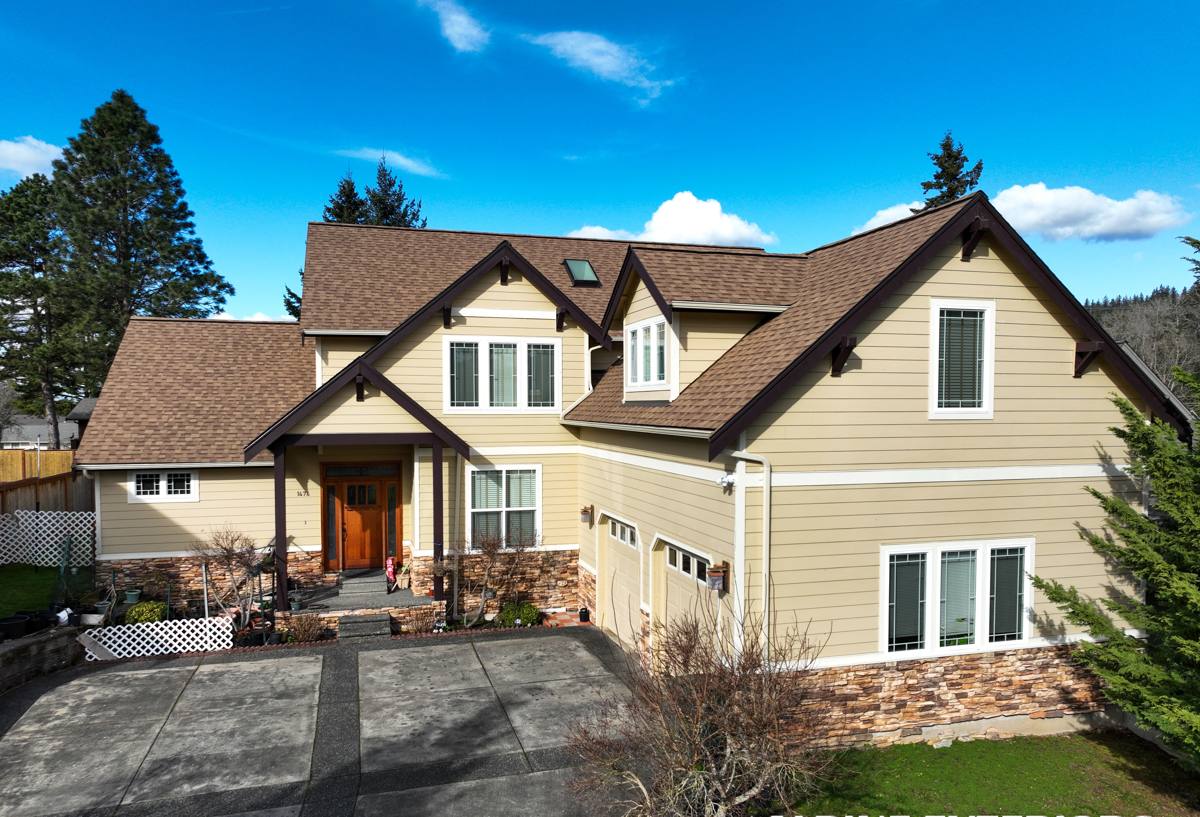
What Chuckanut's Weather Actually Does to a Deck Over Time
It helps to understand the mechanics of what's working against your deck, because it changes which materials and details actually matter.
Salt Air and Corrosion
Homes near the water in Whatcom County deal with airborne salt that settles on exposed metal. Over time this accelerates corrosion on fasteners, brackets, and railing hardware that aren't rated for coastal exposure. A deck that looks structurally sound can still have fasteners quietly losing strength underneath the boards, which is why the hardware spec matters as much as the decking itself.
Driving Rain and Moisture Intrusion
Wind-driven rain doesn't just fall on a deck, it gets pushed sideways and up under boards, around ledger connections, and into any gap that isn't properly flashed or sealed. The ledger board — where the deck attaches to the house — is the single most common point of moisture damage we see on older decks in this region, because it's often the hardest area to inspect and the easiest to under-flash during the original build.
Moss, Algae, and Shade
York's tree cover keeps a lot of yards shaded for large parts of the day, which keeps decking surfaces damp longer after rain. That moisture, combined with organic debris from overhanging trees, creates ideal conditions for moss and algae growth. Beyond looking bad, a mossy deck surface is a slip hazard and, on wood decking, can trap moisture against the board long enough to accelerate rot.
What a Correctly Built Deck Involves Here
A deck built for this specific environment isn't dramatically different in appearance from one built anywhere else — the difference is almost entirely in the details you don't see once it's finished.
- Ledger flashing done right — proper step flashing and a moisture barrier at the house connection, not just caulk over the gap
- Corrosion-resistant fasteners and hardware — hot-dip galvanized or stainless-rated connectors and screws suited for coastal-adjacent exposure
- Adequate airflow under the deck — proper joist spacing and ground clearance so moisture doesn't sit trapped beneath the structure
- Gapping and drainage at the board level — correct board spacing so water sheds instead of pooling
- Footings sized for our soil — Whatcom County soil varies from sandy to clay-heavy depending on the lot, which affects frost depth and footing design
Skip any one of these and the deck can still look good on installation day. The problems show up 18 months to five years later, usually as soft decking near the house, rust bleeding through paint on hardware, or a railing post that's started to wobble.
Decking Material Options for York Properties
There's no single right answer for every home — the right material depends on how much sun the deck gets, how much upkeep you want to do, and your budget. Here's how the common options actually perform under Chuckanut conditions.
| Material | Moss/Algae Resistance | Maintenance | Typical Lifespan Here |
|---|---|---|---|
| Pressure-treated wood | Moderate — needs regular cleaning and sealing | Annual cleaning, re-seal every 2-3 years | 15-20 years with upkeep |
| Cedar | Good natural resistance, still needs care in shade | Cleaning and oil/sealer every 1-2 years | 15-25 years with upkeep |
| Composite decking | Very good, resists moisture absorption | Occasional wash, no sealing/staining | 25-30+ years, manufacturer-dependent |
| PVC decking | Excellent, essentially non-porous | Occasional wash | 25-30+ years, manufacturer-dependent |
In heavily shaded York yards, we lean toward recommending composite or PVC for clients who want to minimize the moss battle, since a non-porous surface simply gives moss and algae less to hold onto. That said, plenty of homeowners prefer the look and feel of real wood and are happy to keep up with the maintenance — that's a legitimate choice too, as long as you go in knowing the upkeep commitment.
Railings, Fasteners, and Hardware That Actually Hold Up
Hardware is where a lot of decks quietly fail first, because it's the least visible part of the structure. For homes in this area we spec corrosion-rated structural connectors, hot-dip galvanized or stainless fasteners, and hidden fastener systems on composite and PVC boards where the clip material is also rated for the exposure. Cutting corners here to save a small amount up front is one of the more expensive mistakes a homeowner can make, because replacing failed hardware often means pulling up decking that's otherwise still in good shape.
Railing systems deserve the same attention. Aluminum and vinyl railing systems generally hold up better than untreated wood balusters in a shaded, damp yard, and cable rail systems need stainless cable and hardware specifically rated for coastal-adjacent air — standard cable will show rust streaking within a couple of seasons in the wrong environment.
Our Process From First Call to Finished Deck
1. On-Site Assessment
We walk the property, look at sun exposure, drainage, existing structure if you're replacing a deck, and talk through how you actually use the space — entertaining, grilling, a quiet spot to sit, pet access to the yard.
2. Design and Material Selection
We go over decking material, railing style, and layout options honestly, including trade-offs on maintenance and budget, so you're choosing based on real information rather than a sales pitch.
3. Permitting
Depending on the deck's size, height, and attachment to the house, a permit through the applicable jurisdiction may be required. We handle that process rather than leaving you to sort it out.
4. Build
Footings, framing, ledger flashing, decking, and railing installation, built to the details described above — not the minimum needed to pass a quick look.
5. Final Walkthrough
We walk the finished deck with you, point out anything you should know about care and maintenance for the specific material you chose, and make sure you're satisfied before we consider the job done.
Maintenance Checklist for Salt Air and Moss Season
Whatever material you choose, a little seasonal attention goes a long way toward getting the full lifespan out of your deck in this climate.
- Sweep debris (needles, leaves, seed pods) off the deck regularly, especially in fall and through moss season
- Rinse or wash the surface periodically to keep salt residue and organic buildup from accumulating
- Check railing hardware and structural connectors annually for early rust or corrosion signs
- Keep gutters and downspouts near the deck clear so runoff isn't dumping extra water onto or under it
- Trim back overhanging branches where practical to reduce shade and debris load
- For wood decking, re-seal or stain on the schedule appropriate to the product — don't wait until it's visibly gray or splitting
- Address any soft spots, loose boards, or wobbly railings promptly rather than waiting for a full season
Permits and Local Considerations in Whatcom County
Deck projects in and around Chuckanut can be subject to permitting requirements depending on size, height above grade, and whether the structure attaches to the house. Requirements and review timelines vary by jurisdiction, and lots closer to shoreline areas can carry additional review depending on local regulations. Rather than guessing, we confirm what applies to your specific property and handle the paperwork as part of the job, so you're not left navigating that process solo.
Why a Crew That Already Works York Matters
There's a real difference between a contractor who's built decks in dozens of different climates and one who knows what a shaded, moisture-heavy Whatcom County yard actually does to a structure over five or ten years. A crew that already works in and around York has seen which fastener specs actually hold up here, which decking materials fight moss successfully, and where ledger connections tend to fail on older homes in this specific area. That local pattern recognition is hard to replace, and it shows up in fewer callbacks and a deck that still performs well well past the first few years.
If you're considering a new deck or replacing one that's showing its age, we're happy to take a look and talk through honest options for your property — no pressure, no obligation. Use the form below to request a free estimate.