 Chuckanut Exterior
 New Roof Installation for Bow Homes
Bow sits close enough to the water that every roof in the area is doing double duty: shedding a lot of rain for a lot of months, and standing up to salt-laden air blowing in off the Salish Sea. A new roof installation here isn't the same job as it would be forty miles inland. The materials, the flashing details, and the ventilation choices all need to account for what this specific corner of Whatcom County throws at a roof year after year. We install new roofs in Bow regularly enough that we've stopped guessing about what fails first and started building around it.
This page covers what actually matters for a correctly installed roof in Bow: the climate factors driving the decisions, what a proper tear-off and install involves, the material trade-offs, and what our process looks like from first look to final walkthrough.
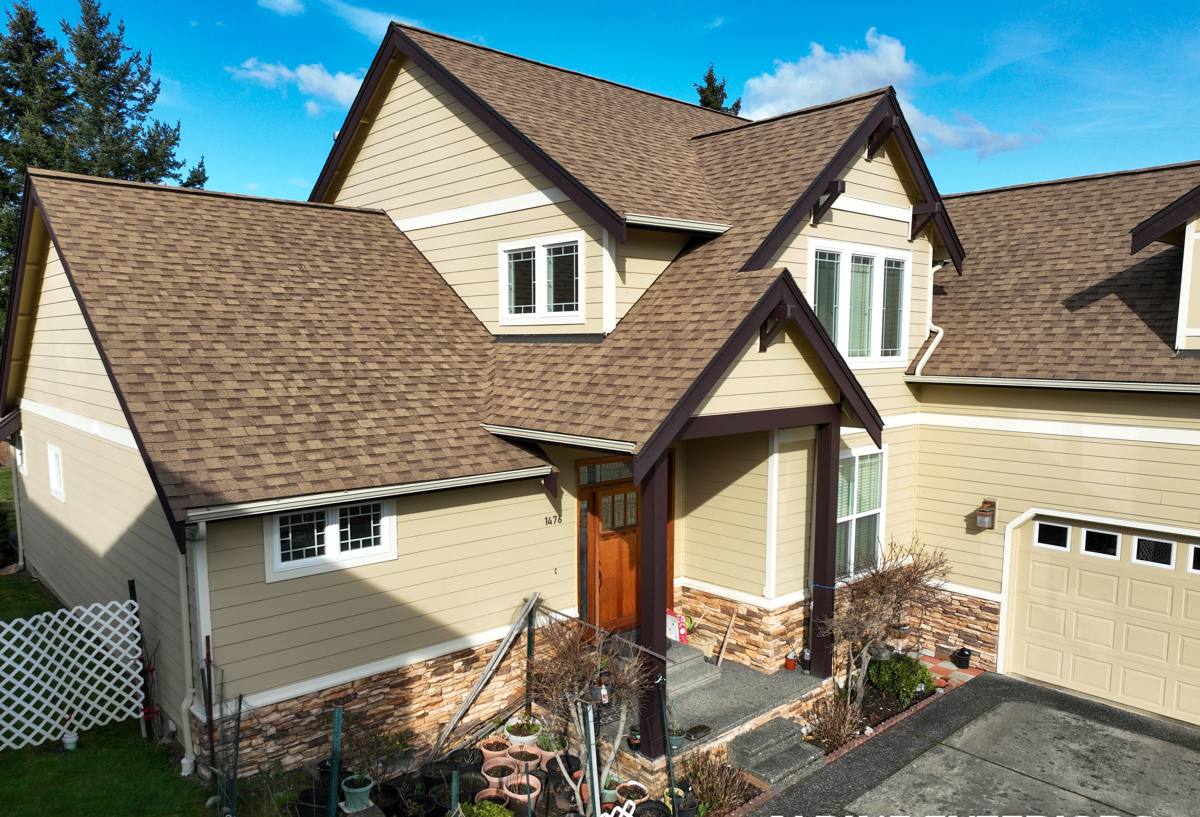
What Bow's Coastal Climate Does to a Roof
Salt Air and Metal Fatigue
Airborne salt doesn't just affect homes right on the shoreline — prevailing winds carry it well inland, and Bow gets its share. Salt accelerates corrosion on any exposed metal: nail heads, flashing, vent boots, gutter fasteners, and the metal components inside certain shingle systems. Over time this shows up as rust streaking, pitted flashing, and fasteners that back out or fail years before they should. It's one of the reasons flashing and fastener choice matters more here than it would in a drier, inland climate.
Driving Rain and Wind-Driven Water
Whatcom County storms off the water rarely fall straight down. Wind pushes rain sideways and up under laps, seams, and flashing that would stay dry in a calmer climate. A roof that's only built to shed water moving downhill isn't enough here — every transition point (valleys, chimneys, skylights, wall intersections) needs underlayment and flashing detailed for water that's actively being pushed uphill and sideways by wind.
A Long Moss Season
Bow's tree cover, marine humidity, and mild temperatures add up to a moss season that runs most of the year, not just a few damp months. Moss holds moisture against the roof surface, works its way under shingle tabs, and lifts material as it grows. Left unaddressed, it shortens the life of almost any roofing material — but some materials and installation details resist it far better than others, which we'll get into below.
Signs a Bow Home Needs a New Roof, Not Another Repair
Not every roof problem calls for full replacement, and we'll tell you honestly when a repair is the right call. But there are signs that point toward replacement being the more sensible investment:
- Granule loss heavy enough that you're finding grit in gutters and downspouts every season
- Shingles that are cupping, cracking, or curling across large sections rather than one isolated area
- Moss growth that's returned repeatedly despite cleaning, especially on north-facing or shaded slopes
- Soft spots or sagging in the roof deck, which usually means water has already reached the sheathing
- A roof at or past its expected service life with more than one or two active leak points
- Flashing that's rusted through or separating at chimneys, valleys, and wall intersections
If a roof is showing one or two of these in isolation, targeted repair often makes sense. When several show up together, patching one area usually just shifts the problem to the next, and a full replacement ends up costing less over time than a string of repairs.
What a Correct New Roof Installation Actually Involves
Tear-Off and Deck Inspection
We remove the existing roofing down to the deck rather than installing over old material. Roofing over a failing roof traps moisture and hides deck damage that will keep getting worse underneath. Once the deck is exposed, we inspect it for soft spots, rot, and delamination, and replace any damaged sheathing before anything new goes down. Skipping this step is the single most common shortcut that leads to premature failure — a new roof surface over a bad deck fails from underneath.
Underlayment and Water Protection
Given how much wind-driven rain this area sees, underlayment choice isn't a minor detail. We use synthetic or high-quality underlayment across the full roof, with self-adhering ice-and-water membrane at the vulnerable points — eaves, valleys, and around any roof penetration — where wind-driven water is most likely to find a way in.
Flashing That's Built for Salt Air
Because salt air corrodes exposed metal faster here than inland, flashing material and fastener choice matter. We detail chimneys, skylights, sidewalls, and valleys with flashing and fasteners chosen to hold up to a marine-influenced climate, not just meet minimum code. Rushed or reused flashing is one of the most common causes of the leaks we get called out to fix on roofs that are otherwise still in decent shape.
Ventilation That Matches the Home
A roof needs balanced intake and exhaust ventilation to manage moisture and temperature in the attic. In a humid, marine climate, poor ventilation traps moisture against the underside of the deck, which shortens roof life and can contribute to mold and rot that has nothing to do with the roofing material itself. We size and place ventilation for the specific home rather than defaulting to whatever was there before.
Roofing Material Options for Bow Homes
There's no single "best" roofing material for every home — it depends on the roof's exposure, slope, shade cover, and the homeowner's priorities on cost, appearance, and long-term maintenance. Here's how the common options stack up against Bow's specific conditions.
| Material | Moss Resistance | Salt Air Durability | Typical Lifespan | Relative Cost |
|---|---|---|---|---|
| Architectural asphalt shingle | Moderate — improves with algae-resistant granules | Good with corrosion-resistant flashing | 25–30 years | $ |
| Standing seam metal | Very good — sheds moss more effectively than shingles | Depends on coating; needs a coastal-rated finish | 40–50+ years | $$$ |
| Synthetic/composite shingle | Good — resists moisture absorption well | Good, minimal exposed metal | 30–50 years | $$ |
| Cedar shake | Poor without diligent upkeep — holds moisture | Fair, but higher maintenance in salt air | 20–30 years with upkeep | $$$ |
We don't install every product on this list on every home, and we're upfront about why. Cedar shake, for example, can look great, but it holds moisture in a climate that already has a long moss season, and it demands a maintenance schedule most homeowners underestimate when they choose it. That's a trade-off we'll walk through honestly rather than talk anyone out of a look they want — it's your home and your call, but you should know what you're signing up for in upkeep.
Our Installation Process, Start to Finish
- On-site assessment — we inspect the existing roof, deck condition, ventilation, and any problem areas before quoting anything
- Written estimate — material options, scope, and a clear price, explained in plain language
- Scheduling — timed around weather windows, since a rushed install during a storm cycle isn't good for anyone
- Tear-off and deck repair — full removal of old material, with any damaged sheathing replaced before moving forward
- Underlayment and flashing — installed to the standard this climate requires, not the minimum code allows
- New roofing installation — installed to manufacturer specification so warranties stay valid
- Cleanup and walkthrough — site cleared of debris and nails, with a final walkthrough so you know exactly what was done
Why a Crew That Already Works Bow Matters
A roofer who mostly works dry inland climates and occasionally takes a job near the water is going to make different default choices than a crew that works this area constantly. Underlayment coverage, flashing metal, fastener selection, and ventilation sizing all shift when salt air, driving rain, and moss are a constant rather than an occasional concern. A crew that already works Bow and the surrounding Whatcom County coastline has already worked out which shortcuts cause callbacks here — and skips them by default, not as an upsell.
It also means faster response if something does come up after install. Local scheduling means a warranty question or a post-storm check doesn't sit behind a long drive from somewhere else in the region.
Maintenance That Protects the Investment
A correctly installed roof still benefits from basic upkeep, especially given the moss season here:
- Keep gutters and downspouts clear so water isn't backing up under the roof edge
- Trim back overhanging branches to reduce shade and debris buildup, both of which feed moss growth
- Have moss removed using methods that don't damage the roofing surface — pressure washing shingles, for example, strips granules and shortens their life
- Schedule a periodic visual inspection, particularly after major windstorms common to this area
- Address small leaks or flashing issues promptly rather than waiting for them to spread
What Affects the Cost of a New Roof in Bow
Cost varies more than most homeowners expect, and not just based on square footage. The main factors we weigh when pricing a job:
| Factor | Why It Matters |
|---|---|
| Roof size and complexity | More valleys, dormers, and penetrations mean more flashing work and labor time |
| Deck condition | Rotted or soft sheathing found during tear-off adds material and labor to replace it |
| Material choice | Asphalt, synthetic, and metal carry different material costs and install labor |
| Roof pitch and access | Steep or hard-to-access roofs take longer and require more safety setup |
| Ventilation upgrades | Adding or correcting intake/exhaust ventilation is often worth doing during a full replacement |
We don't give ballpark numbers over the phone without seeing the roof — too many of these factors only become clear on-site, and a number that doesn't account for them isn't a real estimate.
Get a Free, No-Pressure Estimate
If your roof in Bow is showing its age, or you just want an honest read on how many years it has left, we're glad to take a look. There's no cost and no pressure — just a straight assessment from a crew that already knows what this climate does to roofs. Use the form below to request a free estimate.