 Chuckanut Exterior
 Decking Built for Samish, Not Just Sold to Samish
Samish sits close enough to the water that salt-laden air, near-constant rain for a good chunk of the year, and a long stretch of low sun and shade combine into one of the tougher decking environments in Whatcom County. A deck that would hold up fine in a drier inland town can start showing problems here within a couple of seasons if it wasn't specified and built with this exact climate in mind. That's the difference we focus on: not just installing composite decking, but installing it the way Samish conditions actually require.
This page is specifically about composite decking for homes in and around Samish. We're not going to give you a generic decking overview — we'll walk through what the local climate does to a deck, what a correct composite installation looks like in response, and how our process is set up to handle it.
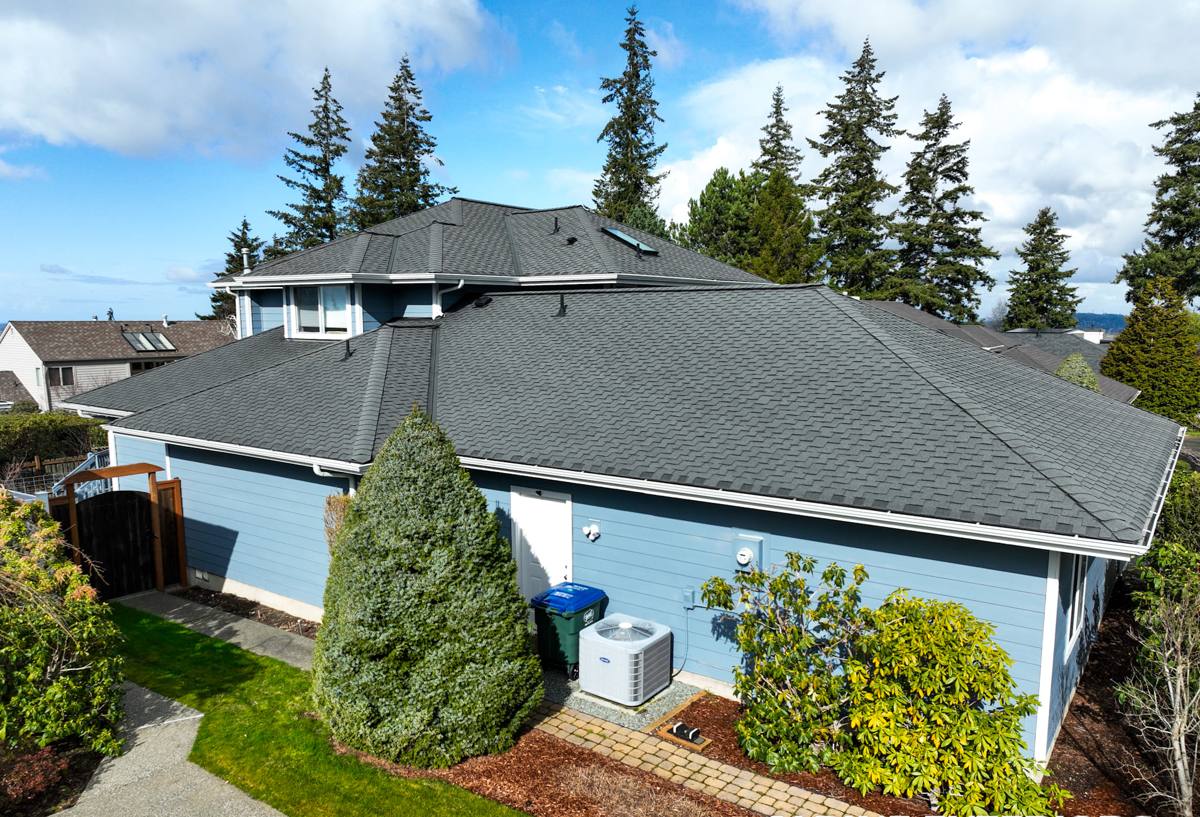
What Salt Air, Driving Rain, and Moss Season Do to a Deck
Three things drive almost every deck problem we see in this part of Chuckanut:
Salt Air
Moisture-carried salt accelerates corrosion on anything metal — fasteners, joist hangers, railing brackets. On a wood deck this often shows up first as rust streaking around screw heads. On a poorly built composite deck, it shows up as corroded hardware failing underneath boards that otherwise look fine on top.
Driving Rain
Whatcom County doesn't just get rain, it gets rain pushed sideways by wind off the water. That means water gets driven into joints, under rail posts, and along ledger boards in ways that straight-down rain wouldn't reach. Any gap in flashing or sealing becomes an entry point.
Moss Season
The long stretch of wet, shaded, cool weather is exactly what moss needs to establish. Moss holds moisture against the deck surface far longer than open air would, which matters most at board edges, fastener heads, and anywhere airflow underneath the deck is restricted. On some products moss growth is mostly cosmetic; on others it can affect the surface over time if left unaddressed.
None of this means composite decking is a bad fit for Samish — quite the opposite, it's one of the better options here. But it means the installation details matter more than the marketing on the box.
Why Composite Decking Fits Samish Well
Composite decking is made from a blend of wood fiber and plastic, capped (on most quality products) with a protective outer shell. Done right, it gives you a few specific advantages that matter for this location:
- No rot from repeated wetting and drying cycles the way solid wood decking eventually experiences
- Capped boards resist moss and algae staining better than uncapped wood, and clean up more easily when moss does appear
- No annual staining or sealing to keep up with, which matters when the weather window for outdoor maintenance work is already short
- Consistent performance across the board — no individual boards cupping, splitting, or splintering the way wood can
That said, composite isn't maintenance-free, and it isn't immune to bad installation. The material choice only pays off if the build underneath it is correct.
What a Correct Composite Deck Installation Actually Involves
The Substructure Comes First
The framing underneath the decking matters as much as the decking itself. In this climate we pay close attention to joist spacing (composite generally needs tighter spacing than the minimums used for wood), joist protection or tape to prevent moisture wicking into framing lumber, and fastener selection rated for coastal-adjacent, high-moisture exposure.
Drainage and Airflow Underneath
A deck built tight to the ground or without adequate ventilation underneath traps moisture and encourages the exact moss and mildew problems Samish's climate already pushes toward. Correct grading, gapping, and skirting design let air move and water drain instead of pooling.
Fastener and Hardware Selection
Given the salt air exposure, we use fasteners and structural hardware rated for corrosion resistance appropriate to a coastal-influenced environment, not just whatever is cheapest at standard hardware-store grade. This is one of the most common corners cut on decks that fail early, and it's invisible until the hardware underneath starts to go.
Board Gapping and Fastening Pattern
Composite boards expand and contract with temperature more than solid wood. Gapping has to account for this, both for water drainage between boards and to prevent buckling. Fastening pattern and spacing also affect how well the deck sheds water instead of holding it at seams.
Flashing at the House Connection
Where the deck ties into the house — the ledger board — is the single highest-risk spot for water intrusion given how much wind-driven rain this area gets. Proper flashing here isn't optional; it's the difference between a deck that stays dry against the house and one that slowly rots the rim joist behind the siding.
Composite vs. Other Decking Options for This Climate
| Material | How It Handles Salt Air | How It Handles Rain/Moisture | Moss Resistance | Ongoing Maintenance |
|---|---|---|---|---|
| Capped Composite | Good — surface doesn't corrode; hardware selection still matters | Strong when installed with proper gapping/drainage | Better than wood; still needs occasional cleaning | Low — cleaning, no staining/sealing |
| Uncapped Composite | Fair — more surface absorption over time | Fair — more prone to moisture staining than capped | Moderate | Low-moderate |
| Pressure-Treated Wood | Poor — fasteners and structure corrode faster | Requires diligent sealing to prevent rot | Poor without regular treatment | High — annual staining/sealing |
| PVC Decking | Good | Very good — fully synthetic, no wood fiber to absorb moisture | Good | Low |
We install composite for the large majority of Samish decking projects because it strikes the best balance of appearance, cost, and long-term performance in this specific climate. Where a homeowner's priorities point toward a different material, we'll say so honestly rather than push one product for every job.
Our Process for Samish Deck Projects
- Site evaluation — we look at sun/shade exposure, prevailing wind and rain direction, existing drainage, and how close the deck is to salt-air exposure, since these vary even block to block in this area.
- Structural assessment — for replacements, we check the existing ledger, footings, and framing before assuming they can be reused. Reusing a compromised substructure under new composite decking just moves the problem underneath a nicer surface.
- Material and layout plan — board direction, gapping, and fastening pattern are planned around drainage, not just appearance.
- Installation — corrosion-resistant hardware, correct joist spacing, ledger flashing, and ventilation underneath the deck are treated as non-negotiable steps, not upgrades.
- Final walkthrough — we go over basic care specific to this climate so you know what to expect through the wetter months.
What Affects the Cost of a Composite Deck
| Factor | Why It Matters |
|---|---|
| Substructure condition | Replacing rotted or corroded framing adds cost but is not optional for a safe, lasting deck |
| Board tier (capped vs. uncapped, product line) | Higher-tier capped boards cost more upfront and hold up better against moss and moisture over time |
| Deck size and shape | More cuts, framing complexity, and railing length all add labor |
| Height and stair/rail requirements | Elevated decks need more structural work and code-compliant railing |
| Site access | Tight lots or limited equipment access can add time to demo and material staging |
We give straightforward, itemized estimates rather than a single vague number, so you can see what you're actually paying for.
Keeping a Composite Deck Looking Right Through Moss Season
- Sweep off leaves and debris regularly through fall — trapped organic matter is what feeds moss growth
- Rinse the deck surface periodically during the wet months rather than letting grime sit and set
- Keep gutters and downspouts near the deck clear so runoff isn't dumping extra water onto the deck surface
- Check that skirting or under-deck areas haven't become blocked, which restricts the airflow the deck was built to rely on
- Address any moss spots with a mild cleaning approach suited to composite surfaces rather than pressure-washing aggressively, which can damage the cap layer
Why Hiring a Crew That Already Works in Samish Matters
A lot of deck problems in this area don't come from bad materials — they come from installation details that were fine for a drier, calmer climate but weren't adjusted for wind-driven rain, salt air corrosion, and a long moss season. A crew that regularly works in and around Chuckanut and the wider Whatcom County coastline already knows which details can't be skipped here, because they've seen what happens when they are.
That local familiarity shows up in small decisions throughout the build — hardware selection, gapping tolerances, where extra flashing attention is warranted — that don't show up on a spec sheet but make the difference between a deck that holds up and one that needs early repairs.
If you're considering composite decking for your Samish home, we're happy to walk the site, talk through what your specific exposure and layout call for, and give you a straightforward, no-pressure estimate using the form below.