 Chuckanut Exterior
 Roof Damage After a Storm Looks Different Here Than It Does Inland
When a windstorm or heavy rain event moves through Mount Vernon, the damage it leaves behind isn't always obvious from the ground. A few lifted shingles near a ridge, a soft spot where flashing pulled away from a chimney, or granules collecting in a gutter downspout can all point to a roof that's been compromised even though nothing looks dramatically wrong. Homes in this part of Whatcom County deal with a specific combination of weather stress: wind-driven rain off the water, salt-laden air that accelerates corrosion on metal components, and long stretches of damp, shaded conditions that keep moss and moisture working on a roof surface far more of the year than drier inland areas ever see.
That combination matters when you're deciding how to respond after a storm. A roof that's already carrying moss growth or slightly corroded fasteners going into a wind event is more likely to suffer real damage than a roof that's been properly maintained. Our storm damage repair work in Mount Vernon starts from that reality — we're not just patching what blew off, we're looking at why it failed and whether the surrounding material is still sound.
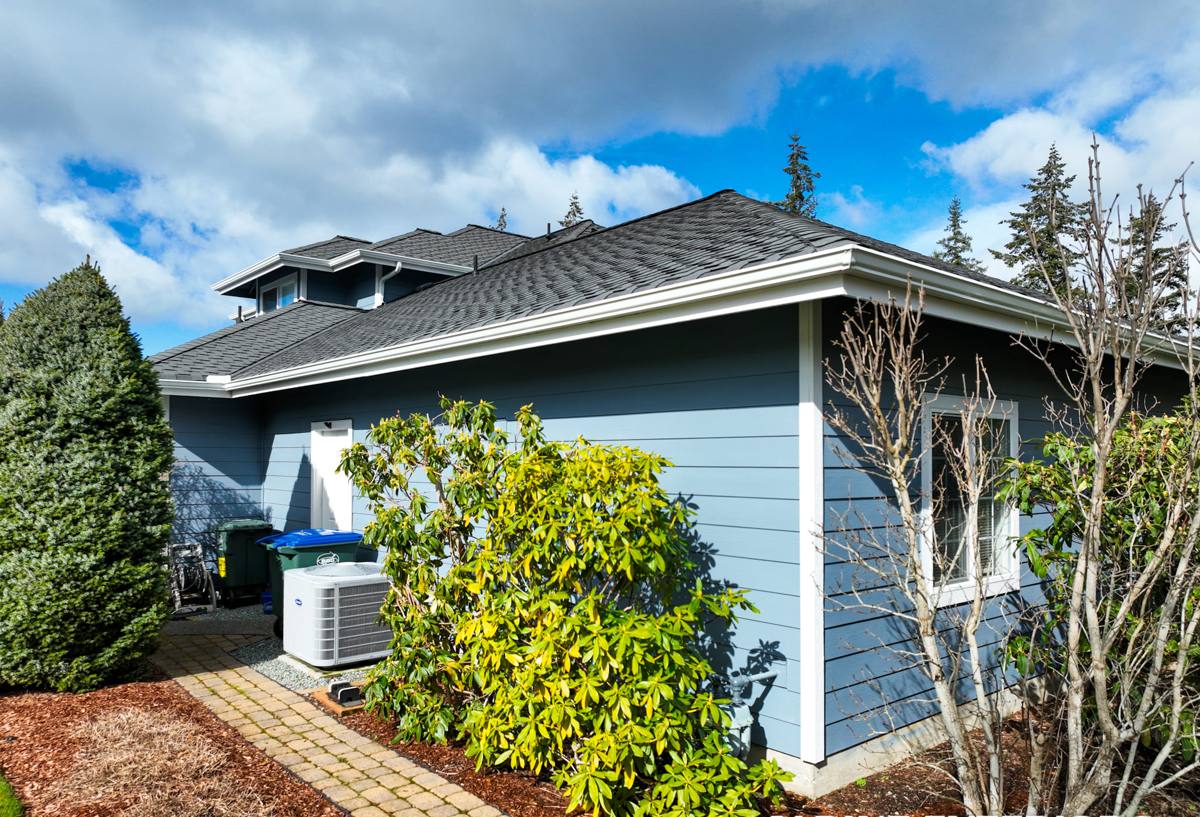
What Actually Causes Storm Damage in This Climate
Wind and Driving Rain
Storms coming off the water tend to bring rain sideways, not straight down. That matters because a roof system built to shed water vertically can still leak when rain is being driven horizontally under shingle edges, around vent boots, and into any gap in flashing that wouldn't normally see water pressure from that angle. Wind uplift is the other half of the problem — older or under-fastened shingles can lift at the edges during gusts, break their seal, and either blow off outright or leave a weakened section that fails in the next storm.
Salt Air and Corrosion
Proximity to Puget Sound and the surrounding waterways means homes in this area deal with airborne salt that ordinary inland roofs don't. Salt exposure speeds up corrosion on exposed metal — nail heads, flashing seams, gutter fasteners, and any galvanized hardware that isn't fully protected. A fastener that's lost holding strength to corrosion is far more likely to let go in high wind than one on a home 50 miles inland. This is one of the reasons we pay close attention to metal condition, not just shingle condition, when we're assessing storm damage here.
Moss and Prolonged Moisture
Western Washington's long wet season keeps roofs damp for extended stretches, and shaded or north-facing slopes in Mount Vernon are especially prone to moss growth. Moss does two things that make storm damage worse: it holds moisture against the roofing material, which speeds up granule loss and wood rot in the decking below, and it physically lifts shingle edges as it grows, creating openings for wind and rain to get underneath. A roof with active moss growth going into a storm is already compromised before the wind even arrives.
What a Correct Storm Damage Repair Actually Involves
A quick patch job can stop an active leak for a while, but it doesn't tell you whether the rest of the roof is sound or whether the same failure is about to happen somewhere else. Our approach on storm calls in Mount Vernon covers the full picture, not just the visible problem spot.
- Full roof walk to identify every area of visible damage, not just the spot the homeowner noticed from inside
- Check of all flashing points — chimneys, valleys, skylights, sidewalls — since these fail more often than open field shingle
- Inspection of the decking underneath damaged shingles for soft spots, staining, or rot before any new material goes down
- Assessment of fastener and metal condition in exposed areas for salt-related corrosion
- Check for moss or organic growth that may have contributed to the failure or will threaten the repair going forward
- Gutter and downspout check, since storm debris and granule buildup here can cause backups that look like roof leaks but aren't
- Interior check in the attic or ceiling below the damaged area, where accessible, to catch moisture that hasn't shown up as a visible stain yet
Skipping any of these steps is how a homeowner ends up calling again after the next storm for a "new" leak that was actually the same underlying problem, left unaddressed.
Our Process, Start to Finish
1. Assessment and Honest Explanation
We start with a full inspection and walk you through what we find in plain terms — what's storm damage, what's pre-existing wear that the storm exposed, and what's still sound. You should understand the difference before any repair work begins, not just get handed an invoice.
2. Temporary Protection When Needed
If there's an active leak or exposed decking, we get it covered and protected first. Waiting days for a full repair while water keeps getting in isn't acceptable, especially during a stretch of driving rain.
3. Matching Repair Materials
Repairs use materials that match your existing roofing as closely as possible in type, weight, and where feasible, color and manufacturer line. A repair that doesn't match creates a weak seam and looks obviously patched.
4. Correcting the Underlying Cause
If corrosion, moss, or a flashing design issue contributed to the failure, we address that as part of the repair — not just replace the damaged shingles and leave the same vulnerability in place.
5. Final Walkthrough
Before we consider the job done, we walk the completed repair with you, explain what was done, and flag anything else on the roof worth keeping an eye on going forward.
Repair vs. Replacement: How We Help You Decide
Not every storm-damaged roof needs to be replaced, and not every roof can be responsibly patched. The right call depends on the extent of the damage, the age and condition of the roof, and whether the damage is isolated or a sign of broader failure.
| Factor | Repair Usually Makes Sense | Replacement Worth Considering |
|---|---|---|
| Extent of damage | Isolated to one section or a handful of shingles | Widespread across multiple slopes |
| Roof age | Well within expected service life | Already near or past typical lifespan |
| Decking condition | Solid, no rot found underneath | Soft spots or rot found in multiple areas |
| Moss/corrosion history | Minor, addressable during repair | Long-term, widespread throughout the roof |
| Underlying material | Consistent match still available | Discontinued or significantly weathered elsewhere |
We'll give you a straight answer on which category your roof falls into rather than defaulting to whichever option is more profitable for us. A well-timed repair on a sound roof is often the right call, and we'll say so.
Insurance Claims and Documentation
Storm damage repairs are frequently covered under homeowner's insurance, but the claims process goes smoother when the damage is documented properly and promptly. We photograph and document what we find during the initial assessment, which gives you something concrete to work with if you're filing a claim. We're not a public adjuster and won't promise a specific claim outcome, but clear documentation of the actual damage — separate from any pre-existing wear — is one of the most useful things you can bring to that conversation with your insurer.
Why a Crew That Already Works Mount Vernon Roofs Matters
Storm damage repair isn't just about roofing technique in general — it's about knowing what tends to fail on homes in this specific area and why. A crew that regularly works Mount Vernon and the surrounding Chuckanut area has already seen how salt air affects fasteners here, which roof orientations collect moss fastest given the local tree cover and rainfall pattern, and which flashing details tend to be the weak point when wind-driven rain comes off the water. That local pattern recognition means a faster, more accurate assessment and a repair that accounts for what's actually likely to cause the next problem, not just what caused this one.
It also means we're not learning the regional climate on your roof. We already factor Skagit and Whatcom County's wet season timing, typical storm direction, and moss pressure into every repair we plan, which affects everything from material choice to how we detail flashing repairs for long-term performance rather than just getting the immediate leak stopped.
What to Do Right After a Storm
If you suspect storm damage, a few simple steps help protect your home and make any eventual repair or claim easier:
- Check ceilings and attic spaces for new staining, dampness, or a musty smell
- Look at gutters and the ground around your home for shingle granules or larger debris that suggests roof material coming loose
- Avoid getting on the roof yourself, especially after wind or rain — storm-damaged roofing can be unstable and slick
- Take photos from the ground of anything visibly out of place, if it's safe to do so
- Get a professional assessment before the next storm arrives, since active gaps or lifted shingles get worse quickly under repeated wind and rain
Acting within a reasonable window after a storm — rather than waiting until a leak becomes obvious inside the home — is usually what separates a straightforward repair from a more involved one.
Ready for a Straight Answer on Your Roof?
If your Mount Vernon home has taken storm damage, or you're not sure whether recent weather affected your roof, we're happy to take a look and give you an honest read on what you're dealing with. Reach out for a free, no-pressure estimate using the form below.